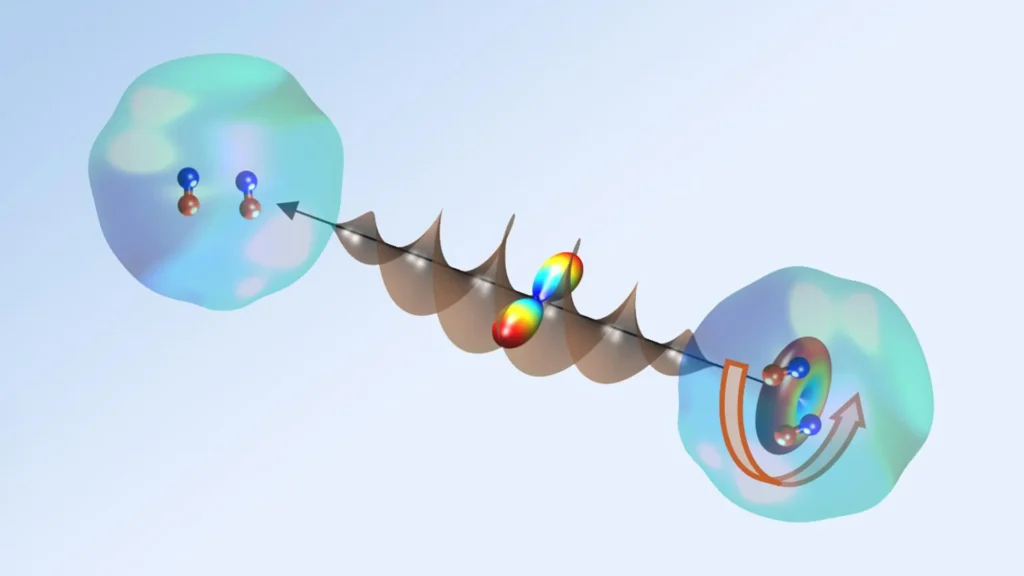
In a significant advancement for the field of quantum dynamics, a collaborative research team led by the University of British Columbia (UBC) and the University of Freiburg has successfully demonstrated a novel method for controlling the rotation of molecules immersed in superfluid liquid helium. This achievement, detailed in a recent publication in the journal Physical Review Letters, provides scientists with an unprecedented level of precision in manipulating matter at the atomic scale, offering a "control knob" to investigate the fundamental properties of superfluids and their interactions with dissolved substances. By utilizing a sophisticated optical centrifuge, the researchers have managed to overcome the inherent challenges of spinning molecules within a dense quantum medium, marking a milestone in the study of frictionless fluids and molecular physics.
The Challenge of Molecular Motion in Superfluids
Superfluidity is a state of matter characterized by the complete absence of viscosity, allowing the fluid to flow without any loss of kinetic energy. When liquid helium is cooled to temperatures approaching absolute zero—specifically below the Lambda point of 2.17 Kelvin—it transitions into this quantum state. In this environment, the fluid can crawl up the sides of containers and leak through microscopic pores that would be impassable for normal liquids. Despite this lack of internal friction, superfluids still act as a complex environment for any molecule dissolved within them.
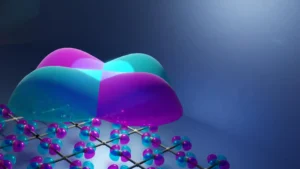
The primary difficulty in controlling molecular rotation in such a medium lies in the interaction between the guest molecule and the surrounding helium atoms. As a molecule begins to rotate, it interacts with the quantum field of the superfluid, effectively dragging a "cloud" of helium atoms along with it. This phenomenon, often referred to in the scientific community as the "snowball effect," increases the effective moment of inertia of the molecule. Dr. Valery Milner, an associate professor at UBC’s Department of Physics and Astronomy and a lead author of the study, explains that this makes the molecule behave as if it were significantly heavier and more resistant to acceleration than it would be in a vacuum or a gaseous state.
Until this breakthrough, while physicists could observe these molecules, they lacked the tools to precisely dictate their rotational speed and orientation once they were submerged in the helium droplets. The ability to manipulate these variables is crucial for understanding how the transition from a normal fluid to a superfluid affects the behavior of matter at the quantum level.
Engineering the Optical Centrifuge for Quantum Media
The core technology behind this discovery is the optical centrifuge, a device that uses ultrafast laser pulses to spin molecules to extremely high frequencies. In a standard gas-phase experiment, an optical centrifuge works by creating a rotating electric field. The molecules, which possess an anisotropic polarizability, align themselves with this field. As the field’s rotation accelerates, the molecules are dragged along, reaching rotational speeds in the terahertz range—trillions of rotations per second.
However, applying this technique to molecules inside liquid helium droplets proved to be a formidable task. The dense environment of the nano-droplet dampens the effect of the laser, and the "snowball" of helium atoms prevents the molecule from keeping pace with the rapidly accelerating laser pulse. To solve this, the UBC and Freiburg team modified the traditional approach by introducing a specific delay between the laser pulses.
The researchers embedded nitric oxide (NO) dimers within helium nano-droplets. By carefully timing the sequence of laser pulses, they created an interference pattern that resulted in a slower, more stable rotational acceleration. This adjustment allowed the molecules to "catch up" and synchronize with the optical field despite the surrounding helium atoms. This innovation significantly increased the "spinnability" of the molecules, allowing the team to exert direct control over both the direction and the velocity of the rotation.
A Chronology of Superfluid Research and Discovery
The success of the UBC-Freiburg experiment is the latest chapter in a century-long investigation into the properties of liquid helium. The timeline of these discoveries highlights the evolving complexity of quantum fluid dynamics:
- 1908: Heike Kamerlingh Onnes first liquefies helium at Leiden University, reaching a temperature of 4 Kelvin.
- 1937-1938: Pyotr Kapitsa, John F. Allen, and Don Misener independently discover superfluidity in Helium-4, noting its zero-viscosity flow.
- 1990s: The development of helium nanodroplet isolation (HENDI) spectroscopy allows researchers to use superfluid droplets as "nanolabs" for studying isolated molecules at ultra-cold temperatures (0.37 K).
- Early 2000s: Optical centrifuges are developed to study molecular "superrotors" in the gas phase, providing insights into molecular collisions and atmospheric physics.
- 2023-2024: The current research bridge the gap between gas-phase control and liquid-phase environments, demonstrating the first successful use of an optical centrifuge to control rotation inside a superfluid droplet.
This progression shows a clear trajectory from the discovery of bulk superfluid properties toward the microscopic manipulation of individual quantum systems within those fluids.
Supporting Data and Experimental Parameters
The experiment focused on nitric oxide dimers ($N_2O_2$) because of their well-defined rotational constants and their behavior when solvated in helium. The helium droplets used in the study were approximately several nanometers in diameter, containing several thousand helium atoms, and maintained at a temperature of approximately 0.37 Kelvin.
Key data points from the study include:
- Rotational Frequency Control: The researchers were able to tune the rotation of the NO dimers to specific frequencies, observing how the "effective mass" of the molecule changed as it interacted with the superfluid.
- Spinnability Enhancement: By introducing the pulse delay, the team observed a measurable increase in the efficiency of angular momentum transfer from the laser to the molecule, overcoming the drag that had stalled previous attempts.
- Symmetry Manipulation: The team demonstrated that they could switch the direction of rotation (clockwise vs. counter-clockwise) by altering the polarization of the centrifuge pulses, a level of control previously reserved for gas-phase studies.
These results indicate that the superfluid, while frictionless in the traditional sense, still exerts a "quantum drag" that is frequency-dependent. This data is essential for refining theoretical models of Bose-Einstein condensates and other quantum fluids.
Reactions from the Scientific Community
While the paper primarily focuses on the technical success of the experiment, the implications have resonated throughout the physics community. Colleagues in the field of molecular spectroscopy have noted that this technique turns helium droplets into a more versatile platform for quantum chemistry.
Dr. Milner’s analogy of the "snowball" has become a central theme in discussing these findings. By being able to control the rotation, scientists can now effectively "peel back" the layers of the snowball to see how the core molecule behaves. Experts suggest that this could lead to new ways of studying the microscopic origins of superfluidity itself. If the rotation is fast enough, the molecule might eventually "shed" its helium shell, providing a glimpse into the limits of quantum solvation.
Inferred reactions from the broader quantum research community suggest that this work may also impact the development of quantum sensors. Since the rotation of the molecule is highly sensitive to its surroundings, these controlled "superrotors" could act as microscopic probes to measure local density or temperature variations within a quantum fluid with extreme precision.
Broader Impact and Future Implications
The ability to control molecular rotation in a superfluid is more than just a feat of laboratory gymnastics; it has profound implications for several branches of science.
Exploring the Breakdown of Superfluidity
The next phase of the UBC research involves identifying the "critical point" of rotation. In superfluid physics, there is a theoretical limit known as the Landau critical velocity. If an object moves through a superfluid faster than this velocity, it begins to create excitations (such as vortices or phonons), and the fluid starts to exhibit friction. By using the optical centrifuge as a "control knob," Milner and his team plan to increase the rotational frequency until they observe this transition. This will provide the first experimental data on the breakdown of superfluidity at the atomic scale, a topic that remains one of the most elusive questions in condensed matter physics.
Advancements in Quantum Computing and Information
Superfluids are often used as environments for quantum bits (qubits) because their low-temperature, low-noise characteristics help maintain quantum coherence. The ability to precisely manipulate the state of a molecule within such a fluid could lead to new methods for encoding or transferring quantum information. If a molecule’s rotation can be coupled to its electronic or nuclear spin states, the optical centrifuge could become a tool for initializing or reading quantum states in a protected environment.
Understanding Molecular Complexity
This research also aids in the study of complex molecules that are difficult to isolate. Helium nanodroplets allow for the assembly of unique molecular clusters that do not exist in nature. By controlling the rotation of these clusters, chemists can study their structural integrity and the forces that hold them together under extreme rotational stress.
Conclusion
The successful demonstration of controlled molecular rotation in superfluid helium by the University of British Columbia and the University of Freiburg represents a major leap forward in our ability to probe the quantum world. By refining the optical centrifuge technique, the researchers have provided a new lens through which to view the strange, frictionless behavior of superfluids. As they begin to explore the limits of these materials, their work promises to unlock deeper insights into the transition between classical and quantum mechanics, potentially paving the way for new technologies in sensing, chemistry, and quantum information science. The study, supported by major Canadian and British Columbian research funds, stands as a testament to the power of international collaboration in solving the most fundamental puzzles of physics.