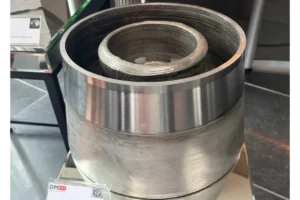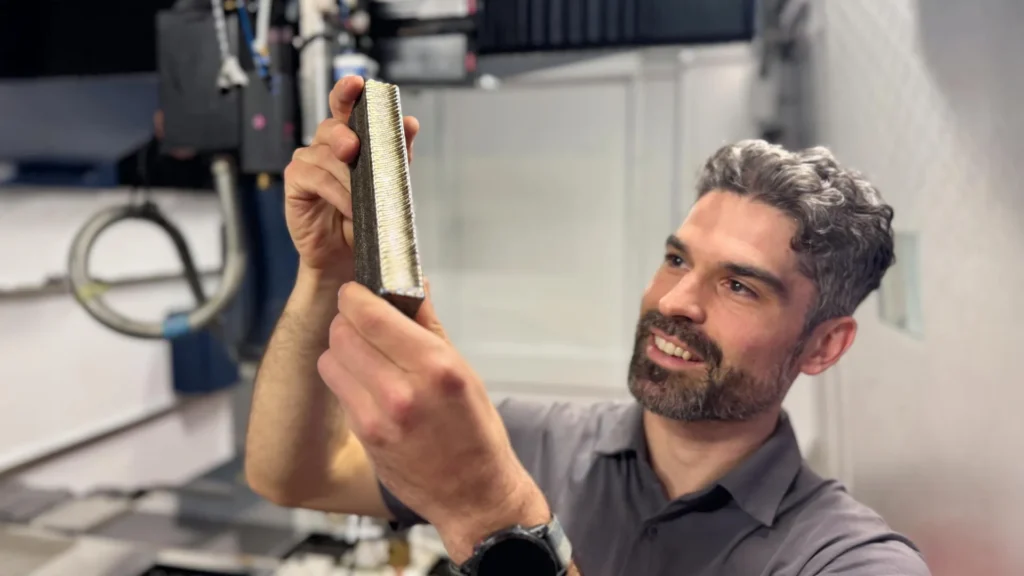
Engineers from RMIT University in Melbourne, Australia, have achieved a significant breakthrough in additive manufacturing with the development of a novel 3D-printed titanium alloy. This innovative material is approximately one-third cheaper to produce than conventional titanium alloys currently in widespread use, a development poised to have a substantial impact on industries such as aerospace and medical devices. The research, detailed in the prestigious journal Nature Communications, not only addresses the economic barriers to wider adoption of 3D-printed titanium but also promises enhanced material properties.
A New Era for Titanium in Additive Manufacturing
The core of RMIT’s innovation lies in its strategic re-engineering of the alloy composition. Traditionally, titanium alloys used in demanding applications, such as the widely adopted Ti-6Al-4V (titanium-aluminum-vanadium), rely on vanadium as a critical alloying element. However, vanadium prices have experienced volatility and a general upward trend, making it an increasingly expensive component. The RMIT team has successfully bypassed this cost driver by utilizing more readily available and economical alternative materials to replace vanadium. This strategic substitution is central to the alloy’s projected cost savings of nearly 30% compared to standard 3D-printed titanium.
The implications of this cost reduction are profound. For sectors like aerospace, where the weight-to-strength ratio of materials is paramount and manufacturing processes are scrutinized for efficiency, a cheaper yet equally or more capable titanium alloy could unlock new design possibilities and reduce the overall cost of aircraft and spacecraft components. Similarly, the medical device industry, which frequently utilizes titanium for implants and surgical instruments due to its biocompatibility and strength, stands to benefit from more affordable and potentially superior materials.
Innovation Rooted in a Deeper Understanding of Material Science
The RMIT research goes beyond a simple compositional tweak. It is underpinned by a novel framework for designing new alloys that leverages the unique capabilities of 3D printing. PhD candidate Ryan Brooke, the study’s lead author and a key figure in the RMIT Centre for Additive Manufacturing (RCAM), emphasized that the current reliance on legacy alloys like Ti-6Al-4V hinders the full realization of 3D printing’s potential.
"3D printing allows faster, less wasteful and more tailorable production yet we’re still relying on legacy alloys like Ti-6Al-4V that doesn’t allow full capitalisation of this potential," Brooke stated. "It’s like we’ve created an aeroplane and are still just driving it around the streets." This analogy highlights the disconnect between the advanced manufacturing technology and the materials it employs. The new RMIT framework, as outlined in their Nature Communications paper, provides a systematic approach to designing alloys that are not only cost-effective but also optimized for the additive manufacturing process itself.
A critical aspect of this optimization is the control of the material’s microstructure during printing. The study outlines a method that offers a clearer framework for predicting and controlling the printed grain structure of metallic alloys. This is crucial because the formation of undesirable microstructures, such as columnar grains, can lead to uneven mechanical properties and reduce the overall performance and reliability of 3D-printed parts. The RMIT team’s alloy formulation actively avoids this issue, promoting a more uniform grain structure. This uniformity translates into more consistent mechanical properties across the printed component, enhancing its strength and ductility.
A Path to Commercialization
Recognizing the significant commercial potential of their discovery, RMIT has filed a provisional patent on their innovative approach. The university is actively exploring commercial opportunities and is seeking partnerships to bring this low-cost, high-performance titanium alloy to market. Ryan Brooke’s recent acceptance of a Research Translation Fellowship at RMIT further underscores the institution’s commitment to advancing this technology from the laboratory to industrial application.
Brooke’s engagement with industry representatives through CSIRO’s ON Prime program has provided valuable insights into market demands. "What I heard loud and clear from end users was that to bring new alloys to market, the benefits have to not just be minor incremental steps but a full leap forward, and that’s what we have achieved here," he reported. This market validation suggests that the RMIT alloy meets the stringent requirements for disruptive innovation that industry leaders are seeking.
The research paper itself details a time- and cost-saving method for selecting elements for alloying, specifically tailored to capitalize on the advancements in 3D printing technology. This systematic design framework not only guides the creation of cost-effective materials but also ensures that the printed metal exhibits improved printability, leading to more consistent and predictable outcomes.
Enhanced Performance Metrics
Beyond the cost savings, testing of the new RMIT alloy has revealed improvements in strength and performance when compared to standard 3D-printed titanium alloys like Ti-6Al-4V. While the specific composition of the commercially viable alloy was not disclosed in the study for proprietary reasons, the reported 29% reduction in production cost is a significant figure. Furthermore, the alloy exhibits enhanced ductility alongside its increased strength and uniform grain structure. This combination of properties is highly desirable for applications where components are subjected to complex stresses and may require some degree of flexibility.
Professor Mark Easton, the corresponding author of the study and a prominent figure at RCAM, expressed his enthusiasm for the alloy’s prospects and highlighted the collaborative effort required for its successful deployment. "We are very excited about the prospects of this new alloy, but it requires a team from across the supply chain to make it successful," he stated. "So, we are looking for partners to provide guidance for the next stages of development." This call for collaboration indicates RMIT’s open approach to commercialization, aiming to leverage expertise from various industry stakeholders, from material suppliers to end-users in aerospace, automotive, and MedTech.
The Genesis of the Breakthrough
The research leading to this novel alloy began with a fundamental challenge: bridging the gap between the capabilities of advanced manufacturing and the limitations of existing materials. For years, the additive manufacturing sector has strived to unlock the full potential of technologies like 3D printing, which offer unparalleled design freedom, reduced material waste, and the ability to create complex geometries impossible with traditional subtractive methods. However, the materials available for these processes have often lagged behind, forcing engineers to compromise on performance or cost.
The RMIT team recognized that a paradigm shift in alloy design was necessary. Instead of adapting existing materials to 3D printing, they sought to create materials specifically engineered for the additive manufacturing environment. This involved a deep dive into the metallurgical science of titanium alloys and an understanding of how printing parameters influence material properties at the microstructural level.
The development process likely involved iterative cycles of alloy design, computational modeling, and experimental validation. The researchers would have systematically explored different combinations of elements, predicting their behavior during the high-temperature, rapid-cooling cycles characteristic of 3D printing. The "time- and cost-saving method to select elements for alloying" mentioned in the study suggests a more efficient and data-driven approach to this process than traditional trial-and-error methods.
The successful printing and testing of samples were conducted at RMIT’s state-of-the-art Advanced Manufacturing Precinct, a facility equipped with cutting-edge additive manufacturing equipment and characterization tools. This provided the team with the necessary infrastructure to move from theoretical design to tangible prototypes.
Broader Implications and Future Outlook
The implications of RMIT’s breakthrough extend beyond the immediate benefits of cost reduction and improved performance. It represents a significant step forward in the field of materials science and additive manufacturing. By providing a clear framework for predicting and controlling the printed microstructure of metallic alloys, the research offers a blueprint for developing future generations of advanced materials for 3D printing. This could accelerate innovation across a wide range of industries, enabling the creation of lighter, stronger, and more efficient components for everything from consumer electronics to advanced robotics.
The aerospace industry, in particular, is a prime candidate for adopting this new alloy. The sector is constantly seeking ways to reduce aircraft weight to improve fuel efficiency and decrease emissions. The ability to 3D print complex titanium parts with reduced material costs and enhanced mechanical properties could lead to significant advancements in aircraft design and manufacturing. Similarly, the medical field could see the development of more affordable and sophisticated implants and prosthetics, improving patient outcomes and accessibility to advanced medical technologies.
The automotive sector, though perhaps not as reliant on titanium as aerospace, also stands to benefit. Lighter vehicle components can lead to improved fuel economy or extended range for electric vehicles. The ability to rapidly prototype and produce complex engine or chassis parts from high-performance materials could also streamline automotive design and manufacturing processes.
As RMIT actively seeks industry partners, the next phase will involve scaling up production, conducting rigorous real-world testing, and obtaining necessary certifications for specific applications. The success of this venture will depend on the synergy between RMIT’s scientific expertise and the industry’s manufacturing capabilities and market insights. However, the foundation laid by this innovative research offers a compelling vision for the future of 3D-printed titanium, promising a more accessible, cost-effective, and high-performing material for a diverse array of critical applications. The successful commercialization of this alloy could indeed represent a "full leap forward," transforming how complex titanium components are designed, manufactured, and utilized across global industries.