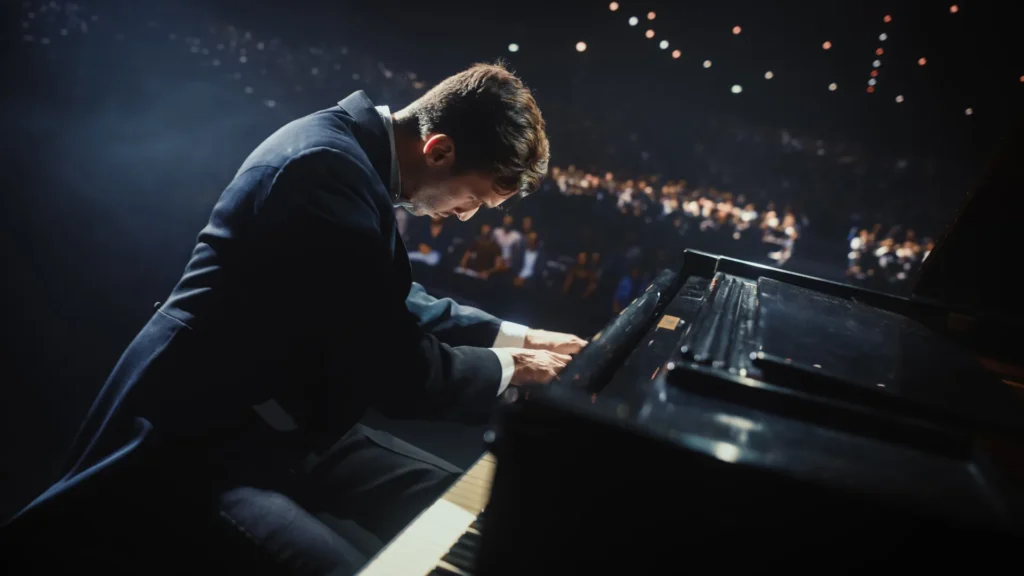
For generations, the nuanced world of piano performance has been a battleground for a persistent and passionate debate: Can a pianist’s touch truly alter the character of a piano’s sound, or is the resulting tone predominantly an inherent quality of the instrument itself once the hammer strikes the string? Skeptics, often from the scientific community, long argued that such distinctions were either subjective psychological phenomena or merely artifacts of changes in volume and timing. Musicians and pedagogues, however, staunchly maintained that the very soul of a performance lay in the individual artist’s ability to imbue notes with specific tonal colors—warmth, brilliance, darkness, or heaviness—through their unique physical interaction with the keys. Now, a groundbreaking scientific study, leveraging cutting-edge technology and rigorous methodology, has provided the clearest and most compelling evidence to date, unequivocally affirming that pianists possess the remarkable capacity to shape a piano’s timbre through touch alone.
This pivotal research, spearheaded by Dr. Shinichi Furuya of the NeuroPiano Institute and Sony Computer Science Laboratories, Inc., utilized ultra-high-speed sensing technology to meticulously unravel the intricate, often imperceptible, movements underpinning expressive piano playing. Their findings, published in the prestigious Proceedings of the National Academy of Sciences (PNAS), illuminate how the subtle, almost microscopic, motions of a pianist’s fingers and hands directly influence how listeners perceive crucial qualities such as brightness, heaviness, and clarity in musical notes. The study not only resolves a long-standing dispute but also opens new avenues for understanding the complex interplay between motor control, perception, and artistic expression.
The Enduring Mystery: A Century of Debate
The question of whether pianists can genuinely alter timbre through touch has been a subject of intense academic and artistic discussion since the early 20th century. While musicians frequently employ a rich vocabulary to describe tonal qualities—terms like "velvety," "piercing," "round," or "metallic"—many early scientists and psychoacousticians struggled to find a measurable physical basis for these descriptions that was independent of loudness (dynamics) or tempo (rhythm). Pioneering figures in acoustics, such as Hermann von Helmholtz in the 19th century, meticulously analyzed the physical properties of sound waves, demonstrating how the overtone series (harmonics) primarily determines timbre. This scientific understanding, while foundational, inadvertently fueled the skepticism.
Critics often posited that any perceived differences in timbre attributed to touch were merely psychological illusions, or that pianists were unconsciously varying other parameters, such as the velocity of the hammer strike (which affects loudness) or the precise timing of notes, leading to an impression of timbral change rather than a direct manipulation of the sound’s intrinsic quality. The challenge lay in isolating the specific motor actions of a pianist from other acoustic variables. Without the ability to precisely measure and separate these elements, the debate remained largely philosophical, with anecdotal evidence from musicians pitted against the lack of empirical scientific proof. This impasse left musicians feeling their artistic intuition was being dismissed, while scientists remained unconvinced by subjective descriptions alone. The sheer complexity of the piano mechanism, involving a delicate balance of levers, hammers, and strings, made direct observation of key and finger interaction at the necessary resolution virtually impossible with previous technologies.
Methodology Unveiled: Precision Engineering Meets Artistic Performance
The breakthrough achieved by Dr. Furuya’s team stems from their innovative methodological approach and the deployment of purpose-built, highly sensitive instrumentation. At the core of their research was a custom-designed, noncontact sensing system dubbed "HackKey." This remarkable technology was capable of recording the movements of all 88 piano keys with unprecedented precision, capturing data at an astonishing speed of 1,000 frames per second and with microscopic spatial resolution. This allowed researchers to observe and quantify the minute variations in key depression, velocity, and subsequent hammer action that previous systems could not detect.
To ensure the ecological validity and artistic relevance of their study, the researchers recruited twenty internationally acclaimed pianists. These virtuosos were tasked with a unique challenge: to play individual notes and short musical phrases while intentionally producing contrasting tonal qualities. For instance, they were instructed to play the same note sequence but aiming for a "bright" sound versus a "dark" sound, or a "light" sound versus a "heavy" sound. This experimental design was crucial, as it allowed for a direct comparison of the physical actions associated with subjectively distinct timbres, controlled for other factors like pitch and instrument.
Following the performance phase, a separate cohort of listeners participated in perceptual tests. This group included both professional pianists and individuals with no formal musical training. They were asked to identify and categorize the intended timbres (e.g., "bright" or "dark") based solely on what they heard. The results were striking: listeners consistently recognized the intended timbres, demonstrating that the differences produced by the pianists were not only perceptible but also consistently interpreted. Professional pianists, with their finely tuned auditory perception honed by years of practice and performance, exhibited even greater sensitivity to these subtle timbral distinctions, validating the musicians’ long-held belief in their ability to manipulate sound quality. The publication in PNAS, a journal renowned for its rigorous peer-review process and high impact factor, lends significant scientific weight and credibility to these findings, signaling a major advance in the fields of music cognition, motor control, and psychoacoustics.
Deciphering the "Hidden Movements": What the Data Revealed
The meticulous data analysis performed on the high-speed kinematic recordings yielded fascinating insights into the "hidden movements" behind musical expression. The researchers discovered that only a select handful of extremely precise movement features were strongly correlated with changes in perceived timbre. These critical features included tiny, almost imperceptible, variations in key acceleration, the exact timing of key release, and subtle synchronization patterns between the hands, even when playing single notes or simple chords. It wasn’t merely the speed of the hammer hitting the string, but the manner in which the key was depressed and released that proved decisive.
One of the most significant findings was the demonstration of a direct causal link: altering just a single movement feature could reliably and reproducibly change how listeners described the sound. This provided definitive evidence that touch itself plays a causal role in shaping timbre, rather than merely accompanying other musical effects like loudness or tempo. Previous studies often struggled to disentangle these variables, but the precision of the HackKey system and the controlled experimental design allowed Dr. Furuya’s team to isolate the specific motor contributions to timbre. For instance, a slightly different acceleration profile during key depression, even if resulting in the same peak hammer velocity, could lead to a perceptually "brighter" or "darker" tone.
The study further characterized these subtle gestures as components of a "shared motor skill" —a highly refined and complex motor program developed through years of advanced piano training. This implies that the artistry behind piano tone is not merely metaphorical or subjective; it is grounded in measurable physical actions that performers learn to execute with incredible precision and control. As Dr. Furuya articulated, this research effectively "helps bring a long-standing artistic intuition into the realm of science." The findings not only validate what countless pianists have intuitively understood and practiced for decades but also offer a clear, scientific framework for comprehending how skilled movement translates into profound emotional and aesthetic experiences in music. It reveals that the "magic" of a pianist’s touch is, in fact, a testament to extraordinary human motor control and sensory integration.
Beyond the Concert Hall: Far-Reaching Implications
The ramifications of this study extend far beyond the confines of concert halls and music conservatories, promising transformative impacts across a diverse array of disciplines.
Transforming Music Education
For generations, piano pedagogy has relied heavily on abstract language and metaphorical instruction. Teachers might tell students to "play warmer," "use a lighter touch," or "make the phrase sing." While effective for some, these instructions can be vague and challenging for many students to translate into concrete physical actions. The current research suggests a revolutionary shift in music education. By identifying the exact physical movements associated with specific tonal qualities, future training systems could offer unprecedented clarity. Imagine a student receiving real-time visual feedback, seeing their finger acceleration profiles or key release timings compared to a master’s, allowing them to precisely replicate the movements that produce a desired timbre. This could lead to more efficient learning, faster skill acquisition, and a deeper understanding of the physical mechanics of musical expression. Furthermore, by understanding the biomechanics of expressive touch, educators might also develop methods to help prevent performance-related injuries, a common affliction among dedicated musicians.
Advances in Neuroscience and Rehabilitation
The study’s insights into advanced motor control and its influence on perception hold significant promise for neuroscience and rehabilitation science. The findings highlight the brain’s remarkable capacity to integrate complex motor commands with sensory feedback to shape our perception of the world. This could lead to a deeper understanding of how the brain learns, refines, and executes highly skilled movements. In rehabilitation, this knowledge could be applied to develop novel therapies for individuals recovering from neurological conditions such as stroke or spinal cord injuries, where fine motor control and dexterity are compromised. Systems inspired by expressive musical performance could utilize targeted movement exercises, potentially enhanced by biofeedback, to improve motor function and coordination. The study offers a new lens through which to explore the neural pathways connecting intention, action, and perception, paving the way for more effective therapeutic interventions.
Innovation in Robotics and Human-Computer Interaction
The findings also carry profound implications for the fields of robotics and human-computer interaction. For years, robotic musicians and expressive digital instruments have struggled to replicate the nuanced, human-like qualities of live performance. This research provides a crucial roadmap, identifying the precise kinematic features that contribute to perceived timbre. Developers can now program robots and artificial intelligence systems to generate these subtle variations in key interaction, leading to far more expressive and emotionally resonant digital music. In human-computer interaction, understanding how subtle physical gestures influence perception could lead to more intuitive and responsive interfaces. Imagine control systems that recognize and respond to the nuanced "touch" of a user, not just binary inputs, creating more natural and expressive interactions with technology.
The Science of Creativity and "Dynaformics"
Beyond its direct applications, this study makes a substantial contribution to the broader scientific effort to understand creativity itself. For decades, much of the scientific research on music perception focused on easily quantifiable elements like pitch, loudness, and rhythm. Timbre, however, has remained a more elusive subject due to its intricate relationship with higher-level sensory interpretation and emotional response. By successfully identifying specific physical actions linked to timbre perception, the researchers have opened a critical door to studying how artistic expression emerges from the intricate interaction between the body, the brain, and the resulting sound.
This work is a cornerstone of an emerging interdisciplinary field sometimes referred to as "dynaformics," which aims to scientifically analyze and optimize music performance. Supporters of dynaformics believe that a deeper understanding of the biomechanics and neurophysiology of musical execution can help musicians train more efficiently, avoid injuries that often accompany years of intense practice, and even overcome physical limitations. It underscores that the profound emotional power of music is not solely derived from grand gestures or overt dynamics, but often from movements so infinitesimally small they are almost invisible, yet precise enough to evoke deep human feeling and differentiate the artistry of one performer from another.
Reactions and Future Outlook
The publication of these findings has been met with considerable enthusiasm across both the scientific and musical communities. For pianists, it offers a scientific validation of their long-held artistic convictions, providing a concrete framework for understanding the elusive quality of "touch." For scientists, it represents a significant leap forward in understanding the complex interplay between motor control, acoustics, and human perception. While Dr. Furuya’s statement encapsulates the bridging of artistic intuition and scientific rigor, one can infer a broader excitement: music educators foresee revolutionary teaching tools, neuroscientists anticipate new avenues for understanding brain function, and engineers envision a new generation of expressive technologies.
The research also lays the groundwork for future investigations. Scientists may now delve deeper into the specific neural mechanisms underlying the learning and execution of these fine motor skills, exploring brain plasticity and the development of expertise. Further studies could also investigate individual differences in pianists’ ability to control timbre, or explore how these principles apply to other instruments. The potential for interdisciplinary collaboration is immense, promising a future where the art and science of music are more deeply intertwined than ever before. The excitement surrounding these findings transcends merely solving an old musical mystery; it illuminates the profound truth that some of the deepest emotional and aesthetic impacts of music arise from physical actions so subtle they are almost imperceptible, yet powerful enough to profoundly shape human experience.