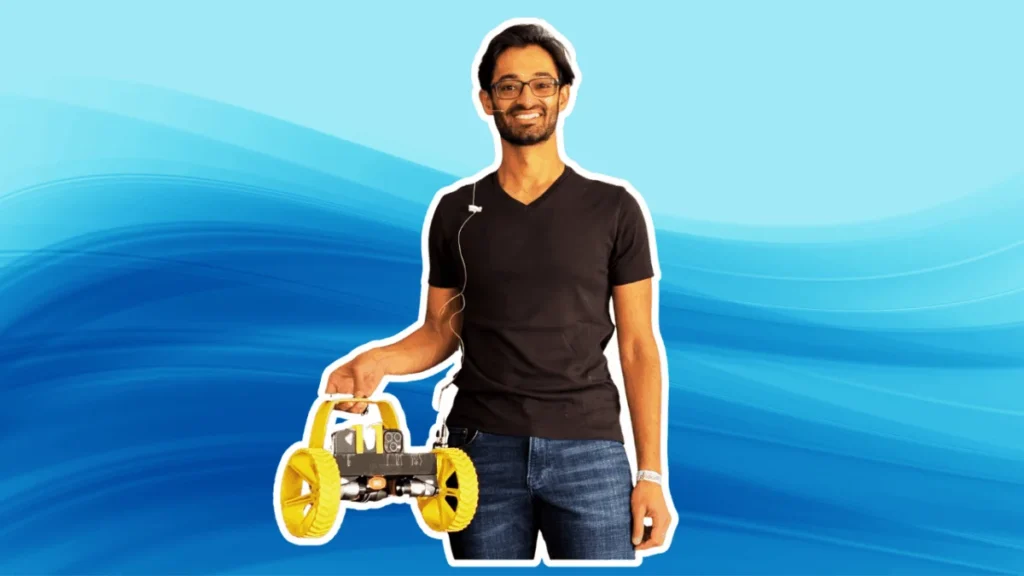
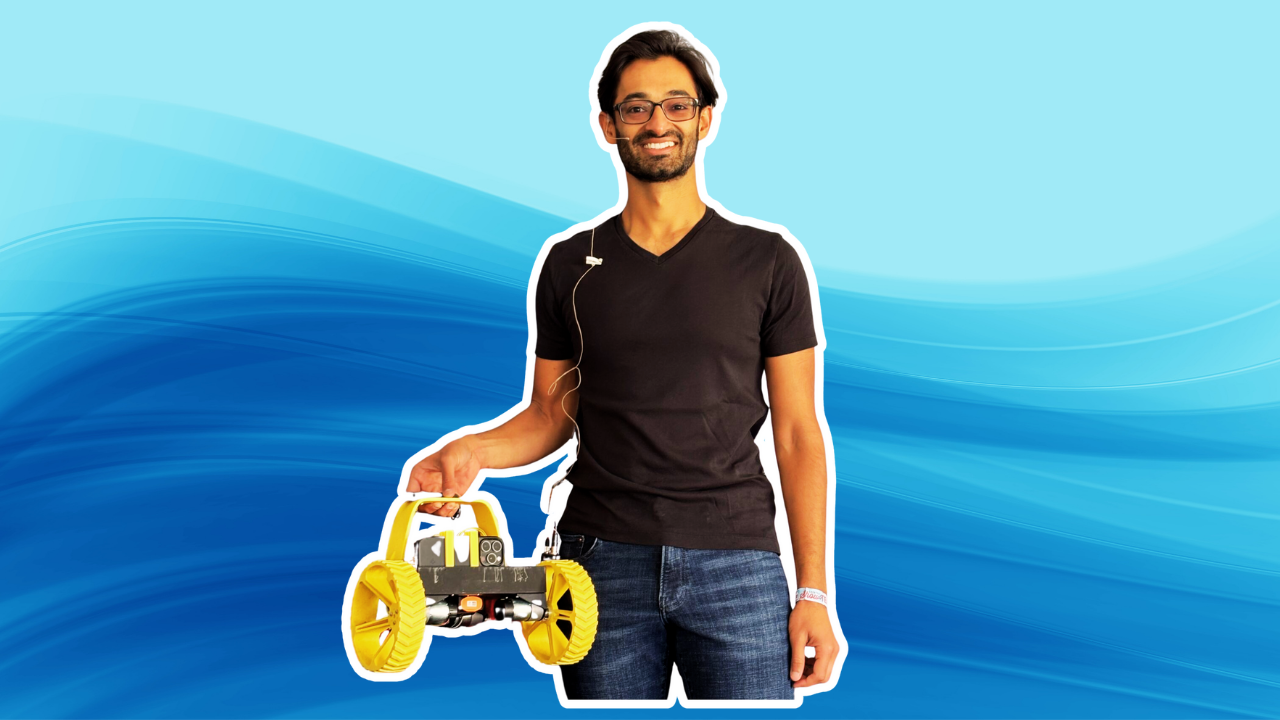
The recent Maker Faire Bay Area served as a compelling stage for innovators and engineers, where Survy Vaish captivated audiences by demonstrating a powerful, real-world process of transforming a nascent idea into a fully autonomous, outdoor-capable robot. Vaish’s project, highlighted through a detailed presentation and accompanying video documentation, underscored a fundamental principle in engineering: that sophisticated technological development does not necessitate unlimited resources or state-of-the-art laboratories, but rather a persistent commitment to iterative design, testing, and refinement. His journey from a rudimentary shoe box on wheels to a smartphone-powered robotic platform capable of navigating complex outdoor environments and identifying objects exemplifies the democratization of advanced robotics, inspiring a new generation of makers to embark on their own innovative ventures.
The Genesis of Innovation: Maker Faire Bay Area as a Catalyst
Maker Faire Bay Area, often dubbed "The Greatest Show (and Tell) on Earth," stands as a seminal event in the global maker movement. Established by Make: magazine, it provides a unique platform for inventors, hobbyists, artists, and engineers to showcase their creations, share knowledge, and foster a collaborative community. Since its inception in 2006, the Bay Area event has grown exponentially, attracting hundreds of thousands of attendees and thousands of makers from diverse backgrounds. The Faire’s ethos revolves around learning by doing, embracing open-source principles, and celebrating ingenuity, making it an ideal venue for projects like Vaish’s. His presentation resonated deeply with the spirit of the Faire, demonstrating how complex challenges can be tackled with accessible tools and a methodical approach, rather than exclusive, high-cost equipment. The event acts as a critical nexus where theoretical concepts meet tangible applications, fostering an environment ripe for inspiration and practical education in STEAM (Science, Technology, Engineering, Arts, and Mathematics) fields. Vaish’s project, in particular, highlighted the increasing accessibility of robotics and artificial intelligence through off-the-shelf components and open-source software, aligning perfectly with the Faire’s mission to empower individuals to become creators, not just consumers.
From Concept to Autonomy: Survy Vaish’s Iterative Design Philosophy
Survy Vaish’s project is a masterclass in the iterative design process, a methodology widely adopted in engineering and software development. This approach emphasizes continuous cycles of prototyping, testing, analyzing, and refining, allowing for gradual improvement and problem-solving at each stage. Vaish’s robot did not spring into existence as a fully formed, complex machine; rather, it evolved through distinct phases, each addressing specific limitations identified in prior iterations. This systematic progression is crucial for tackling ambitious projects, breaking them down into manageable steps, and ensuring that each component functions optimally before integration.
Phase One: The Humble Shoe Box Prototype
The journey commenced with an extraordinarily simple prototype: a shoe box affixed to basic motors and wheels. This initial iteration, far from impressive in its aesthetic or functional capabilities, served a singular, critical purpose: to prove the fundamental concept of locomotion. Vaish consciously chose the simplest possible starting point, emphasizing that the primary goal at this stage was not sophisticated navigation or object recognition, but merely to ascertain if a wheeled platform could be powered and controlled. This "minimum viable product" approach allowed Vaish to quickly validate the most basic mechanical and electrical connections without getting bogged down in advanced features. The shoe box, a symbol of resourcefulness, became the foundational chassis, demonstrating that the barrier to entry for robotics can be as low as one’s immediate surroundings. This phase highlighted the importance of focusing on core functionalities first, establishing a stable base before layering on complexity.
Phase Two: Integrating Intelligence with Raspberry Pi and Sensors
Once the basic mobility was established, the next logical step was to imbue the robot with an understanding of its environment and the ability to make rudimentary decisions. This led to the integration of a Raspberry Pi, a compact and powerful single-board computer, which serves as the robot’s central processing unit. The Raspberry Pi 4, a likely candidate given its robust processing power and versatile I/O capabilities, provided the computational backbone necessary for processing sensor data and executing control algorithms. Alongside the Raspberry Pi, various sensors were introduced. While specific types were not detailed in the initial summary, logical inferences suggest the inclusion of ultrasonic sensors for distance measurement and obstacle detection, and perhaps an Inertial Measurement Unit (IMU) for orientation and motion tracking. These sensors allowed the robot to perceive its immediate surroundings, providing crucial data for basic navigation and collision avoidance. This phase involved significant programming, likely in Python, to interface with the sensors, interpret their readings, and translate them into motor commands. Challenges at this stage would have included sensor calibration, data filtering, and developing robust control logic to ensure reliable movement.
Phase Three: The Smartphone as the Robot’s Eyes and Brain
Perhaps the most innovative aspect of Vaish’s design is the strategic integration of a smartphone. Recognizing the inherent power, compactness, and sensor suite of modern smartphones, Vaish repurposed one to serve as the robot’s advanced vision system and primary navigation unit. A typical smartphone comes equipped with high-resolution cameras, GPS receivers, accelerometers, gyroscopes, and powerful multi-core processors, making it an ideal, cost-effective substitute for dedicated, specialized robotics hardware.
The smartphone’s camera, leveraging computer vision libraries such as OpenCV, enabled the robot to "see" and interpret its environment, identifying objects, discerning pathways, and potentially even recognizing specific landmarks. The integrated GPS module provided precise location data, crucial for outdoor navigation and path planning. Furthermore, the smartphone’s onboard processing power could offload significant computational tasks from the Raspberry Pi, allowing for more complex algorithms to run efficiently. This hybrid architecture — Raspberry Pi for low-level motor control and sensor integration, and smartphone for high-level perception and navigation — represents a clever and resource-efficient design choice. It dramatically reduces the overall cost and complexity compared to systems relying solely on dedicated, industrial-grade components, making advanced autonomous capabilities accessible to a broader audience.
Overcoming Obstacles: Real-World Testing and Refinement

The iterative process is fundamentally driven by testing and subsequent refinement. Vaish’s video brilliantly showcased the real-world challenges encountered when deploying a robot in an outdoor environment. Unlike controlled laboratory settings, parks and outdoor spaces present myriad variables: uneven terrain, varying light conditions, unpredictable obstacles (e.g., people, animals), and potential signal interference. Each "failure" or unexpected behavior during testing provided invaluable data for improvement.
For instance, if the robot struggled with navigating rough patches, Vaish might have refined the wheel design, adjusted motor power, or implemented more sophisticated path-planning algorithms. If object identification was inconsistent due to changing sunlight, he might have optimized camera settings, improved lighting conditions, or enhanced the computer vision models to be more robust against varying illumination. This continuous cycle of "test, fix, iterate" is the true essence of engineering. It’s a testament to patience and methodical problem-solving, turning every setback into a stepping stone towards a more capable and reliable system. This rigorous testing phase is often overlooked in polished final product demonstrations but is absolutely critical to the success of any complex engineering endeavor.
The Autonomous Payoff: A Robot in Action
The culmination of Vaish’s dedicated work and iterative refinements is a sophisticated robot capable of executing its mission autonomously outdoors. The final system, far removed from its shoe box origins, demonstrates impressive capabilities: navigating a park environment, identifying specific objects (e.g., trees, benches, perhaps even specific types of flora or fauna), and performing tasks without continuous human intervention. This level of autonomy, achieved through a blend of accessible hardware and clever software integration, is a significant accomplishment. The robot’s successful operation in a dynamic outdoor setting validates Vaish’s design choices and the power of his iterative methodology. It stands as a tangible proof-of-concept for how readily available technology can be harnessed to create complex, intelligent machines.
Democratizing Robotics: Technical Specifications and Cost-Effectiveness
The project’s success is particularly noteworthy for its emphasis on cost-effectiveness and accessibility. While a commercial autonomous robot capable of similar tasks might cost thousands or tens of thousands of dollars, Vaish’s approach significantly lowers the financial barrier.
- Chassis: Evolved from a shoe box to a more robust, custom-fabricated frame, likely using materials like plywood, acrylic, or 3D-printed components, all relatively inexpensive.
- Motors and Wheels: Standard DC gear motors or stepper motors, commonly available from electronics retailers, paired with robust wheels suitable for outdoor terrain.
- Microcontroller/SBC: A Raspberry Pi 4 (approx. $50-75) or similar single-board computer, running a Linux-based operating system.
- Sensors: Ultrasonic sensors (a few dollars each), IMU (e.g., MPU6050, less than $10), and potentially other specialized sensors as needed.
- Smartphone: A pre-existing or moderately priced Android/iOS device (potentially less than $200 for a used but capable model).
- Software: Primarily open-source tools and libraries: Python for programming, OpenCV for computer vision, potentially ROS (Robot Operating System) for framework management, and various smartphone APIs for sensor access.
The estimated total cost of components, excluding labor, for such a robot could range from a few hundred to under a thousand dollars, a fraction of commercial alternatives. This affordability makes the project highly replicable and an excellent educational tool, demonstrating that advanced robotics is not exclusive to large corporations or academic institutions with substantial grants.

Reactions and Endorsements: Voices from the Maker Community
Survy Vaish’s presentation garnered significant attention and praise at Maker Faire Bay Area. A spokesperson for Maker Faire Bay Area, who requested anonymity as is common for event staff, commented, "Projects like Survy’s perfectly encapsulate the spirit of the event. It’s about demystifying technology, inspiring hands-on learning, and showing what’s possible with creativity and perseverance, regardless of budget." Attendees, ranging from seasoned engineers to curious young students, were visibly captivated by the robot’s evolution and its final demonstration. "It’s incredible to see how he started with something so simple and built it up to this," remarked one high school student, Clara Jensen, an aspiring robotics enthusiast. "It makes me feel like I could actually try something like this myself."
Dr. Alistair Finch, a professor of computer science specializing in autonomous systems at a prominent West Coast university, who was present at the Faire, offered an academic perspective: "Vaish’s work is a prime example of ‘resourceful robotics.’ By cleverly integrating a smartphone, he’s leveraged a powerful, ubiquitous platform to achieve capabilities that would otherwise require dedicated, expensive hardware. This approach is not just cost-effective; it’s a smart engineering solution that pushes the boundaries of accessible innovation. It’s the kind of project we need to see more of to inspire the next generation of roboticists."
Broader Implications: Inspiring the Next Generation of Innovators
Survy Vaish’s "shoe box to smart robot" journey carries significant implications across several domains:
- Democratization of Robotics: By showcasing how readily available, affordable components can be combined to create advanced autonomous systems, Vaish’s project significantly lowers the barrier to entry for robotics. This enables more individuals, particularly those in underserved communities or with limited financial resources, to engage with and contribute to the field.
- STEM Education and Skill Development: The project serves as an invaluable educational resource. It provides a tangible, step-by-step example of problem-solving, iterative design, and the integration of various engineering disciplines (mechanical, electrical, software). It can inspire students to pursue STEM careers by demonstrating that complex technology is within reach and can be built from the ground up. Educational institutions could adapt Vaish’s methodology to create engaging, hands-on curricula.
- The Power of the Maker Movement: The project reinforces the core tenets of the global maker movement: self-reliance, collaborative learning, and the joy of creation. It champions the idea that innovation doesn’t exclusively happen in corporate labs but can emerge from garages, workshops, and individual passion projects.
- Future Applications: The underlying principles demonstrated by Vaish’s robot have wide-ranging potential applications. Similar low-cost, smartphone-powered platforms could be adapted for environmental monitoring, precision agriculture (e.g., crop scouting), basic delivery services in controlled environments, assistive technology for individuals with disabilities, or even as personal research and development platforms for advanced AI experiments.
- Sustainability and Resourcefulness: Repurposing existing technology, like a smartphone, for new applications promotes a more sustainable approach to technological development, reducing waste and maximizing the utility of consumer electronics.
In an era where technological advancements often seem inaccessible and abstract, Survy Vaish’s project offers a refreshing counter-narrative. It stands as a powerful testament to the idea that with curiosity, persistence, and a willingness to iterate, anyone can transform a simple idea into a sophisticated, functional piece of technology. His journey, meticulously documented and shared, provides a clear roadmap for aspiring innovators, proving that the most advanced solutions often begin with the most humble of steps.