For more than sixty years, one of the most tantalizing mysteries in the field of particle physics has centered on a tiny, short-lived subatomic particle known as the muon. Theoretical predictions and experimental measurements of the muon’s magnetic behavior consistently failed to align, leading many in the scientific community to believe they were on the brink of discovering a "fifth force" of nature or previously unknown particles that exist beyond the current boundaries of human knowledge. However, a groundbreaking study led by an international team of researchers, including physicists from Pennsylvania State University, suggests that this long-sought "new physics" may not be necessary after all. According to their findings, published in the journal Nature, the perceived discrepancy was not a sign of a broken universe, but rather a reflection of the immense difficulty in calculating the effects of the strong nuclear force. By utilizing advanced supercomputing techniques and a refined mathematical approach, the team has brought theoretical predictions into alignment with experimental reality, reaffirming the Standard Model of particle physics to an unprecedented degree of precision.
The Nature of the Muon and the g-2 Anomaly
To understand the significance of this resolution, one must first understand the subject of the study: the muon. Often described as the "heavy cousin" of the electron, the muon carries the same negative electrical charge and spin but possesses approximately 200 times more mass. Because of this greater mass, muons are uniquely sensitive to the presence of other particles that pop in and out of existence in the quantum vacuum.
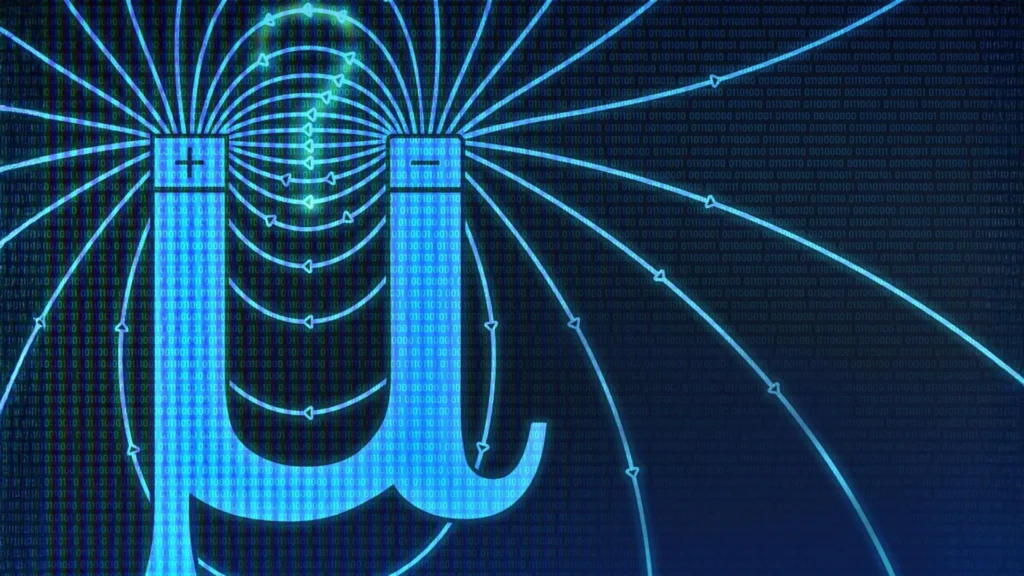
One of the most critical properties of the muon is its magnetic moment, a measure of how much the particle behaves like a tiny bar magnet when placed in an external magnetic field. In the simplest version of quantum mechanics, the "g-factor" of a muon is predicted to be exactly 2. However, the real world is far more complex. As the muon travels through space, it is constantly interacting with a "sea" of virtual particles—photons, quarks, and other bosons—that emerge from the vacuum for fleeting moments. These interactions cause a slight deviation in the g-factor, a phenomenon known as the "anomalous magnetic moment," or g-2.
For decades, the challenge for physicists has been to calculate this g-2 value with enough precision to match the accuracy of experimental measurements. If the calculated value (the theory) and the measured value (the experiment) do not match, it implies that the theory is missing something—perhaps a new force or a particle that has never been detected in a particle accelerator.
A Chronology of the Muon Mystery
The quest to measure and calculate the muon’s g-2 has been one of the longest-running sagas in modern science. The journey began in the late 1950s and early 1960s at CERN, the European Organization for Nuclear Research. Early experiments provided the first glimpses of the muon’s magnetic behavior, but the precision was not yet high enough to challenge the Standard Model.
In the late 1990s and early 2000s, the E821 experiment at Brookhaven National Laboratory on Long Island took the investigation to a new level. In 2001, Brookhaven researchers announced a result that deviated significantly from the theoretical predictions of the time. This "Brookhaven anomaly" became a cornerstone of modern particle physics, suggesting a discrepancy of about 3.7 standard deviations—a statistical hint that something was amiss.
The mystery deepened in 2021 when the Muon g-2 experiment at the Fermi National Accelerator Laboratory (Fermilab) in Illinois released its first results. Using the same giant magnetic ring that had been used at Brookhaven—transported over 3,200 miles by land and sea—Fermilab confirmed the earlier findings with even greater precision. The combined data from Brookhaven and Fermilab pushed the discrepancy to 4.2 standard deviations, tantalizingly close to the "5-sigma" threshold required to claim a formal scientific discovery. At that moment, the physics world was electric with the possibility of a "fifth force."
The Computational Hurdle: The Strong Force
The primary obstacle in reconciling theory with experiment has always been the strong nuclear force, governed by the theory of Quantum Chromodynamics (QCD). While the effects of electromagnetism and the weak nuclear force on the muon are relatively easy to calculate, the strong force is notoriously difficult.
The strong force is what binds quarks together to form protons and neutrons. Unlike gravity or electromagnetism, which get weaker as objects move apart, the strong force behaves like a rubber band: it gets stronger the further you pull the particles. At the low energies relevant to the muon’s magnetic moment, the math becomes "non-perturbative," meaning traditional algebraic methods fail.
Historically, physicists relied on a method called the "R-ratio" approach to estimate the strong force’s contribution. This method used experimental data from electron-positron collisions to infer how the strong force would affect the muon. While effective for years, this approach relied on the accuracy of other experiments, introducing potential external errors into the muon g-2 calculation.
The Breakthrough: Lattice QCD and Supercomputing
To bypass the limitations of the R-ratio method, Zoltan Fodor, a distinguished professor of physics at Penn State, and his colleagues turned to a technique known as Lattice Quantum Chromodynamics (Lattice QCD). Instead of relying on other experimental data, Lattice QCD attempts to solve the fundamental equations of the Standard Model from scratch.
This method involves simulating a four-dimensional grid—or lattice—of space and time. By placing the quarks and gluons on the points of this grid and using massive supercomputers to solve their interactions, researchers can calculate the strong force’s contribution to the muon g-2 directly.
"The old methodology involved collecting thousands of experimental results and reinterpreting them to get the single number," Fodor explained. "Our approach was completely different. We divided space-time into very small cells, a lattice, then we solved the equations of the Standard Model on that."
The scale of this task was gargantuan. The team, known as the BMW collaboration (Budapest-Marseille-Wuppertal), utilized several of the world’s most powerful supercomputers, including those at the Forschungszentrum Jülich in Germany. Over a decade of refinement, they reduced the uncertainties in their lattice calculations by improving the "mesh" of their grid and developing more efficient algorithms to handle the noise inherent in quantum simulations.
Results and Statistical Precision
The final calculation produced by Fodor’s team is staggering in its precision. The researchers were able to confirm the Standard Model’s prediction of the muon’s behavior to 11 decimal places. When the new, more accurate calculation of the strong force’s contribution was added to the other components of the Standard Model, the "discrepancy" that had fueled decades of speculation virtually vanished.
According to the study, the theoretical prediction and the experimental measurements from Fermilab now agree within less than half a standard deviation (0.5 sigma). In the world of particle physics, where a 5-sigma difference is needed to declare a discovery, a 0.5-sigma difference is considered a perfect match.
This result suggests that the "fifth force" many hoped for was actually a "ghost" created by the limitations of previous mathematical techniques. The Standard Model, which describes how the electromagnetic, weak, and strong nuclear forces interact with the fundamental particles of the universe, has once again proven to be incredibly robust.
Scientific Reaction and the Human Element
The reaction within the physics community has been a mixture of awe and a certain level of professional "disappointment." For many theorists, the muon g-2 anomaly was the brightest hope for moving beyond the Standard Model, which, despite its success, does not explain dark matter, dark energy, or gravity.
Zoltan Fodor himself expressed a bittersweet sentiment regarding the discovery. "People ask me how it feels to make this discovery and, to be honest, I feel somewhat sad," he said. "When we started to calculate this quantity, we thought we were going to have a good and trustworthy calculation for a new fifth force. Instead, we found there is no fifth force."
Despite the lack of a "new force," the achievement is being hailed as a triumph of computational physics. It provides what Fodor describes as the "best proof of quantum theory," the underlying framework of the Standard Model. It demonstrates that when our computational tools are sharp enough, the Standard Model is capable of describing nature at an incredibly deep and accurate level.
Broader Implications and the Future of Physics
While this specific mystery appears solved, the search for "new physics" is far from over. The Standard Model remains an incomplete theory because it cannot account for the vast majority of the universe’s mass (dark matter) or the force that is accelerating the universe’s expansion (dark energy).
However, the resolution of the muon g-2 puzzle serves as a cautionary tale for the scientific community. It highlights the importance of rigorous theoretical verification before concluding that known laws of physics have been broken. It also elevates Lattice QCD as the gold standard for future calculations involving the strong force.
The data produced by this study will likely lead to a re-evaluation of other particle physics measurements. If the strong force’s contribution was slightly different than previously thought, it may affect how scientists interpret data from the Large Hadron Collider (LHC) or future experiments involving B-mesons and other heavy particles.
Furthermore, the success of the hybrid strategy used by the Penn State-led team—combining lattice calculations for short distances with reliable experimental data for larger distances—sets a new blueprint for precision physics. This approach effectively minimized uncertainty and allowed for a level of accuracy previously thought unattainable.
Conclusion
The resolution of the muon g-2 mystery marks the end of an era in particle physics. For decades, the muon was the "problem child" of the Standard Model, a particle that refused to behave according to the rules. Through the persistence of international research teams and the power of modern supercomputing, it has been brought back into the fold.
While the "fifth force" may have slipped through the fingers of physicists this time, the journey has yielded a deeper understanding of the quantum world. The Standard Model has survived its most rigorous test to date, standing firm as the most successful theory in scientific history. As researchers look toward the next frontier, they do so with a more precise set of tools and a renewed respect for the intricate, often hidden complexities of the forces that hold our universe together.