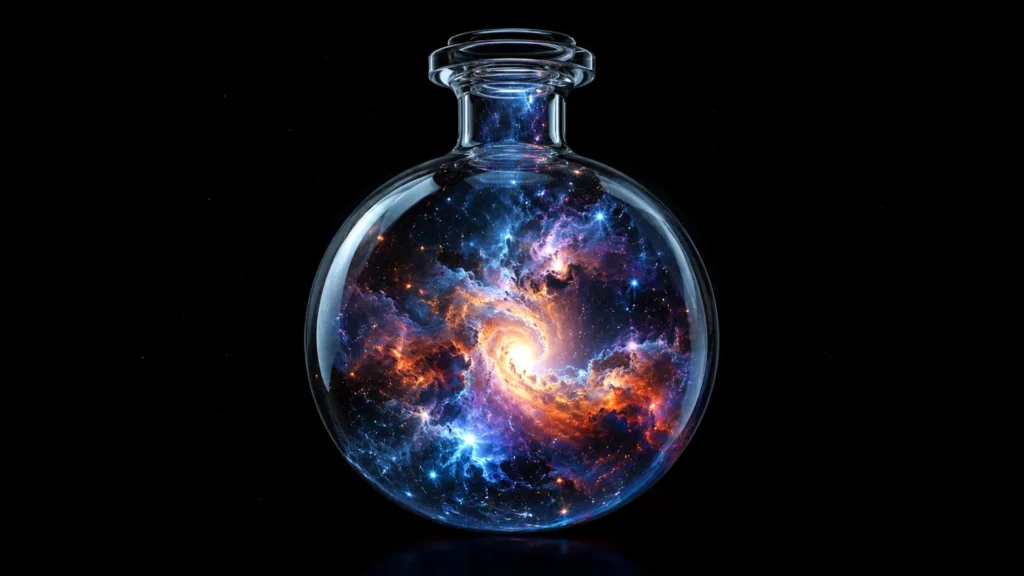
The fundamental mysteries of how life’s chemical precursors emerged in the cold, vast reaches of space have been brought into sharper focus by a breakthrough experiment conducted at the University of Sydney. Linda Losurdo, a PhD candidate specializing in materials and plasma physics within the School of Physics, has successfully synthesized "cosmic dust" from scratch, effectively recreating a microscopic analog of the interstellar medium inside a laboratory vacuum chamber. By simulating the high-energy environments found near dying stars and supernova remnants, the research provides a tangible link between the chaotic physics of the cosmos and the organic chemistry that eventually took root on Earth.
The study, recently published in The Astrophysical Journal of the American Astronomical Society, marks a significant shift in how astrophysicists study the history of the solar system. Rather than waiting for rare celestial events or the arrival of meteorites, researchers can now "reverse engineer" the conditions of the early universe to observe the formation of complex molecules in real-time. This laboratory-based approach allows for a controlled examination of the chemical pathways that lead to the creation of carbon-rich materials, which are believed to be the foundational building blocks of biological life.
The Synthesis of Interstellar Matter
To replicate the extreme conditions of deep space, Losurdo and her supervisor, Professor David McKenzie, utilized a specialized laboratory setup designed to mimic the near-vacuum of the interstellar medium. The process began by using a high-performance vacuum pump to evacuate all air from glass tubes, reaching a state of near-emptiness. Into this void, the researchers introduced a precise mixture of gases: nitrogen, carbon dioxide, and acetylene.
The choice of these specific gases was not accidental. Acetylene is a common precursor in the formation of soot-like particles in space, while nitrogen and carbon dioxide provide the essential atoms needed to form "CHON" molecules—complex combinations of carbon, hydrogen, oxygen, and nitrogen. These four elements are the primary constituents of organic matter and are found in everything from DNA to proteins.
Once the gases were stabilized, the team applied a potent electrical potential of approximately 10,000 volts. This massive surge of energy transformed the gas mixture into a glow discharge plasma. In this state, molecules are torn apart by intense electrical forces, creating a soup of ions and electrons. As these highly reactive components collided and cooled, they began to bond in new, increasingly complex configurations. Over the course of approximately one hour, a thin, sparkling layer of dust began to settle onto silicon chips placed within the tubes. This material, produced under terrestrial conditions, bore a striking resemblance to the carbonaceous dust that permeates the galaxy.
Decoding the Infrared Fingerprint
The success of the experiment was confirmed through the use of infrared spectroscopy. In the vacuum of space, astronomers cannot physically touch the dust clouds they observe. Instead, they rely on the light emitted or absorbed by these clouds. Every chemical bond has a unique vibration that interacts with specific wavelengths of infrared light, creating a "molecular fingerprint."
When Losurdo analyzed her laboratory-grown dust, she found that its infrared signature was a near-perfect match for the signals captured by telescopes observing star-forming regions and the debris of ancient supernovae. This correlation proves that the plasma-based reactions in the lab accurately reflect the chemical processes occurring in space.
"We no longer have to wait for an asteroid or comet to come to Earth to understand their histories," Ms. Losurdo stated. "You can build analogue environments in the laboratory and reverse engineer their structure using the infrared fingerprints. This can give us huge insight into how ‘carbonaceous cosmic dust’ can form in the plasma puffed out by giant, old stars or in cosmic nurseries where stars are being born."
A Timeline of Organic Delivery
The implications of this research extend back billions of years to the formation of our own solar system. Current scientific consensus suggests that Earth formed approximately 4.54 billion years ago as a molten, inhospitable sphere. It was during the period between 4.56 billion and 3.5 billion years ago—a timeframe that includes the "Late Heavy Bombardment"—that Earth was repeatedly struck by comets, meteorites, and interplanetary dust particles.
These celestial visitors acted as delivery vehicles, transporting vast quantities of organic material to the young planet’s surface. While some scientists argue that life’s building blocks formed in Earth’s early oceans or atmosphere, Losurdo’s research supports the "exogenous delivery" hypothesis. This theory posits that the complex CHON molecules required for life were synthesized in the high-energy envelopes of stars long before the Earth even existed.
By recreating these dust particles, Losurdo is helping to map the specific chemical pathways that allowed simple gases to evolve into the complex organic structures found in meteorites today. Understanding these pathways is essential for determining whether the ingredients for life are common throughout the universe or the result of a rare set of circumstances.
Supporting Data and Technical Analysis
The laboratory simulation highlights the role of plasma as a catalyst for chemical complexity. In space, molecules are constantly bombarded by cosmic rays and ultraviolet radiation. The 10,000-volt glow discharge used in the Sydney experiment serves as a proxy for these energetic inputs.
Key findings from the study include:
- Molecular Complexity: The dust produced contained not just simple chains, but complex covalent bonds between carbon and hydrogen, characteristic of the material found in carbonaceous chondrite meteorites.
- Structural Mimicry: The physical morphology of the dust—often appearing as sparkling, amorphous fragments—matches the "fluffy" aggregate structures observed in interstellar dust grains.
- Thermal Stability: The synthesized material demonstrated a resilience to high temperatures, explaining how such dust could survive the perilous journey through a solar system’s formation and atmospheric entry.
Professor David McKenzie emphasized that this terrestrial "cosmic dust" allows for measurements that are impossible to conduct via remote sensing. "By making cosmic dust in the lab, we can explore the intensity of ion impacts and temperatures involved when dust forms in space," he noted. "Its chemical signature holds a record of its journey, and experiments like this help us learn how to read that record."
Official Responses and Academic Recognition
The scientific community has reacted with significant interest to the Sydney findings. Linda Losurdo’s work was recently recognized at the international Annual Meeting of the Meteoritical Society, where she received the award for best presentation. This accolade underscores the importance of laboratory astrophysics in bridging the gap between theoretical physics and tangible planetary science.
The research was supported by the Australian Research Council and utilized the resources of the University of Sydney node of Microscopy Australia. These institutions have highlighted the study as a prime example of how interdisciplinary research—combining plasma physics with astrobiology—can solve long-standing questions about our cosmic origins.
Broader Impact: A Library for the Stars
One of the most ambitious goals following this study is the creation of a comprehensive "fingerprint library." By varying the gas mixtures and energy levels in the laboratory, the team plans to produce a wide array of cosmic dust analogs. Each variant will have its infrared signature documented in a database.
This library will serve as a vital tool for astronomers using next-generation instruments like the James Webb Space Telescope (JWST). When the JWST detects a mysterious infrared signal from a distant nebula, astronomers can compare it against the Sydney database to identify the exact chemical composition and environmental conditions of that region.
Furthermore, this research has significant implications for the search for life on other planets. If we can identify the specific conditions under which life-essential molecules form, we can better target our search for habitable exoplanets. The discovery that these molecules can form readily in the plasma of old stars suggests that the "seeds" of life may be much more prevalent in the galaxy than previously imagined.
Conclusion
The work of Linda Losurdo and the University of Sydney team represents a milestone in our quest to understand the universe. By "bottling" the cosmos, they have demonstrated that the complex chemistry of life is not a localized miracle, but a predictable outcome of high-energy physics. As the team continues to refine their database of cosmic fingerprints, they are providing the keys to unlock the history written in the stars, tracing the journey of a few simple atoms of carbon and nitrogen from the heart of a supernova to the very cells that make up life on Earth.