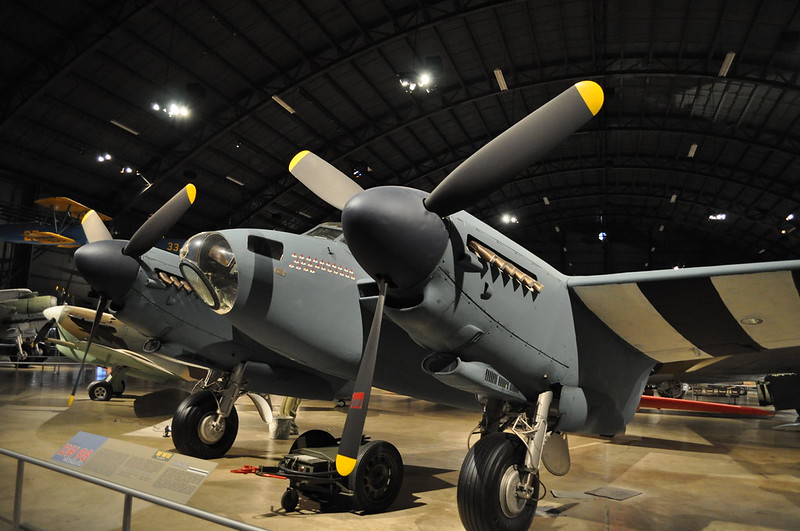
In the annals of aviation history, few aircraft command the same reverence and intrigue as the De Havilland Mosquito. Often dubbed the "Wooden Wonder," this remarkable aircraft, conceived and brought to fruition by the visionary minds at De Havilland Aircraft Company, defied conventional wisdom of its era. While World War II aircraft typically relied on robust aluminum skins and steel frameworks, the Mosquito embraced an entirely different philosophy, leveraging advanced woodworking techniques and a pioneering monocoque design to achieve unprecedented speed, agility, and versatility. This article delves into the revolutionary construction, strategic impact, and lasting legacy of the De Havilland Mosquito, exploring how its innovative approach to aeronautical engineering reshaped the course of aerial warfare and laid groundwork for future aircraft development.
A Radical Departure from Conventional Design
The prevailing design philosophy for combat aircraft during World War II was centered on heavily armored, metal-clad machines. Bombers, in particular, were envisioned as "flying fortresses," designed to withstand immense punishment. In stark contrast, the De Havilland Mosquito was an audacious departure from this norm. Its primary construction material was not aluminum, but rather a sophisticated composite of glued hardwoods. Spruce, ash, fir, and birch were meticulously shaped, bent, or machined into precise forms, then bonded and screwed together to create a remarkably strong yet lightweight airframe. Plywood formed the backbone of many structural components and leading edges, with wood also utilized for reinforcement.
The fuselage itself was a testament to ingenuity. It was constructed from two molded halves, each employing a sandwich structure of balsa wood, plywood, and more balsa. This composite wood structure was molded over mahogany forms and then dried, achieving a remarkably smooth and aerodynamic exterior. This construction method allowed for internal components, such as wiring harnesses, to be pre-installed before the two halves were joined, significantly streamlining the assembly process and reducing production time. The entire aircraft was then covered with a finely woven cloth, known as Mandapollam, and coated with five layers of aircraft dope – a fast-drying lacquer. While aircraft dope had been used on earlier aircraft like the Wright Flyer, its application on the Mosquito was a critical element of its aerodynamic integrity. It is worth noting that aircraft dope, in various formulations, has also been linked to historical incidents, such as the tragic Hindenburg disaster, underscoring the careful material science involved in its application.
The Monocoque Revolution: A "Flying Composite Candle"
The Mosquito’s construction was so unconventional that it was famously described as a "flying composite candle." This vivid analogy, while perhaps unsettling at first glance, accurately captures the aircraft’s inherent lightness, smoothness, and aerodynamic purity. The key to this revolutionary design was its pioneering monocoque construction. In a monocoque structure, the aircraft’s skin carries the primary load, eliminating the need for extensive internal reinforcing framework. This approach offered a cascade of advantages:
- Reduced Weight: By eliminating internal bracing, significant weight savings were achieved, directly translating to higher speeds and greater maneuverability.
- Increased Efficiency: Fewer parts and less material meant a more efficient manufacturing process, crucial during wartime when production capacity was paramount.
- Radical Design Freedom: The monocoque allowed for more fluid and aerodynamically optimized shapes, pushing the boundaries of aircraft design.
- Enhanced Performance: The combination of lightweight construction and superior aerodynamics resulted in an aircraft that could outpace and outmaneuver virtually any contemporary opponent.
The analogy of a parking garage without columns vividly illustrates the impact of this design philosophy. Imagine a structure that previously required internal supports but could now be built with a strong, self-supporting shell. This would allow for vastly more open interior space, enabling more efficient use of the area, potentially reducing construction costs, and creating entirely new architectural possibilities. Similarly, the Mosquito’s monocoque design freed it from the constraints of traditional airframes, allowing for a sleeker, faster, and more adaptable platform.
The Visionary Team Behind the Wooden Wonder
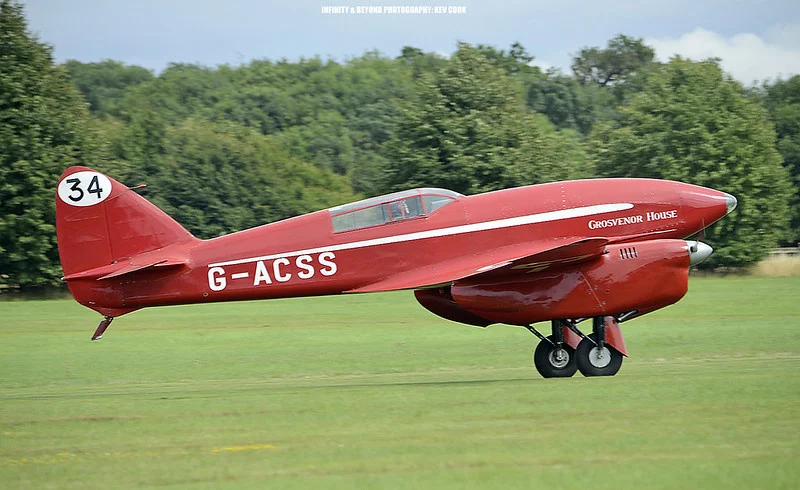
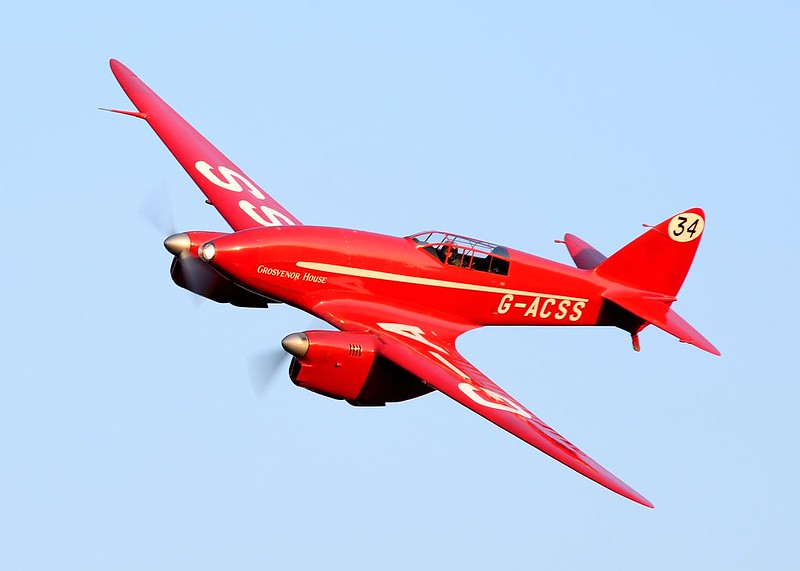
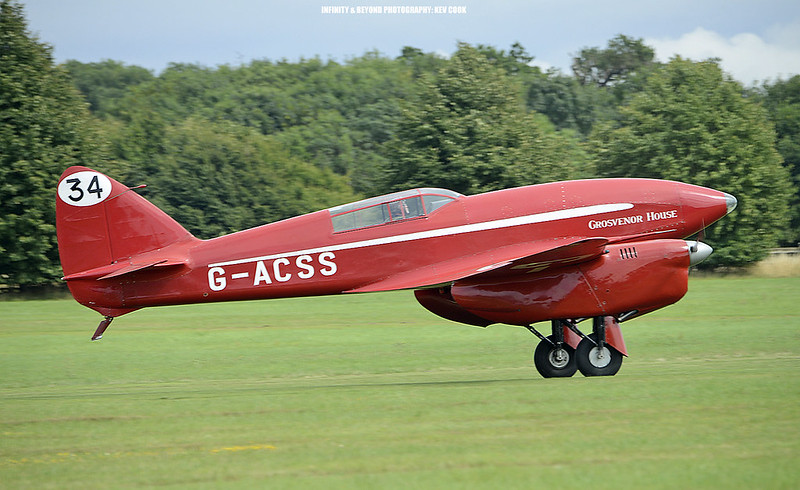
While the De Havilland Mosquito is often associated with key figures like Sir Geoffrey de Havilland and his son, Geoffrey de Havilland Jr., the engineering brilliance behind its construction owes a significant debt to individuals like Arthur E. Hagg. Hagg, the lead draughtsman on the Mosquito project, had a distinguished track record, having also contributed to the design of pioneering aircraft such as the Moth, Albatross, and the iconic DH.88 Comet Racer. His expertise in aerodynamic design and structural integrity was instrumental in translating the ambitious concept of a wooden combat aircraft into a tangible reality.
It is important to acknowledge that groundbreaking inventions rarely stem from the efforts of a single genius. The Mosquito’s development was a complex, collaborative undertaking that demanded the expertise of numerous talented engineers and technicians. Figures such as Ronald Eric Bishop, W.A. Tamblin, R.E. Clarkson, and C.G. Wilkins played crucial roles in its conception and realization. This project exemplifies how innovation often arises from the synergistic collaboration of many individuals, where "sparks flying" in concert, rather than a solitary flash of inspiration, drive progress.
Overcoming Skepticism: The Role of Advanced Adhesives and Composites
One of the primary hurdles in gaining acceptance for the Mosquito was the ingrained perception that wood was a material suited only for World War I-era aircraft. The idea of a predominantly wooden aircraft in an age of increasingly sophisticated metal construction was met with considerable skepticism. However, the De Havilland team understood that the Mosquito was not merely a wooden aircraft; it was a composite structure that utilized advanced materials and bonding techniques.
Central to its success was the use of Aerolite glue, a synthetic urea-formaldehyde adhesive. While early glues used in woodworking, such as casein (milk-based), were insufficient for the demanding conditions of aviation, especially in tropical climates, Aerolite provided a robust and reliable bond. Beetle cement, another urea-formaldehyde resin, was also explored, but Aerolite proved superior. This advanced adhesive, combined with the layered wood construction, created a remarkably strong and resilient airframe. The strategic thinking behind the Mosquito was that its speed and maneuverability would serve as its primary defense, allowing it to outrun threats rather than relying on heavy armor. This philosophy, encapsulated in a lightweight monocoque composite design, was a radical departure from the "flying tank" mentality prevalent at the time and was initially met with considerable resistance.
Furthermore, the development of the Mosquito was deeply rooted in De Havilland’s long-standing work on composite structures. Pioneering research into composite materials was being conducted by figures like Dr. Norman de Bruyne, a Chilean aerospace engineer, and materials scientist J.E. Gordon. De Bruyne, through his firm Aero, had been instrumental in developing early composites for De Havilland, including phenol-formaldehyde resins for propellers. He later developed the Redux resin, widely used in aviation and beyond, and the popular Araldite glue. Gordon, whose lifelong study of composites made him a pioneer in biomechanics and materials science, was crucial in making these materials practical for aircraft construction.
Their work extended to testing a full-scale Supermarine Spitfire constructed from a flax-soaked phenolic composite, inspired by the need to assess the UK’s ability to build aircraft if cut off from aluminum supplies. This research into composite materials, including the use of phenolic-soaked flax fiber, directly informed the development of the Mosquito and its advanced bonding techniques. The Aerolite Spitfire initiative, though a separate endeavor, highlights the broader exploration of composite alternatives to metal during this critical period.
A Desperate Gamble in a Time of Crisis
The approval of the Mosquito in July 1940 came at a precarious moment for Britain. France had fallen, the Dunkirk evacuation had just concluded with immense losses, and Britain stood alone against a formidable Axis power. The nation faced the daunting prospect of the Battle of Britain and the relentless threat of submarine warfare. In this environment, the decision to green-light a radical new aircraft design was, in many respects, a desperate gamble.
The prevailing sentiment among some was to negotiate a separate peace with Germany. Britain’s survival hung precariously in the balance, with devastating losses in personnel and materiel. The Royal Air Force (RAF) was under immense pressure, facing high attrition rates of aircraft and pilots. Monthly losses could reach hundreds of planes and pilots, with training programs shortened to the point where new pilots had only a week of operational life expectancy. The prospect of being cut off from essential metal supplies further underscored the urgent need for alternative manufacturing solutions.
Air Chief Marshal Sir Wilfrid Freeman’s endorsement of the Mosquito was a critical turning point. His belief in the aircraft’s potential, coupled with the engineering prowess of De Havilland and his team, provided the necessary impetus. However, it is undeniable that sheer desperation also played a role. In a scenario where metal resources could become scarce, the Mosquito represented a vital alternative, akin to a "flying Sten gun" – a reliable weapon that could be produced even under the most challenging circumstances.
Operational Success and Multifaceted Roles
Despite the initial skepticism, the De Havilland Mosquito proved to be an outstanding success. Its speed and high-altitude capabilities allowed it to operate with remarkable impunity. In air-to-air combat, it achieved an impressive ratio of victories to losses, accounting for approximately 70 air-to-air losses against over 500 victories. Its low loss rate on bombing runs further underscored its effectiveness.
The Mosquito’s versatility allowed it to excel in a wide array of roles:
- Bomber: It could deliver precision bombing raids, targeting specific objectives with remarkable accuracy, far beyond the "bombing a postal code" approach of earlier bombers.
- Fighter: Its speed and agility made it a formidable interceptor and escort fighter.
- Pathfinder: It led bomber streams, marking targets for subsequent waves of aircraft.
- Night Fighter: Specialized variants were developed to combat enemy bombers in darkness.
- Photo Reconnaissance: Its speed and ability to fly at high altitudes made it ideal for gathering vital intelligence.
- Anti-Submarine Patrol: It contributed to the vital effort of hunting enemy submarines.
- VIP Transport: Its speed and discreet capabilities were utilized for sensitive missions, such as the evacuation of physicist Niels Bohr.
The Mosquito’s two-person crew requirement was another significant advantage. Compared to larger bombers like the Avro Lancaster or B-17 Flying Fortress, which required crews of seven to ten, the Mosquito’s smaller crew reduced training demands, operational costs, and the potential for casualties. This was a crucial consideration during a period of acute manpower shortages.
A Legacy of Innovation and the Dawn of Multirole Aircraft
The success of the De Havilland Mosquito transcended its wartime contributions. It fundamentally challenged existing paradigms in aircraft design and paved the way for the concept of the multirole fighter. The idea that a single aircraft, through its inherent design excellence, could effectively fulfill multiple operational roles was a revolutionary concept at the time. This foresight foreshadowed the development of modern swing-role and multirole fighters, where adaptability and versatility are paramount.
While iconic aircraft like the Spitfire and Hurricane rightfully receive accolades for their pivotal roles in defending Britain, the Mosquito’s contributions were equally significant, albeit often understated. It pioneered new operational doctrines and demonstrated the power of advanced materials and intelligent design. The legacy of the Wooden Wonder is not just in its impressive combat record, but in its enduring influence on the evolution of aeronautical engineering, a testament to human ingenuity and the courage to challenge convention. The De Havilland Mosquito stands as a powerful reminder that sometimes, the most revolutionary advancements emerge from the most unexpected materials and the boldest of visions.