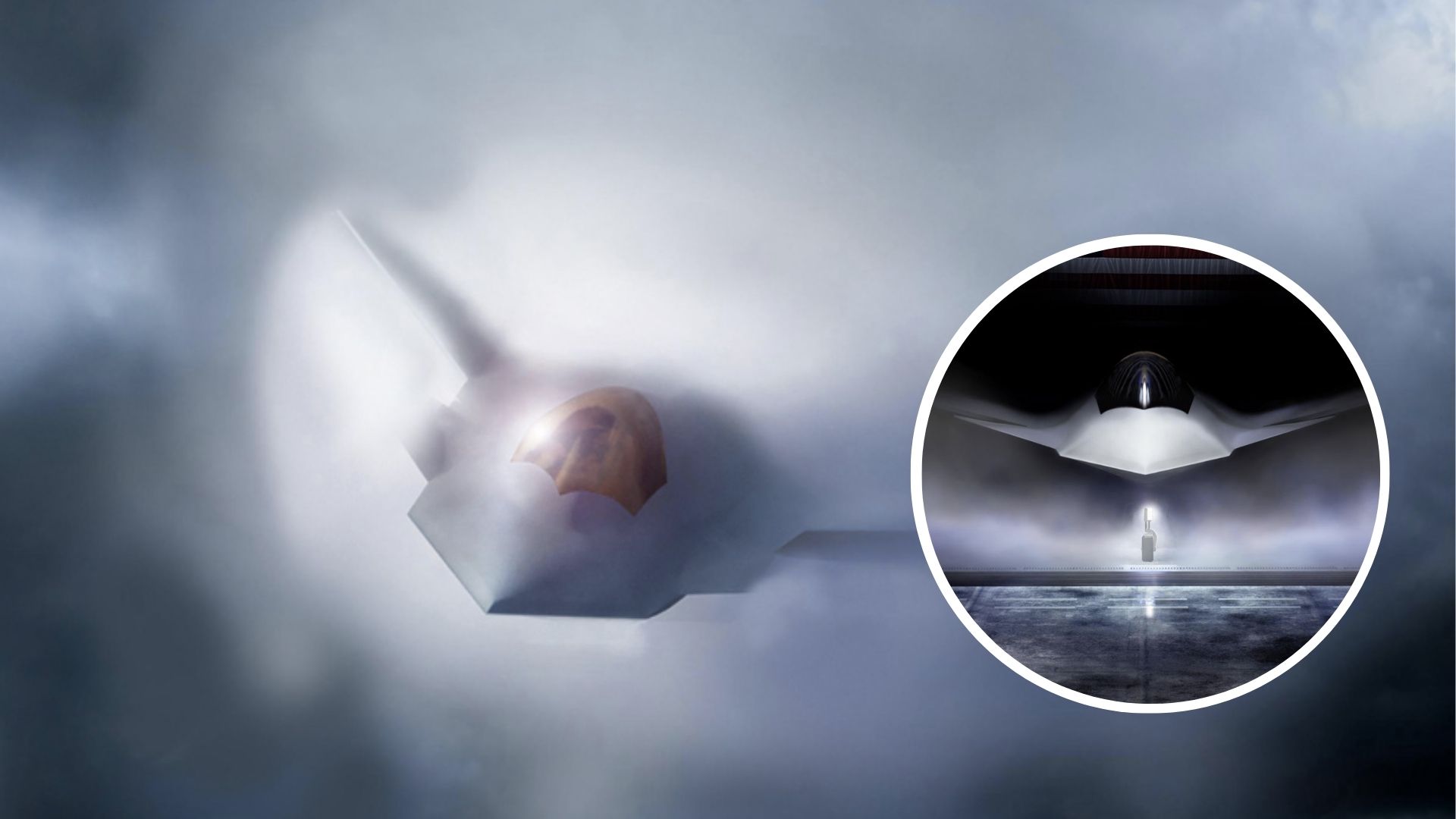
The United States Air Force’s ambitious F-47 fighter, poised to become the cornerstone of its Next Generation Air Dominance (NGAD) program, represents a monumental leap in military aviation, integrating cutting-edge stealth, advanced sensor arrays, artificial intelligence, and extended operational reach. However, a pivotal question continues to loom over this revolutionary platform: will its designated, most advanced propulsion system be fully developed and ready for integration when the F-47 itself enters service, or will initial batches be powered by an interim solution? This dilemma underscores the intricate balance between technological innovation and the exigencies of an aggressive production timeline in modern defense acquisition.
Developing a state-of-the-art combat aircraft is an endeavor characterized by the simultaneous maturation of numerous complex technologies. While the airframe, sophisticated avionics, mission-critical software, and integrated mission systems may progress toward production readiness on an aggressive schedule, propulsion systems frequently demand more extensive and rigorous testing and refinement before they are deemed fully mature and operationally viable. This inherent disparity in development cycles raises the distinct possibility that the earliest production models of the F-47 could initially operate with an existing or upgraded derivative engine, serving as a placeholder before a seamless transition to the advanced propulsion system specifically conceived for the program.
The Vision of Next Generation Air Dominance (NGAD)
The NGAD program is not merely about a single aircraft; it represents a holistic approach to ensuring air superiority in highly contested future environments. Conceived as a "system of systems," NGAD aims to integrate manned platforms like the F-47 with a network of uncrewed Collaborative Combat Aircraft (CCAs), advanced battle management systems, and a robust data-sharing infrastructure. This ecosystem is designed to overcome the limitations of current fifth-generation fighters like the F-22 Raptor and F-35 Lightning II, particularly in terms of range, payload capacity, and adaptability against rapidly evolving peer threats. The F-47 is envisioned as a "quarterback" for this future force, commanding drone swarms, processing vast amounts of battlefield data, and executing missions with unprecedented autonomy and lethality. Its stealth characteristics are expected to surpass those of existing platforms, enabling deeper penetration into enemy airspace, while its advanced sensors will offer unparalleled situational awareness.
Adaptive Propulsion: The Heart of Sixth-Generation Power
At the core of the F-47’s ultimate performance aspirations lies the Next Generation Adaptive Propulsion (NGAP) effort. The engines being developed under NGAP are designed to deliver a transformative leap beyond today’s conventional military turbofans. The key innovation is adaptive-cycle technology, which allows the engine to dynamically alter its airflow characteristics and bypass ratio depending on specific flight conditions. During periods requiring maximum performance, such as high-speed dashes or aggressive maneuvers, the engine can reconfigure itself to prioritize maximum thrust. Conversely, during long-range cruise segments, it can adapt to optimize fuel efficiency, significantly extending the aircraft’s combat radius and reducing logistical burdens.
This flexibility is critical for several reasons. First, it directly addresses the "tyranny of distance" in potential future conflicts, where longer operational ranges are paramount. Second, it enhances the aircraft’s loiter time, providing greater flexibility for various mission profiles. Initial projections suggest that adaptive engines could offer a 25% improvement in fuel efficiency and a 10% increase in thrust compared to current engines, though these figures are subject to ongoing development and refinement.
Beyond sheer thrust and fuel economy, future fighter engines must also meet the escalating electrical and thermal demands of sixth-generation aircraft. The F-47 is expected to house increasingly sophisticated radar systems, advanced electronic warfare suites, high-capacity computing hardware for AI and data fusion, and potentially even future directed-energy weapons. These systems are significant power consumers and generate considerable heat, necessitating robust electrical power generation and highly efficient thermal management capabilities from the propulsion system. The NGAP engines are being designed with these integrated demands in mind, ensuring that the aircraft’s advanced systems have the energy and cooling capacity required to operate at peak performance. Major defense contractors, including General Electric and Pratt & Whitney, are reportedly leading the competitive development efforts under the NGAP initiative, each bringing decades of experience in advanced jet engine design to the table.
A Phased Introduction: A Time-Honored Strategy
Should the adaptive engines not reach full operational readiness concurrently with the F-47 airframe, the Air Force has a well-established precedent for adopting a phased deployment strategy. This approach involves powering the initial production aircraft with an existing engine or a significantly upgraded derivative of one already in service. While such an interim engine might not deliver every performance advantage envisioned from the NGAP design – potentially offering less optimal thrust, range, or electrical power generation – it could still provide the requisite speed, reliability, and operational capability for initial deployment and pilot training.
Military aviation history is replete with examples of fighter programs that entered service with engines that were later upgraded or replaced as technology matured. The venerable F-15 Eagle, for instance, initially flew with Pratt & Whitney F100 engines but later incorporated the General Electric F110 as part of the "Great Engine War," offering improved performance and reliability. Similarly, the F-16 Fighting Falcon also saw a mix of F100 and F110 engines throughout its service life. Even the F-35 Lightning II, a fifth-generation fighter, relies on the F135 engine, which itself has undergone continuous block upgrades and faced proposals for more radical adaptive engine variants to meet future power and thermal demands. This historical context underscores the pragmatic approach of getting a capable platform into service sooner, even if its ultimate propulsion system requires additional time to perfect.
John Sneden, the Portfolio Acquisition Executive in charge of the Propulsion Directorate at the Air Force Life Cycle Management Center (AFLCMC), recently provided an update on the NGAP effort at the Life Cycle Industry Days conference in Dayton, Ohio. While specific details remain classified, Sneden’s remarks highlighted the ongoing challenges and complexities of developing such advanced propulsion systems, implicitly acknowledging the potential for a staggered introduction. This strategic transparency from officials like Sneden helps manage expectations within the defense community and among the public regarding the F-47’s entry into service.
Advantages of a Staggered Approach
Introducing the F-47 in stages offers several tangible benefits beyond simply accelerating initial deployment. It significantly simplifies the testing and validation processes. Engineers can focus on rigorously testing the aircraft’s highly complex stealth characteristics, flight controls, advanced sensor suites, and mission software independently of a brand-new, unproven propulsion system. This compartmentalization reduces overall program risk and allows for more efficient troubleshooting.
Once the adaptive engine completes its extensive development and qualification phases, it can then be seamlessly integrated into later production batches of the F-47. Furthermore, depending on the design and modularity of the airframe, there is often the potential for retrofitting earlier production aircraft with the advanced engines, ensuring that the entire fleet eventually benefits from the full range of capabilities. This "spiral development" model, favored by the Air Force for its NGAD program, allows for continuous improvements and integration of mature technologies over the aircraft’s lifecycle.
Balancing Capability, Cost, and Schedule
The ultimate decision regarding the F-47’s initial engine configuration hinges on a delicate balance between achieving full operational capability and adhering to critical development schedules and budgetary constraints. Delaying the aircraft’s introduction until every single new technology, including the adaptive engine, is perfected could postpone the Air Force’s modernization plans by several years. Such delays could have significant strategic implications, potentially ceding an advantage to peer competitors who are also aggressively pursuing their own next-generation airpower capabilities. Conversely, fielding the fighter with a proven, albeit interim, engine allows for the rapid accumulation of vital operational experience, informs subsequent design refinements, and maintains momentum in the face of evolving global threats.
The economic implications are also considerable. Developing a completely new, high-performance adaptive engine is an extraordinarily expensive undertaking, potentially costing billions of dollars. A phased approach might allow for better cost management by spreading out the development costs of the engine and mitigating the risk of costly redesigns if initial integration issues arise. However, the cost of retrofitting existing airframes must also be factored in, alongside the logistical complexities of maintaining two different engine types within the early fleet.
Broader Impact and Future Evolution
Regardless of the propulsion system initially employed, the F-47 is universally expected to represent a profound leap in capability over previous generations of fighters. Its advancements in survivability (stealth and electronic warfare), networking, sensor fusion, and long-range operations will fundamentally redefine air superiority. The subsequent introduction of adaptive engines in later production blocks will further amplify these inherent strengths, providing an even greater combat radius, enhanced fuel efficiency, increased electrical power for future mission systems, and superior thermal management capabilities crucial for sustained high-energy operations.
The F-47, like many advanced military platforms, is not conceived as a static design but rather as an evolving system. Its service life will likely be characterized by continuous improvements in propulsion, software, sensors, weapons, and autonomous capabilities. This commitment to continuous modernization ensures that the aircraft remains at the forefront of military technology, capable of effectively countering emerging threats and adapting to unforeseen challenges for decades to come, thereby safeguarding the United States’ air dominance into the latter half of the 21st century. The journey of the F-47, particularly concerning its advanced engine, will serve as a critical barometer for the future of military aviation innovation and acquisition strategies.