Published: August 21st, 2026
The automotive landscape of the mid-1980s was a crucible of change, marked by shifting consumer preferences, tightening regulations, and intense global competition. Into this dynamic environment, Ford Motor Company introduced a vehicle that would not only redefine its own product lineup but also set a new benchmark for the American family car: the Ford Taurus. Heralded as a revolution upon its arrival, the Taurus was a bold departure from the traditional rear-wheel-drive sedans that had long dominated the domestic market. Its innovative front-wheel-drive architecture, aerodynamic styling, and focus on practicality and family-friendliness positioned it as a vehicle designed for a new era of automotive consumption.
The Perilous Landscape of the Early 1980s
The early 1980s presented significant challenges for the "Big Three" American automakers – Ford, General Motors, and Chrysler. The lingering effects of the 1970s "malaise era" had eroded public confidence in the perceived quality and reliability of domestic vehicles. Simultaneously, escalating fuel prices and increasingly stringent emissions regulations rendered the large, V8-powered family cars of yesteryear increasingly impractical and economically unviable. Manufacturers found themselves caught between a rock and a hard place, struggling to compete with nimble and fuel-efficient Japanese imports at the lower end of the market, while simultaneously facing an aggressive challenge from established European luxury brands at the higher end.
The Japanese automotive invasion was particularly potent. Compact cars from manufacturers like Toyota, Honda, and Nissan had established a reputation for superior reliability, excellent fuel economy, and lower running costs. This eroded customer loyalty, a once-sacred tenet of American car buying, as consumers became more discerning and less inclined to prioritize domestic production over practical benefits. The purchasing cycle also lengthened; consumers were holding onto their vehicles for longer periods than they had in the booming decades of the 1960s and 1970s, further intensifying the pressure on manufacturers to produce compelling and enduring products.
At the upper echelon of the market, the dominance of American "land barges" waned as luxury car buyers increasingly gravitated towards European marques such as Mercedes-Benz and BMW. These German automakers had significantly bolstered their dealer networks and expanded their model offerings in the United States throughout the early 1980s. The impact was quantifiable: Mercedes-Benz, for instance, saw its U.S. sales surge from 53,790 vehicles in 1980 to an impressive 86,903 by 1985. This represented a substantial market share gain and a clear signal that American luxury aspirations were shifting.
A Shifting Mid-Market and the Dawn of Front-Wheel Drive
Consumer tastes in the mid-market segment also underwent a profound transformation. The emphasis increasingly shifted towards fuel efficiency, practicality, and reasonably sized vehicles. The personal luxury coupe, a staple of American automotive design for decades, experienced a steep decline in popularity, as did the traditional full-size station wagon. Accompanying this shift was a diminishing appetite for rear-wheel-drive platforms. Front-wheel drive was gaining widespread acceptance, lauded for its perceived advantages in safety, ease of driving, fuel economy, and interior space efficiency. The burgeoning success of Chrysler’s minivans, which debuted in 1984, served as a stark illustration of this trend, directly challenging the traditional market share of Ford and General Motors. It was within this complex and evolving automotive ecosystem that Ford made the momentous decision to launch the Taurus.
Ford’s product portfolio at the time reflected its reliance on established, albeit aging, platforms. At the base of its range were the front-wheel-drive Escort, the slightly larger Escort-derived Tempo, and the rear-wheel-drive Fairmont. For several years, Ford had leaned heavily on the versatile Fox platform, which underpinned a variety of coupes, compacts, and midsize cars. The practice of badge engineering was prevalent, with Ford and Mercury offering near-identical vehicles, with Lincoln typically representing the only significant differentiation. This platform consolidation extended even to Lincoln, which utilized the Fox body for the Continental from 1982 and the Continental Mark VII from 1983.
Above the Fairmont on the Fox platform sat the LTD, an evolution of the midsize Granada. The LTD, with its boxy and traditional styling, struggled to convey the prestige it sought, particularly as it was positioned to compete with newer, more contemporary designs. The full-size LTD was rebranded as the LTD Crown Victoria in 1983, while the smaller LTD continued its run until 1986, sharing showroom space with the groundbreaking Taurus for its final year. The largest passenger car in Ford’s lineup was the Crown Victoria-based Country Squire wagon, a model destined to be supplanted by the Taurus wagon. Performance enthusiasts were catered to by the Fox-bodied Mustang and Thunderbird, alongside the Escort-based EXP hatchback. This pervasive platform concentration highlighted a need for a radical reimagining of Ford’s core offerings.
Leadership and the Genesis of Project Taurus
Ford’s struggles extended beyond its product offerings; the company had been facing significant financial headwinds since the late 1970s. A pivotal moment in its corporate history occurred around 1978 with the dismissal of its president, Lee Iacocca. In a move that would have profound implications for the automotive industry, a disgruntled Iacocca took his innovative minivan concept, which Ford had previously rejected, to Chrysler. There, he would go on to orchestrate the development and launch of the highly successful Dodge Caravan and Plymouth Voyager, effectively creating the minivan segment and revitalizing Chrysler.
Stepping into the void left by Iacocca was Philip Caldwell, a veteran Ford executive who had been with the company since 1953. Caldwell was rapidly promoted from president to CEO and chairman in March 1980, following the retirement of Henry Ford II. His ascension marked a significant shift: Caldwell was the first CEO of Ford not to be a member of the Ford family, signaling a move towards professional management.
One of Caldwell’s immediate and paramount directives was to engineer a successor to the LTD, a vehicle that would serve as Ford’s flagship family car. This initiative would evolve into an ambitious and all-encompassing project, critically important for Ford’s financial future. Recognizing the substantial lead time required for such a transformative undertaking, the Ford board of directors approved the development of the Taurus in the spring of 1980, coinciding with Caldwell’s promotion to CEO. The development process was projected to span over five years, with the exterior design being finalized around 1983.
"Team Taurus": A New Paradigm in Product Development
The development of the Taurus represented a paradigm shift in Ford’s approach to product development, involving a scale of cross-functional collaboration previously unseen within the company. Ford executives, acutely aware of past product failures, such as the ill-fated Edsel of the late 1950s, were determined to avoid similar missteps. The project demanded meticulous attention to detail and a holistic approach to vehicle design and engineering.
A critical early step was the formation of "Team Taurus," a dedicated group of engineers, designers, and marketers who were co-located and empowered to collaborate seamlessly. This integrated team structure aimed to foster open communication, accelerate decision-making, and ensure that all aspects of the vehicle – from styling and engineering to manufacturing and marketing – were aligned with a singular vision.
The commitment to the Taurus extended to its manufacturing infrastructure. The vehicle necessitated its own dedicated production facility, a move that involved significant investment and the retooling of existing plants previously used for Fox-body vehicle production. This infrastructure investment underscored Ford’s unwavering belief in the Taurus’s potential to revolutionize its product line and secure its future. The comprehensive nature of this project, from its conception in the early 1980s to its eventual launch, represented a gamble for Ford, but one that was essential for survival and future prosperity in an increasingly competitive global automotive market. The success of "Team Taurus" and its groundbreaking creation would hinge on their ability to execute this ambitious vision.
Design and Engineering Innovation
The Ford Taurus was not merely a replacement for an aging model; it was a deliberate and radical departure from established automotive conventions. The design team, led by Jack Telnack, was tasked with creating a vehicle that was both aerodynamically efficient and aesthetically pleasing, reflecting the evolving sensibilities of mid-1980s consumers. The result was a sleek, rounded profile that significantly reduced drag coefficients compared to the boxy, upright designs of its predecessors. This focus on aerodynamics was not merely for show; it directly contributed to improved fuel economy and reduced wind noise, key selling points for a generation increasingly conscious of both.
Underpinning this distinctive exterior was a completely new platform designed from the ground up for front-wheel drive. This architecture offered several advantages over traditional rear-wheel drive. The transverse mounting of the engine and transmission freed up interior space, allowing for a more accommodating passenger cabin and a larger trunk. The front-wheel-drive layout also provided more predictable handling characteristics, particularly in adverse weather conditions, a factor that contributed to the Taurus’s reputation for safety and ease of driving.
The Taurus was offered in a variety of configurations to appeal to a broad spectrum of buyers. Base models featured economical four-cylinder engines and the option of a manual transmission, appealing to budget-conscious consumers. More powerful V6 engines were available for those seeking enhanced performance. The Taurus wagon offered increased cargo capacity, directly competing with and eventually replacing the larger Country Squire. A sportier trim level, the SHO (Super High Output) Taurus, later introduced with a Yamaha-designed V6 engine, further expanded the model’s appeal to enthusiasts. The Mercury Sable, a slightly more upscale sibling, shared much of its engineering and design with the Taurus, offering a distinct yet closely related option in the market.
Market Reception and Enduring Legacy
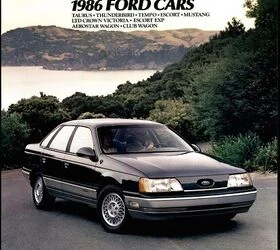
Upon its introduction for the 1986 model year, the Ford Taurus was met with widespread critical acclaim and significant commercial success. Automotive journalists lauded its innovative design, comfortable ride, and advanced engineering. Consumers responded enthusiastically, drawn to its modern aesthetic, practical interior, and perceived value. The Taurus quickly became one of the best-selling vehicles in the United States, a position it would hold for many years.
The success of the Taurus had a profound impact on Ford’s financial health and its corporate trajectory. It revitalized the company’s image, demonstrating Ford’s ability to innovate and compete effectively against both domestic and international rivals. The Taurus became a symbol of American automotive resurgence, proving that Detroit could indeed produce world-class vehicles that met and exceeded consumer expectations.
Beyond its immediate sales success, the Ford Taurus left an indelible mark on the automotive industry. It helped popularize front-wheel drive for larger sedans and wagons, accelerating the decline of rear-wheel-drive platforms for mainstream family vehicles. Its aerodynamic styling influenced subsequent automotive design trends, ushering in an era of sleeker, more fuel-efficient vehicles. The collaborative, team-based approach to product development pioneered by "Team Taurus" became a model for future automotive projects within Ford and across the industry.
The Taurus’s journey from a risky proposition to an automotive icon underscores the importance of bold innovation and a deep understanding of evolving market dynamics. It stands as a testament to Ford’s ability to adapt and thrive in the face of adversity, a pivotal moment that reshaped not only the company’s fortunes but also the very definition of the American family car. The ripple effects of the Taurus’s success would be felt for decades, solidifying its place as a true "Rare Ride Icon."