The global pursuit of a decarbonized economy hinges significantly on the widespread adoption of hydrogen, a versatile energy carrier often heralded as "the fuel of the future." Its potential lies in its clean combustion, producing only water vapor, and its capacity to replace fossil fuels in challenging industrial sectors like steel and cement manufacturing. However, unlocking this potential faces a dual hurdle: the development of cost-effective, low-carbon production methods and the equally critical challenge of efficient transportation and storage. A groundbreaking study, spearheaded by researchers at the MIT Energy Initiative (MITEI) in collaboration with ExxonMobil Technology and Engineering Co., has introduced a novel solution to address the latter, aiming to demystify the complex logistics of moving hydrogen across vast distances.
The fundamental issue stems from hydrogen’s unique properties. As the lightest element, it possesses a low energy density per unit volume, meaning that transporting a significant amount of energy requires a substantial quantity of gas. This necessitates exceptionally tight sealing to prevent even the smallest molecules from escaping, a feat considerably more demanding than handling liquid fuels like gasoline. Recognizing that the most economically viable production sites for hydrogen may be geographically distant from its points of consumption, the MIT-led team focused on developing a practical framework for overcoming these transportation obstacles.
The Genesis of HyCAT: Addressing a Critical Gap in Hydrogen Logistics
The research, funded by ExxonMobil through MITEI in 2024, emerged from a growing awareness that while significant progress was being made in hydrogen production technologies, the crucial downstream aspect of delivery had received comparatively less focused attention. "There hasn’t been a lot of attention paid to addressing those questions," stated Gasim Ibrahim, a former MITEI postdoc and lead author of the study, now an R&D Engineer/Scientist at Honeywell. He highlighted that existing studies offered inconsistent conclusions and were hampered by a lack of comprehensive data on large-scale hydrogen transport.
This uncertainty underscored the need for a flexible and adaptable analytical tool. The team’s objective was not to declare a single "best" method for hydrogen transportation, as the optimal solution is inherently context-dependent. Instead, they aimed to empower stakeholders with the ability to conduct their own assessments, considering specific regional economic factors, energy costs, and carbon intensity. This led to the development of the Hydrogen Carrier Analysis Tool, or HyCAT.
HyCAT: A User-Centric Approach to Hydrogen Transport Economics
HyCAT is designed to be an open-source platform, allowing for continuous updates and improvements as the hydrogen industry matures and economies of scale evolve. The tool deliberately isolates the transportation and storage phases of the hydrogen supply chain, excluding the upstream production and downstream utilization aspects. This focused approach allows for a granular analysis of the costs and greenhouse gas (GHG) emissions specifically associated with moving hydrogen from its point of origin to its destination.
The user interface of HyCAT is engineered for simplicity, employing drop-down menus for inputting assumptions and presenting results through clear bar charts. Detailed breakdowns of the analyses are accessible via linked tables. Crucially, while HyCAT itself operates within a defined boundary – "incoming hydrogen to outgoing hydrogen" – users can incorporate local data on the carbon intensity and cost of incoming hydrogen, thereby influencing the final analytical outcomes. This inherent flexibility is what allows HyCAT to account for the significant geographical variations in the hydrogen transport landscape.
The tool meticulously calculates costs and GHG emissions across five key stages of the supply chain:
- Carrier Production/Liquefaction: The initial conversion of hydrogen into a transportable form.
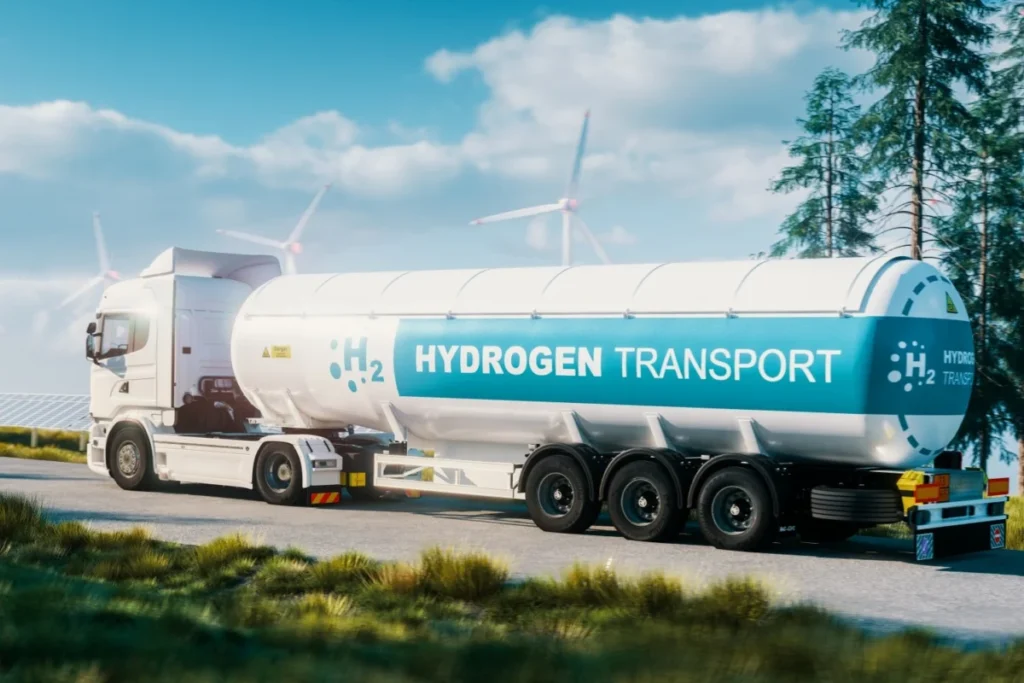
- Shipping: The actual transportation of the hydrogen carrier, whether by sea, rail, or road.
- Unloading and Storage: The process of receiving the carrier at the destination.
- Hydrogen Release/Re-gasification: The recovery of hydrogen from its carrier or its conversion back into a usable gaseous state.
- On-site Storage and Distribution: The final handling of hydrogen before its end-use.
Navigating the Hydrogen Carrier Landscape
A pivotal element of HyCAT’s analysis revolves around the methods for converting hydrogen gas into a more manageable liquid form for transport. The most direct approach involves cryogenic liquefaction, reducing hydrogen to extremely low temperatures. However, this process is energy-intensive, requiring approximately one-third of the hydrogen’s energy content for liquefaction alone. Furthermore, maintaining the necessary insulation to prevent re-gasification during transit presents a significant logistical challenge.
An alternative, and often more practical, strategy involves utilizing hydrogen "carriers." These are liquid chemical compounds that can reversibly absorb and release hydrogen atoms under specific conditions. This approach necessitates two chemical reactions: one to bind hydrogen to the carrier at the production site and another to release it at the consumption point.
The MITEI-led study examined three promising hydrogen carrier compounds:
1. Toluene-Based Carriers
This method involves reacting hydrogen with toluene, a common aromatic hydrocarbon. While the chemical reaction itself is relatively straightforward, a significant drawback is toluene’s origin, which is typically the petrochemical industry, resulting in a relatively high carbon intensity for the carrier itself. Additionally, over time, some toluene is lost, requiring periodic replenishment, which adds to operational costs and environmental footprint.
2. Synthetic Methane (Methane Synthesis)
Synthetic methane is produced by reacting hydrogen with carbon dioxide (CO2). This process is advantageous as it consumes CO2, offering a potential pathway for carbon capture and utilization. However, the reaction also produces water as a byproduct, leading to a loss of hydrogen with each synthesis cycle. The established nature of the methane synthesis reaction, however, provides a degree of familiarity and potential for scaling.
3. Ammonia
Ammonia (NH3), formed by the reaction of hydrogen with nitrogen from the air, is a well-studied and commercially utilized compound. The infrastructure for its production, transportation, and storage is already extensively developed globally. Ibrahim identifies ammonia as a particularly promising option due to these existing advantages. However, a key area requiring further research and development is the efficiency and energy requirements of releasing pure hydrogen from ammonia at the point of destination.
Varying Conclusions and Future Trajectories
The initial analyses conducted using HyCAT revealed a crucial insight: there is no universal "best" carrier or transportation method. The optimal choice is highly contingent on a multitude of factors, including the distance of transport, prevailing energy and shipping costs in exporting and importing regions, and the capital investment required for dedicated infrastructure at both ends of the supply chain.
"As we developed the tool, we saw that the ‘best’ carrier was very specific to the supply chain at hand," explained Ibrahim. "It’s a function of how far you’re trying to ship your hydrogen, energy and shipping costs at your exporting and importing countries, the capital cost of building the needed facilities at both ends, and more."
This nuanced understanding is critical for policymakers, industry leaders, and investors making decisions about hydrogen infrastructure development. The team’s findings suggest that a one-size-fits-all approach to hydrogen logistics will likely prove inefficient and costly. Instead, a tailored strategy, informed by detailed, location-specific analysis, will be essential for realizing hydrogen’s full potential.
The MITEI research team plans to leverage HyCAT in future studies to analyze specific, real-world hydrogen supply chains under various defined conditions. This will involve a deeper exploration of assumptions with high degrees of uncertainty, allowing for a clearer delineation of the range of possible outcomes. Such focused analyses will enable more precise comparisons between different carriers and transportation methods, identifying trade-offs between cost-effectiveness and carbon intensity.
The overarching conclusion drawn from this foundational study is one of complexity and context-dependency. "There’s no conclusion," Ibrahim stated definitively, cautioning against generalizing findings from existing literature. He stressed that decision-makers should utilize HyCAT as a dynamic tool to explore available options, align them with their specific objectives and values, and thereby optimize their supply chains. By embracing such data-driven, adaptive approaches, the transition to clean-burning hydrogen as a cornerstone of the global energy future can be accelerated and made more effective. The successful integration of hydrogen into the global energy landscape will depend not only on its efficient production but equally on the robust and adaptable systems that deliver it to where it is needed most.