In an era defined by rapid e-commerce growth, escalating consumer expectations, and persistent labor challenges, the modern warehouse has transformed from a static storage facility into a dynamic, highly automated logistical hub. At the very heart of this intricate ecosystem, silently driving countless critical operations, lies the humble yet profoundly powerful electromechanical component: the gearmotor. Far from being a mere accessory, the fractional-horsepower gearmotor, in particular, serves as the fundamental muscle for the vast array of automated systems that define contemporary warehousing, from autonomous robots navigating sprawling factory floors to sophisticated conveyor networks and vital safety mechanisms at loading docks.
The Evolution of Warehouse Automation: A Paradigm Shift
The trajectory of warehousing has seen a dramatic shift over the last two decades, moving from predominantly manual processes to increasingly sophisticated automated solutions. This transformation has been propelled by several converging forces. The explosion of online retail has necessitated faster order fulfillment, higher throughput, and greater accuracy than human labor alone can consistently provide. Simultaneously, a global shortage of warehouse workers, coupled with rising labor costs and the need for improved workplace safety, has accelerated the adoption of robotic and automated material handling systems.
Early automation efforts often involved large, fixed conveyor systems and basic automated guided vehicles (AGVs). However, the advent of Industry 4.0, characterized by interconnected systems, data analytics, and artificial intelligence, has ushered in a new generation of smart warehouses. Here, purpose-built autonomous mobile robots (AMRs) collaborate with advanced sortation systems, high-density storage solutions, and intelligent software to optimize every facet of warehouse operations. While software engineering commands significant attention in designing these coordinated robot fleets and intelligent systems, the physical execution—the movement, lifting, turning, and securing—remains firmly rooted in robust electromechanical components, with gearmotors playing a starring role.
Industry reports consistently underscore this trend. The global warehouse automation market, valued at approximately $20 billion in 2022, is projected to reach over $40 billion by 2028, growing at a compound annual growth rate (CAGR) exceeding 12%. A significant portion of this growth is directly tied to the deployment of AGVs, AMRs, and advanced conveyor systems, all of which are heavy users of gearmotors. This sustained expansion highlights not just the demand for automation, but also the critical reliance on reliable, efficient, and precise motion control solutions that gearmotors provide.
The Mechanical Heartbeat: Where Gearmotors Drive Efficiency
The ubiquitous presence of gearmotors across diverse warehousing equipment underscores their adaptability and indispensable nature. Unlike standalone motors, which operate at high speeds and low torque, gearmotors integrate a gearbox with a motor, reducing output speed while significantly increasing torque. This characteristic is precisely what makes them ideal for applications requiring controlled, powerful movements, often in confined spaces or under heavy loads.

-
Automated Mobile Robots (AMRs) and Automated Guided Vehicles (AGVs):
These mobile workhorses are central to modern logistics. Whether moving product racks, pallets, or individual items, AMRs and AGVs rely heavily on gearmotors for their mobility and functionality. Gearmotors power the wheels that enable these robots to traverse factory floors, providing the necessary torque for acceleration, deceleration, and maintaining consistent speeds. Furthermore, for precise navigation and positioning, gearmotors facilitate turning in place, allowing robots to maneuver in tight aisles and dock accurately. In more advanced designs, such as those that lift and transport entire shelving units, gearmotors are employed in lifting mechanisms, like jack screws or scissor lifts, providing the vertical force required to elevate substantial loads with precision and stability. The demand for compact, high-torque, and energy-efficient gearmotors for AGVs and AMRs has driven significant innovation in fractional-horsepower designs, including specialized brushless DC (BLDC) gearmotors that offer superior control and longevity. -
Conveyor Systems: The Backbone of Material Flow:
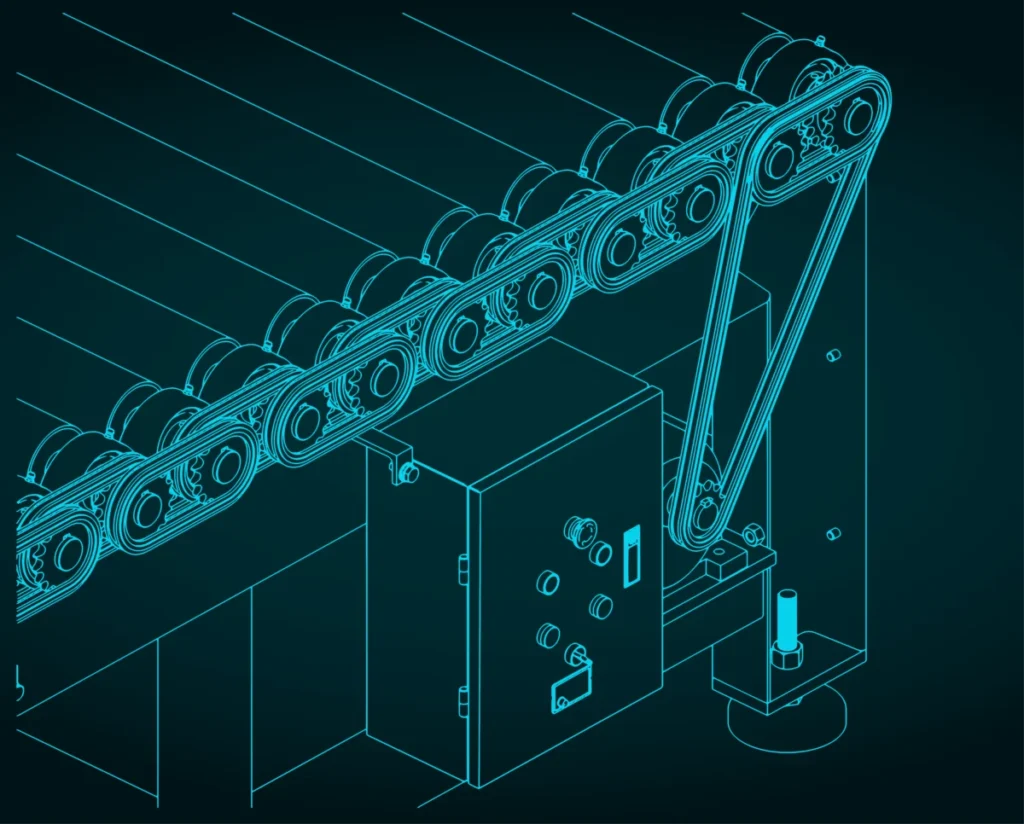
Conveyors are arguably the most visible form of automation in many warehouses, and gearmotors are their undisputed workhorses. From fixed belt conveyors spanning vast distances to modular, flexible systems, gearmotors ensure the continuous and controlled movement of goods. Accordion-style and flexible powered conveyors, common for adaptable material handling, utilize gearmotors to drive their powered rollers. These systems often feature rollers ganged together by round belts, with each section or zone independently driven. Gearmotors here enable the rhythmic progression of items, often interfacing with flatbed shipping trucks at loading docks to expedite loading and unloading operations. The ability to break these conveyors into zones, each with its own gearmotor and control system, allows for optimized flow, preventing bottlenecks and enabling sequential movement of goods. When a sensor detects an item in a zone, the gearmotor activates; once cleared, it deactivates, conserving energy and managing traffic efficiently in a domino-like effect. Leading manufacturers, such as Bodine Electric Co., have been instrumental in supplying robust gearmotors for a wide array of conveyor types, supporting the seamless movement of products through complex logistics networks. -
Loading Dock Safety and Efficiency:
Beyond internal material flow, gearmotors play a crucial role in enhancing safety and efficiency at the critical interface between the warehouse and transportation—the loading dock. Motorized locking restraints, often integrated into dock levelers, are powered by gearmotors. These claw-type constraints engage with specialized hardware on trucks, securely locking the vehicle to the dock. This prevents dangerous accidents, such as "trailer creep" or drivers inadvertently pulling away while personnel, forklifts, or other equipment are still traversing the area between the truck and the loading dock. The reliability and robust torque provided by gearmotors are paramount in these safety-critical applications, ensuring that the restraints can withstand significant forces and operate consistently in demanding environments. -
Heavy-Duty Material Handling: Motorized Carts and Lifts:
For the movement of exceptionally heavy or awkwardly shaped workpieces that cannot be safely or ergonomically handled manually, specialized motorized carts, trollies, and dollies are employed. These often feature motorized caster wheels, driven by gearmotors, which impart motion and enable precise positioning. This is particularly vital in manufacturing facilities supporting the assembly of large equipment, where massive subsystems need to be transported and maneuvered with utmost control. The high torque density of gearmotors in a compact form factor is essential here, allowing operators to move multi-ton components with relative ease and safety, reducing the risk of injury and improving operational efficiency. -
Specialized Personnel and Workpiece Lifts:
Gearmotors also power various lifting equipment designed for both personnel and specialized workpiece handling. Man lifts, commonly known as "crow’s-nest" buckets, utilize gearmotors for their vertical and sometimes horizontal movements, allowing operators to safely reach elevated areas for maintenance, inventory, or installation tasks. Similarly, ergonomic workpiece lifts feature motorized Z-axis platforms or end-effectors, such as pneumatic suction-cup arrays. These systems, powered by gearmotors, enable operators to safely raise, lower, and position items, minimizing physical strain and improving precision in assembly or handling processes. The smooth, controlled motion provided by gearmotors is critical in these applications, where stability and safety are paramount.
Precision and Control: The Brains Behind the Brawn
The effectiveness of gearmotor-driven systems is intrinsically linked to their control mechanisms, which range from simple standalone units to highly integrated, complex networks. Most dock restraints, for instance, are designed as self-contained units, operating via a straightforward on-off switch, typically complemented by a prominently placed emergency-stop button for immediate shutdown. Similarly, many lift trucks function as independent units, steered and operated directly by warehouse personnel. Their control systems often involve a simple current-limit control, where motor torque is directly proportional to the current, allowing operators to command acceleration, maintain speed, and change direction (forward/reverse) with ease.
For such self-contained designs, some fractional-horsepower gearmotor suppliers offer basic speed controls with integrated on-off and speed-adjustment functionalities. However, a more prevalent trend, particularly within original equipment manufacturers (OEMs), is the development of custom control solutions. From a capital-equipment perspective, OEMs often find it more cost-effective and strategically advantageous to design their own control boards or outsource their production to specialized electronics manufacturers. This approach allows them to seamlessly integrate a gearmotor’s control functions into a broader, global control system, consolidating multiple functions onto a single board rather than managing disparate control units.
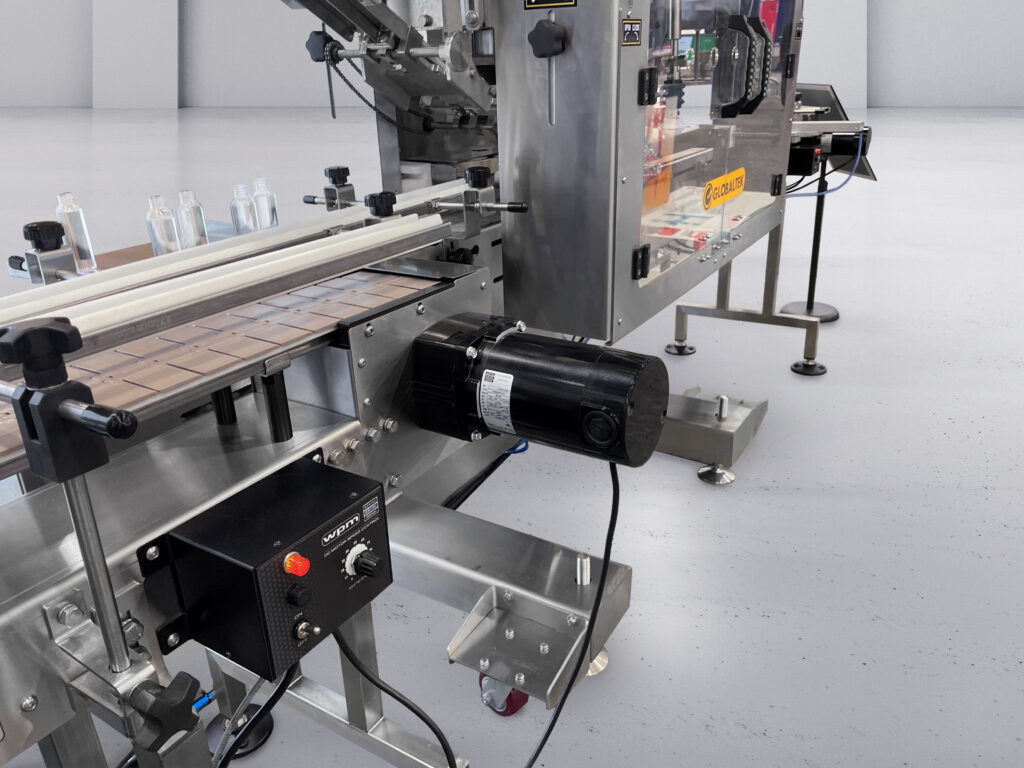
A prime example of this integrated control philosophy is seen in flexible powered conveyors. These systems feature centralized controls that orchestrate separate command zones along the conveyor’s length. A long conveyor might have a gearmotor (and its interconnected controls) every five feet or so. Sensors, such as photo-eyes or proximity switches, detect the presence of boxes or workpieces within each zone. Upon detection, the respective gearmotor activates, moving the item forward. Once the zone is cleared, the motor automatically deactivates, and the next zone in sequence powers on, creating a seamless, energy-efficient flow down the line. This modular, intelligent control not only optimizes material flow but also minimizes energy consumption by only activating motors when necessary.
Procurement and Partnership: Navigating the Supply Chain
The process of procuring gearmotors for warehousing equipment is a sophisticated dance primarily led by OEM design engineers and their purchasing managers. These professionals, armed with detailed wish lists and engineering specifications, engage directly with gearmotor suppliers to size, specify, and ultimately select components for standard lifts, conveyors, and other automated equipment. The emphasis is on finding solutions that meet precise performance requirements, ensure reliability, and offer long-term cost-effectiveness.
Once the OEM designs are finalized and the equipment is manufactured, distributors and system integrators often step in. They work closely with plant engineers and warehouse operators to tailor these standard solutions to the unique demands of a specific facility. This might involve customizing layouts, integrating the equipment with existing systems, or providing ongoing maintenance and support.
The global supply chain disruptions experienced in recent years have highlighted a critical challenge in gearmotor procurement. When gearmotors from established manufacturers suddenly become unavailable due, for example, to material shortages or geopolitical factors, OEMs face significant hurdles. With designs already finalized and engineering specifications locked in, purchasing managers are often tasked with an urgent hunt for new, compatible suppliers who can meet the exact technical requirements and maintain production schedules. This scenario underscores the importance of resilient supply chains, robust supplier relationships, and the potential need for OEMs to qualify multiple sources for critical components like gearmotors.
Industry Outlook: Future Trends and Innovations
The future of gearmotors in warehousing is characterized by continuous innovation, driven by the overarching trends of efficiency, intelligence, and sustainability.
- Smart Motors and Predictive Maintenance: The integration of sensors and IoT capabilities into gearmotors is paving the way for "smart motors." These units can monitor their own performance metrics—temperature, vibration, current draw—and transmit data to a central system. This enables predictive maintenance, allowing potential failures to be identified and addressed before they lead to costly downtime, thus maximizing uptime and operational efficiency.
- Enhanced Energy Efficiency: As energy costs rise and environmental concerns grow, the demand for even more energy-efficient gearmotors will intensify. This includes advancements in motor design (e.g., permanent magnet synchronous motors), improved gear geometries to minimize friction, and more sophisticated control algorithms that optimize energy consumption based on real-time load conditions.
- Miniaturization and Power Density: The push for smaller, more agile robots and compact automation solutions will drive the development of gearmotors with higher power density—delivering more torque in a smaller footprint. This is crucial for applications where space is at a premium, without compromising performance.
- Modular and Flexible Designs: Future gearmotor solutions will likely feature greater modularity, allowing for easier customization, faster integration, and simplified maintenance. This will enable warehouses to adapt more quickly to changing operational needs and technological advancements.
- Focus on Durability and Longevity: Given the demanding 24/7 operational cycles of many automated warehouses, gearmotors must be built for extreme durability. Innovations in materials, bearing technology, and sealing will continue to extend the operational life of these critical components, reducing the total cost of ownership.
In conclusion, while the visible face of warehouse automation often showcases sophisticated software and intelligent robots, the foundational mechanics are powered by the unsung hero: the gearmotor. From the intricate movements of an AMR to the relentless flow of a conveyor and the steadfast security of a loading dock restraint, gearmotors are the robust, reliable, and precise drivers of efficiency. As warehousing continues its relentless march towards greater automation and intelligence, the role of these electromechanical powerhouses will only grow in importance, solidifying their status as truly indispensable components in the global supply chain.






