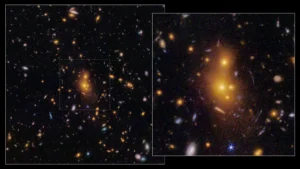
The universe’s earliest epochs, often referred to as the "cosmic dawn," remain one of the most profound frontiers in modern astrophysics. In a landmark study published in Nature Astronomy, a team of researchers led by the Massachusetts Institute of Technology (MIT) has announced the detection of a flickering quasar dating back to just 850 million years after the Big Bang. This discovery represents the most distant, and therefore earliest, instance of a flickering quasar ever recorded. More importantly, the nature of this flicker suggests that supermassive black holes in the infant universe reached a state of structural maturity far more rapidly than current cosmological models predict.
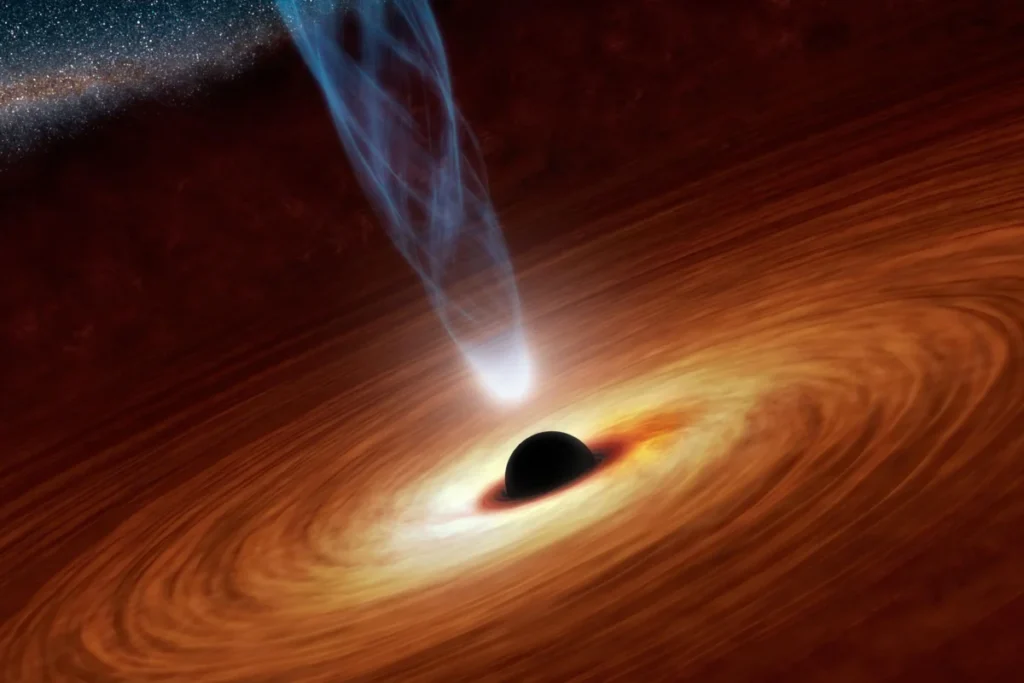
Quasars are among the most energetic and luminous objects in the known universe. They are powered by supermassive black holes—gravitational titans millions or billions of times the mass of our sun—situated at the centers of galaxies. When these black holes are in an "active" phase, they consume vast quantities of surrounding gas and dust. This material does not fall directly into the gravitational sink; instead, it swirls around the black hole in a high-speed, high-temperature whirlpool known as an accretion disk. The friction and gravitational energy within this disk generate radiation so intense that a single quasar can outshine all the stars in its host galaxy combined.
The Significance of the "Flicker"
While astronomers have identified more than 200 quasars existing within the first billion years of the universe’s history, these objects usually appear as static "pinpricks" of light due to their immense distance. Detecting a "flicker"—a stochastic variation in brightness—provides a much deeper level of insight.
"Although there have been a lot of quasars found in the cosmic dawn, this is the first time we actually see one flickering," stated Gene Leung, a postdoctoral researcher at the MIT Kavli Institute for Astrophysics and Space Research and the study’s lead author.
The importance of the flicker lies in what it reveals about the black hole’s "feeding" habits. These fluctuations in light are caused by instabilities and variations in the flow of matter into the black hole. By analyzing the timing and intensity of these variations across different wavelengths of light, scientists can effectively map the physical geometry of the accretion disk. In this instance, the flicker allowed the MIT team to determine that the accretion disk of this ancient quasar was surprisingly thin and flat—a "pancake" shape typically associated with much older, more "settled" black holes in the local, modern universe.
Chronology of the Early Universe and the Seeding Problem
The discovery challenges the established timeline of how supermassive black holes (SMBHs) evolve. To understand the anomaly, one must look at the standard chronology of the universe:
- The Big Bang (0 Years): The birth of space-time.
- The Dark Ages (up to ~150-200 million years): The universe is filled with neutral hydrogen; no stars or galaxies have yet formed.
- The Cosmic Dawn (~200 million to 1 billion years): The first stars (Population III stars) ignite, and the first small galaxies begin to coalesce.
- The Reionization Era: Radiation from the first stars and quasars strips electrons from neutral hydrogen, making the universe transparent to light.
According to traditional physics, a black hole in the very early universe should be a chaotic, "unsettled" system. Astronomers expected that the rapid, violent growth required to reach supermassive status in under a billion years would result in "puffy," turbulent accretion disks. The fact that a quasar existing only 850 million years after the Big Bang already possesses a stable, flat accretion disk suggests that the "messy" phase of growth must have occurred even earlier and much faster than previously thought.
"This suggests that all the messy, very rapid growth phases that we expect all black holes to go through at some point happen very, very early on, before we see them as these very bright luminous quasars," explained Anna-Christina Eilers, assistant professor of physics at MIT. "That’s the picture that’s emerging."
Overcoming the Technical Challenge of Redshift
Detecting a flicker from 13 billion light-years away is a feat of extreme technical difficulty due to the expansion of the universe. As light travels through expanding space, its wavelength is stretched—a phenomenon known as "redshift." For objects as distant as this quasar, visible light is stretched into the infrared spectrum.
Furthermore, the expansion of the universe causes "time dilation." A physical process that takes one week to occur in the quasar’s frame of reference would appear to take several weeks or even months to an observer on Earth. To catch a meaningful flicker, the researchers needed a dataset that was both sensitive to infrared light and spanned a long enough duration to account for this temporal stretching.
The team utilized data from NASA’s Near-Earth Object Wide-field Infrared Survey Explorer (NEOWISE). Originally launched as the WISE mission, this space-based telescope has scanned the entire sky in infrared wavelengths for approximately 14 years. The breakthrough came when Kishalay De, a former MIT postdoc now at Columbia University, spearheaded a project to re-process archival NEOWISE data. This re-processing allowed the team to extract a clear signal from the noise, revealing a quasar that flickered randomly—much like a candle flame—over more than a decade of observation.
Supporting Data: The Scale of the Ancient Engine
The data retrieved from the NEOWISE observations highlights the staggering scale of the energy involved. The team estimated that the quasar possesses a baseline luminosity equivalent to 12 trillion suns. The "flicker" itself represents a fluctuation of roughly 20 percent. In practical terms, this means the quasar’s brightness increases and decreases by a margin of 2 trillion suns—an amount of energy nearly impossible to conceptualize.
By tracking these fluctuations across multiple infrared wavelengths, the researchers could probe different regions of the accretion disk. Shorter wavelengths correspond to hotter material closer to the event horizon, while longer wavelengths correspond to cooler material further out. The consistency of the flicker across these bands confirmed the "flat" geometry of the disk. This evidence suggests that the fundamental physics of black hole accretion has remained remarkably consistent across 13 billion years of cosmic history.
Implications for Galactic Evolution
The role of supermassive black holes extends far beyond their own gravitational boundaries. They are now understood to be the primary regulators of galactic "ecosystems."
"Without supermassive black holes, no galaxy would look the way it does today," Eilers noted. "Black holes play a major role in shaping how galactic ecosystems look."
The energy emitted by a quasar can drive "feedback" loops, heating up galactic gas and preventing it from cooling and collapsing into new stars. This process effectively caps the growth of a galaxy. If supermassive black holes reach maturity as early as this study suggests, it implies that the regulatory mechanisms that govern galaxy formation were also in place during the universe’s infancy. This raises new questions about whether galaxies and their central black holes co-evolved in a synchronized fashion or if the black holes "seeded" the growth of galaxies from the very beginning.
Scientific Reaction and Future Research
The broader astronomical community has viewed the MIT findings as a crucial piece of the "black hole seeding" puzzle. There are currently two primary theories for how these giants formed so quickly:
- Light Seeds: Black holes formed from the collapse of the first massive stars, which then grew at "super-Eddington" rates (faster than theoretically thought possible).
- Heavy Seeds: Large clouds of gas collapsed directly into black holes of 10,000 to 100,000 solar masses, giving them a "head start" in the growth race.
The discovery of a mature, flat accretion disk so early in time lends some weight to the "heavy seed" or extremely rapid growth models, as it leaves very little time for a "light seed" to transition from a chaotic infant to a stable, mature quasar.
The research, which was supported in part by NASA, serves as a roadmap for future observations. The team hopes to utilize the James Webb Space Telescope (JWST) to peer even deeper into the cosmic dawn. With its unprecedented infrared sensitivity, the JWST may be able to find even earlier quasars—perhaps those still in the "messy" growth phase that Eilers and Leung suspect preceded the maturity observed in this latest discovery.
As scientists continue to bridge the gap between the Big Bang and the formation of the first galaxies, the flickering light of these ancient quasars remains the most reliable beacon, illuminating the dark, distant history of our universe. The MIT study confirms that even in its earliest stages, the universe was capable of producing structures of immense complexity and stability, challenging our understanding of time, gravity, and the birth of the cosmos.