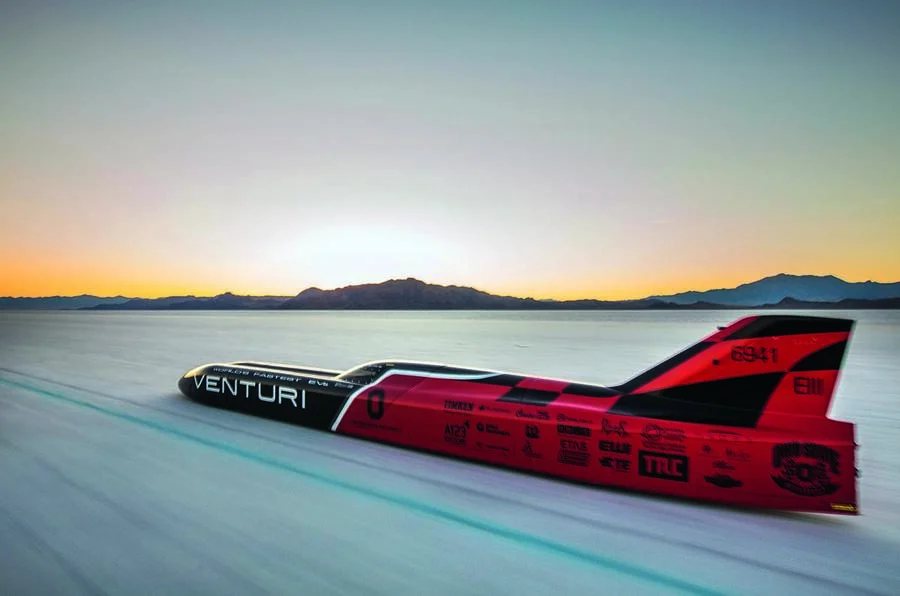
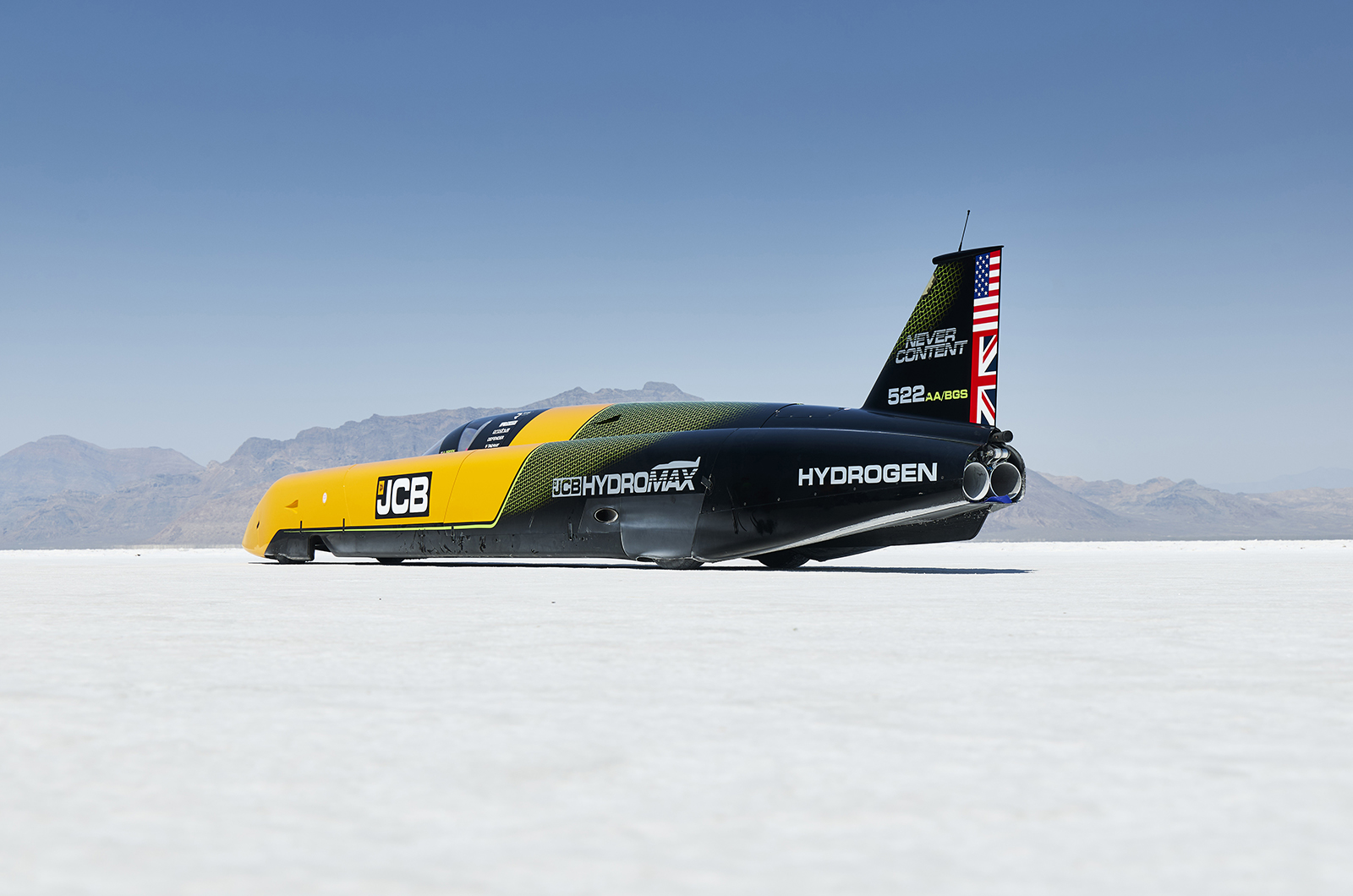
The arid expanse of the Bonneville Salt Flats in Utah, a vast, shimmering canvas of crystallized earth, recently played host to a remarkable feat of engineering and ambition. Witnessing Andy Green and the JCB Hydromax team achieve a new land speed record of 406.320 mph for a hydrogen-powered vehicle was not merely a demonstration of raw speed; it was a potent, albeit unconventional, marketing triumph that manufacturers across various sectors would be wise to dissect and learn from. The stark beauty of Bonneville, a landscape simultaneously featureless and alive, provided a dramatic backdrop for this technological pursuit, a stark contrast to the usual regulated arenas of motorsport.
A New Benchmark in Hydrogen Propulsion
The JCB Hydromax, a vehicle purpose-built for this audacious challenge, represents a significant milestone in the development and application of hydrogen fuel cell technology. The record achieved by Green, a veteran of speed record attempts, signifies more than just a number on a speedometer. It demonstrates the tangible potential of hydrogen as a viable, high-performance energy source, moving it beyond niche applications and into the realm of extreme speed. This achievement is particularly noteworthy given the ongoing global push towards sustainable energy solutions and decarbonization.
The Bonneville Salt Flats, a natural geological wonder, has long been the hallowed ground for land speed record attempts. Its flat, hard surface, stretching for miles, offers an unparalleled, albeit challenging, environment for vehicles to push the boundaries of velocity. The salt’s crystalline structure, formed over millennia from ancient lake beds, provides a unique, low-friction surface that is ideal for achieving extreme speeds, but also demands meticulous preparation and precise handling. The history of speed records at Bonneville is rich, dating back to the early 20th century, with iconic vehicles and drivers etching their names into the annals of automotive history. The pursuit of these records has consistently driven innovation, pushing the limits of materials science, aerodynamics, and engine technology.
The Genesis of the Hydromax Project
The genesis of the JCB Hydromax project can be traced back to JCB’s broader commitment to exploring and advancing sustainable technologies. While JCB is renowned for its construction and agricultural machinery, the company has also invested heavily in research and development for cleaner power solutions. The decision to target a land speed record with a hydrogen-powered vehicle was a bold move, designed to capture global attention and showcase the potential of this technology in a dramatic and unforgettable way.
The development of the Hydromax was a multi-year endeavor, involving a dedicated team of engineers, designers, and technicians. The vehicle itself is a testament to cutting-edge engineering, incorporating advanced aerodynamics to minimize drag at high speeds and a sophisticated hydrogen fuel cell system to provide the necessary power. The choice of hydrogen was strategic, aligning with the global imperative to reduce reliance on fossil fuels and explore alternative energy carriers. Hydrogen, when produced through renewable means, offers a zero-emission pathway to power, emitting only water vapor.
Chronology of the Record Attempt
The journey to the 406.320 mph record was not a single, spontaneous event, but rather a culmination of meticulous planning, extensive testing, and iterative refinement. The team likely spent considerable time at Bonneville, acclimatizing to the conditions, making incremental adjustments to the vehicle, and conducting preliminary runs to gather data.
The initial stages of the record attempt would have involved lower-speed runs to validate the vehicle’s systems and aerodynamic stability. As confidence grew and data was collected, the speeds would have been progressively increased. The final record-breaking run would have been the result of optimal conditions – a perfectly prepared salt surface, favorable weather, and a perfectly calibrated vehicle.
The process of setting a land speed record is rigorously governed by recognized authorities such as the Federation Internationale de l’Automobile (FIA). These regulations ensure that records are set under standardized conditions, with strict criteria for vehicle design, engine type, and measurement methodologies. For a hydrogen-powered vehicle, the challenge is further amplified by the specific requirements for fuel containment, safety, and the accurate measurement of hydrogen consumption.
Supporting Data and Technological Advancements
The 406.320 mph achieved by the JCB Hydromax is a significant data point in the landscape of hydrogen vehicle performance. To put this into perspective, the fastest production cars today can reach speeds in the region of 300 mph, and even these are typically powered by internal combustion engines or advanced hybrid powertrains. The fact that a hydrogen-powered vehicle has surpassed this benchmark underscores the remarkable progress in fuel cell technology and electric drivetrain integration.
The fuel cell system employed in the Hydromax is likely a high-power density unit, capable of converting hydrogen and oxygen into electricity with exceptional efficiency. This electricity then powers electric motors that drive the wheels. The key advantages of this system are its zero tailpipe emissions and its potential for rapid refueling, which is crucial for sustained high-speed operations.
The vehicle’s design would also incorporate advanced materials, such as lightweight composites, to minimize overall weight and enhance structural integrity under extreme stress. Aerodynamic efficiency is paramount, with the body shape carefully sculpted to reduce drag and ensure stability at speeds that approach the sound barrier. The tires, specially designed for the salt flats, must withstand immense forces and heat generated by friction.
Official Responses and Industry Implications
While specific official statements from regulatory bodies beyond the confirmation of the record itself might be limited, the achievement by JCB will undoubtedly resonate within the automotive and energy industries. The success of the Hydromax project serves as a powerful testament to the viability of hydrogen as a high-performance energy source, potentially encouraging further investment and research in this area.
For manufacturers of hydrogen fuel cells, this record validates their technological advancements and opens up new possibilities for applications beyond passenger vehicles. This could include heavy-duty transport, aviation, and even specialized industrial equipment where high power density and zero emissions are critical.
The broader implications for the automotive industry are significant. As the world transitions away from fossil fuels, hydrogen is emerging as a key contender in the race for sustainable mobility. While battery electric vehicles (BEVs) currently dominate the market, hydrogen fuel cell electric vehicles (FCEVs) offer distinct advantages in terms of refueling time and range, particularly for larger vehicles and long-distance travel. The JCB Hydromax achievement helps to shift perceptions and build confidence in the capabilities of hydrogen technology.
The Public Relations Power of Pushing Boundaries
Beyond the technical achievements, the JCB Hydromax’s land speed record attempt offers a compelling case study in modern public relations and marketing. In an era saturated with digital advertising and conventional media, the pursuit of extreme records provides a potent, authentic narrative that captures imagination.
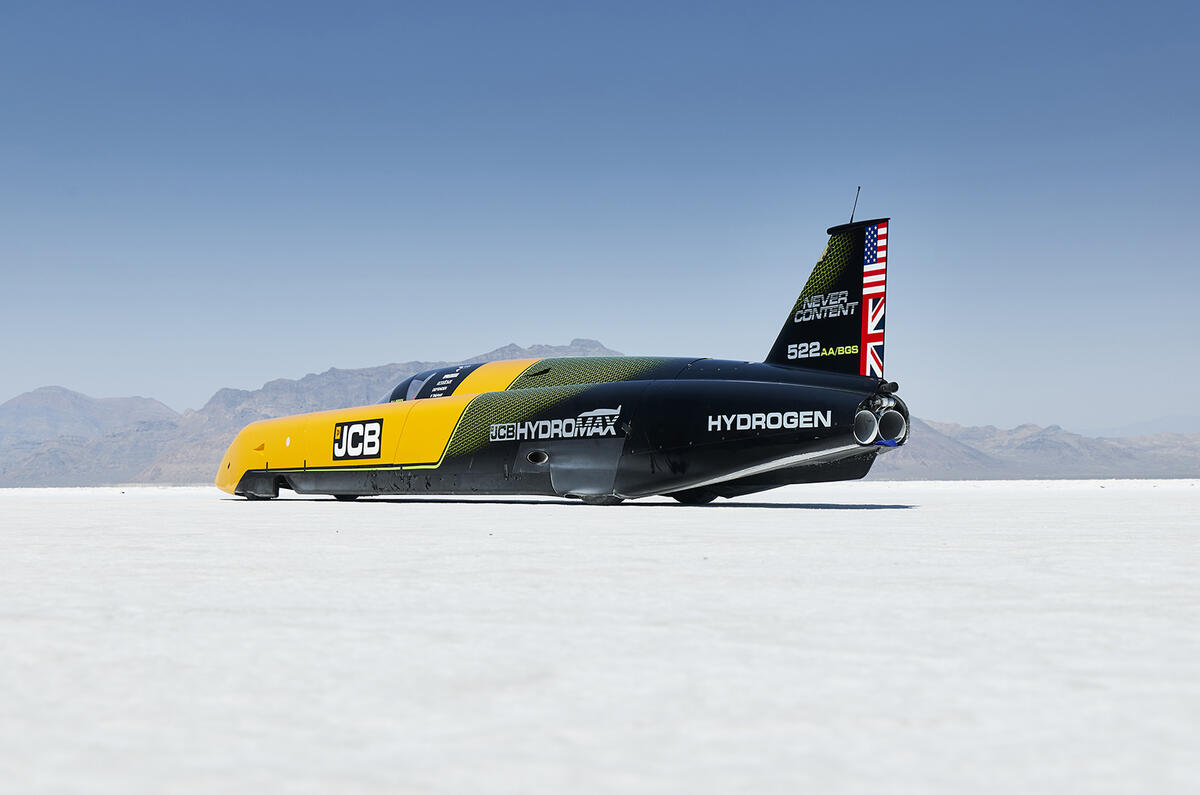
Land speed records, unlike many other forms of motorsport, are inherently about pushing the absolute limits of what is technically possible. They are a pure test of engineering prowess and human determination. The spectacle of a vehicle hurtling across a vast, barren landscape at incredible speeds is intrinsically captivating. This inherent drama is a marketer’s dream.
The choice of Bonneville, with its iconic status and rich history, adds another layer of appeal. It evokes a sense of pioneering spirit and adventure. The challenge of the environment itself – the heat, the dust, the sheer scale of the salt flats – contributes to the heroic narrative.
For JCB, this endeavor transcends a simple product launch or advertising campaign. It’s about associating the brand with innovation, courage, and cutting-edge technology. The record becomes a powerful, tangible symbol of their commitment to progress. The media coverage generated by such an event is typically extensive and far-reaching, offering significant global exposure. Unlike a sponsored race car that competes within a defined season, a land speed record attempt is a singular, monumental event that commands attention.
Furthermore, the "hydrogen" aspect of the record is crucial. It taps into the contemporary discourse around sustainability and the future of energy. By demonstrating that hydrogen can power a vehicle at such extreme speeds, JCB is not only showcasing their engineering capabilities but also contributing to the broader acceptance and understanding of hydrogen as a viable energy solution. This aligns with corporate social responsibility goals and appeals to environmentally conscious consumers and stakeholders.
The timing of such an achievement is also significant. As governments and industries worldwide grapple with climate change and the need for decarbonization, high-profile demonstrations of advanced, clean technologies gain considerable traction. The JCB Hydromax record arrives at a moment when the world is actively seeking solutions, making its message all the more impactful.
The challenge of spectating at Bonneville, as noted by observers, presents a unique paradox. While the actual event of the car speeding past is fleeting and requires immense distance for safety, the anticipation, the build-up, and the collective experience of witnessing such a feat create a powerful, shared memory. This is not a sport for casual observation; it demands dedication and engagement, qualities that resonate with a core audience interested in innovation and engineering excellence.
Conclusion: A Blueprint for Technological Ambition
The JCB Hydromax’s journey to the land speed record on the Bonneville Salt Flats is a compelling narrative of technological ambition, engineering excellence, and strategic public relations. It underscores the fact that pushing the boundaries of what is possible, especially in the realm of sustainable technology, can yield immense publicity and foster significant industry advancement.
Manufacturers looking to make a mark in emerging technological fields, particularly those related to decarbonization and alternative energy, should consider the potent combination of innovation and audacious goals. The clear, quantifiable achievement of a world record, coupled with a compelling narrative, can cut through the noise of conventional marketing and create a lasting impression. The Hydromax has not only set a new benchmark for hydrogen-powered vehicles but has also provided a valuable blueprint for how technological prowess can be translated into significant global recognition and influence. The future of energy and mobility is being forged in laboratories and on test tracks, and the lessons learned from the Bonneville Salt Flats are as vital as the engineering that powered the record-breaking run.