In a significant advancement for the field of quantum condensed matter physics, an international team of researchers has successfully demonstrated a novel method for manipulating the rotational dynamics of molecules submerged within superfluid helium nano-droplets. This achievement, spearheaded by physicists at the University of British Columbia (UBC) in collaboration with the University of Freiburg, utilizes a specialized optical centrifuge to achieve unprecedented control over molecular movement in a frictionless environment. The study, recently published in the prestigious journal Physical Review Letters, provides a sophisticated new "control knob" for scientists seeking to understand the complex interactions between matter and quantum fluids at the atomic scale.
The research marks the first time that controlled molecular rotation has been successfully executed and measured within a superfluid medium. By precisely adjusting the speed and direction of rotation for molecules suspended in these tiny, ultra-cold droplets, the team has opened a new window into the behavior of superfluids—substances that flow with zero viscosity and represent one of the most enigmatic states of matter known to science.
The Quantum Nature of Superfluids
To understand the magnitude of this breakthrough, one must first consider the unique properties of superfluids. When certain isotopes, such as Helium-4, are cooled to temperatures approaching absolute zero (specifically below the "Lambda point" of 2.17 Kelvin), they undergo a phase transition into a superfluid state. In this state, the liquid loses all internal friction, allowing it to flow through microscopic capillaries without resistance and even crawl up the walls of containers in a thin film.
Despite this lack of viscosity, superfluids still act as a solvent. Scientists have long used helium nano-droplets—tiny spheres of liquid helium containing a few thousand to several million atoms—as "nanoscopic test tubes." Because these droplets are incredibly cold (typically around 0.37 Kelvin) and chemically inert, they provide an ideal environment for isolating and studying individual molecules in a state of high purity. However, observing and controlling how these molecules move within the superfluid has remained a formidable challenge due to the subtle quantum mechanical interactions between the solute (the molecule) and the solvent (the helium).
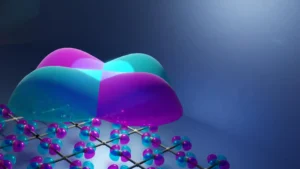
Dr. Valery Milner, an associate professor with the UBC Department of Physics and Astronomy and a lead author of the study, explained the inherent difficulty of the task. "Controlling the rotation of a molecule dissolved in any fluid is a challenge," Dr. Milner noted. He compared the phenomenon to a "snowball effect," where a molecule moving through a fluid attracts the surrounding atoms. "Dissolved molecules interact with the atomic or molecular constituents of the fluid, effectively getting bigger and harder to spin up. Imagine making a snowball: It’s very easy to move it when it’s small, but gets harder and harder as more snow gets attached to it."
The Mechanics of the Optical Centrifuge
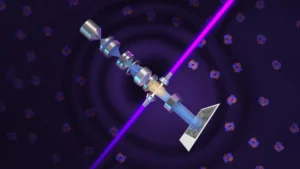
The primary tool used in this experiment is the optical centrifuge, a device that employs ultra-fast laser pulses to exert torque on molecules. In a standard gas-phase experiment, an optical centrifuge works by creating a laser beam with a rotating plane of polarization. As the electric field of the laser rotates, it interacts with the molecule’s polarizability, causing the molecule to align with the field and spin faster and faster, reaching rotational frequencies in the terahertz range.
While this technique has been highly effective for molecules in a vacuum or a gaseous state, applying it to molecules inside a liquid—even a frictionless superfluid—presented a significant hurdle. In the dense environment of a helium droplet, the "snowball" of helium atoms surrounding the molecule increases its effective moment of inertia. This means the molecule requires more energy to spin, and the rapid acceleration of a standard optical centrifuge often fails to "catch" the molecule effectively, leading to a loss of control.
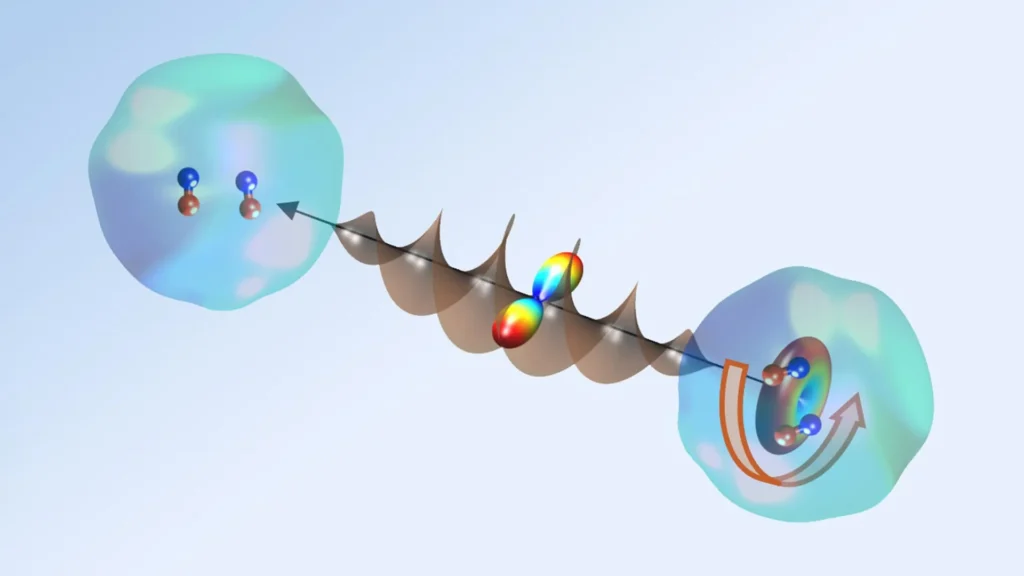
To overcome this, the UBC and Freiburg team modified the traditional approach. They embedded nitric oxide (NO) dimers—pairs of nitric oxide molecules—within the helium nano-droplets. Instead of a single continuous "crank" of the optical centrifuge, the researchers introduced a specific delay between laser pulses. This created an interference pattern that effectively slowed the initial acceleration of the "rotational kick." This modified pulse sequence allowed the molecule to gradually overcome the inertia added by the surrounding helium atoms, a property the researchers refer to as "spinnability."
Chronology of Research and Experimental Setup
The journey toward this discovery is rooted in decades of low-temperature physics. The study of superfluids began in earnest in 1937 with the work of Pyotr Kapitsa, John F. Allen, and Don Misener. Since then, the scientific community has sought to understand how quantum fluids interact with impurities at the microscopic level.
- Early 2000s: The development of helium nano-droplet isolation (HENDI) spectroscopy allowed researchers to begin placing single molecules inside superfluids to study their spectra with high precision.
- 2010-2020: The UBC team and other groups worldwide perfected the use of optical centrifuges to spin molecules in the gas phase to "extreme" rotational states, often called "molecular rotors."
- 2022-2023: The collaboration between UBC and the University of Freiburg focused on the theoretical modeling of how a rotating molecule would drag a "superfluid cloud" of helium atoms. This led to the hypothesis that a slower, more controlled torque was necessary.
- 2024: The successful execution of the experiment at UBC, demonstrating the first controlled rotation of molecules in a superfluid and the subsequent publication in Physical Review Letters.
In the experimental setup, the helium droplets were generated by expanding high-pressure helium gas through a cooled nozzle into a vacuum. The resulting beam of droplets then passed through a "pick-up cell" containing nitric oxide gas, where individual droplets captured one or more NO molecules. The droplets were then intersected by the centrifuge laser pulses, and the resulting rotational state of the molecules was analyzed using a technique known as ion-imaging, which detects the spatial distribution of fragments after the molecule is broken apart by a secondary probe laser.
Supporting Data and Technical Observations
The researchers observed that the "spinnability" of the molecule was highly dependent on the timing and shape of the laser pulses. Data indicated that when the centrifuge was operated at its maximum acceleration, the molecules in the helium droplets remained largely unaffected. However, by introducing the pulse delay, the team observed a clear signature of high-speed rotation.
Key findings from the data include:
- Rotational Frequency: The molecules reached rotational speeds that were previously thought unattainable within a liquid medium.
- Inertial Correction: The experiment confirmed that the effective mass of the rotating nitric oxide dimer was significantly higher than its vacuum mass, providing a direct measurement of the "helium crust" or "snowball" that rotates in tandem with the molecule.
- Phase Transition Indicators: The team noted that the molecules maintained their rotation longer than they would in a normal (non-superfluid) liquid, confirming the low-friction nature of the environment, yet they also saw evidence of energy dissipation that hints at the limits of superfluidity.
Broader Implications for Quantum Science
The ability to control the rotation of molecules in a superfluid has far-reaching implications for several branches of science. One of the most immediate applications is in the study of "quantum decoherence." In quantum computing and quantum information science, decoherence is the process by which a system loses its quantum properties due to interaction with its environment. By studying how a rotating molecule slowly loses its energy to the surrounding superfluid, researchers can gain insights into how to protect quantum states from environmental noise.
Furthermore, this technique allows for the exploration of the "critical velocity" of superfluids. Superfluidity is not absolute; if an object moves through a superfluid faster than a certain threshold, it creates excitations (such as rotons or vortices) that cause friction to reappear. By spinning molecules at increasing frequencies, Dr. Milner’s team intends to find the exact point where the frictionless flow breaks down.
"It is not well understood how and when—for example at what frequency—this transition will happen at such a tiny atomic scale," said Dr. Milner. "That’s the key area we’re investigating at the moment. Using this new ‘control knob,’ we can see exactly when the molecule starts to feel the ‘wind’ of the superfluid."
Reactions and Future Directions
The physics community has reacted with enthusiasm to the UBC-Freiburg study. Experts in molecular spectroscopy suggest that this method could be used to study more complex molecules, including those of biological interest, in a highly controlled environment. By "spinning up" these molecules, researchers can study their structural integrity and their interactions with solvents in ways that were previously impossible.
The research was made possible through the support of major Canadian and international funding bodies, including the Natural Sciences and Engineering Research Council of Canada (NSERC), the Canada Foundation for Innovation (CFI), and the BC Knowledge Development Fund.
Moving forward, the research team plans to refine the optical centrifuge technique to explore different types of molecules and isotopes of helium. They are particularly interested in the difference between Helium-4 (a boson) and Helium-3 (a fermion), as the two isotopes exhibit superfluidity under very different conditions and via different physical mechanisms.
By pushing the boundaries of what can be controlled at the intersection of optics and low-temperature physics, the team at UBC and the University of Freiburg has provided a foundational tool that will likely influence the study of quantum matter for years to come. The "molecular centrifuge" in a droplet is no longer just a theoretical concept; it is a functional laboratory for the most extreme conditions of the quantum world.