Modern warehousing facilities, once bustling with manual labor and rudimentary mechanical aids, have undergone a profound transformation, evolving into sophisticated hubs of automation driven by a complex interplay of mechanical engineering and advanced software. At the heart of this intricate ecosystem, often overlooked but critically indispensable, are fractional-horsepower gearmotors. These electromechanical components are the silent workhorses that power a vast array of equipment, from autonomous robots navigating factory floors to high-speed conveyor systems and crucial safety mechanisms at loading docks, underpinning the efficiency, safety, and scalability demanded by today’s global supply chains.
The shift towards increasingly automated warehouses is not merely a technological whim but a strategic imperative fueled by the explosive growth of e-commerce, persistent labor shortages, and the relentless pursuit of operational efficiency. Industry events such as MODEX and ProMat consistently showcase the profound reliance of warehouse operations on these electromechanical systems. For instance, the autonomous mobile robots (AMRs) and automated guided vehicles (AGVs) that transport product racks, pallets, or individual items across vast facility floors depend on gearmotors for precise locomotion, including traversing, turning in place, and in some cases, vertical lifting mechanisms like jack screws. This precise control is paramount for avoiding collisions, optimizing routes, and ensuring accurate placement of goods within a dynamic environment.
The Unseen Engines of Automation: Gearmotors at Work
Gearmotors are fundamental to the operational fluidity of modern warehouses, empowering diverse applications that span the entire logistics chain. Their compact design, combined with their ability to deliver high torque at controlled speeds, makes them ideal for tasks requiring both power and precision in often space-constrained environments.
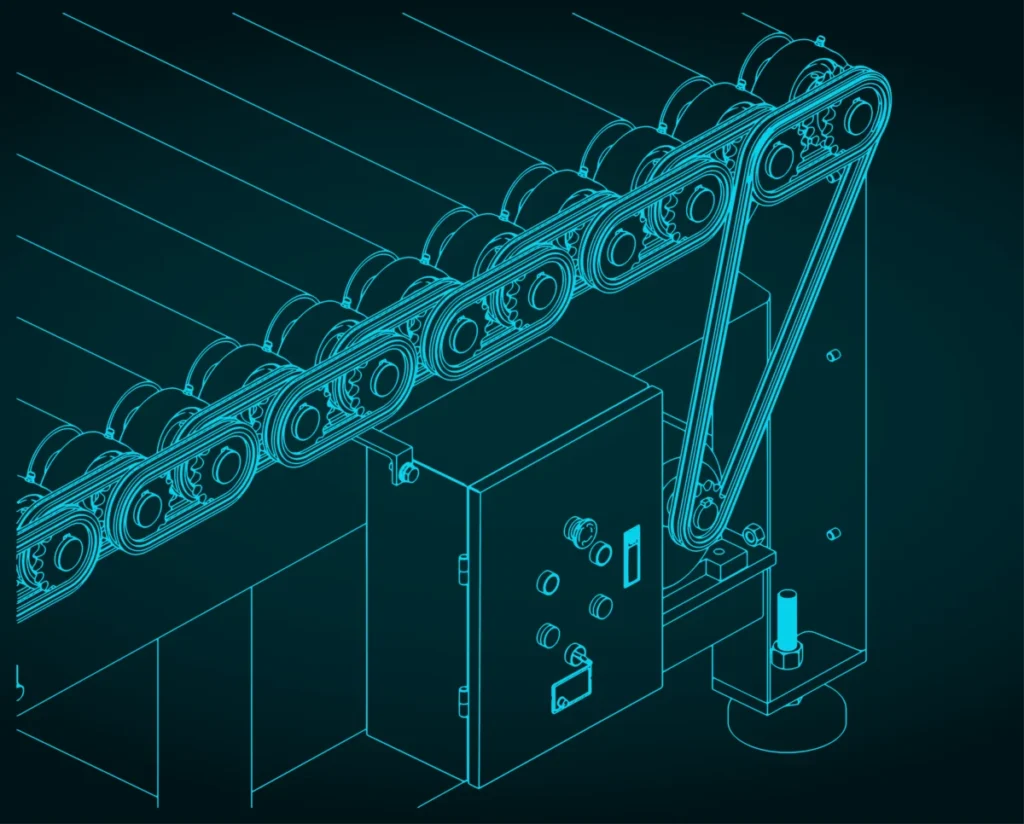
One of the most ubiquitous applications is in conveyor systems. From traditional belt and roller conveyors to more specialized designs like accordion-style and flexible powered conveyors, gearmotors provide the motive force. These systems, often comprising scissor-leg material-handling units with powered rollers linked by round belts, facilitate the continuous movement of goods through a facility. They are critical for interfacing with flatbed shipping trucks at loading docks, significantly accelerating the loading and unloading processes. Advanced accordion-style conveyors, for example, are frequently segmented into zones. Each zone is independently controlled, allowing goods to move along a section at a time, preventing jams and optimizing flow. The gearmotors in these systems ensure smooth, consistent movement, adapting to varying loads and speeds.
Beyond material transport, gearmotors are vital for enhancing loading dock safety. At these critical junctures, motorized locking restraints are deployed to prevent accidents. These robust, claw-type dock constraints engage with specialized hardware on trucks, securely locking them in place. This mechanism is crucial to prevent drivers from inadvertently pulling away while personnel, whether on foot or operating forklifts, are still traversing the interface between the truck and the loading dock. The gearmotors here provide the necessary force to engage and disengage these safety locks reliably, often operating under demanding conditions.
The movement of heavy workpieces within a warehouse or manufacturing facility is another domain where gearmotors excel. Motorized caster wheels, integrated into carts, trollies, and dollies, leverage gearmotors to impart motion. These powered solutions enable the safe, ergonomic, and efficient movement of extremely heavy or bulky items that would otherwise be difficult or unsafe to move manually. This is particularly crucial in settings supporting the assembly of large equipment with substantial subsystems, where precision positioning and controlled movement are paramount.
Furthermore, gearmotors are integral to various types of lifts and ergonomic assistance devices. Man lifts, often featuring "crow’s-nest" buckets, rely on gearmotors for vertical travel, allowing operators to safely reach elevated areas for stocking, maintenance, or inspection. Similarly, ergonomic workpiece lifts, equipped with trolley wheels (sometimes motorized) and a motorized Z-axis platform or end-effectors like pneumatic suction-cup arrays, enable operators to safely raise and lower items, reducing physical strain and improving productivity. In all these applications, the gearmotor’s ability to provide controlled, powerful motion is non-negotiable for both operational efficiency and worker safety.
Evolution of the Automated Warehouse: A Chronological Perspective

The journey of the modern warehouse from a manual labor-intensive space to a highly automated, data-driven environment has been incremental, with gearmotors playing an increasingly sophisticated role.
- Early 20th Century: Mechanization Begins. The first significant advancements involved simple conveyor belts and basic lifting equipment. These early systems, powered by large, often inefficient motors, represented the initial steps away from purely manual handling. Gearmotors, even in their rudimentary forms, were essential for transmitting power and adjusting speed for these nascent systems.
- Mid-20th Century: Palletization and Forklifts. The widespread adoption of pallets revolutionized storage and transport, leading to the proliferation of forklifts. While initially manually controlled, the integration of motorized lifting and driving mechanisms laid the groundwork for future automation. Gearmotors were crucial in providing the torque for lifting heavy loads and driving the vehicles.
- Late 20th Century: Automated Storage and Retrieval Systems (AS/RS). The 1970s and 80s saw the rise of AS/RS, massive robotic systems that automatically store and retrieve items with high density. These systems, often multi-aisle and multi-level, required precise, high-speed motion control for cranes and shuttles, heavily relying on specialized gearmotors with advanced control capabilities.
- Early 21st Century: Automated Guided Vehicles (AGVs). As technology advanced, AGVs began to replace fixed conveyor lines in some applications, offering more flexibility. These vehicles followed predefined paths, guided by wires, magnets, or optical sensors. Gearmotors were the heart of their propulsion and steering systems, demanding reliability and efficiency for continuous operation.
- 2010s to Present: Autonomous Mobile Robots (AMRs) and Hyper-Automation. The current era is defined by AMRs, which use sophisticated onboard sensors and AI to navigate dynamic environments without fixed paths. This requires even more advanced, compact, and energy-efficient gearmotors capable of precise, agile movements. The rise of e-commerce has accelerated the demand for hyper-automation, integrating various robotic systems, advanced conveyors, and AI-driven inventory management, all orchestrated by sophisticated software. Gearmotors, particularly brushless DC (BLDC) variants, are increasingly favored for their efficiency, longevity, and precise controllability in these cutting-edge applications.
Throughout this evolution, gearmotor technology has adapted, moving from simple AC and DC motors to more advanced, often fractional-horsepower, brushless DC gearmotors, offering greater efficiency, smaller footprints, and enhanced control capabilities essential for the sophisticated demands of modern automation.
The Power Behind the Precision: Gearmotor Technology and Controls
The selection and integration of gearmotors in warehousing equipment are highly dependent on the specific application’s requirements for torque, speed, precision, and environmental conditions. Fractional-horsepower gearmotors, characterized by their output power typically below one horsepower, are particularly prevalent due to their efficiency and compact size, making them suitable for the majority of material handling tasks.
-
Motor Types:
- DC Brush Motors: Often used in simpler, standalone applications like basic lift trucks or dock restraints due to their straightforward control and good starting torque. However, brush wear requires maintenance.
- AC Induction Motors: Common in conveyor systems and larger equipment where continuous, robust power is needed. They are durable but may require variable frequency drives (VFDs) for speed control.
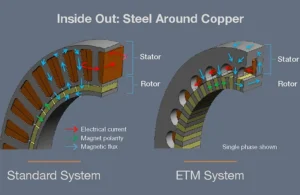
- Brushless DC (BLDC) Motors: Gaining significant traction in advanced applications like AGVs/AMRs and high-precision conveyors. BLDC gearmotors offer superior efficiency, longer lifespan, quiet operation, and precise speed and torque control due to their electronic commutation. Their compact size is also a major advantage in mobile robotics.
-
Gearbox Types: The gearbox component is crucial for converting high-speed, low-torque motor output into low-speed, high-torque output suitable for moving heavy loads. Common types include:
- Spur Gearboxes: Simple, efficient, but can be noisy.
- Helical Gearboxes: Quieter and offer smoother operation than spur gears, often used in conveyors.
- Worm Gearboxes: Provide high reduction ratios and self-locking capabilities, making them suitable for lifts and dock restraints where holding a position is critical.
- Planetary Gearboxes: Offer high torque density and efficiency in a compact package, ideal for robotics where space is at a premium and precise movement is required.
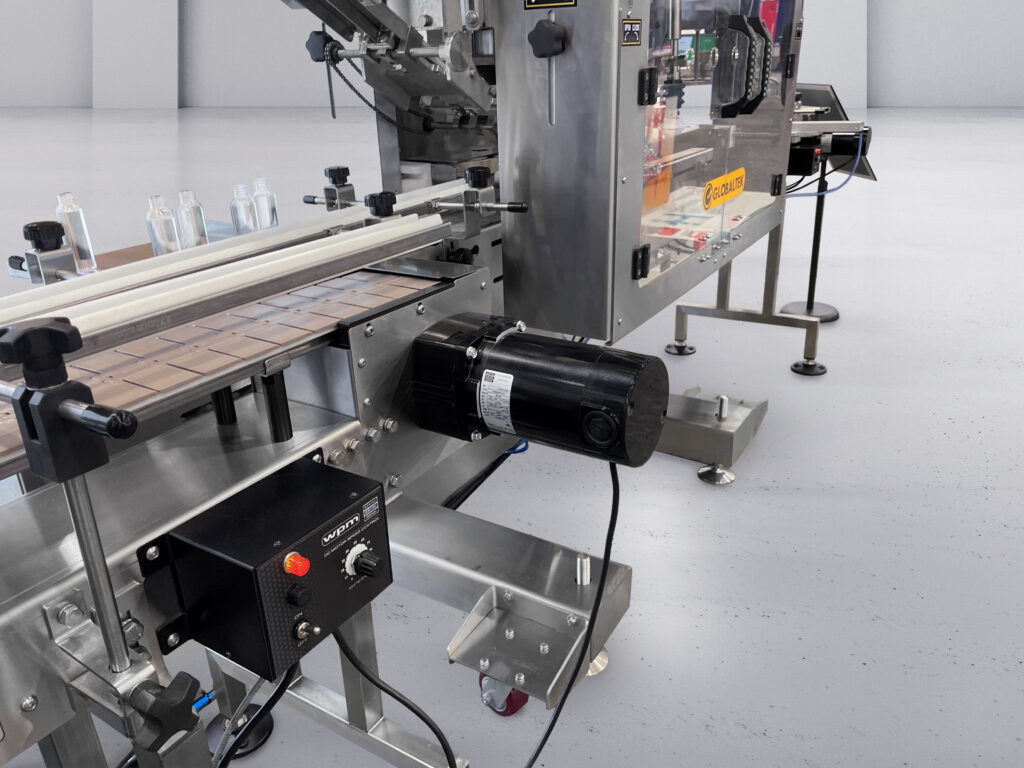
The control systems paired with these gearmotor-based designs vary widely in complexity. For many self-contained units, such as dock restraints or certain lift trucks, controls can be remarkably simple. A basic on-off switch, often complemented by an emergency-stop button, suffices for dock restraints. Similarly, some lift trucks, operated and steered by warehouse personnel, might only require a simple current-limit control where motor torque is directly proportional to current, enabling acceleration, speed holding, and direction changes (forward/reverse). For such straightforward designs, some fractional-horsepower gearmotor suppliers offer integrated speed controls with basic on-off and speed-adjustment functions.
However, a more prevalent trend, particularly for sophisticated warehouse automation, involves original equipment manufacturers (OEMs) designing or outsourcing custom control boards. This approach allows OEMs to seamlessly integrate gearmotor controls into broader, global control-system functions. Instead of managing multiple standalone control boards, a single, integrated board can execute all necessary functions, simplifying system architecture, reducing costs, and enhancing overall system coordination.
Flexible powered conveyors serve as an excellent example of integrated control. These systems often feature centralized controls that coordinate separate command zones. A long conveyor of this design might have a motor (and interconnected controls) every five feet or so. Switches or sensors detect the presence of boxes or workpieces in each zone, activating its specific motor to carry the items through. Once a zone is cleared, its motor is automatically turned off, and the next zone is powered on, creating a seamless "domino effect" of movement down the line. This zonal control not only optimizes energy consumption but also prevents bottlenecks and ensures efficient material flow.
Market Dynamics and Strategic Procurement
The procurement of gearmotors for warehouse automation equipment is a highly strategic process, primarily driven by OEM design engineers and purchasing managers. These professionals, armed with detailed wish lists from their design teams, engage directly with suppliers to size and specify components for standard lifts, conveyors, and other equipment. The critical factors in their selection often include performance specifications (torque, speed, efficiency), reliability, durability, lifespan, maintenance requirements, and cost.
Once the OEM designs are finalized and engineering specifications set, distributors and system integrators play a crucial role. They often interface with plant engineers to tailor these standardized solutions to the specific operational settings and unique requirements of individual warehouses. This customization might involve configuring control systems, integrating with existing infrastructure, or optimizing layouts for maximum efficiency.
The global supply chain landscape, especially in recent years, has underscored the importance of robust procurement strategies. When gearmotors from specific manufacturers suddenly become unavailable due to supply chain disruptions or obsolescence, purchasing managers face the challenging task of identifying and qualifying new suppliers. This often requires a rapid assessment of alternative products to ensure they meet the stringent performance and quality standards of the OEM’s established designs, minimizing disruption to production and deployment schedules. The long-term reliability of these components is paramount, as a single gearmotor failure can halt an entire automated line, leading to significant downtime and financial losses. Consequently, relationships with reliable, high-quality suppliers like Bodine Electric Co., as highlighted by insights from Terry Auchstetter, are invaluable.
Economic, Safety, and Environmental Implications
The widespread adoption of gearmotor-driven automation in warehouses carries significant implications across economic, safety, and environmental dimensions.
- Economic Impact: Automation, while sometimes raising concerns about job displacement, primarily shifts the nature of work. Repetitive, physically demanding tasks are taken over by machines, freeing human workers for roles requiring critical thinking, oversight, and technical skills in managing and maintaining these complex systems. The economic benefits are substantial: increased throughput, reduced operational costs (especially labor and error reduction), optimized inventory management, and faster order fulfillment, all contributing to enhanced competitiveness and profitability for businesses. The global warehouse automation market is projected to continue its robust growth, driven by ongoing investment in infrastructure and technology.
- Safety Enhancements: The safety implications are profound. Automated systems powered by gearmotors significantly reduce the risk of workplace injuries. Automated dock restraints prevent potentially catastrophic "trailer creep" incidents. Ergonomic lifts and motorized carts reduce musculoskeletal injuries associated with heavy lifting. AGVs and AMRs, with their precise navigation and safety sensors, minimize collisions, creating a safer environment for human co-workers. This leads to fewer accidents, lower insurance costs, and improved employee well-being.
- Environmental Considerations: Modern gearmotors are increasingly designed with energy efficiency in mind. Brushless DC (BLDC) motors, for example, consume less energy than traditional AC or DC brush motors for the same output, contributing to reduced carbon footprints for warehouse operations. Furthermore, optimizing material flow and storage density through automation can lead to more efficient use of space and resources, potentially reducing the need for larger facilities or minimizing waste. The longevity and reliability of high-quality gearmotors also mean less frequent replacement, reducing waste from discarded components.
The Road Ahead: Future Trends in Warehouse Automation
The trajectory of warehouse automation points towards even greater sophistication and autonomy, with gearmotors continuing to be a foundational element.
- Predictive Maintenance: The integration of IoT sensors with gearmotors will enable predictive maintenance. By monitoring parameters like temperature, vibration, and current draw, systems can anticipate potential failures before they occur, allowing for proactive maintenance and minimizing unplanned downtime.
- AI-Driven Optimization: Artificial intelligence and machine learning will further optimize the operation of gearmotor-driven systems. AI algorithms can dynamically adjust conveyor speeds, robot paths, and lift operations in real-time based on fluctuating demand, traffic patterns, and inventory levels, maximizing efficiency and responsiveness.
- Collaborative Robotics: The rise of collaborative robots (cobots) that work alongside humans will require gearmotors capable of extremely precise, safe, and responsive movements. These cobots will perform tasks that augment human capabilities, necessitating sophisticated motion control.
- Modular and Scalable Systems: Future warehouses will likely feature more modular and scalable automation solutions. Gearmotor-driven modules can be easily added, removed, or reconfigured to adapt to changing business needs, offering unparalleled flexibility.
- "Dark Warehouses": The ultimate vision for some highly automated facilities is the "dark warehouse," where operations run entirely without human presence, allowing for optimized environmental conditions (e.g., temperature, lighting) for goods rather than people. This level of autonomy will place even greater demands on the reliability and intelligence of every electromechanical component, especially gearmotors.
In conclusion, gearmotors, particularly the fractional-horsepower variants, are far more than mere components; they are the unsung heroes of the modern automated warehouse. They provide the precise, reliable, and efficient motion necessary to power the sophisticated machinery that defines contemporary logistics. As the demands on global supply chains continue to intensify, driven by consumer expectations and technological advancements, the role of these indispensable electromechanical systems will only grow, cementing their status as critical enablers of efficiency, safety, and innovation in the evolving landscape of warehousing. The ongoing conversation with industry experts, such as Terry Auchstetter of Bodine Electric Co., underscores the continuous innovation and critical importance of these powerful, yet often overlooked, drivers of progress.