A research consortium spearheaded by Worcester Polytechnic Institute (WPI) has secured a $3.3 million award from the National Science Foundation’s (NSF) Growing Convergence Research program to pioneer a revolutionary approach to waste management and mineral recovery. The five-year, two-phase initiative aims to transform industrial liabilities—such as coal ash, red mud, and mine tailings—into strategic assets by leveraging biological mechanisms found in nature. By emulating the ways diatoms, sea sponges, and various plants manipulate silica at a molecular level, the team intends to extract rare earth elements (REEs) and other critical minerals using significantly less energy and fewer toxic chemicals than traditional metallurgical processes.
The project, titled "Bio-inspired and Bio-enabled Recovery of Critical Minerals and Valorization of Silicate Waste," represents a significant shift in how the scientific community views industrial byproducts. Rather than treating these materials as environmental hazards destined for landfills, the WPI-led team views them as "urban mines" that hold the key to securing the nation’s technological and energy future.
The Economic and Environmental Scale of Industrial Waste
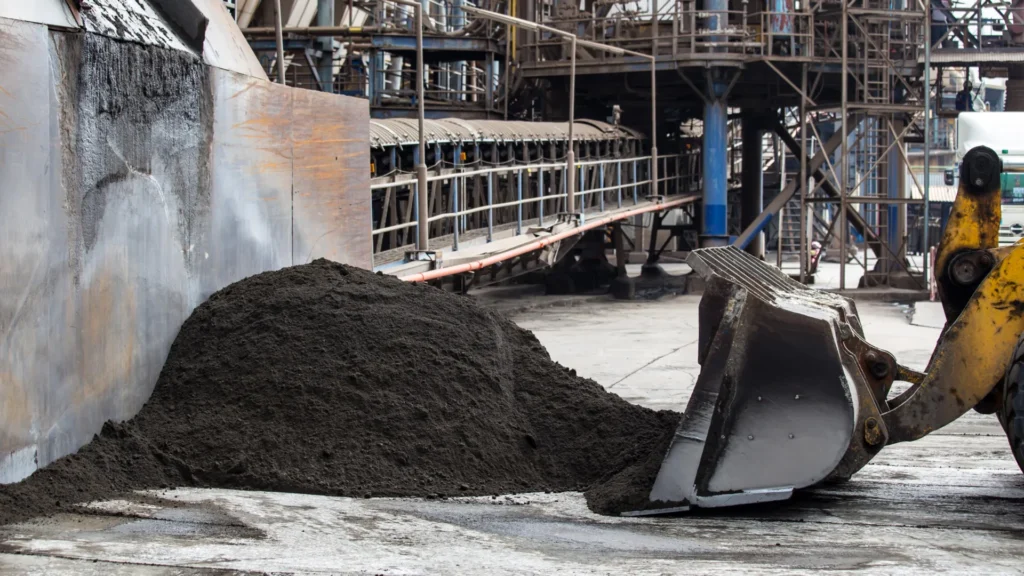
The scale of the problem the researchers are addressing is immense. For decades, industrial processes have generated vast quantities of silicon-rich waste. Coal-fired power plants produce coal ash; the aluminum industry generates red mud; and mining operations leave behind mountains of tailings. These materials are often stored in massive ponds, impoundments, or landfills, where they pose long-term risks of groundwater contamination and structural failure.
However, recent geological and chemical assessments have revealed the hidden value within these waste streams. According to research estimates, approximately 11 million tons of rare earth elements are currently trapped in U.S. coal ash landfills alone. This volume is valued at roughly $8.4 billion—a figure nearly eight times the value of the nation’s current raw domestic reserves.
Rare earth elements, a group of 17 chemically similar elements, are indispensable to modern technology. They are critical components in the manufacturing of high-strength magnets for electric vehicle (EV) motors, wind turbine generators, smartphone screens, and advanced defense systems. Currently, the global supply chain for REEs is heavily concentrated in a few geographic regions, creating significant economic and national security vulnerabilities for the United States. Finding a sustainable, domestic method to recover these minerals from existing waste could provide a stable supply while simultaneously cleaning up legacy pollution.
A Nature-Inspired Paradigm Shift: The Power of Bio-Mimicry
Traditional methods of extracting minerals from silicate-rich waste are notoriously "dirty." They typically involve "pyrometallurgy," which requires extreme temperatures and massive energy consumption, or "hydrometallurgy," which relies on aggressive acids and bases that generate further toxic runoff.
The WPI-led team is proposing a radical alternative: looking to biology for blueprints. In the natural world, organisms such as diatoms (single-celled algae) and sea sponges perform complex chemical engineering at ambient temperatures and in neutral pH environments. These organisms use specialized biological molecules and organic scaffolds to harvest dissolved silicon from seawater and assemble it into intricate, high-strength silica structures.
"Nature has already solved the problem of how to manipulate silica efficiently," said Mingjiang Tao, associate professor in the WPI Department of Civil, Environmental, and Architectural Engineering and the project’s lead principal investigator. "By studying and adapting these biological strategies, we can develop lower-energy methods to break down industrial waste. Our goal is to use these biomolecules to ‘unlock’ the silica structure, releasing the trapped rare earth elements and other critical minerals."
The "Whole-Material" Philosophy
A distinguishing feature of this research is its commitment to a "whole-material" approach. In many recycling or recovery efforts, the focus is solely on the most valuable component, while the remainder is discarded as secondary waste. Tao and his colleagues argue that this is an incomplete solution.
The project seeks to develop a process that utilizes as much of each waste stream as possible. Once the rare earth elements are extracted, the remaining silica-rich material will not be returned to a landfill. Instead, the researchers plan to use bio-enabled processes to convert that residue into useful, marketable products. This could include high-purity silica for glass and ceramics, silicones for industrial applications, or sustainable additives for concrete and construction materials.
This holistic strategy aligns with the principles of the circular economy, where the output of one process becomes the input for another, effectively eliminating the concept of "waste" entirely.
Leveraging Artificial Intelligence and Computational Modeling
To accelerate the transition from biological observation to industrial application, the team is employing cutting-edge digital tools. The discovery of specific biomolecules that can interact with industrial waste is a daunting task, given the near-infinite variations in molecular structures.
Researchers will use advanced computational modeling and artificial intelligence (AI) to design and test specialized biomolecules in a virtual environment. These AI tools can predict how a specific protein or organic scaffold will interact with the chemical bonds in coal ash or red mud. By simulating thousands of reactions per second, the team can identify the most promising candidates for mineral recovery and materials manufacturing, bypassing years of trial-and-error laboratory work.
This integration of data science and biotechnology is a hallmark of the NSF’s Growing Convergence Research program, which is designed to support "transdisciplinary" projects that merge traditionally distinct fields of study to solve complex societal problems.
A Multi-Disciplinary Collaboration
The complexity of the project requires a diverse array of expertise. Joining Mingjiang Tao at WPI are co-principal investigators Carrick Eggleston and Yan Wang.
Professor Carrick Eggleston, a geochemist, will focus on the fundamental chemical reactions involved in the process. His work will examine the "reaction pathways"—the step-by-step changes that occur when silicate materials are broken down and rebuilt. This includes studying dissolution, repolymerization, and carbonation, all of which are essential for turning raw waste into sophisticated new materials.
Professor Yan Wang, the William B. Smith Professor of Mechanical and Materials Engineering, brings his renowned expertise in sustainable manufacturing and battery recycling to the project. Wang’s previous work in closed-loop battery recycling has already set industry standards; here, he will lead the efforts to bioengineer methods specifically for the recovery of critical minerals.
The collaboration extends beyond WPI, incorporating researchers from George Mason University, the University of California San Diego, the University of Massachusetts Amherst, and the University at Buffalo. This network ensures that the project benefits from top-tier talent in metallurgy, biology, engineering, and environmental policy.
Timeline and Phase-Based Implementation
The project is structured as a five-year, two-phase effort.
- Phase I (Years 1-2): The initial focus will be on laboratory-scale testing and computational modeling. Researchers will identify the biological molecules most effective at breaking down different types of industrial waste and refine the AI models used for molecular design.
- Phase II (Years 3-5): Once the fundamental processes are established, the team will pivot toward scalability. This phase will involve testing the technology in larger volumes and conducting economic feasibility studies. The goal is to prove that bio-inspired recovery is not only scientifically possible but also commercially viable for large-scale industrial adoption.
Broader Impact and Global Implications
The success of this initiative could have far-reaching implications for global industry and environmental policy. By reducing the energy requirements of mineral recovery, the project directly contributes to global decarbonization goals. Furthermore, it addresses the "not in my backyard" (NIMBY) challenges often associated with traditional mining; by recovering minerals from existing waste sites, the need for new, disruptive mining operations is diminished.
From a geopolitical standpoint, the ability to harvest $8.4 billion worth of REEs from domestic landfills would significantly bolster the U.S. supply chain, reducing reliance on foreign imports for technologies that are essential for both the green energy transition and national defense.
The project also serves as an educational catalyst. WPI graduate and undergraduate students will be deeply involved in the research, gaining hands-on experience in a field that sits at the intersection of AI, biotechnology, and environmental engineering. These students represent the next generation of innovators who will be tasked with managing the planet’s resources more sustainably.
Ultimately, the WPI-led project aims to create a new "bioengineered, silicon-based materials ecosystem." By connecting researchers, industry leaders, and policymakers, the team hopes to build a framework where industrial waste is no longer seen as a burden to be managed, but as a fountain of resources to be tapped. As the world moves toward a more sustainable future, the lessons learned from diatoms and sea sponges may provide the most sophisticated solutions to the most pressing industrial challenges of the 21st century.