The commercial aviation industry stands on the precipice of its most significant technological advancement in a generation, as global giants Airbus and Boeing intensify their efforts to design and develop the successors to their best-selling single-aisle aircraft. While specific timelines remain fluid, executives from both planemakers and key engine suppliers revealed at the recent Farnborough International Airshow that crucial decisions regarding engine configurations, wing designs, and overall architecture are rapidly approaching, with a target launch for a new Airbus model set for 2030. These next-generation aircraft promise a substantial leap in fuel efficiency, performance, and potentially propulsion systems, driven by evolving market demands and the urgent need to address environmental concerns.
The biennial Farnborough International Airshow, a premier global event for the aerospace and defense industry, provided a crucial platform for these discussions. Held just outside London, the show typically draws hundreds of thousands of attendees, including industry leaders, government officials, and media from around the world. It serves as a critical venue for manufacturers to showcase their latest innovations, announce new partnerships, and offer insights into future strategies. This year’s event was particularly significant as it underscored the accelerating pace of innovation in the highly competitive single-aisle market, which represents the largest segment of global aircraft deliveries.
Strategic Timelines and Technological Maturation
Boeing Chief Technology Officer Lane Ballard articulated the company’s deliberate approach during a roundtable discussion on July 21. "For us, the next couple years is about making sure that we get our finances ready, and we get the technology decisions made so that ultimately we’ll be positioned," Ballard stated. He emphasized that the timing of a new aircraft introduction is contingent upon market readiness, customer demand, and Boeing’s own operational capacity. "The time will be right, the market needs to be right, the customers obviously," he added, underscoring the need for a holistic convergence of factors before committing to a new program. Ballard also highlighted the company’s immediate focus on fulfilling its substantial backlog of 6,800 aircraft, stating, "We’ve got 6,800 planes in backlog; we’ve got to make sure that we get those into the hands of our customers while we focus on that next leap."
Echoing this sentiment, Airbus CEO Guillaume Faury confirmed the company’s commitment to a 2030 launch for a successor to its highly successful A320 family. During a media event on July 21, Faury acknowledged that while significant technological advancements are still being refined, Airbus is on track. "We are not yet there," Faury told reporters. "We are maturing technologies, but we have a roadmap that leads to being fully prepared for the launch in 2030 and the entry to service in the back end of the next decade." This ambitious timeline suggests that Airbus is pushing ahead with a determined pace, aiming to leverage its market leadership and technological foresight.
Market Dynamics and the Imperative for Efficiency
The strategic importance of these next-generation aircraft cannot be overstated. Aviation analytics firm Cirium projects a staggering $3.4 trillion in aircraft deliveries through 2044, with single-aisle airliners accounting for approximately 75% of this market value. As current aircraft designs approach the limits of their fuel efficiency gains, the demand for next-generation aircraft that offer substantial improvements in this area is paramount. Sash Tusa, an aviation industry analyst at Agency Partners, stressed the high stakes involved. "It’s incredibly important, because get this wrong and you’ve lost a decade," Tusa commented. "Maybe a bit less, but that’s a lot of sales." This underscores the competitive imperative for Airbus and Boeing to develop aircraft that not only meet future performance benchmarks but also capture significant market share for decades to come.
Revolutionary Propulsion Systems Under Consideration
A pivotal aspect of these future aircraft is their propulsion systems. The choice of engine suppliers and the underlying technology will dictate the environmental performance and operational economics of the new jets. Three major players are vying for a central role: CFM International (a joint venture of GE Aerospace and Safran), Pratt & Whitney, and Rolls-Royce.
Rolls-Royce CEO Tufan Erginbilgic indicated that a decision on engine suppliers could be made within the next two years. "Once they do the engine decision, you are either in or you are out," Erginbilgic stated at Farnborough, highlighting the decisive nature of these upcoming choices.
Airbus confirmed it is actively exploring a range of advanced engine configurations. A company spokesperson reiterated the 2030 target for the next-generation single-aisle announcement and elaborated on the technologies being matured, including "engine configurations, including a possible open fan design, longer and thinner wings and more integrated automated systems."
The "open fan" configuration, where engine fan blades are exposed rather than enclosed within a nacelle, is a particularly intriguing prospect. CFM International has been a vocal proponent of this technology, which promises significant improvements in fuel efficiency. CFM CEO Gaël Méheust reaffirmed the company’s commitment to open fan technology at a briefing in London prior to Farnborough, emphasizing its role in achieving the "step change in efficiency required for the next generation of engines." CFM is also exploring hybrid-electric propulsion and compact core designs for enhanced cooling. A demonstration flight of a CFM open-fan engine on an A380 test aircraft is planned before the end of the decade.
Rolls-Royce is making a concerted effort to re-enter the single-aisle market, a segment it has not been a major player in for some time. The company is seeking U.K. government funding to further develop its UltraFan 30 engine, a high-bypass-ratio turbofan design unveiled earlier this year. The success of the UltraFan, or alternative Rolls-Royce technologies, could be crucial for its strategic objectives.
The Rise of Hybrid-Electric Propulsion
The ongoing development timelines for these new aircraft also create an opportunity for more nascent technologies, such as hybrid-electric propulsion, to mature into viable options. Sasha Tusa noted that the longer the development cycle, the more plausible it becomes for hybrid-electric systems to be integrated.
A significant development in this area was announced on July 20, when GE announced a flight milestone with BETA Technologies. The companies successfully replaced one of the turboprop engines on a Saab 340 regional jet with a 1-megawatt hybrid-electric engine. This engine, developed in collaboration with NASA and Boeing subsidiary Aurora Flight Sciences, was flown across the Atlantic above 30,000 feet. GE Aerospace Commercial Engines CEO Mohamed Ali declared, "Simulation has given way to real-world innovation," indicating that such engine classes are now potentially capable of powering single-aisle passenger airliners.
This breakthrough in hybrid-electric technology could fundamentally alter the propulsion landscape for future aircraft. It represents a tangible step towards decarbonizing aviation, a key objective for both manufacturers and regulators.
Pratt & Whitney’s Strategic Position
For Pratt & Whitney, the development of these new aircraft presents a critical opportunity to expand its market presence. "Our incentive is that we would think it’s a great opportunity to maybe get back into Boeing and continue partnering with Airbus," said Rick Deurloo, President of Commercial Engines, during the company’s chalet at Farnborough on July 21. "That’s a hell of an incentive for us." This statement underscores the competitive stakes for engine manufacturers, as securing contracts for next-generation aircraft can define their market position for decades.
Innovations in Aerodynamics: The Future of Wings
Beyond propulsion, significant advancements are also anticipated in aircraft wing design. Airbus announced at Farnborough its intention to flight-test next-generation folding wingtips. This technology is designed to allow for longer, more aerodynamically efficient wingspans without exceeding standard airport gate dimensions, a critical operational constraint. Airbus plans to design, build, and flight-test several configurations over the next three years, with flight trials scheduled to commence in the second half of 2027. Richard MacPherson, technology lead on the project, emphasized the importance of this research: "Ultimately, all of this flight-test data that we will gather will be absolutely critical to de-risk the technology of folding wings in flight, but also to unlock the power and potential that long, high-aspect-ratio wings will have in the future."
Boeing also foresees longer and thinner wings for its future aircraft. Lane Ballard confirmed that the company is considering folding wingtips, a feature already incorporated into the design of the 777X. These aerodynamic enhancements are crucial for improving fuel efficiency and extending range, key performance metrics for modern airliners.
Industrial Capacity and Production Readiness
The ambitious technological goals are closely intertwined with the industrial capacity of both manufacturers and their supply chains. John Schmidt, global head of aerospace and defense at Accenture, highlighted this critical factor: "The timing of the next-generation platform will depend as much on industrial readiness as technological readiness." He noted that both Airbus and Boeing are currently grappling with stabilizing supply chains and meeting unprecedented demand for existing aircraft. Therefore, the introduction of new programs will likely be contingent on a strong confidence in the ecosystem’s ability to execute at scale.
Airbus has been proactively addressing its industrial capacity. Guillaume Faury explained that the company began assessing its future needs and restructuring efforts as early as 2018. This includes an ongoing collaboration with Dassault Systèmes aimed at integrating aircraft, production systems, and services within a digital environment.
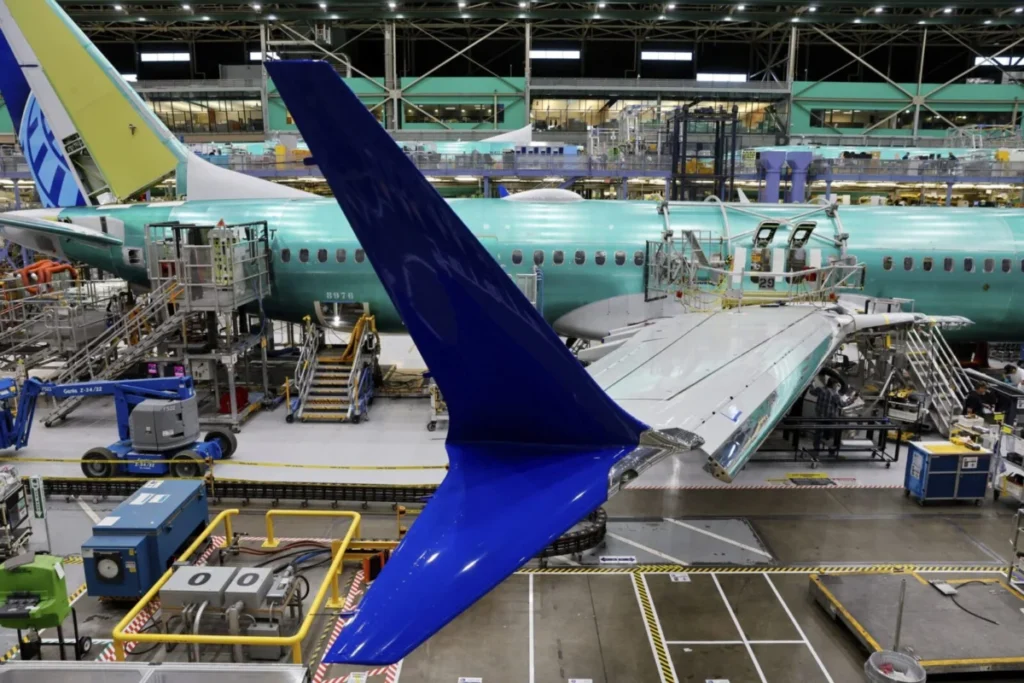
Boeing, while facing its own manufacturing challenges, including quality control issues with the 787 Dreamliner and certification delays for the 777X, is prioritizing industrial capacity in its new aircraft planning. Ballard indicated that the company aims to build its next jet at "historically high" rates, incorporating greater automation and potentially advanced technologies like quantum computing. Boeing is actively seeking an optimal balance between aerodynamic performance and production efficiency, aiming to "get it right" for its customers.
The Path Forward: A Generational Shift
The decisions being made today by Airbus and Boeing, and their respective engine partners, will shape the future of air travel for decades to come. The pursuit of greater fuel efficiency, reduced emissions, and enhanced passenger experience necessitates a bold reimagining of aircraft design. From revolutionary open-fan and hybrid-electric propulsion systems to advanced aerodynamic wing technologies and sophisticated digital manufacturing processes, the next generation of single-aisle airliners promises a transformative leap forward. While the exact timelines are subject to technological maturation, market dynamics, and industrial readiness, the industry is clearly embarking on a new era of innovation, driven by the imperative to create more sustainable and efficient aviation for the future. The next few years will be critical in solidifying the blueprints for these groundbreaking aircraft, setting the stage for a new benchmark in commercial aviation technology.