The United States Department of Defense is undergoing a significant transformation in its approach to defense training, driven by the accelerating integration of artificial intelligence (AI). This strategic shift, while promising enhanced efficiency and realism, also introduces a complex array of challenges that require careful consideration and collaborative solutions. Retired Vice Adm. Sean Buck, in his capacity as president of the National Training & Simulation Association (NTSA), a subsidiary of the National Defense Industrial Association (NDIA), is at the forefront of these discussions, working to bridge the gap between industry, academia, and government to refine the national security training ecosystem.
Buck, who brings four decades of U.S. Navy experience, including roles as a naval flight officer and superintendent of the U.S. Naval Academy, articulated his vision during an interview on the sidelines of MODSIM World, a prominent NTSA event focused on modeling and simulation. His leadership at NTSA, a role he assumed in 2024, is characterized by a commitment to convening stakeholders, fostering collaboration, and coordinating efforts to navigate the evolving landscape of defense training. "I’m a convener, a collaborator and a coordinator," Buck stated, underscoring the multifaceted nature of his responsibilities in this critical domain.
The Power of Simulation: A Historical Perspective and Modern Realization
The efficacy of simulation-based training in the military is not a new revelation. Buck highlighted that the concept has been understood for decades, with the primary limitation being the availability of sufficient computational power. "We knew this 60 or 70 years ago, but what we didn’t have then was the [necessary] compute power," he explained. The advent of massively powerful computing capabilities has now unlocked the potential for highly sophisticated and realistic synthetic environments. This technological leap allows for the creation of training scenarios that are not only more efficient but also demonstrably more effective in preparing military personnel for their demanding roles.
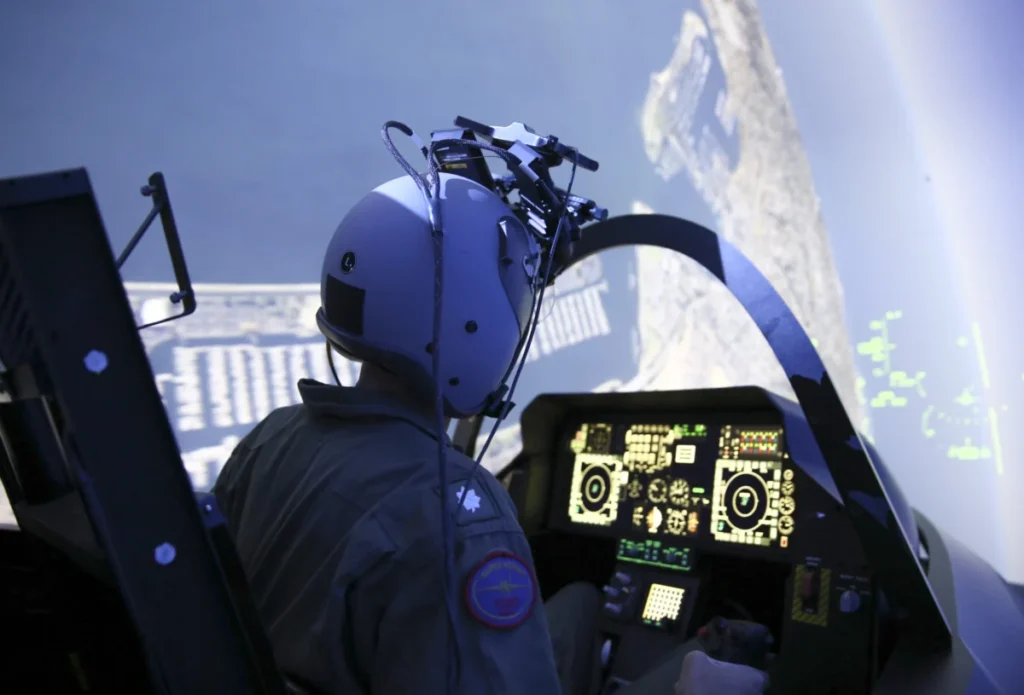
"Anybody that’s doing a particular task can be [trained] through simulation and high-fidelity synthetic environments now. It’s more efficient, and – I would suggest and argue – it’s more effective," Buck asserted. The ability to replicate complex operational environments, from the cockpit of an advanced aircraft to the intricate command center of a naval vessel, offers a safe and controlled space for trainees to hone their skills without the risks and costs associated with real-world exercises. This is particularly crucial in an era where the complexity of modern warfare demands a highly skilled and adaptable workforce. The continuous advancement in computing power directly correlates with the quality and fidelity of these training simulations, leading to better-prepared individuals.
AI as a Transformative Force in Defense Training
While increased compute power has been foundational, the integration of artificial intelligence (AI) represents the next paradigm shift in defense modeling, simulation, and training (MS&T). Buck identified AI as a "game changer" and a central focus for NTSA. The organization is dedicated to assisting the MS&T industry in incorporating AI to enhance the realism and effectiveness of training programs.
"What I see is the introduction of artificial intelligence into existing modeling and simulation. That is a game changer and where we’re really intensely focused [on] at NTSA: helping the modeling, simulation and training industry introduce and complement their simulation with AI, [which] makes for a better and more realistic training environment," Buck elaborated.
Historically, simulation training primarily focused on the physical execution of tasks, such as piloting an aircraft or operating weaponry. However, AI is expanding this scope to encompass the cognitive aspects of military operations, particularly in decision-making processes. "When I first got into the job, I thought about training a human to do a physical endeavor: Fly an airplane, shoot a gun, use a telescope. Now, what I see is we’re using simulation and AI to help with decision-making. The cognitive aspect of training a decision-maker is a very, very powerful aspect of training," Buck explained. This shift is critical as modern conflicts increasingly involve complex, data-rich environments where rapid and accurate decision-making under pressure can be the determining factor between success and failure.
Emerging Technologies Shaping the Future of MS&T
Looking ahead, Buck anticipates several key technological trends that will continue to shape MS&T over the next five to ten years. Beyond the foundational advancements in compute power and data processing speeds, AI stands out as the most significant disruptor. The ability of AI algorithms to learn, adapt, and predict offers unparalleled opportunities to create dynamic and responsive training scenarios. This includes generating intelligent adversaries within simulations, providing personalized feedback to trainees, and optimizing training pathways based on individual performance.
Furthermore, the increasing sophistication of virtual reality (VR) and augmented reality (AR) technologies, coupled with AI, is poised to deliver even more immersive and engaging training experiences. These technologies can create highly realistic environments that allow trainees to interact with virtual systems and personnel, fostering a deeper understanding of operational dynamics and team coordination. The convergence of these technologies promises to elevate the fidelity and impact of defense training to unprecedented levels.
Navigating the Risks and Ethical Considerations of AI Adoption
Despite the immense potential, the integration of AI into defense training is not without its risks. Buck candidly addressed these concerns, emphasizing the need for robust governance and oversight. "I see a lot of risk," he admitted. "All of us that choose to put AI on our networks need to keep it compliant, to govern use [of it] and light off a warning signal when the bias is getting out of bounds."
The issue of AI bias is particularly concerning in defense contexts. If AI systems are trained on biased data, they can perpetuate and even amplify those biases, leading to inequitable or flawed decision-making in training scenarios and potentially in real-world operations. Therefore, rigorous data validation, ongoing bias detection, and the establishment of clear ethical guidelines for AI development and deployment are paramount.
Moreover, Buck stressed the importance of post-implementation assessment to ensure that the use of AI truly yields beneficial outcomes. "We also need to do an assessment after the fact that the use of it truly was beneficial." This includes evaluating the impact on trainee performance, operational readiness, and the overall effectiveness of the training program. This iterative process of development, deployment, and evaluation is crucial for responsible AI integration.
The Human Element in an Increasingly Autonomous World
The Pentagon’s broader strategic push towards greater autonomy in military operations, particularly in aviation, presents a unique set of challenges for training. While Buck acknowledges the inevitable progression towards more autonomous systems, he maintains a strong conviction about the continued necessity of human oversight and decision-making. "For the foreseeable future, I want and hope that we keep a human in the loop of the decision-making cycle as we move every day to more autonomy," he stated.
Currently, autonomy is most visible in the operational control of vehicles. However, AI’s increasing role in decision-making processes raises questions about the extent to which humans should delegate critical judgments to machines. Buck expressed a degree of skepticism regarding the complete delegation of decision-making to AI, particularly in complex and ethically sensitive situations.
The concept of "unmanned" systems, such as drones, is often a misnomer, as Buck pointed out. The operation of these platforms relies on a vast network of human support, including pilots, engineers, logisticians, and intelligence analysts. As technology advances, the autonomy of these systems will undoubtedly increase, blurring the lines between human control and machine execution. This evolution is evident across various domains, including remotely piloted undersea, surface, air, and space vehicles.
A significant challenge arises when humans are tasked with operating weapon systems against adversaries they do not physically see. This disembodied engagement can have profound psychological and emotional impacts on military personnel. Buck emphasized the need to understand and address these human factors: "We have humans that are operating those right now, and we need to listen to them to see how they’re doing emotionally, psychologically as they employ weapon systems against an adversary they don’t physically see. That’s a heck of a dilemma."
Rethinking Training for Psychological and Ethical Complexities
Buck’s insights strongly suggest that the future of training for autonomous platforms must evolve beyond technical proficiency to encompass a deeper understanding of psychological and ethical considerations. "It sounds like your answer is that training for autonomous platforms has to change to encompass different psychological and ethical dilemmas?" the interviewer asked.
"Yes, that is exactly my answer," Buck affirmed. "A human is subject to psychological and emotional factors. It’s also about the psychological aspects of using automation and autonomy. Where are we heading with that? Because that’s a component of training and preparation."
This implies a need to develop training methodologies that equip service members with the resilience and cognitive frameworks to manage the complexities of remote warfare, to understand the implications of AI-assisted decision-making, and to maintain ethical integrity in increasingly automated operational environments. The psychological toll of wielding lethal force through a digital interface, without direct visual or physical confrontation, requires dedicated attention and innovative training solutions.
The NTSA, under Buck’s leadership, is strategically positioned to facilitate the critical dialogue and collaborative efforts necessary to address these multifaceted challenges. By bringing together diverse stakeholders, the association aims to foster a shared understanding of the opportunities and risks presented by AI in defense training. This inclusive approach is essential for developing robust, ethical, and effective training programs that will prepare the U.S. military for the future of warfare, ensuring that technological advancement is harnessed responsibly to enhance, rather than compromise, national security and the well-being of its personnel. The ongoing evolution of AI and autonomous systems necessitates a parallel evolution in how military personnel are trained, emphasizing not just technical mastery but also the critical human dimensions of decision-making, ethics, and psychological resilience in an increasingly complex and technologically advanced operational landscape.