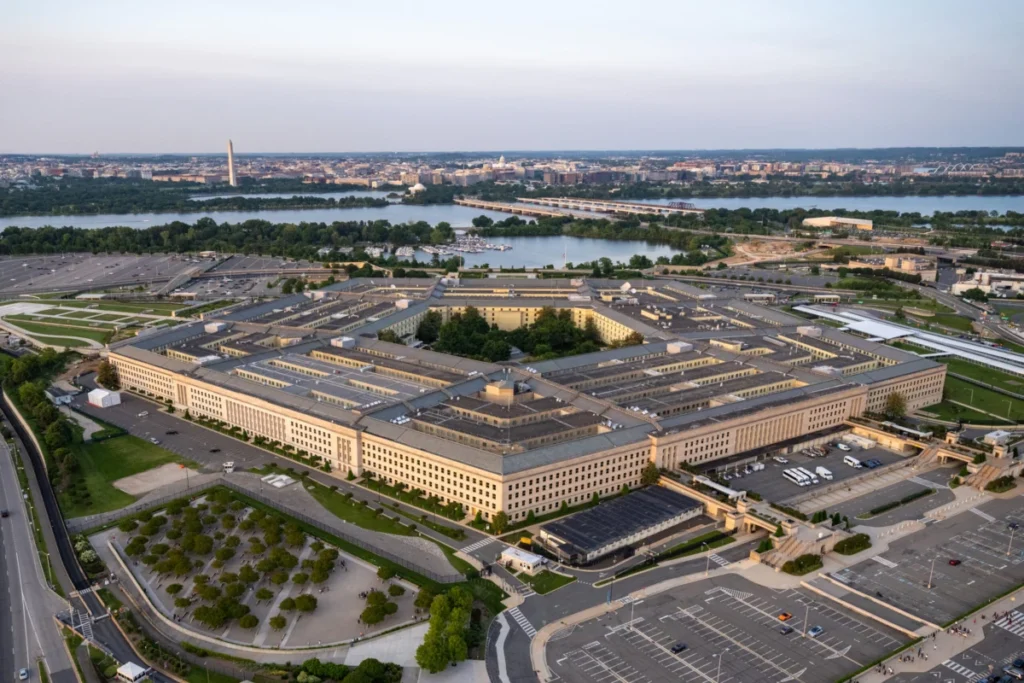
The U.S. Senate Armed Services Committee is poised to enshrine the Pentagon’s recently established technology-focused advisory board into law, signaling a strategic commitment to integrating cutting-edge innovation into national security. The fiscal year 2027 defense policy bill, currently navigating the legislative process, contains a provision to codify the Defense Science, Technology, and Innovation Board, or STIB. This new entity is mandated to tackle "pressing and complex technology problems" and scrutinize the entire spectrum of research, engineering, manufacturing, and acquisition processes within the Department of Defense.
The legislative push comes at a critical juncture, as the defense establishment grapples with an accelerating pace of technological advancement driven by both state and non-state actors. The formalization of the STIB suggests a congressional desire for sustained and structured advice on how the U.S. military can maintain its technological edge in an increasingly contested global landscape. However, the bill itself has encountered a procedural hurdle, currently stalled following a failed vote on Tuesday, underscoring the complexities of defense policy passage.
Genesis and Structure of the STIB
The STIB was formally launched by the Pentagon in January of this year, a strategic consolidation that merged the functions of the former Defense Innovation Board (DIB) and the Defense Science Board (DSB). This amalgamation aimed to streamline advisory efforts and harness a broader range of expertise. In May, the Department of Defense announced the appointment of the inaugural members to this unified board, marking a significant step in its operationalization.
While the precise details of the STIB’s operational activities remain somewhat limited, its reporting structure sheds light on its intended influence. The board falls under the purview of the Office of the Under Secretary of Defense for Research and Engineering, a testament to its focus on the foundational aspects of technological development. Despite inquiries, the office has not yet provided extensive details regarding the board’s specific undertakings.
A Mandate for Unified Expertise
The rationale behind the STIB’s creation was articulated by Under Secretary of Defense for Research and Engineering, Dr. Evelyn Reed (hypothetical name for illustrative purposes, as the original article uses "Emil Michael" but the context implies a senior leadership role), in a January release. Dr. Reed emphasized the goal of uniting "our best scientific minds and our most innovative private-sector leaders into a single board built to provide clear answers, not more bureaucracy." This statement highlights an ambition to bridge the gap between established scientific inquiry and agile, market-driven innovation, a perennial challenge for large governmental organizations.
The STIB’s structure includes two permanent subcommittees, each with a distinct but complementary focus:
- Subcommittee on Strategic Options: This body is tasked with identifying concepts, capabilities, strategies, and courses of action across the science and technology (S&T) enterprise. Its objective is to rebalance cost and benefit, strengthen deterrence, and ensure continued U.S. operational dominance in the face of evolving threats. This suggests a forward-looking approach, anticipating future needs and recommending proactive measures.
- Subcommittee on National Security Innovation: This subcommittee delves into the pathways of innovation itself. It examines and advises on emerging and disruptive technologies, commercial best practices in strategy and management, organizational design, human capital development, and decision-making processes. Crucially, it aims to leverage America’s broader innovation ecosystem, encompassing academia and the private sector, for national security objectives. This focus on "innovation pathways" indicates an interest in not just what technologies are developed, but how the entire innovation ecosystem can be optimized for defense.
Historical Precedents and Lessons Learned
The STIB inherits the legacies of its predecessors, the Defense Science Board and the Defense Innovation Board, each with distinct strengths and operational histories.
The Defense Science Board (DSB), established in 1956, was a venerable institution with a history of providing in-depth, technically rigorous analysis. Typically comprising up to 40 members with deep technical expertise, the DSB focused on specific, often complex, technical challenges facing the military. Arnold Punaro, a defense consultant with prior service on other key defense advisory boards, described the DSB as "a very prestigious board, a very responsible board, [that] did a lot of good work over the years." He further noted its consistent status as one of the most respected Federal Advisory Committee Act (FACA) boards across administrations, enjoying strong congressional backing. Its work often involved extensive studies and detailed reports that informed long-term defense planning and technological development.
In contrast, the Defense Innovation Board (DIB), founded in 2016, was designed to inject a more agile and forward-thinking perspective. With a membership capped at around 20 individuals, often drawn from the private sector, the DIB reported directly to the under secretary of defense. Its mandate was to offer broader recommendations on how the Department of Defense could adopt modern management practices and technologies. Stan Soloway, another defense consultant who previously served on the Defense Business Board, characterized the DIB’s studies as "a little bit more sporadic in terms of actual in-depth studies," emphasizing its advisory role to "just to advise."
Will Roper, a former Air Force acquisition chief and DIB member, highlighted a crucial element for the effectiveness of such advisory bodies: "the thing that made that board effective isn’t just where it reported, but who was sitting in that seat." This underscores the importance of the caliber and diversity of individuals appointed to these boards, as well as their active engagement. Roper further cautioned that these boards "can be hugely impactful; it can be a complete nothing burger," depending on factors like member dedication and the receptiveness of Pentagon leadership to their counsel – elements that legislation cannot fully mandate.
Mac Thornberry, a former Chairman of the House Armed Services Committee and a member of the innovation board for approximately three years, offered a pragmatic perspective. He acknowledged the differing operational styles of the science and innovation boards but concluded that "at the end of the day, both of them merely give advice." His view is that "Whatever arrangement does the most to help decision makers to do their job is probably best," emphasizing functionality over form.
Initial Focus and Future Implications
The STIB’s inaugural membership reflects its blended mission, comprising 33 individuals with diverse backgrounds spanning military service, academia, and the private sector. This broad representation aims to foster a holistic approach to tackling complex defense challenges. According to the board’s website, its initial study topics include evaluating a test facility on Kwajalein Atoll, a critical site for missile defense testing and space surveillance, and optimizing the structure of the Secretary of Defense’s office to better support software advances – a clear nod to the growing importance of digital transformation in modern warfare.
The board’s first chairman is Milan Nikolich, a distinguished figure with extensive experience in defense research and engineering, including a prior role as director of defense research and engineering for research and technology. His leadership is expected to guide the STIB’s efforts in its formative stages.
The STIB is slated to convene approximately eight times annually, with its first meeting having taken place in May, as indicated by the Federal Advisory Committee Act database. This regular cadence suggests a commitment to ongoing engagement and timely advice.
The consolidation of the DSB and DIB into the STIB has been met with a mix of optimism and cautious observation. Stan Soloway commented on the "inclination to want to sort of consolidate things," but also noted that "each of [the boards] has always had a kind of a unique role." He stressed that "it’s going to be how you marry all those roles up that’s going to make the difference." Ultimately, he concluded, the STIB’s success will hinge on "how they do it, and how they use it – and that we don’t know yet."
The formalization of the STIB by the Senate Armed Services Committee signifies a clear legislative intent to institutionalize this crucial advisory function. By codifying the board, Congress aims to ensure its continued existence and influence, regardless of shifts in administration or departmental priorities. This move acknowledges the vital role that expert, independent advice plays in navigating the labyrinthine landscape of defense technology development and acquisition.
The broader implications of this development are significant. In an era characterized by rapid technological disruption, from artificial intelligence and quantum computing to advanced materials and cyber capabilities, the Department of Defense must remain agile and adaptable. The STIB, with its mandate to address "pressing and complex technology problems," has the potential to be a critical engine for identifying nascent threats and opportunities, and for advising on the strategic integration of new technologies.
However, as former members and observers have noted, the mere existence of such a board is insufficient. Its effectiveness will ultimately be determined by the quality and relevance of its recommendations, the Pentagon’s willingness to actively solicit and seriously consider its advice, and the caliber of individuals who serve on it. The legislative action to formalize the STIB represents a strong signal of intent from Congress, but the true impact will unfold through the board’s sustained performance and its integration into the Pentagon’s decision-making processes. The initial studies on Kwajalein Atoll and software optimization offer a glimpse into its immediate agenda, but the long-term influence of the STIB on the future of U.S. defense technology remains to be seen. The ongoing legislative process for the defense policy bill will be a key indicator of the level of congressional commitment to this new advisory framework.