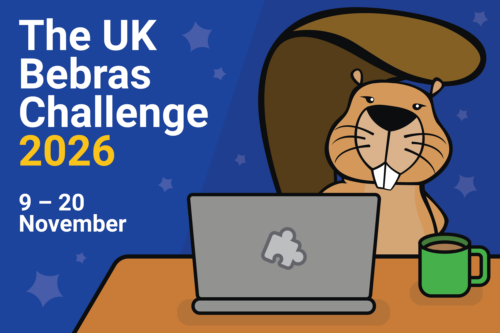
The UK Bebras Challenge, the United Kingdom’s largest and most influential computing competition, has officially launched its latest cycle, inviting primary and secondary schools across the country to participate in an initiative that reached more than 526,000 students last year. Organized by the Raspberry Pi Foundation in partnership with the University of Oxford, the challenge serves as a critical entry point for young people into the world of computer science, emphasizing logical reasoning and problem-solving over technical programming knowledge. By removing the barriers of syntax and coding experience, the program aims to democratize access to high-level computational concepts for students aged 6 to 19.
The Evolution and Purpose of the UK Bebras Challenge
The Bebras Challenge is an international initiative, originally founded in Lithuania in 2004 by Professor Valentina Dagienė. The name "Bebras" is the Lithuanian word for beaver, chosen to symbolize the industrious and collaborative nature of the animal. Since its inception, the challenge has grown into a global phenomenon, with over 50 countries participating annually. In the United Kingdom, the challenge has seen exponential growth, reflecting an increasing national focus on STEM (Science, Technology, Engineering, and Mathematics) education and the urgent need to address the digital skills gap.
The primary objective of the UK Bebras Challenge is to introduce students to computational thinking—a set of problem-solving methods that involve expressing problems and their solutions in ways that a computer could execute. These skills, including abstraction, decomposition, algorithmic thinking, and pattern recognition, are increasingly recognized as fundamental literacies for the 21st-century workforce. Unlike traditional coding competitions that may favor students with prior experience or access to expensive hardware, Bebras focuses on cognitive aptitude. The tasks are designed as short, interactive puzzles that can be solved within a 45-minute window, requiring no prior preparation or specialized software.
Structure and Accessibility of the 2024-2025 Competition
The challenge is structured to accommodate a wide range of developmental stages, with tasks tailored to six specific age groups:
- Kittens: Ages 6 to 8
- Castors: Ages 8 to 10
- Juniors: Ages 10 to 12
- Intermediate: Ages 12 to 14
- Senior: Ages 14 to 16
- Elite: Ages 16 to 19
Accessibility remains a cornerstone of the program. To ensure that the challenge is inclusive of all learners, the organizers provide a tailored version specifically designed for secondary students with severe sight impairments. This commitment to inclusivity ensures that students from diverse backgrounds and with varying physical abilities can engage with complex computer science concepts. Furthermore, the challenge is free to enter for all UK schools, ensuring that socio-economic factors do not prevent participation.
The competition is conducted online and is self-marking, which significantly reduces the administrative burden on teachers. Upon completion, every participating student receives a certificate. Performance-based accolades are also distributed, including certificates for high achievers within individual schools and "Gold Certificates" for those who score within the top 10% nationally.
New Incentives: Digital Badges for Schools
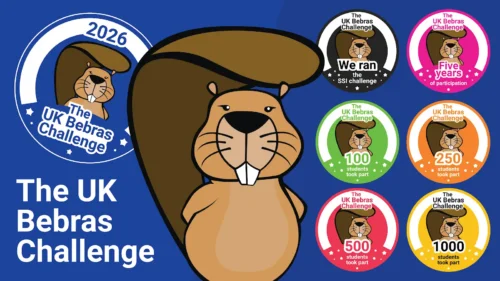
A significant addition to this year’s program is the introduction of digital badges for schools. While students have traditionally been the focus of recognition, the organizers have recognized the need to celebrate the commitment of educational institutions. Schools can now earn digital badges to display on their websites and social media platforms, signifying their dedication to computer science education.
The badge categories are designed to reward both consistency and scale of participation. They include:
- Inaugural Badge: For schools participating for the first time.
- Participation Milestones: Awarded for reaching specific numbers of participating students within a single year.
- Longevity Badge: Awarded to schools that have consistently participated in the challenge for five years.
These badges are not merely cosmetic; they serve as a marker of a school’s proactive approach to the modern curriculum. "The UK Bebras challenge provides an engaging way for students to apply their problem-solving skills in a fun, competitive environment," noted Jonathan Phillips of Hereford Cathedral School. "It complements our coding curriculum, encouraging critical thinking and enhancing computational thinking."
Integration with Ada Computer Science
In an effort to bridge the gap between the fun, puzzle-based nature of the Bebras tasks and formal academic study, the challenge has been deeply integrated with the Ada Computer Science platform. Ada Computer Science is a free, high-quality online learning resource developed by the Raspberry Pi Foundation and the University of Cambridge.
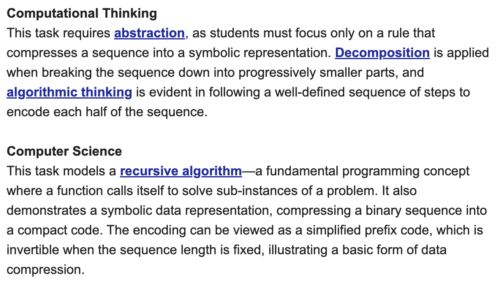
Following the live challenge period, every Bebras task is now linked to specific topics on the Ada platform. This allows teachers to use the puzzles as a springboard for deeper classroom discussion. For instance, a puzzle involving a sequence of instructions can be linked to Ada’s modules on "Algorithmic Thinking" or "Recursive Functions." This pedagogical bridge helps students understand that the logic they used to solve a "game" is the same logic used by software engineers to build complex systems.
Sharon Pendreigh from Brownedge St Mary’s Catholic High School emphasized the value of this approach: "The challenges are designed to push students to think critically and creatively, developing essential problem-solving skills that are applicable both inside and outside of the classroom."
Case Study: Graph Theory and the "Park Walk" Puzzle
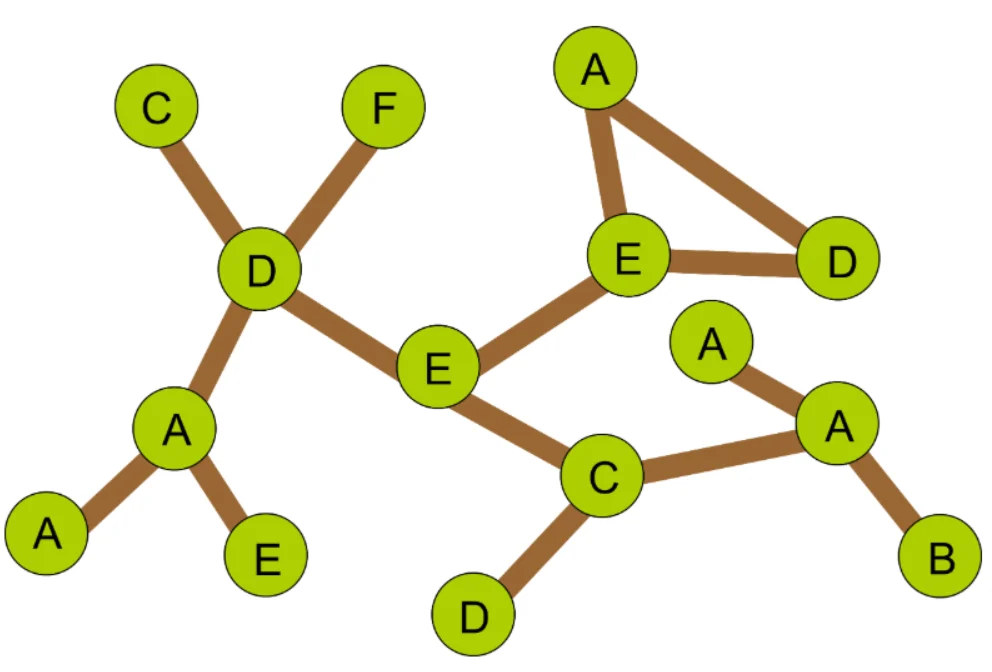
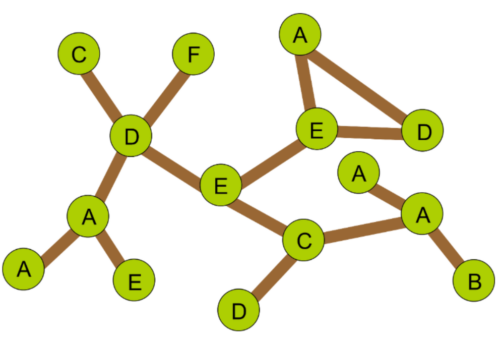
To understand the depth of the Bebras methodology, one can examine the "Park Walk" puzzle, a classic task from the Junior category. The puzzle presents a map of a park where trees are represented by lettered circles and paths are represented by lines. Students must track the movements of two families walking through the park at the same speed to determine if and when they meet.
From a computer science perspective, this task is an introduction to Graph Theory—a branch of mathematics and computer science that studies relationships between objects. In this context, the trees are "vertices" and the paths are "edges." The puzzle also touches upon "data representation" and "unambiguous sequences." Because each tree’s neighbors are labeled with different letters, a sequence of letters can only describe one specific path, mirroring how computers process unique identifiers in a network.
The historical context provided by the Bebras organizers notes that Hungarian mathematician Dénes Kőnig wrote the first textbook on graph theory in 1936. Today, these concepts are the backbone of modern technology, from GPS navigation systems like Google Maps to the social network algorithms that connect people online. By solving a simple "Park Walk" puzzle, a 10-year-old is essentially practicing the foundational logic of global logistics and telecommunications.
Broader Economic and Educational Implications
The return of the UK Bebras Challenge comes at a time when the UK government and industry leaders are increasingly concerned about the "digital divide." According to various industry reports, the UK economy requires a steady influx of workers with high-level computational skills to maintain its position in the global tech market, particularly in fields such as Artificial Intelligence, Cybersecurity, and Data Science.
Programs like Bebras are essential for "widening the funnel" of the tech talent pipeline. By engaging half a million students, many of whom might not have considered themselves "computer people," the challenge helps break down stereotypes about who can succeed in technology. The "unplugged" nature of many computational thinking tasks—where the logic can be taught without a computer—is particularly effective in primary education, where early interest can be sparked before gender biases or academic insecurities take root.
Furthermore, the challenge provides teachers with a robust set of resources. Once registered, schools gain access to a vast archive of previous Bebras questions, which can be used for end-of-term quizzes, lesson starters, or enrichment activities. This creates a year-round ecosystem of learning that supports the national curriculum.
Registration and Participation
Registration for the UK Bebras Challenge is currently open to all schools in the United Kingdom or those following a UK-based curriculum. Teachers can register their students through the official UK Bebras website (bebras.uk). The process is designed to be streamlined, allowing teachers to upload student lists and manage the challenge with minimal technical overhead.
As the competition approaches its peak participation period in November, the educational community anticipates another record-breaking year. The combination of competitive fun, academic rigor, and new institutional rewards ensures that the UK Bebras Challenge remains a cornerstone of the national educational landscape, preparing the next generation of British innovators to navigate an increasingly algorithmic world.