For many watch enthusiasts, the Omega Speedmaster Professional is the undisputed titan of chronographs, a timepiece synonymous with lunar exploration and an icon of mid-20th century design. However, a less heralded, yet equally compelling, chapter in the Speedmaster lineage exists: the Mark II. This evolution of the Moonwatch, conceived during a period of fervent space exploration and technological optimism, represented a bold reimagining of a legendary design, aiming to capture the spirit of a future that seemed limitless. This article delves into the history, design, and enduring appeal of the Speedmaster Mark II, exploring its context within Omega’s ambitious "Alaska Project" and its place in the pantheon of significant timepieces.
The Dawn of a New Era: Omega’s Post-Apollo Ambitions
The late 1960s and early 1970s were a period of unprecedented human achievement in space. The successful Apollo 11 mission in 1969, which saw the Speedmaster Professional famously accompany Neil Armstrong and Buzz Aldrin to the lunar surface, cemented Omega’s reputation. Yet, for the Swiss watchmaker, this was not an endpoint but a launching pad. The prevailing sentiment within NASA and the broader scientific community was that lunar missions would become routine, with plans for permanent moon bases and orbiting space stations actively discussed. This optimistic outlook fueled a drive for technological innovation, and Omega, keen to maintain its pioneering spirit, sought to develop timepieces that could not only withstand the rigilors of space but also embody the futuristic aesthetic of the Space Age.
The Speedmaster Mark II emerged from this fertile ground of innovation. While the Speedmaster Professional was lauded for its robustness and functionality, Omega recognized the need for a design that would signal a new era, one that embraced the sleek, aerodynamic forms and advanced materials characteristic of the burgeoning Space Age. The Mark II was envisioned as a direct successor, a timepiece designed to carry the Speedmaster’s legacy forward into a future of continuous space exploration.
The Alaska Project: Pushing the Boundaries of Watchmaking
The development of the Speedmaster Mark II is intrinsically linked to Omega’s ambitious "Alaska Project." This clandestine initiative, launched in 1969, was a testament to Omega’s commitment to pushing the boundaries of watchmaking for extreme environments. The primary goal of the Alaska Project was to develop a chronograph capable of withstanding the extreme temperature fluctuations experienced on the lunar surface. Without an atmosphere, the moon’s climate can swing dramatically, from scorching highs of approximately 121°C (250°F) when exposed to sunlight, to frigid lows of around -133°C (-208°F) in the shade or during the lunar night.
The initial prototype of the Alaska Project, developed in 1969, was a radical departure from conventional watch design. It featured an oversized titanium case, chosen for its light weight and thermal properties, and was equipped with a distinctive red anodized thermal shield. This shield was designed to act as a heat sink, protecting the delicate internal movement from extreme temperatures. While this initial prototype was a proof-of-concept, its underlying principles of thermal management and advanced materials would inform subsequent Speedmaster developments.
A later variant of the Alaska Project, utilizing a case design that would eventually become the Speedmaster Mark II, was sent to NASA for testing. This iteration, while perhaps less overtly experimental than its predecessor, still represented a significant leap in design and functionality. The fact that it was submitted to NASA, almost as an unsolicited proposal following the success of the original Speedmaster, speaks volumes about Omega’s confidence in its ability to innovate and its desire to continue its role in space exploration. The implicit message to NASA was clear: "You trusted our original Speedmaster; perhaps you’ll find this evolutionary step equally compelling."
A Design for the Future: The Speedmaster Mark II’s Distinctive Aesthetic
The Speedmaster Mark II represented a conscious departure from the classic, round case and lyre lugs of the Speedmaster Professional. Omega’s designers embraced the prevailing aesthetic of the 1970s, a decade characterized by bold lines, ergonomic forms, and a sense of futuristic optimism. The Mark II adopted a sleek, tonneau-shaped case, a design that was both contemporary and aerodynamic, evoking the streamlined forms of contemporary sports cars and aircraft.
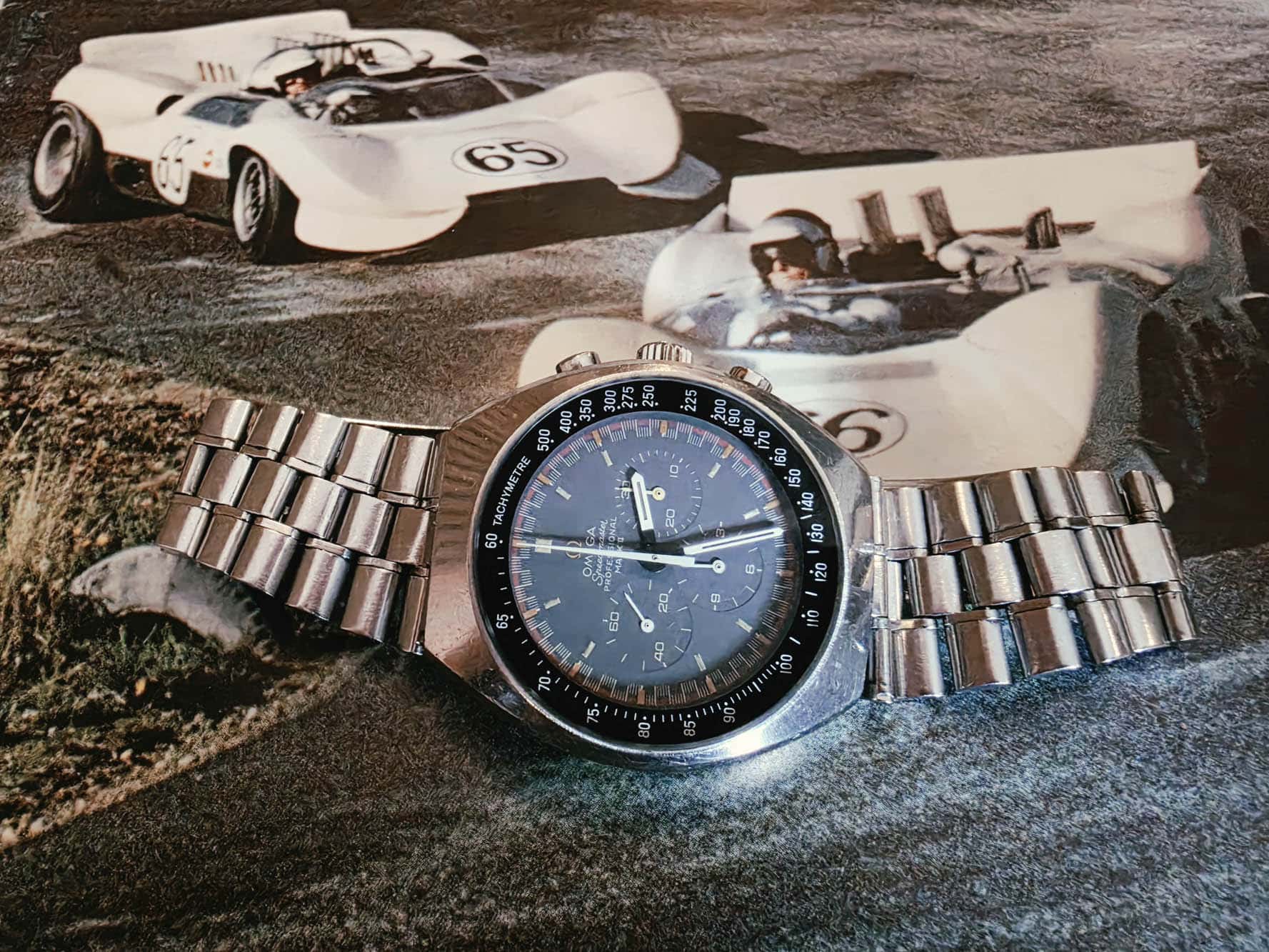
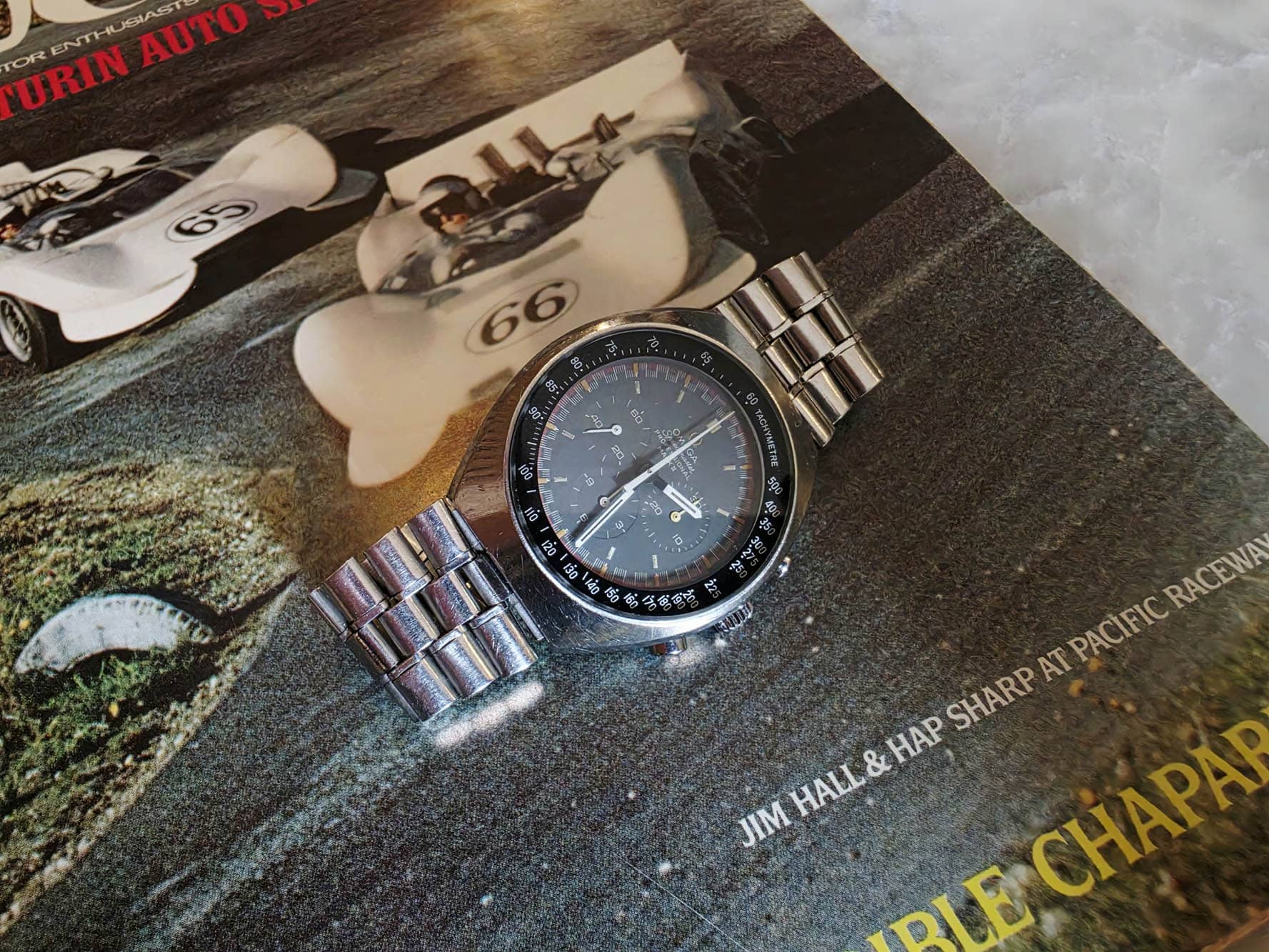
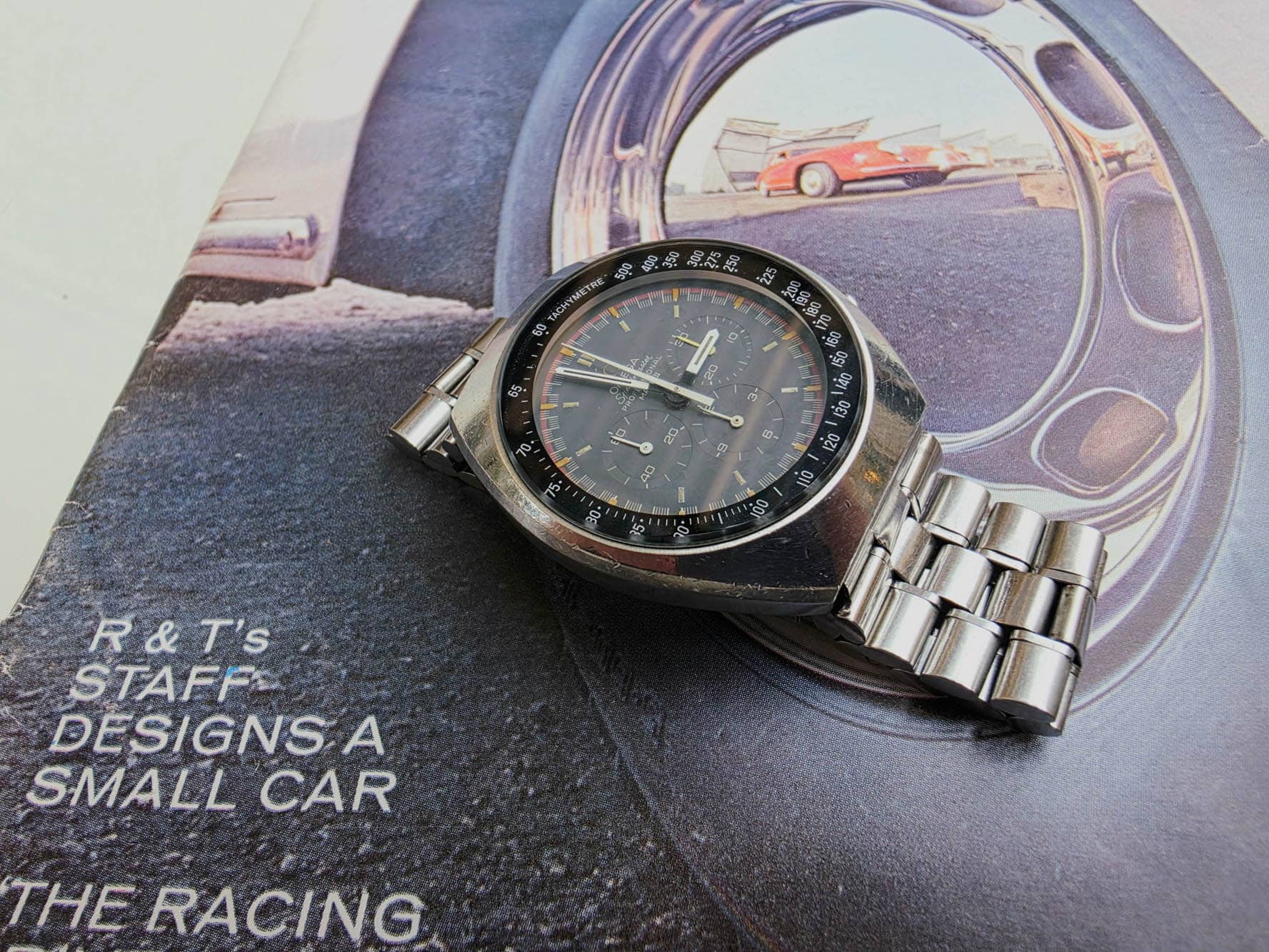
One of the most striking design elements of the Mark II is its integrated bezel. Instead of a separate, raised steel bezel, the tachymeter scale, crucial for measuring speed, was moved to the underside of the crystal. This created a cleaner, more monolithic appearance, with the tachymeter markings etched onto a flat sapphire or mineral crystal. When viewed from the side, the watch features a distinctive concave gap between the crystal and the dial, crafted from brushed aluminum. This design choice not only contributed to the watch’s futuristic look but also served a functional purpose, potentially aiding in thermal regulation by creating an air gap.
This midcentury modern design, envisioned as a look into the future, now stands as a testament to a specific era’s aspirations. The Speedmaster Mark II, with its unconventional case shape and integrated tachymeter, was a deliberate statement of intent from Omega – a clear indication that the brand was not content to rest on its laurels but was actively looking ahead to the next generation of space exploration and the timepieces that would accompany it.
The Racing Dial and its Legacy
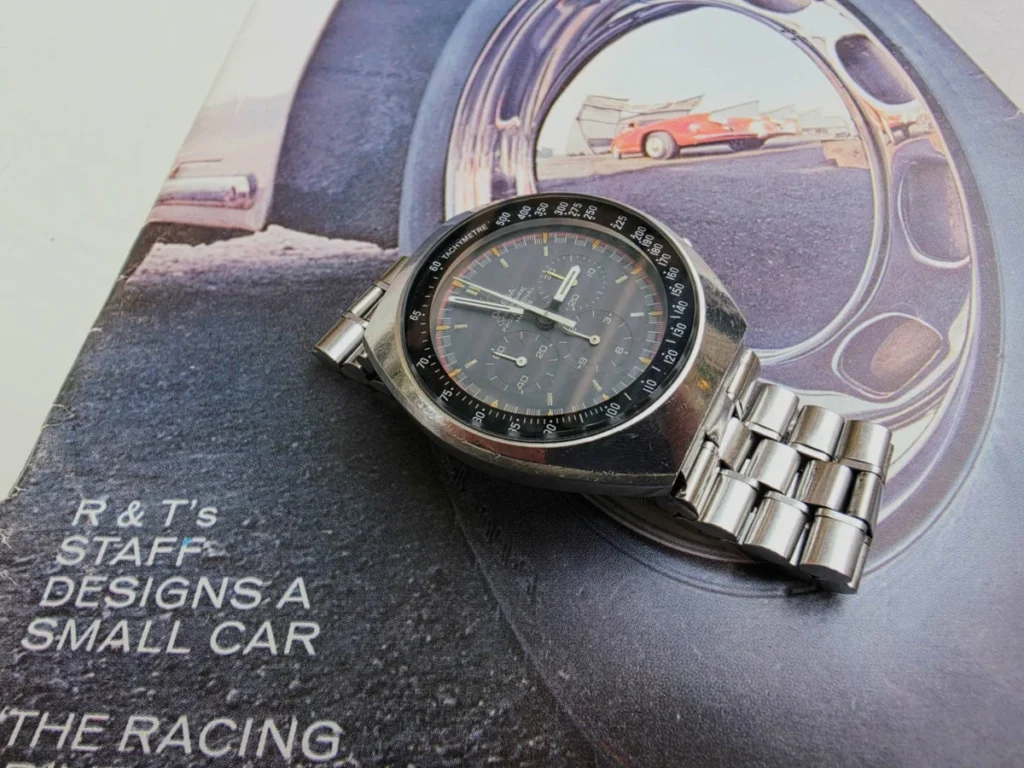
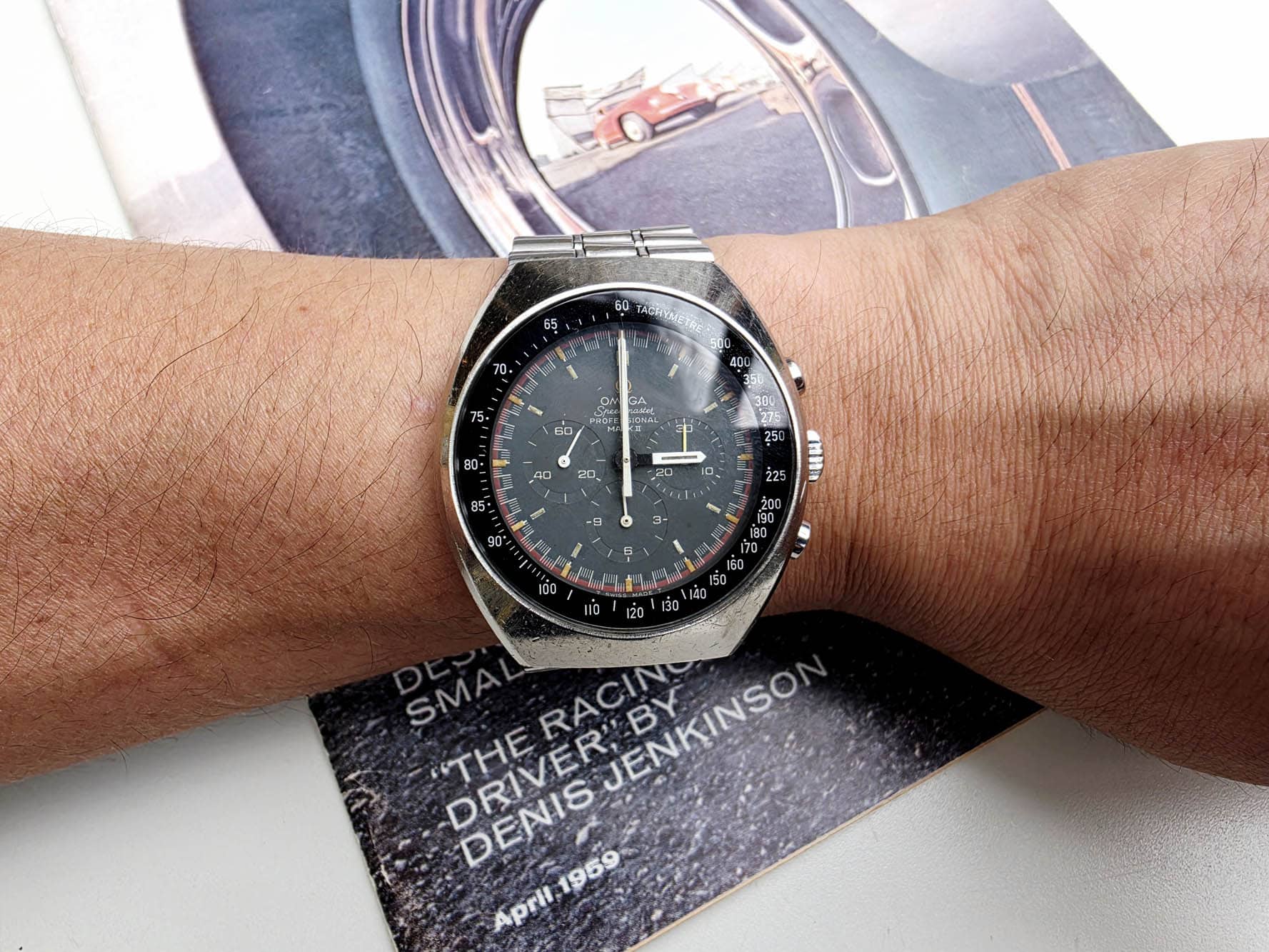
While the Speedmaster Professional is renowned for its iconic black and white dial, the Mark II often featured variations that pushed the boundaries of traditional chronograph design. The specific Mark II discussed in the source material boasts a pale grey "Racing" dial. This dial variant, characterized by its bold, often brightly colored sub-dial hands and racing-inspired markings, has a rich history within the Speedmaster family.
Omega has revisited and reinterpreted the Racing dial theme multiple times throughout its modern history. For instance, Reference 3570.40, released exclusively for the Japanese market in 2004, featured a striking black dial with red, white, and blue sub-dial hands. A decade later, in 2013, the "Tintin" variant emerged, a red-and-white checkerboard dial that paid homage to the fictional Belgian reporter’s lunar adventures, predating real lunar missions by decades.
Beyond these standalone tributes, the Racing dial has also been integrated into other Speedmaster models. The automatic Speedmaster Reduced Michael Schumacher Edition, launched in 1996 during the Formula One legend’s peak, incorporated racing-inspired aesthetics. More recently, the Speedmaster Racing line, introduced in 2012 with exaggerated sub-dials and a Co-Axial movement, has evolved into two-register versions that continue to carry the racing spirit within the broader Speedmaster family. However, the original Racing dial on the Mark II offers a unique blend of vintage charm and bold design, representing an earlier, and perhaps more uninhibited, expression of this theme.
The Allure of the Patina and Wearability
The specific Omega Speedmaster Mark II found in the vintage shop, Theo’s Haberdashery, embodies the character that comes with age and use. The "sun-worn patina" on its dial and the faded outer markings tell a story of an unknown history, a journey through time. The originally yellow sub-dial hands, now faint, hint at the vibrancy they once possessed. While the case’s original radial brushing might have softened over time, perhaps due to polishing, its visible dents are not flaws but rather badges of honor, speaking to a life of daily wear, honest use, and the occasional mishap – experiences that resonate with many watch owners.
The wearability of the Mark II is another significant aspect of its appeal. The absence of traditional lugs, due to its integrated case design, allows the watch to conform gracefully to the curvature of the wrist. This, combined with its substantial yet ergonomic form, makes it a comfortable and secure timepiece to wear throughout the day. The "jangly old-school bracelet," while perhaps not as refined as modern offerings, provides a sense of nostalgia and familiarity, a tactile connection to a bygone era. The Omega-signed clasp ensures adjustability, allowing for a personalized fit.
The Mechanical Heart and Symbolic Details
At its core, the Speedmaster Mark II is powered by the robust Caliber 861 manually wound movement. This workhorse movement, known for its reliability and precision, is characterized by its three registers, a hallmark of the Speedmaster line. The fact that the movement in the found Mark II is running sharply, resetting accurately to zero, and maintaining consistent timekeeping is a testament to Omega’s engineering prowess and the enduring quality of its movements.
On the reverse of the case, the Mark II features the iconic hippocampus, Omega’s symbol of water resistance. Originally denoting the watch’s ability to withstand submersion, the hippocampus also carries deeper, more esoteric connections to astrology and the maritime world. While this symbol adds another layer of historical and symbolic significance to the watch, it’s important to note that the simpler, etched design on the back of the original Speedmaster Professional, a design that predates the Apollo 11 mission, holds a different kind of appeal for some collectors. This distinction highlights how different eras and design philosophies can imbue the same lineage with unique characteristics.
A Tool Watch with Hidden Depths
Ultimately, the Omega Speedmaster Mark II is a practical and compelling piece of wristwear. It embodies the oversized, robust aesthetic of a 1970s tool watch, yet it manages to remain somewhat under the radar, offering a sense of discovery and a "hidden secret" for those who appreciate its unique qualities. While the Speedmaster Professional stands as an undeniable icon, a perfect synthesis of function, significance, and design, the Mark II invites a broader exploration of watchmaking history.
The appeal of the Mark II lies in its ability to broaden one’s appreciation for the diverse evolutionary paths a legendary timepiece can take. It represents a bold vision of the future, realized in a design that, though half a century old, still possesses a remarkable contemporary relevance. For those who seek to delve deeper into the rich tapestry of horological history, the Speedmaster Mark II offers a compelling and rewarding journey, proving that sometimes, the most interesting stories are found just beyond the most obvious paths. Its enduring charm lies not just in its technical merits but in its ability to connect us to a specific moment in time, a period of boundless optimism and unwavering faith in human ingenuity, embodied in a beautifully crafted, time-telling machine.