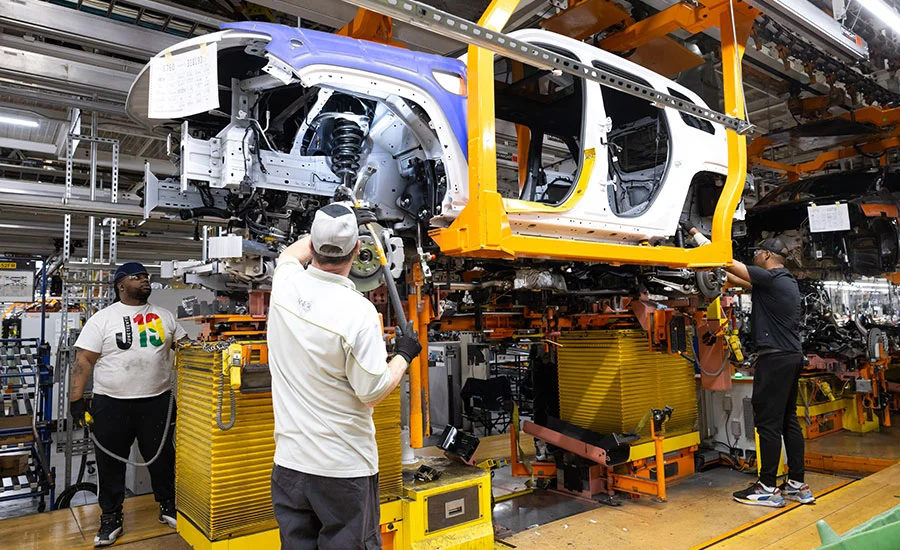
As the global manufacturing landscape undergoes a profound transformation, ushering in the era of Industry 5.0, academic institutions face the critical imperative to adapt their curriculums and research initiatives to address an evolving spectrum of challenges, demands, and opportunities. At the vanguard of this transformative shift stands the University of Michigan’s new Advanced Manufacturing Institute (UMAMI), strategically positioned to bridge the historical chasm between foundational research and practical, real-world industrial deployment. This initiative marks a significant pivot in how manufacturing innovation is conceived, developed, and implemented, emphasizing a holistic approach that integrates technological prowess with human expertise, environmental stewardship, and systemic resilience.
UMAMI distinguishes itself by fostering a uniquely interdisciplinary environment, purposefully bringing together a diverse cadre of experts spanning engineering, behavioral sciences, and business. Beyond the traditional confines of the College of Engineering, the institute actively incorporates researchers from esteemed departments such as the Institute for Social Research, the Stephen M. Ross School of Business, and the School for Environment and Sustainability. This collaborative model is foundational to developing Industry 5.0 systems and technologies that are not merely efficient but also ethically sound, socially responsible, and environmentally sustainable.
Understanding Industry 5.0: A Necessary Evolution Beyond Efficiency
Industry 5.0 is increasingly recognized not as a radical departure but as a vital course correction to its predecessor, Industry 4.0. As Chinedum Okwudire, Ph.D., a mechanical engineering professor and the visionary director of UMAMI, elucidates, "Industry 5.0 is generally viewed as a paradigm where advanced technologies such as AI and automation are integrated with human expertise, sustainability, and resilience." He further elaborates that it "emphasizes human-centered systems that augment workers rather than replace them, while prioritizing environmentally responsible and adaptable production."
The distinction from Industry 4.0 is crucial. While Industry 4.0, which gained prominence in the early 2010s, primarily focused on digitalization, automation, and optimizing efficiency through interconnected systems, the Internet of Things (IoT), and artificial intelligence, it largely overlooked the critical human, sustainability, and resilience dimensions of manufacturing. The drive for efficiency often came at the expense of worker well-being, environmental impact, and vulnerability to unforeseen global disruptions. The World Economic Forum, for instance, has repeatedly highlighted the growing skills gap and the need for a human-centric approach to automation to ensure equitable benefits from technological progress.
"Industry 5.0 brings these elements to the forefront, emphasizing systems that are not only technologically advanced but also human-centered, environmentally responsible, and adaptable to disruption," notes Okwudire. This paradigm shift is imperative because, as he points out, "manufacturers (and society at large) are realizing that technology alone is not sufficient for long-term success." Modern enterprises must concurrently address escalating workforce challenges, mounting environmental pressures, and the increasingly frequent and severe supply chain disruptions that have characterized the past decade. The COVID-19 pandemic, geopolitical tensions, and climate-related events have starkly underscored the fragility of highly optimized, yet inflexible, global supply chains, pushing resilience to the top of corporate agendas.
By deliberately incorporating human-centered design, sustainability principles, and built-in resilience into technological innovation, Industry 5.0 empowers manufacturers to construct systems that are inherently more robust, adaptable, and profoundly aligned with broader economic and societal imperatives. This includes creating safer, more fulfilling work environments, minimizing ecological footprints, and building supply chains capable of weathering future shocks. The European Commission, a key proponent of Industry 5.0, officially defined it in 2021 as focusing on human-centricity, sustainability, and resilience, aligning perfectly with UMAMI’s core mission.
Confronting the "Valley of Death" in Manufacturing Innovation
One of UMAMI’s most critical objectives is to actively bridge the notorious "valley of death" that often separates promising research discoveries from successful industrial deployment. This persistent gap, particularly acute in the manufacturing sector, frequently sees groundbreaking innovations perform exceptionally well in controlled laboratory settings only to falter or fail during the complex, costly, and uncertain transition to real-world production environments.
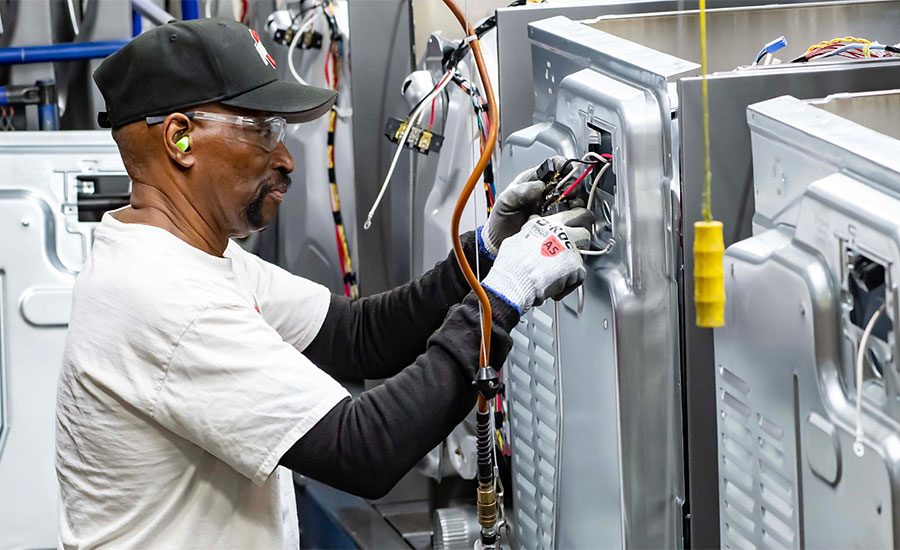
Okwudire explains, "In the context of manufacturing research and technology adoption, the ‘valley of death’ refers to the gap between basic research and real-world industrial deployment. Technologies often perform well in controlled lab settings, but fail to scale due to integration challenges, cost constraints, and uncertainty around return on investment." This phenomenon is exacerbated in manufacturing, where solutions must operate with unwavering reliability within intricate, often high-volume, and unforgiving production ecosystems. The U.S. National Science Foundation (NSF) and other research bodies have long identified this translational gap as a major barrier to innovation and economic competitiveness, particularly for technologies requiring significant capital investment and complex integration.
UMAMI is addressing this "valley of death" head-on by meticulously crafting an ecosystem that tightly couples academic research with the tangible needs of the manufacturing industry. This deliberately designed approach manifests in several innovative programs:
A central pillar of this strategy is the Doctor of Engineering (DEng) program, designed to complement the traditional Ph.D. degree. While Ph.D. candidates traditionally focus on advancing fundamental knowledge and theoretical understanding, DEng students are geared towards translating that knowledge into immediately scalable industrial solutions. Success in the DEng program is not primarily measured by academic publications but by the demonstrable return on investment (ROI) for sponsoring companies, which can include tangible outputs such as functional prototypes, documented process improvements, awarded patents, and successful real-world deployment of technologies. This applied focus ensures that research directly addresses existing industrial pain points and market opportunities.
Complementing the DEng program is UMAMI’s manufacturing work-study program, specifically tailored to engage and support small- and medium-sized manufacturers (SMMs). This segment of the industry, often characterized by limited internal R&D capacity and historically underserved by traditional university research models, stands to gain significantly. Through industry-funded projects, undergraduate and master’s students contribute directly to applied R&D efforts, delivering measurable impact for these companies while simultaneously gaining invaluable hands-on experience that prepares them for future leadership roles in modern manufacturing. This creates a symbiotic relationship where SMMs access cutting-edge research and talent, and students acquire practical skills and industry exposure.
Together, these innovative programs cultivate a robust talent pipeline and establish a rapid feedback loop between scientific discovery and practical application. This continuous iterative process ensures that innovations are not only developed but also rigorously tested and refined in authentic industrial settings, simultaneously equipping students with the real-world experience and problem-solving acumen essential for leadership in the evolving manufacturing sector.
Investing in the Future: State-of-the-Art Infrastructure
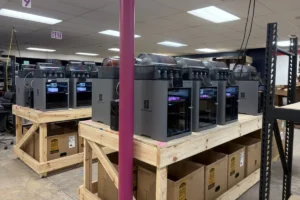
Recognizing that cutting-edge research and education demand world-class facilities, the University of Michigan has made a substantial investment of over $4 million to upgrade its state-of-the-art manufacturing lab. These comprehensive renovations include the acquisition of advanced additive manufacturing equipment, reflecting the growing importance of technologies like 3D printing in rapid prototyping, customized production, and complex part creation.
Beyond new machinery, the lab features an open-concept design specifically engineered to foster enhanced collaboration and dynamic learning. "Some aspects of the space weren’t serving our needs as well as they used to," explains Okwudire, indicating a proactive adaptation to evolving pedagogical and research methodologies. He adds, "This new setup reflects where we are. The manufacturing faculty are very much into teamwork and collaboration, and this space will allow us to really highlight that mindset." This physical embodiment of collaboration underscores UMAMI’s interdisciplinary ethos, creating an environment where engineers, behavioral scientists, and business experts can seamlessly interact, share insights, and co-create solutions.
Pioneering Next-Generation Manufacturing Education and Recognition
UMAMI’s commitment to transformative education has garnered significant recognition. Earlier this year, Professor Okwudire and his esteemed colleagues were honored by the American Society of Mechanical Engineers (ASME) with the prestigious 2026 Donald N. Zwiep Innovation in Education Award. This accolade specifically acknowledged their groundbreaking efforts in "transforming manufacturing education through multi-expert instruction, project-based learning, additive manufacturing and digitally enabled industry-integrated systems."
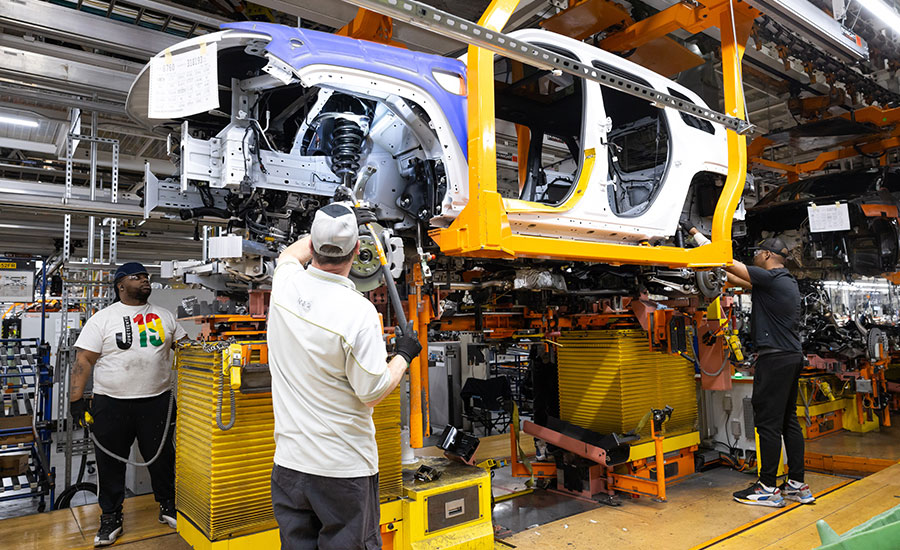
This award validates UMAMI’s pedagogical philosophy, which is rooted in the understanding that "modern manufacturing is multidisciplinary, digital, and globally distributed," as Okwudire articulates. He asserts that "multi-expert instruction and inclusive hands-on learning better reflect how manufacturing actually works: through collaboration, iteration, and real-world problem solving." This approach moves beyond siloed disciplines, preparing students for the complex, interconnected challenges prevalent in contemporary industrial environments. Project-based learning, in particular, allows students to tackle authentic industry problems, developing critical thinking, teamwork, and practical application skills.
The overarching goal is clear: to ensure that students are exceptionally well-equipped for the demands of a new era of manufacturing—one characterized by its digital nature, intricate interconnectedness, and rapid evolutionary pace. "Our students are deeply interested in manufacturing, and many go on to careers in the sector," Okwudire adds. "Our goal is to ensure they are well-equipped for a new era of manufacturing—one that is digital, interconnected and rapidly evolving—by providing them with the skills to innovate, adapt and lead in industry." This forward-looking educational model is crucial for developing the next generation of leaders who can navigate the complexities of Industry 5.0 and drive sustainable growth.
Broader Impact and Future Implications
The work being undertaken at UMAMI carries significant implications, not only for the University of Michigan and the state’s robust manufacturing sector but also for national and global industrial competitiveness.
Economic Impact: By fostering innovation and accelerating technology transfer, UMAMI directly contributes to strengthening the U.S. manufacturing base. This leads to the creation of new, high-value jobs, attracts further industrial investment, and enhances economic resilience. Michigan, historically a manufacturing powerhouse, stands to particularly benefit from this initiative, solidifying its position as a hub for advanced, sustainable production. Analysts estimate that every dollar invested in manufacturing R&D can generate several dollars in economic output, underscoring the potential ripple effect of UMAMI’s efforts.
Societal Impact: The human-centered approach of Industry 5.0, championed by UMAMI, promises improved working conditions, more meaningful jobs through human-robot collaboration, and ethical deployment of AI and automation. By augmenting rather than replacing human workers, UMAMI’s research addresses concerns about job displacement, promoting a more inclusive technological future. This also plays a role in addressing the persistent skills gap in manufacturing, which, according to Deloitte and The Manufacturing Institute, could leave 2.1 million jobs unfilled by 2030 in the U.S. alone.
Environmental Impact: The emphasis on sustainability is paramount. UMAMI’s research into environmentally responsible production methods, resource efficiency, and circular economy principles positions manufacturing as a key player in addressing climate change and achieving global sustainability goals. This aligns with a growing consumer and regulatory demand for greener products and processes, offering manufacturers a competitive edge.
Global Leadership: By pioneering an integrated, multidisciplinary approach to Industry 5.0, UMAMI is positioning the University of Michigan, and by extension the United States, as a global leader in advanced manufacturing research and education. This leadership is vital for shaping international standards, fostering collaborations, and driving the future direction of industrial innovation worldwide.
In essence, the University of Michigan’s Advanced Manufacturing Institute is not merely conducting research; it is actively shaping the future of manufacturing. By holistically integrating technological advancement with human values, environmental responsibility, and systemic resilience, UMAMI is forging a path toward an Industry 5.0 era that is not only more productive and efficient but also more ethical, sustainable, and beneficial for all. Its innovative educational models and strategic industry partnerships are creating a blueprint for how academia can effectively serve as a catalyst for industrial transformation, ensuring that the next wave of manufacturing progress is truly aligned with broader societal needs and aspirations.