A revolutionary shoebox-sized CubeSat, developed by the University of Maribor in Slovenia, has successfully endured an intense radiation test at CERN, demonstrating the resilience of its miniaturized imaging technology. This groundbreaking development promises to enhance the ability of future spacecraft to determine their orientation and trajectory in the unforgiving environment of space. The TRISAT-R CubeSat, a testament to European ingenuity supported by the European Space Agency’s (ESA) General Support Technology Programme (GSTP), has pushed the boundaries of what is possible with compact, high-performance imaging systems.
A Glimpse of Earth from Orbit, and a Harsh Reality
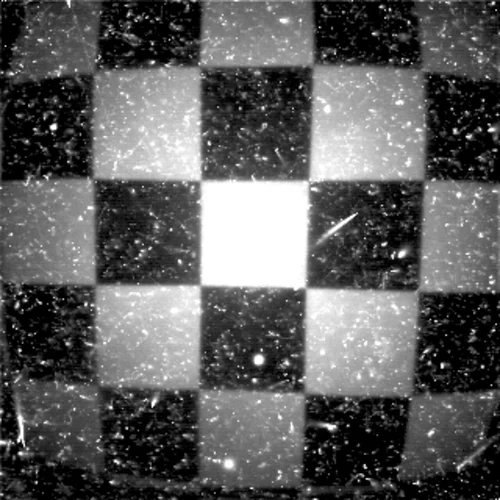
Three years ago, the TRISAT-R mission captivated the scientific community by successfully snapping an image of Earth. This was no small feat, especially considering the camera’s minuscule size – approximately the edge of a 20-cent coin. Its ability to capture such an image while navigating the medium Earth orbit, a region characterized by a constant bombardment of highly energetic particles, was a significant technological achievement. These particles, moving at extremely high velocities, traverse the vacuum of space in every direction, posing a constant threat to sensitive electronic components. The image produced, speckled with bright dots and streaks against a chequerboard background, served as a vivid illustration of these particle interactions with the image sensor. Each dot and streak represented a high-energy particle leaving its mark, a stark reminder of the challenges inherent in space-based imaging.
Rigorous Testing at CERN’s CHARM Facility
To further assess the robustness and potential applications of this miniaturized imaging system, the TRISAT team recently subjected it to a highly accelerated radiation campaign at CERN’s CHARM (CERN High-energy Accelerator for Mixed-field radiation) facility. This facility is specifically designed to simulate the harsh radiation environments that spacecraft encounter. The testing, facilitated by the RADNEXT project, exposed the camera to an intense, mixed-field particle environment. This environment was carefully calibrated to encompass a broad spectrum of particles and energies relevant to various space applications, including those found in Earth’s magnetosphere and during solar particle events.
A Deep Dive into Radiation Effects
For over 108 hours, the miniature camera was immersed in the CHARM chamber, facing conditions analogous to those encountered in space, such as radiation trapped by Earth’s magnetic field or emitted by the Sun during solar flares. Iztok Kramberger, the principal investigator of the TRISAT programme at the University of Maribor, elaborated on the testing parameters. "Our tiny imaging system spent more than 108 hours in the CHARM chamber, exposed to a mixed-field radiation environment containing high-energy particles, including hadrons such as protons, neutrons and pions," he explained.
During this extended period, the camera was pointed at a 13-centimeter wide chequerboard, which served as a stable reference pattern. The system acquired an astonishing 4 million images at a rapid rate of 10 frames per second. From this massive dataset, over 160,000 images were meticulously selected for in-depth analysis. The primary objective of this analysis was to study radiation-induced pixel activation – the phenomenon where energetic particles strike the image sensor and alter the electrical state of individual pixels – and the subsequent recovery of the image sensor’s functionality following these interactions.
The resulting images, as described in the initial report, are a visual testament to the radiation encountered. They are "speckled with white dots and streaks called ‘radiation-induced artefacts’." These artefacts are direct evidence of energetic particles traversing the image sensor, highlighting the critical challenges that imaging systems must overcome to maintain performance in space.
Collaboration and Resilience: The Role of SkyLabs
Recognizing the potential impact of such intense radiation, the TRISAT team collaborated with SkyLabs, a company specializing in space technology solutions. SkyLabs played a crucial role by integrating protection mechanisms into the camera system. "For this test we have joined forces with SkyLabs, who implemented protection mechanisms into the camera system to make sure the intense radiation doesn’t cause any permanent damage or loss of functionality," Iztok Kramberger added. This collaboration underscores the importance of robust engineering and the development of resilient systems for space exploration.
Unlocking the Secrets of Radiation Artefacts
The analysis of the vast dataset acquired at CERN is yielding invaluable insights into the behavior of the imaging system under extreme radiation. Researchers are meticulously investigating several key aspects: the frequency and spatial distribution of these radiation-induced artefacts, the number of pixels affected by each individual particle event, the mechanisms and timing of pixel recovery, and crucially, how to differentiate between temporary, recoverable effects and permanent radiation-induced damage.
These findings are not merely academic; they are directly applicable to the development of more sophisticated image processing algorithms. By understanding precisely how radiation impacts image data and how the sensor responds, engineers can design algorithms that can effectively filter out or correct for these artefacts in real-time. Furthermore, this research will significantly enhance next-generation attitude and orbit determination technologies. The ability to accurately interpret data from imaging sensors, even in the presence of radiation, is paramount for spacecraft navigation, enabling them to precisely know their position and orientation in space.
Background Context: The Growing Need for Miniaturization and Resilience
The development of the TRISAT-R CubeSat and its imaging technology is situated within a broader trend in space exploration: the increasing reliance on smaller, more cost-effective satellites, often referred to as CubeSats. These miniaturized spacecraft, typically built to standard sizes of 10x10x10 cm (a "U"), offer a more accessible entry point into space for research institutions and smaller nations. However, their reduced size and mass often mean less shielding against the harsh space environment. Therefore, developing resilient components and systems that can withstand radiation is not just desirable, but essential for the long-term success of these missions.
The ESA’s General Support Technology Programme (GSTP) plays a vital role in fostering such innovative technologies. By providing funding and technical support, ESA enables the development and maturation of technologies that have the potential to revolutionize space missions. The TRISAT-R project is a prime example of how targeted investment in fundamental research and development can yield significant advancements.
A Chronology of Innovation
- Early 2020s: Development of the TRISAT-R CubeSat by the University of Maribor, with a focus on miniaturized imaging technology.
- Circa 2020-2021: The TRISAT-R mission successfully launches and operates in medium Earth orbit, capturing an image of Earth. This mission validates the core imaging technology in a real space environment.
- Recent Past: The TRISAT team, in collaboration with SkyLabs, conducts extensive radiation testing of the miniaturized imaging system at CERN’s CHARM facility. This testing is enabled by the RADNEXT project.
- Present: Analysis of the vast dataset from the CERN testing is underway, yielding critical insights into radiation effects and recovery mechanisms.
- Future: The findings are expected to drive the development of more robust image processing algorithms and next-generation attitude and orbit determination systems for future spacecraft.
Supporting Data and Scientific Significance
The sheer volume of data collected – over 4 million images, with 160,000 selected for analysis – underscores the thoroughness of the testing. This extensive dataset allows for statistically significant conclusions to be drawn about the camera’s performance under radiation stress. The ability to acquire data at 10 frames per second is also crucial for understanding transient phenomena and recovery rates.
The identification and characterization of "radiation-induced artefacts" are fundamental to space-based imaging. These artefacts can manifest as single pixel errors (SEUs), multiple bit flips (MBUs), or even more complex phenomena. Understanding their frequency, spatial distribution, and the time it takes for affected pixels to "heal" is critical for designing reliable imaging systems. For attitude determination, where precise orientation is key, even minor image distortions caused by radiation can lead to significant navigation errors. The current research aims to quantify these errors and develop methods to mitigate them.
Broader Impact and Implications for Space Exploration
The success of the TRISAT-R imaging system and its validation at CERN have far-reaching implications for the future of space exploration:
- Enhanced Spacecraft Navigation: More accurate and reliable attitude and orbit determination systems will be crucial for increasingly complex missions, including deep space exploration, orbital debris tracking, and autonomous rendezvous and docking operations.
- Cost-Effective Spacecraft Design: The development of miniaturized, yet radiation-hardened, components can lead to more cost-effective spacecraft designs without compromising performance. This opens up new possibilities for scientific research and commercial applications.
- Longer Mission Lifetimes: By understanding and mitigating the effects of radiation, spacecraft can be designed for longer operational lifetimes, reducing the need for frequent replacements and lowering overall mission costs.
- Advancements in Earth Observation and Remote Sensing: More resilient imaging systems will enable improved data quality from Earth observation satellites, leading to better climate monitoring, disaster management, and resource mapping.
- Paving the Way for Autonomous Systems: As space missions become more autonomous, the ability of onboard systems to accurately interpret sensor data in challenging conditions is paramount. This research directly contributes to that goal.
The collaboration between academic institutions like the University of Maribor, space agencies like ESA, and commercial entities like SkyLabs, exemplified by this project, is a powerful model for driving innovation in the space sector. The rigorous testing at CERN, a world-leading particle physics laboratory, provides an unparalleled environment for validating these advanced technologies, ensuring they are ready to meet the demands of the final frontier. The bright dots and streaks captured in the test images are not just artefacts of radiation; they are markers of progress, illuminating the path towards a more robust and capable future for space exploration.