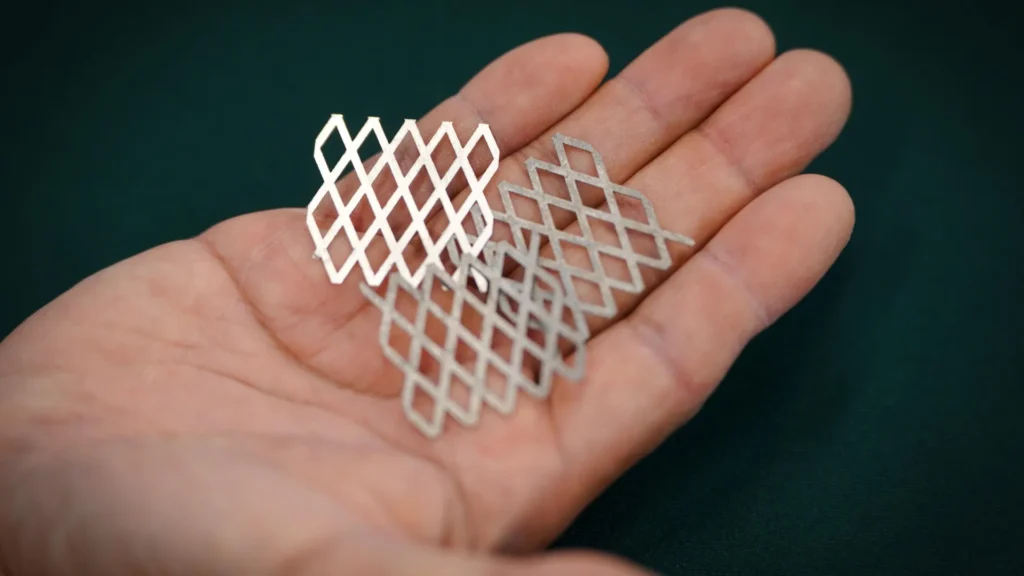
The innovation, dubbed stainless steel for hydrogen (SS-H₂), addresses a century-old challenge in materials science: preventing severe corrosion in high-potential electrochemical applications. Led by Professor Mingxin Huang of HKU’s Department of Mechanical Engineering, the research team has engineered a material capable of withstanding the demanding conditions required for efficient water electrolysis, especially when using abundant, untreated seawater. This breakthrough could dramatically accelerate the global transition to a hydrogen-based economy, offering a more sustainable and economically viable pathway to decarbonization.
The Global Imperative for Green Hydrogen and Its Production Challenges
The urgent need to combat climate change and achieve net-zero emissions has propelled green hydrogen to the forefront of global energy strategies. Green hydrogen, produced by splitting water into hydrogen and oxygen using renewable electricity, is considered a clean fuel with vast potential for decarbonizing heavy industries, transportation, and power generation. Governments and industries worldwide are investing billions in scaling up green hydrogen production, with projections indicating a market value potentially reaching hundreds of billions of dollars by the next decade. For instance, the Hydrogen Council estimates that hydrogen could meet 18% of the world’s energy needs by 2050.
However, the widespread adoption of green hydrogen faces significant hurdles, primarily its high production cost and the technical complexities associated with its generation. A major cost driver lies in the materials required for electrolyzers—the devices that perform water splitting. Conventional electrolyzers often rely on expensive and scarce materials like titanium, frequently coated with precious metals such as platinum or gold, to resist the corrosive environments and high electrical potentials involved in the electrolysis process. These material costs can constitute a substantial portion of the total system expenditure, making green hydrogen less competitive with fossil fuels.
Furthermore, the availability of freshwater for electrolysis is a growing concern in many regions facing water scarcity. Utilizing seawater directly for hydrogen production offers an attractive solution, as oceans represent an almost limitless resource. Yet, seawater presents an even more aggressive corrosive challenge due to its high chloride content. Standard materials degrade rapidly under such conditions, necessitating even more robust and costly alternatives, thereby perpetuating the economic barrier.
HKU’s "Super Steel" Legacy and the Genesis of SS-H₂
Professor Mingxin Huang’s team at HKU has a distinguished track record of pushing the boundaries of materials science through their "Super Steel" Project. This latest development builds upon a series of innovations that have garnered international attention. In 2017 and 2020, the team developed exceptionally strong and tough forms of Super Steel, demonstrating their expertise in engineering materials with superior mechanical properties. More recently, in 2021, they gained widespread recognition for creating stainless steel with anti-COVID properties, showcasing their versatility in addressing diverse societal challenges through materials innovation. The development of SS-H₂ is a testament to this ongoing commitment to pioneering advanced metallic alloys.
The journey to SS-H₂ spanned nearly six years, beginning with the serendipitous discovery of the steel’s unusual properties. The team then embarked on a rigorous scientific quest to understand the underlying mechanisms at an atomic level, a process crucial for robust material design and future optimization. This meticulous approach underscores the scientific rigor behind the "Super Steel" Project, moving beyond empirical observation to fundamental understanding.
Unpacking the Scientific Breakthrough: Sequential Dual-Passivation
At the heart of SS-H₂’s remarkable performance lies a novel mechanism that the researchers term "sequential dual-passivation." To understand its significance, it’s essential to first grasp the limitations of conventional stainless steel. For over a century, stainless steel has been indispensable in applications demanding corrosion resistance, largely owing to its chromium content. When chromium (Cr) in the steel reacts with its environment, it forms a thin, protective chromium oxide (Cr₂O₃) layer on the surface. This passive layer acts as a barrier, preventing further corrosion of the underlying metal.
However, this protection has a critical Achilles’ heel, especially in high-voltage electrochemical processes like water electrolysis. At sufficiently high electrical potentials, typically around ~1000 mV (relative to a saturated calomel electrode, SCE), the protective Cr₂O₃ layer can undergo further oxidation, forming soluble hexavalent chromium species, Cr(VI). This process, known as transpassive corrosion, degrades the passive layer and exposes the underlying steel to aggressive corrosion. Crucially, water oxidation—an essential reaction in electrolysis—requires a significantly higher potential, around ~1600 mV. This inherent mismatch means conventional stainless steels, even high-performance grades like 254SMO super stainless steel known for excellent pitting resistance in seawater, cannot be effectively used in such high-potential applications without succumbing to rapid degradation.
Professor Huang’s team circumvented this long-standing limitation by designing SS-H₂ to form a second protective layer. Instead of solely relying on the traditional chromium oxide, SS-H₂ develops an additional layer based on manganese. What makes this particularly astonishing is that manganese (Mn) has historically been regarded as detrimental to the corrosion resistance of stainless steel. It is often associated with forming sulfide inclusions that can initiate pitting corrosion, especially in chloride-containing environments.
"Initially, we did not believe it because the prevailing view is that Mn impairs the corrosion resistance of stainless steel," explained Dr. Kaiping Yu, the first author of the study and Professor Huang’s PhD supervisee. "Mn-based passivation is a counter-intuitive discovery, which cannot be explained by current knowledge in corrosion science. However, when numerous atomic-level results were presented, we were convinced. Beyond being surprised, we cannot wait to exploit the mechanism."
This manganese-based layer begins forming at a relatively lower potential of approximately ~720 mV. Working in concert with the underlying chromium oxide layer, these two protective films enable SS-H₂ to resist corrosion in highly aggressive, chloride-containing environments—like seawater—at potentials reaching an unprecedented 1700 mV. This threshold is critical because it comfortably surpasses the ~1600 mV required for water oxidation, making SS-H₂ fundamentally superior to conventional stainless steels for high-potential electrochemical applications. The ability to withstand such conditions in the presence of chlorides, notorious for causing localized corrosion in many metals, marks a significant leap forward in materials science.
The findings detailing this innovative material and its unique passivation strategy were published in the prestigious journal Materials Today in a study titled "A sequential dual-passivation strategy for designing stainless steel used above water oxidation." The researchers have proactively sought intellectual property protection, applying for patents in several countries, with two patents already authorized, safeguarding their pioneering technology.
Economic Ramifications: A Game Changer for Cost Reduction
The economic implications of SS-H₂ are profound and could fundamentally alter the cost structure of green hydrogen production. Current electrolyzer designs, particularly for Proton Exchange Membrane (PEM) systems which are favored for their efficiency and compactness, rely heavily on expensive components. Electrolyzers operating with desalinated seawater or acidic solutions typically require titanium structural components, often further enhanced with precious metal coatings like gold or platinum. These materials, chosen for their superior corrosion resistance and catalytic properties, represent a substantial portion of the overall system cost.
According to the HKU researchers, structural components alone can account for as much as 53% of the total system cost of a 10-megawatt PEM electrolysis tank system, which currently approximates HK$17.8 million (approximately US$2.28 million). This figure highlights the immense financial burden posed by material selection in scaling up green hydrogen infrastructure.
The introduction of SS-H₂ presents an opportunity to replace these exorbitantly priced titanium and precious metal components with a much more economical steel. The researchers’ conservative estimates suggest that adopting the new material could reduce the cost of structural materials by an astonishing 40 times. To put this into perspective: for a 10 MW PEM system, structural components currently cost roughly HK$9.434 million (53% of HK$17.8 million). A 40-fold reduction would bring this cost down to approximately HK$0.236 million, representing a saving of over HK$9 million per 10 MW system. This staggering potential for cost reduction is not merely incremental; it could be transformative, making green hydrogen production significantly more competitive with fossil fuels and accelerating its market penetration.
"Different from the current corrosion community, which mainly focuses on the resistance at natural potentials, we specializes in developing high-potential-resistant alloys," Professor Huang stated. "Our strategy overcame the fundamental limitation of conventional stainless steel and established a paradigm for alloy development applicable at high potentials. This breakthrough is exciting and brings new applications." This shift in focus from natural potential corrosion to high-potential resistance is what truly sets SS-H₂ apart.
From Laboratory to Industrial Scale: The Road Ahead
While the laboratory results for SS-H₂ are exceptionally promising, the transition from experimental material to widespread industrial deployment still entails significant engineering challenges. Electrolyzers require components in various practical forms, such as metal meshes and foams, which are integral to their design and functionality. Manufacturing these complex geometries with the new steel while maintaining its superior corrosion resistance and mechanical properties at scale is a critical next step. Laboratory-scale performance, while indicative, does not always directly translate to real-world industrial conditions or manufacturing feasibility.
Nevertheless, Professor Huang’s team has already taken concrete steps toward industrialization, demonstrating a proactive approach to commercialization. "From experimental materials to real products, such as meshes and foams, for water electrolyzers, there are still challenging tasks at hand," Professor Huang acknowledged. "Currently, we have made a big step toward industrialization. Tons of SS-H₂-based wire has been produced in collaboration with a factory from the Mainland. We are moving forward in applying the more economical SS-H₂ in hydrogen production from renewable sources." This collaboration and the production of "tons" of wire indicate that the material is not merely a lab curiosity but is already undergoing preliminary industrial-scale processing, a crucial milestone in its journey to market.
The ultimate success of SS-H₂ hinges on its reliable performance in commercial electrolyzers over extended operational periods. Rigorous testing under various industrial conditions, including prolonged exposure to seawater at high electrical potentials, will be necessary to validate its durability and long-term cost-effectiveness. Should the technology successfully navigate these remaining engineering and commercialization hurdles, its combination of high corrosion resistance and drastically lower material costs positions SS-H₂ as a pivotal enabler for the green hydrogen economy.
Broader Implications for Sustainability and Industry
The implications of SS-H₂ extend far beyond the direct cost reduction of green hydrogen. Firstly, by enabling the use of untreated seawater for electrolysis, the technology offers a robust solution to the growing concern of freshwater scarcity, making green hydrogen production feasible in coastal and arid regions that lack access to desalinated water. This significantly expands the geographical potential for green hydrogen generation, decentralizing production and reducing logistical complexities.
Secondly, the ability to replace expensive titanium and precious metals reduces reliance on critical raw materials that are often subject to volatile market prices and geopolitical supply chain risks. This enhances the security and stability of the green hydrogen supply chain, fostering greater energy independence.
Thirdly, this breakthrough represents a paradigm shift in materials design for electrochemical applications. By demonstrating a novel "sequential dual-passivation" mechanism involving a traditionally "detrimental" element like manganese, the HKU team has opened new avenues for materials scientists to explore in developing high-performance alloys. This intellectual leap could inspire further innovations in corrosion-resistant materials for a wide array of industries beyond hydrogen production, including chemical processing, marine engineering, and sustainable manufacturing.
In conclusion, the development of SS-H₂ by the University of Hong Kong stands as a monumental achievement in materials science and engineering. By offering a durable, cost-effective, and sustainable solution for green hydrogen production, particularly from seawater, this innovation has the potential to be a true game-changer in the global effort to decarbonize economies and build a cleaner, more sustainable future. Its successful transition from laboratory to industrial application could catalyze the widespread adoption of green hydrogen, marking a critical step towards energy transition and environmental stewardship.






