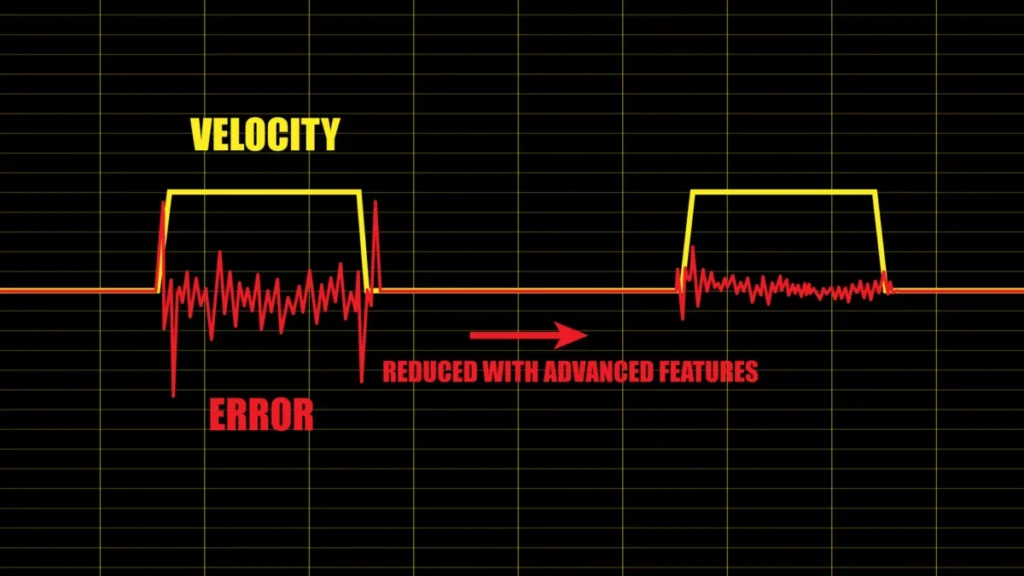
Achieving true precision in advanced motion control applications necessitates a meticulous focus on the design, features, and sophisticated capabilities of drives and controls, which serve as the central nervous system for dynamic systems. This installment, the third in a comprehensive series, delves into how these electronic components transcend mere motor activation to become indispensable architects of high-performance motion, guiding engineers and system integrators toward optimal design choices in an increasingly demanding technological landscape.
The Evolving Landscape of Motion Control Precision
In the intricate world of high-precision motion control, the prevailing tendency is often to evaluate system capabilities primarily through the lens of mechanical specifications. Actuators, for instance, are frequently assessed based on standard metrics such as repeatability, accuracy, and load capacity. While these foundational parameters are sufficient for a broad spectrum of applications, a more profound understanding of the entire motion control ecosystem—from mechanics to motors, and crucially, to drives and controls—is imperative for applications pushing the boundaries of precision.
The preceding articles in this series laid the groundwork for this holistic perspective. The inaugural piece explored the mechanical layer, scrutinizing often-overlooked yet critical factors like bearing deflection, body stiffness, and structural smoothness, which can profoundly impact ultimate system performance. The second article shifted focus to motors, examining how their inherent designs, construction quality, and specific characteristics contribute to or constrain the potential for precise motion. Building upon these insights, this third part illuminates the pivotal role played by the designs and features of drives and controls, positioning them not merely as support components but as the intelligent core dictating the finesse and responsiveness of any motion system. As industries demand accuracy beyond the micron level, traditional datasheet specifications begin to lose their full explanatory power, making nuanced engineering decisions about these electronic layers absolutely essential.
Drives and Controls: The Intelligence Core of Motion Systems
The evolution of drives and controls mirrors the broader advancements in industrial automation, moving from rudimentary power delivery to highly sophisticated, networked intelligence. Historically, the simplest electric motor applications operated without inherent intelligence, with power applied directly, causing the motor to turn. Drives emerged as the initial layer of sophistication, providing regulated power to motors, thereby enabling smoother and more efficient operation. Controllers then added a layer of programmable intelligence, facilitating more advanced functions such as precise acceleration, velocity, and positioning control.
For many basic motor applications, a standard level of electronics often suffices, where compatibility and basic operational functionality are the primary requirements. Default tuning settings are typically adequate, and the complexity of advanced features remains largely untapped. However, as control requirements tighten, the inherent capabilities of drives and controllers become increasingly significant. At this "specification-level" tier, tuning features are not just available but actively utilized, requiring precise adjustment of parameters to achieve desired performance. Controllers must be accurately programmed to execute specific motion profiles and sequences of actions. It is at this juncture that common issues, often stemming from simple setup errors, missing settings, or improper tuning by inadequately trained personnel, can manifest as either unresponsive and slow motion or, conversely, aggressive and unstable operation. A significant pitfall in this tier is the attempt to pair high-performance motors with lower-performance electronics, a combination that, while not always catastrophic, frequently hinders the system from realizing its full potential.
Pushing Beyond Specifications: The High-Performance Imperative
The true limitations of mismatched or under-specified drives and controls become strikingly apparent in high-performance applications. Here, the system struggles to meet its intended requirements, becoming notoriously difficult to tune, ultimately leading to suboptimal or, in extreme cases, impossible performance. Achieving precision in these demanding environments—from semiconductor manufacturing to advanced robotics and medical instrumentation—requires drives and controllers equipped with a suite of advanced features and capabilities.
High-performance applications mandate advanced tuning functionalities that incorporate dynamic and adaptable gains, allowing the system to adjust its response in real-time to varying load conditions or environmental disturbances. For multi-axis mechanics, such as complex gantries and Cartesian robots, sophisticated multi-axis synchronization capabilities are paramount to ensure coordinated and precise movements across all axes. Furthermore, rapid update rates are essential for tight current and voltage control, enabling the system to react instantaneously to changes and maintain stability. The processing power of these controllers cannot be underestimated; fast processors are critical to prevent lag in logic execution, ensuring that commands are processed and acted upon with minimal latency.
Beyond internal processing, high-performance systems must possess tools to adapt to their operational environment. A salient example recounted by industry experts involved an OEM’s tool that performed flawlessly in a controlled, isolated laboratory setting. However, upon deployment in a real-world industrial environment, characterized by significant electrical and mechanical noise from sources like arc-welders, heavy machinery, and human activity, the original controls proved inadequate. Lacking features such as notch filters to suppress specific frequency noise and dynamic tuning parameters to adapt to changing conditions, the system’s performance degraded, necessitating an upgrade to more robust controls capable of environmental resilience. This anecdote underscores the critical distinction between theoretical performance and real-world operational reliability, a gap that advanced drive and control features are designed to bridge.
Key Technical Considerations for Uncompromising Precision
Several technical factors inherent to high-end drives and controllers are indispensable for achieving uncompromising precision:
-
Advanced Servo Control Algorithms: Beyond basic Proportional-Integral-Derivative (PID) control, high-performance systems utilize sophisticated algorithms. These can include feedforward control to anticipate and compensate for expected disturbances, adaptive control that modifies parameters based on system behavior, and state-space control for managing complex multi-variable systems. These algorithms enable faster settling times, reduced overshoot, and superior disturbance rejection, all critical for micron- and nanometer-level accuracy. The implementation of powerful servo control algorithms directly correlates with the ability to achieve smooth, stable, and highly accurate motion profiles.
-
Fast Servo Sampling and Update Rates: The speed at which a drive samples feedback and updates its control outputs directly impacts system responsiveness and accuracy. In high-performance applications, update rates can range from tens of kilohertz to megahertz, allowing for incredibly fine-grained control over motor current and position. This rapid feedback loop is crucial for dynamic applications where even minor deviations can compromise precision, ensuring the system can react almost instantaneously to changes in desired motion or unexpected disturbances.
-
Advanced Power Electronics: The quality and design of power electronics within drives are fundamental to precise current and voltage delivery. This includes sophisticated pulse-width modulation (PWM) techniques, high-frequency switching capabilities, and robust thermal management. Efficient and clean power delivery minimizes electrical noise, reduces heat generation, and ensures that the motor receives exactly the power required for its commanded motion, contributing to smoother operation and extended component lifespan.

-
Encoder Resolution and Integration: The interface between the motor’s encoder and the drive/controller is a critical feedback mechanism. High-resolution encoders, often with millions of counts per revolution or micron-level linear resolution, provide the granular positional data necessary for extreme precision. The drive’s ability to accurately read, process, and interpret this high-resolution data, often through specialized digital signal processors (DSPs), directly translates into the system’s ability to achieve and maintain its target position with minimal error. A mismatch here—where the encoder provides high resolution but the electronics cannot process it effectively—can nullify the mechanical advantage.
-
High-Speed Fieldbus Communication Protocols: In multi-axis systems, the speed, determinism, and synchronization capabilities of the communication protocol are paramount. Protocols like EtherCAT, PROFINET IRT, and SERCOS III offer deterministic real-time communication, ensuring that commands and feedback are exchanged across multiple drives and controllers with sub-millisecond latency and jitter. This synchronous communication is vital for coordinated motion, where multiple axes must move in precise harmony, as seen in complex robotic manipulators or integrated production lines. The ability of a controller to process these commands rapidly and without lag prevents cumulative errors and ensures seamless operation.
The Critical Interplay: Hardware and Software Synergy
Precision motion is not merely the outcome of a well-controlled motor; it is the culmination of coordinating diverse information streams—from the target’s desired trajectory to environmental conditions and the intrinsic variables of mechanics and motors—to achieve a specific application goal. The finest hardware components cannot compensate for an inadequately designed or poorly implemented control loop.
The notion of "auto-tuning," while a valuable starting point and time-saver, is rarely a silver bullet for high-performance systems. It provides an initial stable configuration but often requires manual refinement by experienced engineers to unlock the system’s full dynamic potential. This iterative process of tuning and optimization highlights the ongoing need for human expertise, even as automation tools become more sophisticated. The best drives and controllers offer extensive diagnostic tools and visualization capabilities, empowering engineers to understand system behavior deeply and make informed adjustments.
Industry Applications and Broader Implications
The implications of expertly specified drives and controls resonate across numerous high-tech industries:
- Semiconductor Manufacturing: In processes like lithography, wafer handling, and inspection, precision measured in nanometers is routine. The motion systems here rely on ultra-fast, highly accurate drives and controllers to ensure perfect alignment and repeatability, directly impacting chip yield and performance.
- Medical Devices: Robotic surgery, diagnostic imaging equipment, and laboratory automation demand fail-safe, highly precise motion. Drives and controls in this sector must offer not only accuracy but also reliability, safety features, and often, compliance with stringent regulatory standards.
- Aerospace and Defense: Applications ranging from precision weapon systems to satellite antenna positioning and flight simulation require robust, high-performance motion control capable of operating in extreme environments with unwavering accuracy and responsiveness.
- Advanced Robotics: The rise of collaborative robots (cobots) and advanced industrial robots, particularly in fields like high-speed pick-and-place or complex assembly, hinges on sophisticated drives and controllers that enable fluid, adaptive, and safe interaction with their surroundings.
- Additive Manufacturing (3D Printing): High-precision 3D printers, especially those using advanced materials or operating at micro-scales, require drives and controls that can accurately manage multi-axis motion for precise layer deposition, influencing the quality and structural integrity of the final product.
The market for industrial motion control, including drives and controllers, is robust and growing. According to various market research reports, the global motion control market is projected to reach significant valuations, driven by increasing automation across industries, the demand for higher precision in manufacturing, and the integration of Industry 4.0 technologies. This growth underscores the increasing importance of these components, with trends pointing towards greater intelligence, connectivity, and integration of artificial intelligence and machine learning for predictive maintenance and adaptive control.
Challenges and Future Outlook
Despite the advancements, challenges persist. The complexity of integrating diverse mechanical, electrical, and software components requires a highly skilled workforce. The need for engineers proficient in both mechanical dynamics and control theory is more acute than ever. Furthermore, the selection process for optimal drives and controllers can be daunting given the myriad options and the subtle nuances that differentiate them. The rising adoption of simulation tools and digital twins offers a promising avenue for virtual prototyping and optimizing drive/control selection before physical implementation, significantly reducing development time and costs.
Looking ahead, the trajectory of motion control drives and controllers is towards even greater levels of integration, intelligence, and connectivity. Edge computing capabilities are increasingly being embedded directly into drives, enabling faster, localized decision-making and reducing reliance on centralized controllers for routine tasks. The convergence of operational technology (OT) and information technology (IT) will further enhance data analytics and predictive capabilities, transforming how motion systems are designed, operated, and maintained.
In conclusion, while the mechanics and motors lay the physical foundation for motion, it is the sophisticated interplay of drives and controls that orchestrates the symphony of precision. They are the unseen architects, translating digital commands into flawless physical movement. A holistic understanding of these layers is not merely an academic exercise but a strategic imperative for engineers, designers, and system integrators aiming to develop high-performance motion systems that meet the exacting demands of modern industry. Neglecting the nuanced capabilities of these electronic brains risks undercutting the potential of even the most meticulously crafted mechanical and motor components, ultimately compromising the entire system’s ability to deliver true precision.
Read the other installments in this series:
Part 1: Layers of performance and specifications in motion control
Part 2: Layers of performance and specifications in motion control
Part 4: Layers of performance and specifications in motion control