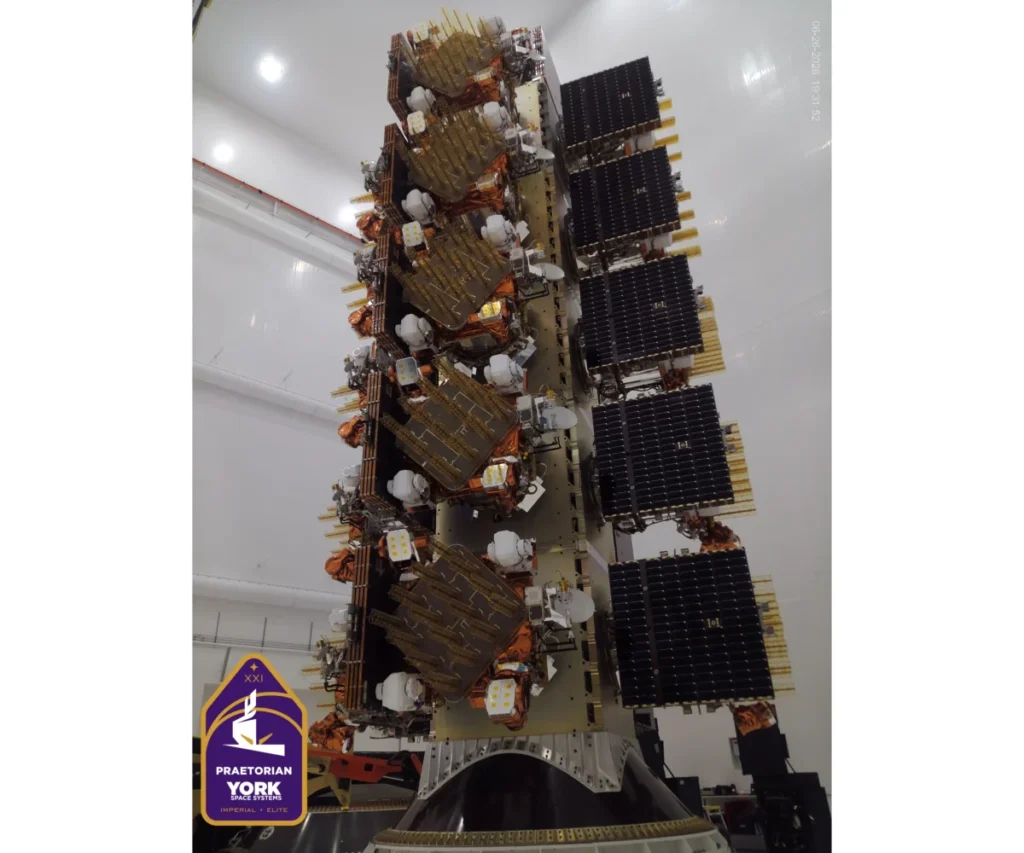
The U.S. Space Development Agency (SDA) is set to significantly expand its nascent satellite constellation this week with a launch carrying 21 new satellites, a move Director GP Sandhoo stated will place "half our transport constellation on orbit." The launch, scheduled for Thursday from Vandenberg Space Force Base in California at 1:32 p.m. Pacific Time, will utilize a SpaceX Falcon 9 rocket to deliver the York Space Systems-built satellites into low-Earth orbit. This deployment marks a crucial step in the SDA’s ambitious plan to establish a proliferated network designed to provide advanced missile tracking, warning, and resilient communications capabilities for the warfighter.
Reaching a Milestone: Half the Transport Constellation in Orbit
The impending launch represents the third of ten planned for Tranche 1 of the SDA’s Proliferated Warfighter Space Architecture (PWSA). With the addition of these 21 satellites, the agency will have deployed a total of 63 satellites towards its goal of a comprehensive, interconnected network. GP Sandhoo, who also serves as the Space Force’s portfolio acquisition executive for missile tracking and warning, emphasized the significance of this milestone during a virtual media roundtable. "By the end of this launch, we’ll have half our transport constellation on orbit," Sandhoo stated. "We’re starting to talk real capability for the warfighter."
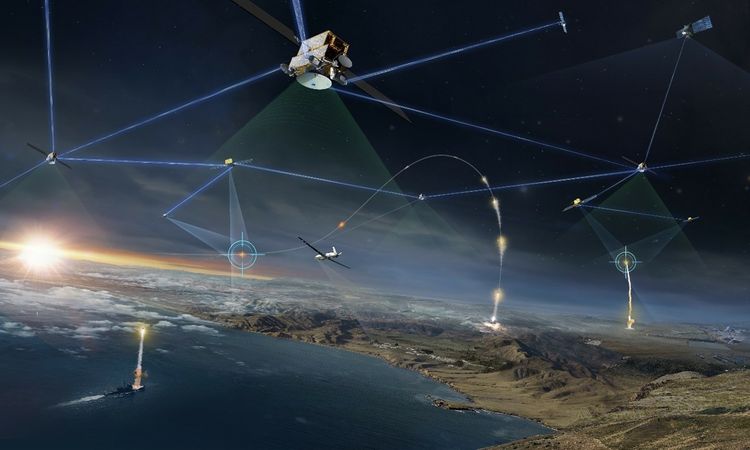
The PWSA is designed to operate at an altitude of approximately 1,000 kilometers, a mid-Earth orbit altitude chosen to balance coverage and latency for its intended functions: tracking conventional and hypersonic missiles, providing early warning of such threats, and ensuring robust, resilient communication pathways. The architecture relies on a proliferated network of satellites, meaning a large number of smaller, interconnected satellites rather than a few large, high-value assets, to enhance survivability and coverage.
Tranche 1: A Phased Approach to Deployment and Challenges
The current deployment phase, known as Tranche 1, began in earnest with the first launch in September of last year. Since then, the SDA has successfully delivered 42 of the planned 154 satellites for this tranche. However, the path to operational capability has not been without its hurdles. In March, Sandhoo confirmed that the agency had temporarily paused further launches to address and rectify issues encountered with the satellites already in orbit.
During the virtual roundtable, Sandhoo elaborated on the nature of these challenges, detailing "hardware and software issues" that arose. These difficulties included discrepancies between thermal models and actual on-orbit measurements, which can impact the longevity and performance of sensitive satellite components. Furthermore, issues with the propulsion systems were reported, potentially affecting orbital maneuvering and station-keeping. Another significant challenge was the time it took for satellites to become fully operational online, partly attributed to limited ground entry points for initial system checks and activation.
"Frankly," Sandhoo admitted, "we still quite haven’t finished some of those checkouts" of satellites launched in the previous year. This ongoing validation process underscores the complexity of deploying and integrating such a large number of interconnected space assets.
Learning from Setbacks: Resilience and Future Launches
The complexities of deploying a nascent space architecture have also led to setbacks. Sandhoo revealed that during the troubleshooting and checkout process, the SDA lost contact with one of the Lockheed Martin-built satellites already in orbit. "When you’re building this many satellites, I do expect some failures," he remarked, a statement reflecting the inherent risks associated with ambitious space programs. Despite this loss, the agency remains committed to its deployment schedule.
Looking ahead to the upcoming launch, Sandhoo expressed confidence in a smoother operation. "We expect this launch to be a lot smoother than the last one," he stated. The SDA’s strategy involves incremental launches, with subsequent deployments planned based on the readiness of its three primary contractors: Lockheed Martin, Northrop Grumman, and York Space Systems. While a specific timeline for future launches beyond this week was not provided, the agency is adapting its schedule to accommodate the contractor with the earliest readiness.
Integrating the Network: The Next Frontier
A critical aspect of the PWSA is its ability to function as a unified, interconnected network. While the satellites are being deployed, the SDA has not yet fully integrated them into a cohesive communication system. Sandhoo anticipates that the integration process for the upcoming batch of satellites will be less problematic. He attributed this expectation to the deployment of "a different system" with the new satellites, suggesting that improvements or modifications have been implemented based on lessons learned from earlier deployments.
The ongoing efforts to resolve technical challenges are paramount to the SDA’s mission. "I wish we were on orbit and supporting this mission right now," Sandhoo conveyed, highlighting the urgency and dedication behind the program. "But we are doing everything we can technically to solve these technical challenges to get these systems on orbit so we can deliver these capabilities."
Broader Implications: National Security and Space Capabilities
The SDA’s Proliferated Warfighter Space Architecture represents a significant shift in how the U.S. military intends to leverage space-based assets for national security. Traditionally, military space programs have relied on a smaller number of large, expensive, and often vulnerable satellites. The proliferated approach, characterized by numerous smaller, more cost-effective satellites, aims to enhance resilience, reduce the impact of single-point failures, and enable more agile responses to evolving threats.
The ability to track and warn against advanced missile threats, including hypersonic weapons, is a key driver for the PWSA. Hypersonic missiles, traveling at speeds exceeding Mach 5 and capable of complex maneuvers, present a significant challenge to existing missile defense systems. A proliferated constellation equipped with advanced sensors and rapid communication capabilities could provide the necessary early warning and tracking to counter such threats effectively.
Furthermore, the emphasis on resilient communications is crucial in an era where potential adversaries are developing capabilities to disrupt or deny traditional communication channels. A space-based network offers an alternative that is less susceptible to terrestrial interference or attack.
The SDA’s incremental acquisition and deployment strategy, often referred to as "tranches," allows for rapid iteration and incorporation of lessons learned. This agile approach contrasts with the often lengthy development cycles of traditional defense programs. By launching in tranches, the SDA can introduce new capabilities, test them in operational environments, and refine subsequent deployments based on real-world performance and emerging threats.
The successful deployment and integration of the PWSA will have far-reaching implications for U.S. military operations, enhancing situational awareness, command and control, and overall strategic deterrence. It also positions the United States at the forefront of developing and fielding next-generation space architectures for national security purposes, contributing to the ongoing evolution of space as a critical domain for defense and intelligence. The upcoming launch, therefore, is not merely a technical milestone but a tangible step towards realizing a more robust and responsive space-based defense posture.