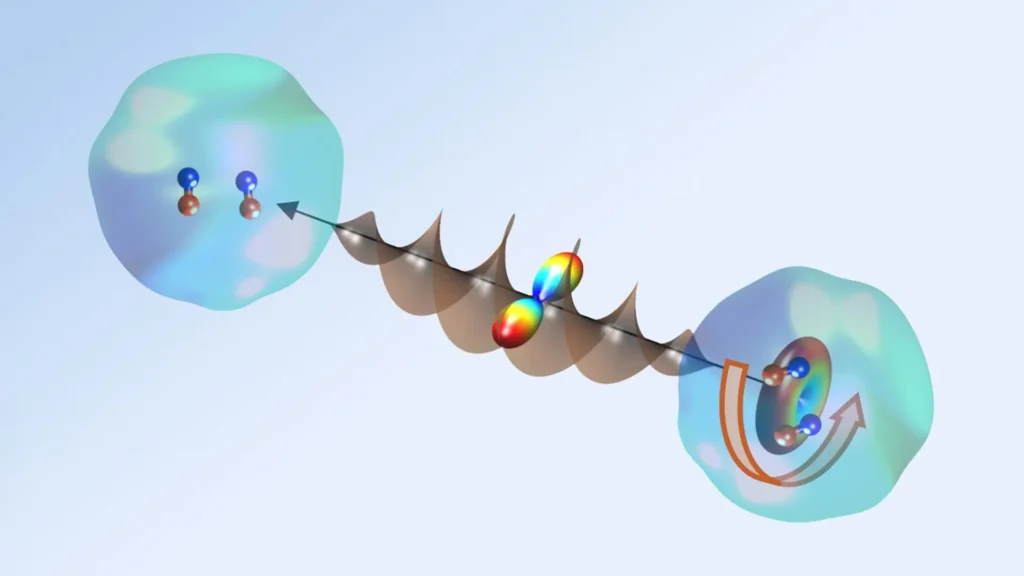
In a significant advancement for the field of quantum condensed matter physics, a collaborative team of researchers has successfully demonstrated a method to precisely control the rotation of molecules immersed in superfluid liquid helium. This achievement, led by physicists at the University of British Columbia (UBC) in partnership with the University of Freiburg, provides a sophisticated new "control knob" for investigating the microscopic properties of superfluids—substances that flow with zero viscosity and represent one of the most intriguing states of matter in modern science. The study, recently published in the prestigious journal Physical Review Letters, marks the first time scientists have been able to manipulate molecular rotation within a superfluid environment with such high degrees of accuracy, opening new pathways for understanding how quantum systems interact with their surroundings.
The Nature of Superfluidity and the Solvation Challenge
To appreciate the scale of this breakthrough, one must first understand the unique environment of a superfluid. When certain isotopes, such as Helium-4, are cooled to temperatures approaching absolute zero (approximately 2.17 Kelvin), they undergo a phase transition into a state where internal friction completely vanishes. In this state, the liquid can flow through microscopic cracks without resistance, climb the walls of containers, and maintain a constant state of motion indefinitely.
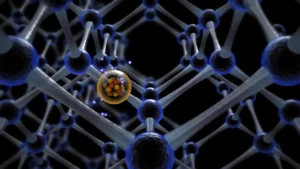
Despite these frictionless properties, superfluids still act as solvents. When a molecule is introduced into a droplet of liquid helium, it becomes "solvated," meaning it is surrounded by the helium atoms. However, because the environment is governed by quantum mechanics rather than classical physics, the interaction between the molecule and the fluid is complex. Even in a frictionless fluid, a rotating molecule experiences an "effective mass" increase. As Dr. Valery Milner, an associate professor at UBC’s Department of Physics and Astronomy and a lead author of the study, explained, the process is analogous to a snowball rolling down a hill. While it may start small and move easily, it quickly accumulates layers of snow, becoming heavier and more resistant to changes in motion. In the case of liquid helium, the molecule drags a portion of the superfluid with it, creating a "quantum solvation shell" that complicates any effort to control its movement.
Evolution of the Optical Centrifuge Technique
The primary tool used in this experiment is the optical centrifuge, a device that utilizes ultra-fast laser pulses to spin molecules to extreme rotational speeds. The concept of the optical centrifuge was first theorized and developed in the late 1990s as a way to study "superrotors"—molecules spinning so fast that their rotational energy can break chemical bonds or alter their collision dynamics with other molecules.
In a standard optical centrifuge setup, a laser pulse is "chirped" and polarized such that its electric field rotates at an accelerating rate. Gas-phase molecules, which have a natural tendency to align their dipoles with an external electric field, are caught in this rotating trap and spun up to frequencies in the terahertz range. While this technique has been highly successful in studying gases, applying it to molecules submerged in a liquid medium—even a superfluid—has historically proven unsuccessful. The dense environment of the liquid helium nanodroplets typically dampens the rotation or causes the molecule to lose its alignment with the laser field before significant rotational speed can be achieved.
To overcome this, the UBC and Freiburg team modified the traditional approach. Instead of a single continuous acceleration, they embedded nitric oxide dimers (pairs of molecules) into helium nanodroplets and utilized a dual-pulse interference technique. By introducing a precise delay between the laser pulses, the researchers created a specific interference pattern that allowed for a slower, more stable "spinnability." This adjustment allowed the molecules to overcome the initial resistance of the helium solvation shell, enabling the researchers to dictate both the direction and the frequency of the rotation.
Experimental Chronology and Methodology
The journey toward this discovery involved several years of refining the interaction between ultra-fast optics and cryogenic molecular beams. The chronology of the experiment can be traced through several key phases:
- Cryogenic Preparation: The team utilized a specialized apparatus to create helium nanodroplets. These droplets are formed by expanding high-pressure helium gas through a cooled nozzle into a vacuum, resulting in tiny clusters of several thousand helium atoms at a temperature of approximately 0.37 Kelvin.
- Doping the Droplets: The droplets passed through a "pickup cell" containing nitric oxide gas. Due to the extreme cold, the nitric oxide molecules were captured by the droplets, forming dimers (NO)2.
- Laser Interaction: The doped droplets were then intersected by the modified optical centrifuge beam. The innovation here was the "control knob" provided by the pulse delay, which allowed the team to match the laser’s acceleration to the molecule’s ability to shed or carry its helium shell.
- Detection: Using ion imaging and time-of-flight mass spectrometry, the researchers measured the rotational state of the molecules after they were kicked out of the droplets by a secondary "probe" laser. This allowed them to verify that the molecules were indeed spinning at the predicted rates and directions.
The data gathered during these phases confirmed that the researchers could adjust the rotational frequency of the nitric oxide dimers from zero up to the point where the centrifugal forces began to interact with the superfluidity of the droplet itself.
Supporting Data and Technical Observations
The researchers focused on the "rotational constant" of the molecule, which effectively changes when the molecule is inside the superfluid. In a vacuum, a nitric oxide dimer has a known, fixed rate at which it rotates for a given energy input. Inside the helium droplet, this rate decreases because the molecule must move the surrounding helium atoms.
Data from the study showed that by using the new centrifuge technique, the "spinnability" of the molecules increased significantly compared to previous attempts using standard laser pulses. The team observed that at lower rotational frequencies, the molecule behaves as if it is much heavier—supporting the "snowball" theory. However, as the rotation speed increases, the interaction with the superfluid changes. The ability to precisely tune this frequency is what makes the UBC study a landmark; it provides the first empirical data on the transition between a molecule being "locked" to its superfluid shell and it spinning freely.
Scientific Reactions and Collaborative Impact
The international physics community has greeted the findings with enthusiasm, noting the implications for quantum chemistry and the study of phase transitions. While the paper was authored primarily by the UBC team, the collaboration with the University of Freiburg was essential for the sophisticated droplet-beam technology required to isolate single molecules in such a pristine environment.
"Controlling the rotation of a molecule dissolved in any fluid is a challenge," Dr. Milner noted in a statement following the publication. He emphasized that the success of the project relied on the ability to bridge the gap between high-intensity laser physics and ultra-cold condensed matter physics.
Independent researchers have noted that this tool could be used to probe the "Andronikashvili experiment" at a microscopic scale. In the 1940s, Elepter Andronikashvili used a stack of rotating disks to show that only the "normal" component of a superfluid moves with a container, while the "superfluid" component stays still. The UBC team is essentially performing a 21st-century version of this experiment, using a single molecule as the "disk" to probe the fluid at the atomic level.
Broader Implications and Future Research Directions
The implications of this research extend far beyond the rotation of nitric oxide. One of the most anticipated applications is the exploration of the limits of superfluidity. The team plans to use their "rotational control knob" to identify the exact frequency at which superfluidity breaks down.
In theory, there is a critical velocity at which the frictionless flow of a superfluid fails, leading to the creation of vortices or the transition back to a normal fluid state. By spinning a molecule faster and faster, researchers can create a localized "speed limit" test for the superfluid. Understanding where and why this breakdown occurs is vital for the development of future quantum technologies, including high-precision sensors and potentially new types of quantum bits (qubits) for quantum computing that are shielded by superfluid environments.
Furthermore, this technique allows for the study of "molecular superrotors" in a controlled liquid environment for the first time. This could lead to breakthroughs in understanding how energy is dissipated in quantum liquids and how complex chemical reactions occur at temperatures near absolute zero, where traditional thermal motion is absent.
Conclusion and Funding Acknowledgments
The successful demonstration of controlled molecular rotation in a superfluid represents a milestone in the manipulation of quantum matter. By providing a way to peer into the frictionless world of liquid helium through the lens of a rotating molecule, the UBC and Freiburg researchers have equipped the scientific community with a powerful new diagnostic tool.
The research was made possible through significant institutional support, including grants from the Natural Sciences and Engineering Research Council of Canada (NSERC), the Canada Foundation for Innovation (CFI), and the BC Knowledge Development Fund. As the team moves forward, their focus will shift toward the "critical point" of rotation, seeking to solve the long-standing mystery of how quantum fluids behave when pushed to their physical limits. For now, the "snowball" of molecular physics has begun to spin exactly how the scientists want it to, marking a new era in the study of the ultra-cold.