Last year, researchers spearheaded by UCLA achieved a scientific milestone that physicists had pursued for half a century: the controlled absorption and release of photons by radioactive thorium nuclei, mimicking the behavior of electrons within atoms. This groundbreaking achievement, first conceptualized by the team in 2008, laid the foundation for a new generation of incredibly precise clocks. The anticipated advancements promise to dramatically improve global navigation systems and offer scientists an unprecedented tool to investigate whether some of nature’s fundamental constants remain immutable over time.
The Quest for Unprecedented Precision: A Background
For decades, the standard for accurate timekeeping has been the atomic clock, which relies on the precise oscillations of electrons within atoms. These devices have been instrumental in enabling technologies like GPS, global communication networks, and scientific research requiring exacting temporal measurements. However, even the most advanced atomic clocks, while incredibly stable (achieving accuracies of one second in billions of years), possess inherent limitations. They are sensitive to environmental disturbances such as temperature fluctuations, magnetic fields, and even subtle gravitational changes, which can introduce drift over extended periods.
The concept of a "nuclear clock" emerged as a theoretical successor to atomic clocks, promising an even greater leap in precision. Instead of harnessing electron transitions, nuclear clocks would utilize transitions within the nucleus of an atom. The nucleus, being significantly smaller and more tightly bound than the electron cloud, is far less susceptible to external perturbations. This inherent stability makes nuclear transitions an ideal candidate for ultra-high precision timekeeping. The challenge, however, lay in identifying a suitable atomic nucleus and then finding a way to manipulate its energy states with laser light – a feat previously deemed impossible due to the immense energy scales involved in nuclear physics.
The specific isotope that captured the attention of physicists was thorium-229. Its nucleus possesses a uniquely low-energy excited state, making it theoretically accessible by optical lasers, unlike other nuclear transitions that require gamma rays or X-rays. This "isomeric" state in thorium-229 has been the subject of intense research, with its precise energy level being a critical parameter for unlocking its potential as a nuclear clock. The pursuit of controlling this transition has been a holy grail for quantum metrology and fundamental physics, holding the promise of stability orders of magnitude beyond current atomic clock technology, potentially reaching accuracies of one second in trillions of years or more.
The 2023 Breakthrough: Unlocking the Thorium-229 Isomer
The initial breakthrough by the UCLA-led team in 2023 marked a pivotal moment in this decades-long quest. After years of meticulous research and development, they successfully demonstrated the controlled excitation and de-excitation of thorium-229 nuclei using optical lasers. This was the first experimental realization of directly probing the nuclear transition in thorium-229 with light, validating the theoretical predictions and opening a tangible pathway to building a nuclear clock. The technique involved embedding thorium-229 atoms within specially engineered fluoride crystals, which stabilized the thorium while remaining transparent to the laser light required to induce the nuclear transition. This achievement garnered significant attention in the scientific community, earning Ricky Elwell, a key contributor, the prestigious 2025 Deborah Jin Award for Outstanding Doctoral Thesis Research in Atomic, Molecular, or Optical Physics.
Despite this monumental success, a significant practical limitation loomed large: the scarcity of thorium-229. This specific isotope is not naturally abundant and is primarily produced as a decay product in the processing of weapons-grade uranium. Consequently, the global supply available for research purposes is exceedingly limited, estimated at only about 40 grams worldwide. This severe constraint made the efficiency of thorium utilization a critical, almost insurmountable, challenge for any widespread adoption or even expanded research into nuclear clocks. The initial method, while successful, consumed relatively large quantities of this precious material, rendering the prospect of practical nuclear clocks distant and expensive.
A Paradigm Shift: The New, Economical Approach
An international collaboration, once again led by UCLA physicist Eric Hudson, has now unveiled a revolutionary solution to this bottleneck. The team discovered a remarkably simpler and more economical method to reproduce their earlier results, drastically reducing the amount of thorium-229 required. Their innovative technique, detailed in a recent publication in Nature, is not only straightforward and inexpensive but also raises the compelling possibility that nuclear clocks could one day become compact and affordable enough for widespread integration into everyday technology.
The prior approach, which took Hudson’s team 15 years to perfect, involved the painstaking fabrication of specialized thorium-doped fluoride crystals. In these elaborate experiments, thorium-229 atoms were meticulously bonded with fluorine within a precisely engineered crystalline lattice. The crystals served the dual purpose of stabilizing the thorium nuclei and allowing the laser light to reach and excite them. However, as first author Ricky Elwell explained, the process was "extremely difficult" and consumed substantial amounts of thorium. "We did all the work of making the crystals because we thought the crystal had to be transparent for the laser light to reach the thorium nuclei. The crystals are really challenging to fabricate. It takes forever and the smallest amount of thorium we can use is 1 milligram, which is a lot when there’s only 40 or so grams available," Elwell stated, highlighting the immense practical hurdles.
Borrowing from Industry: Electroplating for Precision
In a stark departure from their previous high-tech crystal growth, the researchers adopted a method rooted in a much older, industrial technique: electroplating. Commonly employed in jewelry making and various industrial coatings since the early 19th century, electroplating uses an electric current to transfer metal atoms from a conductive solution and deposit them as a thin layer onto a desired surface. For instance, gold or silver is frequently electroplated onto less valuable metals to create durable and aesthetically pleasing finishes.
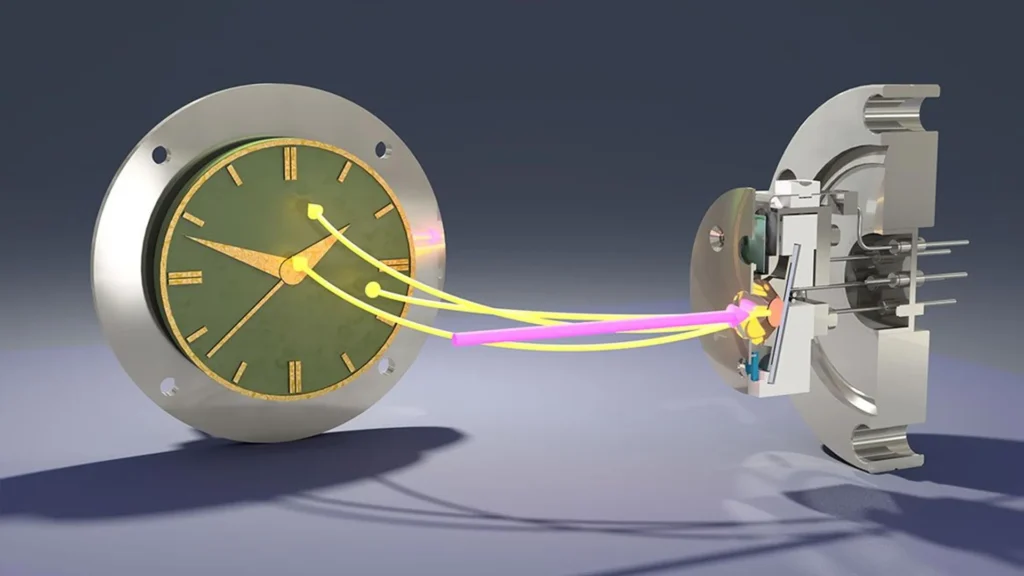
Applying this established technique, the team successfully deposited an extremely thin layer of thorium onto a stainless steel substrate. This ingenious shift dramatically reduced the material requirements. "It took us five years to figure out how to grow the fluoride crystals and now we’ve figured out how to get the same results with one of the oldest industrial techniques and using 1,000 times less thorium," Hudson remarked, underscoring the efficiency gains. Furthermore, the resulting product is not only significantly more robust but also simpler to produce: "Further, the finished product is essentially a small piece of steel and much tougher than the fragile crystals." This newfound simplicity and robustness are critical for moving nuclear clock technology out of specialized laboratories and into practical applications.
Rethinking Nuclear Excitation: A Fundamental Shift in Understanding
The success of the new electroplating system stemmed from a critical re-evaluation of a long-held scientific assumption. For years, physicists had believed that thorium-229 nuclei needed to be embedded within a transparent material to allow laser light to penetrate and excite the nucleus effectively. The UCLA team’s breakthrough demonstrated that observing the nuclear energy transition was far easier than previously conceived, even within opaque materials.
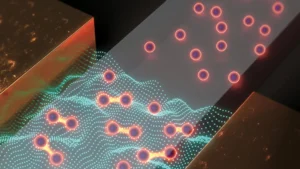
"Everyone had always assumed that in order to excite and then observe the nuclear transition, the thorium needed to be embedded in a material that was transparent to the light used to excite the nucleus. In this work, we showed that is simply not true," Hudson explained. The crucial insight was realizing that even in opaque materials, enough light could be forced into the surface layers to excite nuclei located near the surface. Moreover, instead of emitting photons, as they would in transparent crystals, these excited nuclei in opaque materials emit electrons. This phenomenon allows for detection by simply monitoring an electrical current – a remarkably straightforward and standard laboratory procedure. "Which is just about the easiest thing you can do in the lab!" Hudson added, emphasizing the elegant simplicity of the new detection method.
Chronology of a Scientific Pursuit:
- Early 2000s: Theoretical interest in thorium-229’s unique low-energy nuclear isomer grows, prompting initial research into its potential for ultra-precise timekeeping.
- 2008: The UCLA team formally proposes the concept of using the thorium-229 nuclear transition to build an optical clock, setting a long-term research goal.
- 2008-2023: Over 15 years of dedicated research and development are invested in fabricating specialized thorium-doped fluoride crystals and devising methods to manipulate the nuclear transition.
- 2023: The UCLA-led team achieves the initial breakthrough, successfully demonstrating the controlled absorption and release of photons by thorium-229 nuclei in fluoride crystals, validating the nuclear clock concept.
- Post-2023: Building on the 2023 success, the team pivots to address the material scarcity, developing the electroplating method that significantly reduces thorium-229 requirements and simplifies the process.
- Near Future: Continued refinement of the electroplating technique and miniaturization efforts aim to bring nuclear clocks closer to practical deployment.
- Long-Term Vision: Potential widespread adoption of nuclear clocks in various sectors, from fundamental science to consumer electronics and space exploration.
Beyond the Lab: Profound Implications of Nuclear Clocks
The implications of this breakthrough extend far beyond the confines of research laboratories, promising to revolutionize several critical sectors:
1. Navigation and Timing Systems:
Current global navigation satellite systems (GNSS) like GPS rely heavily on the precise timing signals from onboard atomic clocks. However, these systems are vulnerable to disruption, whether from malicious jamming, cyberattacks, or natural phenomena like electromagnetic storms. Such disruptions could cripple infrastructure reliant on GPS, including transportation, finance, and critical communication networks. Nuclear clocks, with their inherent stability and independence from external signals, offer a robust solution for resilient navigation.
Submarines, for instance, already use onboard atomic clocks for navigation while submerged, but these clocks accumulate drift over time, necessitating periodic surfacing to reconfirm their position via satellite signals. Nuclear clocks, being far less sensitive to environmental disturbances, could maintain accuracy for extended periods without external recalibration, enhancing operational autonomy and security for military and scientific underwater missions. Makan Mohageg, optical clock lead at Boeing Technology Innovation, affirmed this potential, stating, "The UCLA team’s approach could help reduce the cost and complexity of future thorium-based nuclear clocks. Innovations like these may contribute to more compact, high-stability timekeeping, relevant to several aerospace applications."
2. Fundamental Physics and the Nature of Reality:
Ultra-precise clocks are not merely timing devices; they are exquisitely sensitive probes of the universe itself. Nuclear clocks could enable scientists to test some of physics’ most profound questions. For example, they could be used to search for subtle variations in fundamental constants, such as the fine-structure constant, which governs the strength of electromagnetic interactions. Any observed changes, even minuscule ones over cosmic timescales, could hint at new physics beyond the Standard Model.
Moreover, these clocks could provide unprecedented precision for testing Einstein’s theory of relativity. General relativity predicts that clocks run at different rates depending on their gravitational potential. Nuclear clocks could detect these relativistic effects with extraordinary accuracy, potentially validating the theory in new regimes or revealing subtle deviations that point towards a quantum theory of gravity. Eric Burt, who leads the High Performance Atomic Clock project at the NASA Jet Propulsion Laboratory and was not involved in the research, emphasized this: "In my opinion, thorium nuclear clocks could also revolutionize fundamental physics measurements that can be performed with clocks, such as tests of Einstein’s theory of relativity."
3. Space Exploration and Interplanetary Navigation:
For long-duration, deep-space missions, precise timing is paramount for navigation, communication, and scientific data acquisition. As spacecraft venture further from Earth, light-travel time delays become significant, and the need for autonomous, highly stable onboard clocks becomes critical. Nuclear clocks could provide the unwavering timekeeping necessary for navigating interstellar distances, guiding autonomous probes to distant planets, and maintaining synchronization for complex multi-spacecraft operations. Burt further elaborated on this vision: "Due to their inherent low sensitivity to environmental perturbations, future thorium clocks may also be useful in setting up a solar-system-wide time scale essential for establishing a permanent human presence on other planets."
4. Terrestrial Infrastructure and Everyday Technology:
Beyond specialized applications, the affordability and miniaturization enabled by the new electroplating method could bring nuclear clock technology into broader use. This includes synchronizing power grids for enhanced stability and efficiency, improving the timing in cellular networks to boost capacity and reliability, and refining radar systems for superior target detection and tracking. In the longer term, if the technology can be sufficiently shrunk, nuclear clocks could potentially be integrated into consumer devices like smartphones and wristwatches, providing unprecedented accuracy for personal timing, location services, and even novel sensor applications. Imagine a future where your personal device’s clock is accurate to within a second over the age of the universe.
Collaborative Excellence and Future Prospects
This groundbreaking research was made possible through a robust international collaboration, drawing expertise from a consortium of institutions including the University of Manchester, University of Nevada Reno, Los Alamos National Laboratory, Ziegler Analytics, Johannes Gutenberg-Universität at Mainz, and Ludwig-Maximilians-Universität München. The project received vital financial backing from the National Science Foundation, underscoring the strategic importance of this scientific endeavor.
The successful development of an economical and robust method for harnessing thorium-229’s nuclear transition marks a profound step forward in the quest for the ultimate clock. By overcoming the critical bottleneck of isotope scarcity and simplifying the manufacturing process, the UCLA-led team has not only pushed the boundaries of quantum metrology but has also dramatically accelerated the timeline for nuclear clocks to transition from theoretical marvels to practical, transformative technologies, shaping the future of navigation, fundamental science, and perhaps, even our daily lives.