The UK Bebras Challenge, the nation’s premier initiative for fostering computational thinking, has officially returned for its latest cycle, inviting schools across the country to engage students in the fundamental principles of computer science. Following a landmark year in which more than 526,000 students participated, the program continues to serve as a vital entry point for young learners aged 6 to 19. By utilizing a series of logic-based puzzles that require no prior programming knowledge, the challenge seeks to democratize access to technical literacy and identify high-potential talent in the United Kingdom’s next generation of digital innovators.
The Evolution and Scale of the Bebras Movement
The Bebras Challenge is part of an international initiative that originated in Lithuania in 2004, founded by Professor Valentina Dagienė. The name "Bebras" is the Lithuanian word for "beaver," an animal known for its industriousness and engineering prowess—traits the challenge aims to instill in students. Since its inception, the movement has expanded to over 50 countries, becoming a cornerstone of global computer science education. In the United Kingdom, the challenge is coordinated by the Raspberry Pi Foundation and the University of Oxford, ensuring that the content aligns with both academic standards and industry needs.
The scale of the UK’s involvement has seen exponential growth over the last decade. What began as a niche competition for enthusiasts has transformed into a massive national event. The 2023 participation figures, exceeding half a million students, represent a significant portion of the UK student population, signaling a shift in how schools prioritize digital competencies. The challenge is structured to be inclusive, offering categories for various age groups: Kittens (ages 6–8), Castors (8–10), Juniors (10–12), Intermediate (12–14), Senior (14–16), and Elite (16–19). This tiered approach ensures that tasks remain developmentally appropriate while progressively introducing more complex abstractions.
Bridging the Gap with Ada Computer Science
A significant development in this year’s iteration is the deepened integration with the Ada Computer Science platform. Ada Computer Science, a free online learning resource developed by the Raspberry Pi Foundation and the University of Cambridge, now provides a direct link between the Bebras puzzles and formal curriculum topics. Each task within the challenge includes a "background" section that connects the puzzle’s logic to real-world computer science concepts.
Following the completion of the live challenge, teachers and students can access detailed explanations on the Ada platform. For instance, a puzzle involving pathfinding is no longer just a game; it is explicitly linked to lessons on graph theory, Dijkstra’s algorithm, or network topology. This pedagogical bridge is designed to transition students from intuitive problem-solving to formal algorithmic thinking, providing a clear pathway for those who wish to pursue computer science at the GCSE, A-Level, or university levels.
Pedagogical Framework: Beyond Coding
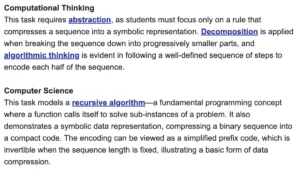
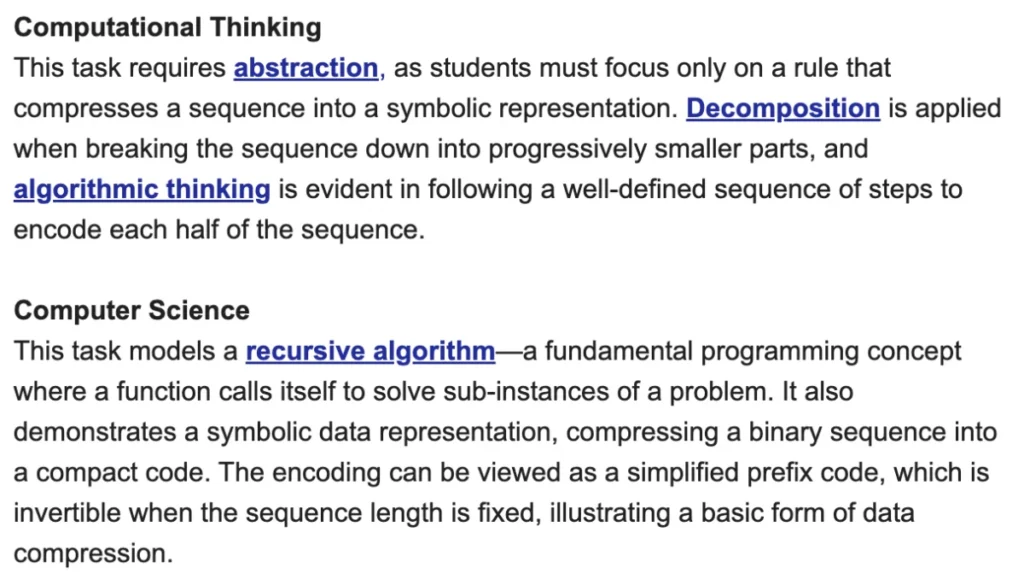
The core philosophy of the UK Bebras Challenge is that computer science is fundamentally about problem-solving, not just writing code. This distinction is crucial in an educational landscape often preoccupied with specific programming languages. The challenge focuses on four pillars of computational thinking:
- Decomposition: Breaking down complex problems into smaller, manageable parts.
- Pattern Recognition: Identifying similarities and trends within data or problems.
- Abstraction: Focusing on the essential information while ignoring irrelevant details.
- Algorithmic Thinking: Developing a step-by-step solution to a problem.
By removing the barrier of syntax—which often intimidates beginners—the Bebras Challenge allows students to demonstrate "raw" computational talent. This is particularly effective in identifying students who may have a natural aptitude for logic but have not yet had the opportunity to learn a language like Python or Java.
Case Study in Logic: The "Park Walk" and Graph Theory
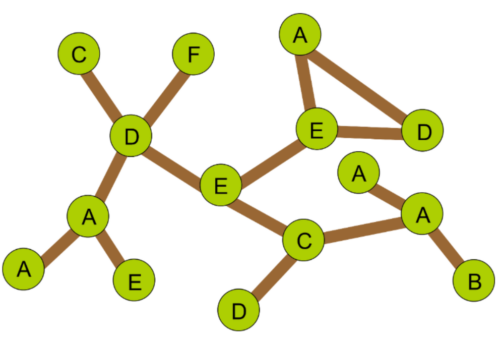
To understand the rigor of the challenge, one can look at past tasks such as the "Park Walk" puzzle, originally designed for the Junior group (ages 10–12). The task presents a map of a park where trees (nodes) are connected by paths (edges). Some trees share the same letter label, requiring students to use the context of their current position and the available connections to determine their path.
This specific task models a fundamental area of mathematics and computer science known as graph theory. In a formal setting, this involves the study of vertices and the relationships between them. The "Park Walk" puzzle specifically introduces the concept of unambiguous representation in data structures. Despite the duplicate labels, the sequence of movement is unique because the "neighbors" of each node are labeled distinctly.
The history of this field dates back to 1936, when Hungarian mathematician Dénes Kőnig published the first comprehensive textbook on graph theory. Today, the principles tested in this simple 10-year-old’s puzzle are the same ones used by Google Maps for navigation, by social media companies to map user connections, and by logistics firms to optimize delivery routes. By engaging with these puzzles, students are participating in a mathematical tradition that underpins the modern internet.
Inclusion and Accessibility in Digital Education
A primary objective of the UK Bebras Challenge is to ensure that the field of computing is accessible to all, regardless of background or physical ability. The challenge is free for all UK schools, removing financial barriers that often hinder participation in extracurricular academic competitions. Furthermore, the organizers have implemented specific measures to support students with diverse needs.
A tailored version of the challenge is available for secondary students with severe sight impairments, ensuring that the visual nature of many logic puzzles is adapted into accessible formats. This commitment to inclusivity is vital for diversifying the pipeline of talent entering the technology sector, which has historically struggled with representation.
Perspectives from the Classroom
Educators across the UK have praised the challenge for its ability to energize the classroom. Jonathan Phillips of Hereford Cathedral School noted that the competition provides an engaging environment for students to apply problem-solving skills that complement the standard coding curriculum. According to Phillips, the competitive but fun nature of the event encourages critical thinking in a way that traditional lessons sometimes cannot.
Similarly, Sharon Pendreigh of Brownedge St Mary’s Catholic High School emphasized the broader applications of the skills developed through Bebras. She observed that the tasks push students to think creatively, fostering essential skills that are "applicable both inside and outside of the classroom." This sentiment reflects a growing understanding among educators that computational thinking is a "universal" skill, as valuable to a future lawyer or doctor as it is to a software engineer.
Strategic Implications for the UK’s Digital Economy
The return of the Bebras Challenge comes at a time when the UK government and industry leaders are increasingly concerned about the "digital skills gap." As artificial intelligence and automation reshape the global economy, the ability to understand and manipulate digital systems is becoming a baseline requirement for employment.
The UK Bebras Challenge acts as a massive "top-of-funnel" recruitment tool for the nation’s technical workforce. By engaging over half a million students, the program helps normalize computer science as a standard part of a well-rounded education. The certificates awarded—ranging from participation to "Gold" certificates for those in the top 10% nationally—provide students with tangible recognition of their abilities, often encouraging them to select Computer Science as an elective subject in later years.
Furthermore, the data collected from the challenge provides researchers with insights into how computational thinking skills develop across different demographics and regions. This information is instrumental in shaping future educational policies and ensuring that resources are directed where they are most needed.
Chronology and Participation Details
The UK Bebras Challenge typically runs during a two-week period in November, known as the "live" challenge weeks. However, the impact of the program extends throughout the academic year.
- Registration Phase: Teachers register their schools through the official Bebras website. Registration is restricted to staff members to ensure the security and integrity of student data.
- Preparation Phase: Once registered, teachers gain access to a vast archive of past questions. These can be used to create custom, self-marking quizzes for end-of-term activities or lesson starters.
- The Live Challenge: Students have 45 minutes to complete the tasks under supervised conditions. The system is designed to be "plug-and-play," requiring only a web browser and no software installation.
- Results and Progression: After the challenge period ends, results are released to teachers. High-achieving students may be invited to participate in follow-on competitions, such as the Oxford University Computing Challenge (OUCC), which introduces more formal programming elements.
Schools interested in participating in the current cycle are encouraged to register at the official administrative portal (bebras.uk/admin). The platform remains a free resource, supported by a global community of educators and computer scientists dedicated to the belief that every child should have the opportunity to understand the digital world they inhabit.
As the UK Bebras Challenge continues to grow, it stands as a testament to the power of collaborative, international education. By turning complex mathematical concepts into accessible puzzles, the initiative is not just teaching kids how to think like computers—it is teaching them how to solve the problems of the future.