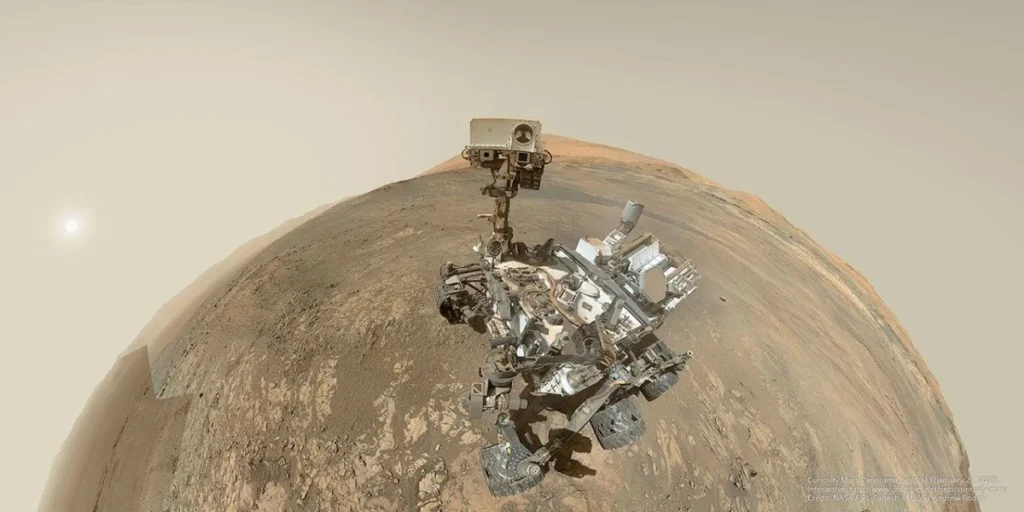
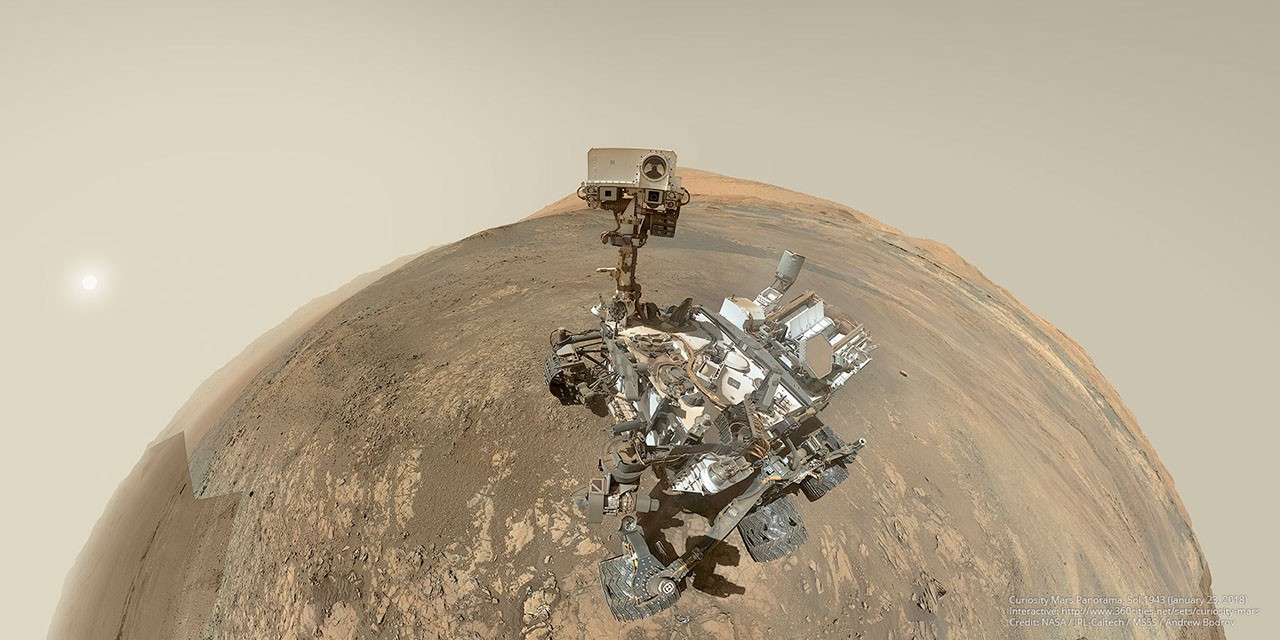
On sol 1943 of its groundbreaking mission, NASA’s Mars Science Laboratory rover, Curiosity, turned its sophisticated camera system towards itself, capturing a stunning self-portrait from the southern rim of Vera Rubin Ridge. This remarkable image, a testament to the rover’s enduring capabilities and the advancements in planetary exploration, offers a unique perspective on the alien landscape and the ongoing scientific endeavors on the Red Planet. The "selfie," as it has been colloquially termed, is not merely a picturesque snapshot but a rich data point, composed of 61 individual exposures meticulously stitched together by the rover’s Mars Hand Lens Imager (MAHLI).
The date of this particular Martian day, known as a "sol," is significant. Sol 1943, according to Martian timekeeping, corresponds to Earth date January 23, 2018. A Martian sol is approximately 40 minutes longer than an Earth day, a crucial detail for understanding the pace and timing of rover operations and data transmission. This extended sol represents a full cycle of daylight and darkness on Mars, allowing for a comprehensive view of the rover’s surroundings under varying light conditions.
The panoramic image showcases the vast, rugged terrain surrounding the Curiosity rover. Notably, the image features the rover’s MAHLI instrument, which is mounted on a robotic arm. To achieve a clear view of the Martian landscape, frames that would have captured the imager’s arm have been artfully edited out of the final panorama. The broader background, providing context to the immediate surroundings, was captured by the rover’s Mastcam on an earlier sol, sol 1903, highlighting the continuous data collection strategy employed by the mission.
Dominating the upper portion of the rover’s mast, and thus a prominent feature in the selfie, is the ChemCam instrument housing. This component, which contains a laser capable of firing at Martian rocks to analyze their composition, obscures the distant view of Mount Sharp. Mount Sharp, formally known as Aeolis Mons, is the central peak within Gale Crater and stands an impressive 5 kilometers (approximately 3.1 miles) high. Curiosity’s mission has been centered around its ascent, studying the layered geology of this colossal mountain to understand Mars’ past environmental conditions.
A Milestone in Martian Exploration: Reaching a Kilometer of Elevation Gain
The capture of this selfie occurred during a period of significant progress for the Curiosity mission. On August 26, 2026, an Earth date that would have been well after sol 1943, Curiosity achieved a remarkable milestone: a total elevation gain of 1 kilometer (approximately 0.62 miles) since its landing on the floor of Gale Crater. This achievement underscores the rover’s persistent journey up the slopes of Mount Sharp, meticulously collecting data at each stage of its ascent. The data gathered from these different elevations provides invaluable insights into the sequential deposition of Martian rock layers, offering a chronological record of the planet’s geological and climatic history.
The "Selfie" as a Scientific Tool
While the "selfie" aesthetic might appeal to the public imagination, its scientific value is immense. The MAHLI instrument, responsible for capturing these high-resolution images, functions as a microscopic imager, capable of revealing fine details of rock textures and mineral compositions. By taking a selfie, the rover effectively documents its immediate operational environment with unprecedented clarity. The composite nature of the panorama, combining multiple exposures, allows for a wide field of view, essential for understanding the geological context of the rover’s sampling and analysis activities.
The inclusion of the rover itself in the image provides a scale reference for the surrounding landscape. It allows scientists to better gauge the dimensions of geological features and the rover’s position relative to them. Furthermore, the detailed view of the rover’s components, including its wheels, instruments, and solar panels, offers a visual status report, aiding in the ongoing assessment of its health and performance.
Vera Rubin Ridge: A Geological Hotspot
Vera Rubin Ridge, the location from which this selfie was taken, is a significant geological feature within Gale Crater. Named in honor of the pioneering American astronomer Vera Rubin, who made groundbreaking discoveries about dark matter, this ridge represents a distinct geological unit that scientists have been eager to study. Its formation and composition are thought to hold clues about past hydrological processes on Mars, potentially indicating the presence of ancient lakes or rivers. Curiosity’s investigations in this area aim to unravel the history of water on Mars, a key factor in the planet’s potential habitability.
The Evolution of Martian Exploration: From Orbiters to Rovers
The Curiosity rover is part of a long and illustrious history of Martian exploration, initiated by a series of increasingly sophisticated missions. Early orbital reconnaissance missions, such as NASA’s Mariner and Viking programs, provided the first detailed images and atmospheric data of Mars. These missions paved the way for landers and rovers, which have allowed for in-situ analysis of the Martian surface.
The Mars Pathfinder mission in 1997, which deployed the Sojourner rover, marked a significant leap in robotic exploration, demonstrating the feasibility of mobile platforms on Mars. This was followed by the twin Mars Exploration Rovers, Spirit and Opportunity, which far exceeded their planned mission durations and provided extensive geological data. The Mars Science Laboratory mission, with its car-sized rover Curiosity, represents a quantum leap in scientific capability, equipped with a suite of advanced instruments for chemical, mineralogical, and atmospheric analysis. The subsequent Perseverance rover, which landed in 2021, further builds upon this legacy, with an emphasis on sample caching for future return to Earth and the inclusion of the Ingenuity helicopter, marking the first powered flight on another planet.
The "Astronomy Picture of the Day" (APOD) Program
The image and its accompanying explanation are part of NASA’s "Astronomy Picture of the Day" (APOD) program. APOD, established in 1995, is a widely recognized initiative that features a different image or photograph of our universe each day, accompanied by a brief explanation written by a professional astronomer. Its aim is to "discover the cosmos" and make the wonders of astronomy accessible to a broad audience. The APOD program serves as a powerful educational tool, democratizing access to stunning cosmic imagery and expert scientific insights. The image of the Curiosity rover on Mars is a prime example of how APOD brings the frontiers of space exploration directly to the public.
Implications and Future Directions
The continued success of the Curiosity mission, as exemplified by this detailed "selfie" and its progress up Mount Sharp, has profound implications for our understanding of Mars. The data collected by Curiosity and its predecessors are crucial for addressing fundamental questions about the Red Planet’s past climate, the potential for ancient life, and the feasibility of future human exploration.
The rover’s ability to navigate challenging terrain and operate for extended periods provides invaluable engineering data that informs the design of future missions. The insights gained from studying Martian geology and atmospheric processes also contribute to our broader understanding of planetary evolution and the conditions necessary for life to arise.
The existence of the interactive 360-degree VR version of the panorama further enhances public engagement, allowing individuals to virtually immerse themselves in the Martian landscape. This technology democratizes the experience of planetary exploration, making it more tangible and inspiring for a wider audience.
As Curiosity continues its ascent of Mount Sharp, the scientific community eagerly anticipates further discoveries. The ongoing analysis of rock samples, atmospheric data, and the detailed imagery captured by its advanced instruments promises to unveil more secrets of Mars, inching us closer to understanding our celestial neighbor and its place in the cosmos. The "selfie" from Vera Rubin Ridge, therefore, is more than just a remarkable photograph; it is a snapshot in time of humanity’s persistent quest for knowledge, captured from the surface of another world.
APOD Submissions and Future Images
It is important to note that NASA’s APOD program has updated its image submission process. Aspiring contributors are directed to the official "APOD Submissions" page for current guidelines. The announcement also teases "Tomorrow’s picture: Sunday’s Childe," hinting at another captivating astronomical image to be featured, underscoring the continuous stream of breathtaking visuals and scientific narratives provided by APOD. This commitment to daily astronomical discovery ensures that the public remains engaged with the ever-expanding frontiers of space science.