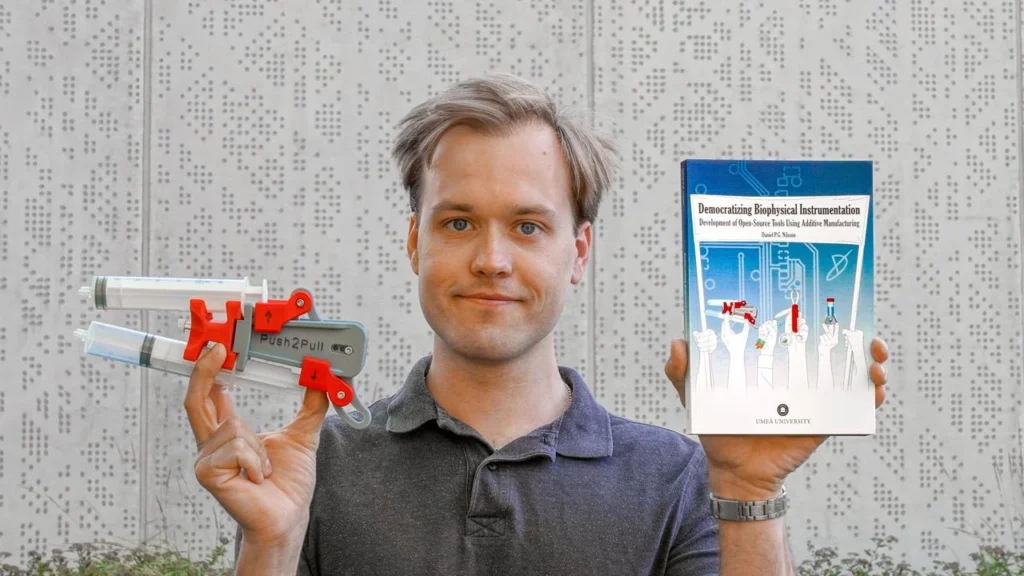
Researchers at Umeå University in Sweden are spearheading a significant shift in scientific research by demonstrating how readily available desktop 3D printers can be leveraged to fabricate essential laboratory equipment. This groundbreaking work, primarily focused on instruments for studying bacteria and other microorganisms, promises to dramatically reduce costs and increase accessibility for scientific endeavors worldwide. The innovations include the development of sophisticated devices capable of precisely locating and manipulating bacteria using laser technology, opening new avenues for understanding and combating microbial threats.
The research, spearheaded by Daniel Nilsson of Umeå University’s Department of Physics, outlines a practical methodology for scientists to design and produce their own experimental apparatus using consumer-grade 3D printers. This departure from an exclusive reliance on commercially produced instruments empowers laboratories to create bespoke tools tailored to their unique research needs and to adapt these tools dynamically as scientific inquiry progresses. This capability is particularly vital for smaller research institutions and those in resource-constrained regions, where the prohibitive cost and long lead times of traditional scientific equipment can act as significant barriers to advancement.
The Costly Landscape of Scientific Instrumentation
The pursuit of scientific knowledge, especially in fields like microbiology, often necessitates the use of highly specialized and exceptionally precise instruments. These tools, essential for tasks ranging from high-resolution imaging to the manipulation of microscopic entities, can come with substantial price tags. For instance, advanced laser tweezers systems, capable of trapping and moving individual cells, can easily cost tens of thousands of dollars. Similarly, specialized incubators, microfluidic devices, and automated cell culture systems represent significant capital investments for any laboratory. This financial burden can stifle innovation, particularly for early-career researchers or institutions operating on limited grants and budgets.
The challenges extend beyond initial acquisition costs. The customization required for specific experimental protocols can further inflate prices, as manufacturers often charge a premium for bespoke modifications. Furthermore, the time lag between ordering specialized equipment and its delivery can be considerable, delaying research timelines and potentially leading to missed opportunities in fast-moving scientific fields.
A Paradigm Shift: 3D Printing as a Solution
This predicament has led researchers to explore alternative manufacturing methods, with 3D printing emerging as a powerful and increasingly viable solution. As far back as 2024, 3DPrint.com reported on the Custom Lab Institute’s efforts to democratize research through the production of affordable 3D-printed lab equipment. Nilsson’s current work builds upon this burgeoning trend, focusing on the integration of desktop 3D printing with accessible open-source electronics to construct functional tools for biological research.
"We have developed a set of instruments that can be manufactured directly in the laboratory by anyone," Nilsson stated. "We hope this will make biological research less expensive and more accessible to a larger number of researchers." This sentiment underscores the core philosophy driving this innovation: to empower scientists with the tools they need, when they need them, at a fraction of the traditional cost.
Pioneering Tools for Bacterial Research
A significant portion of Nilsson’s research is dedicated to developing practical tools for the study of bacteria. This includes the creation of devices that utilize laser technology to not only detect but also to precisely move individual bacteria. Such capabilities are invaluable for a variety of research applications, including understanding bacterial motility, isolating specific strains, and performing controlled experiments on microbial behavior.
Furthermore, the research addresses the development of equipment for growing and quantifying biofilms. Biofilms, complex communities of microorganisms encased in a self-produced matrix, are a ubiquitous and often problematic phenomenon. They form on surfaces in diverse environments, from medical implants and hospital surfaces to industrial pipelines and food processing plants. Their tenacious adherence and resistance to conventional sterilization methods make them a major concern in healthcare, agriculture, and manufacturing.
Traditionally, studying the formation, structure, and behavior of biofilms requires specialized microscopes, incubators, and analysis software. Nilsson’s work demonstrates that many of these essential functions can be replicated using 3D-printed components combined with readily available electronics. This allows researchers to build custom biofilm reactors, controlled environmental chambers for growth studies, and even simple imaging setups for observing biofilm development in situ.
The inherent flexibility of 3D printing is a paramount advantage. Scientists can now design and iterate on equipment designs within their own labs, adapting them to the specific dimensions and parameters of their experiments. This iterative design process, where modifications can be made and new versions printed within hours or days, drastically accelerates the pace of experimentation and discovery. For example, a researcher studying a particular type of bacterial colony might need a petri dish holder with specific dimensions or an optical setup that precisely aligns with their microscope. Instead of waiting weeks for a custom-made part, they can download or design the necessary components and print them in-house, allowing for rapid prototyping and validation.
While the goal is not to entirely replace established, high-end scientific instruments, the aim is to provide a cost-effective and adaptable alternative for many common laboratory tasks. This democratization of tool-making ensures that budgetary constraints do not impede the progress of scientific inquiry.
"These methods enable a more collaborative and needs-driven approach to development within the research community," Nilsson added, highlighting the potential for interdisciplinary collaboration and shared innovation spurred by open-source designs.
Democratizing Biophysical Instrumentation: A Comprehensive Guide
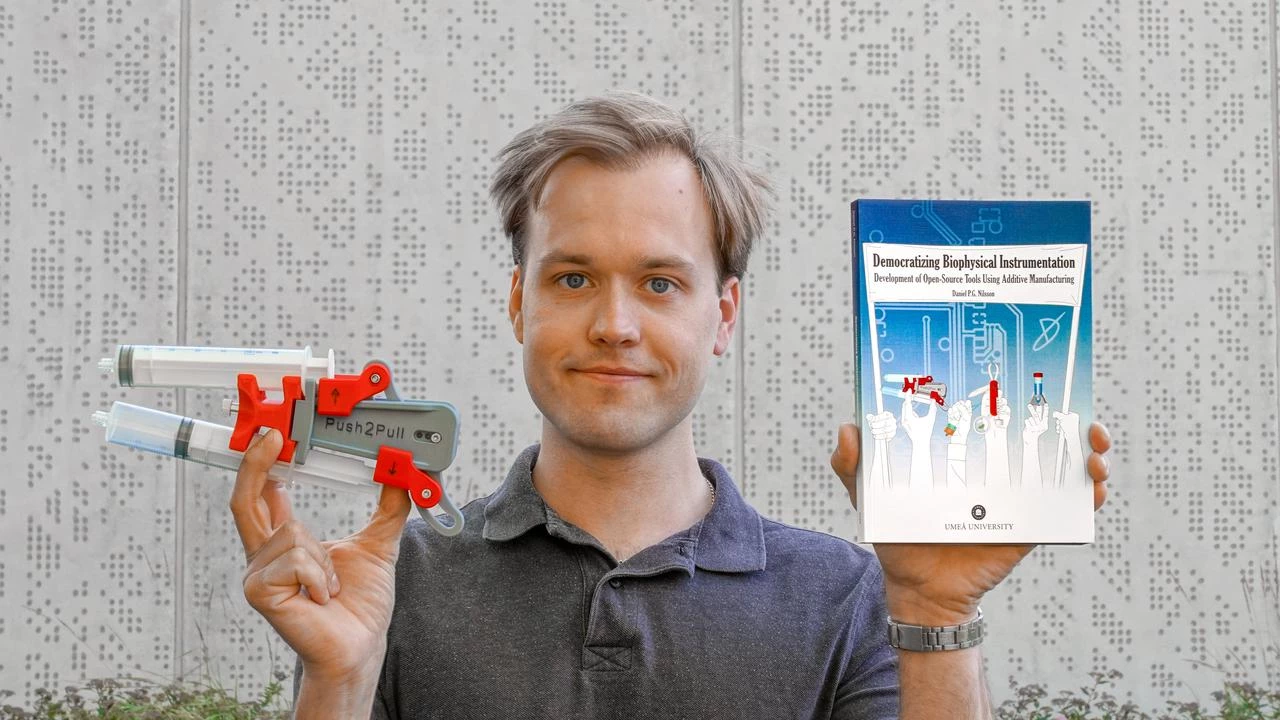
The culmination of this research is presented in Nilsson’s doctoral thesis, titled "Democratizing Biophysical Instrumentation: Development of Open-Source Tools Using Additive Manufacturing." This comprehensive work not only details the development of specific research instruments but also provides a practical, step-by-step guide for other scientists and enthusiasts interested in designing and fabricating their own 3D-printed tools. Crucially, the thesis emphasizes the seamless integration of these 3D-printed components with affordable, off-the-shelf electronics.
The creation of functional laboratory equipment typically involves more than just fabricating plastic parts. Many instruments require sophisticated electronic systems for power, data acquisition, control, and measurement. Nilsson’s approach focuses on combining the geometric freedom offered by 3D printing with the capabilities of low-cost microcontrollers, sensors, and actuators. This synergy allows for the construction of instruments that are not only physically adaptable but also electronically functional, bridging the gap between conceptual design and practical application.
This integrated approach is not without precedent. In 2017, a notable example emerged with the development of "FlyPi," a low-cost laboratory system that ingeniously combined 3D-printed parts, basic electronics, and a single-board computer like a Raspberry Pi to create a versatile platform for biological experiments. FlyPi, for instance, could be configured as a low-cost incubator, a microscope, or even a device for observing fruit fly behavior. Such initiatives paved the way for the kind of comprehensive system development that Nilsson is now advancing.
Another significant benefit highlighted by Nilsson is the concept of modularity and reusability in laboratory tool design. Once a basic design for a component or a subsystem is created and printed, it can be readily adapted for different experimental contexts. This eliminates the need to start from scratch for every new project, significantly saving time and maximizing the utility of existing resources. A scientist might design a universal stage for holding various sample types; this stage can then be integrated with different optical, mechanical, or electronic modules depending on the specific experiment.
"The same methods can be used both for advanced research instruments and for everyday technological solutions in the laboratory," Nilsson elaborated, underscoring the broad applicability of his findings. From intricate laser-based manipulators to simple custom holders for pipettes, the principles of open-source 3D printing offer a versatile toolkit for laboratory enhancement.
Implications for the Future of Scientific Research
The implications of this research are far-reaching. By significantly lowering the barrier to entry for acquiring specialized scientific equipment, Umeå University’s work has the potential to:
- Accelerate Scientific Discovery: Researchers can prototype and test new experimental setups more rapidly, leading to faster iterations and quicker breakthroughs.
- Enhance Global Research Equity: Institutions in developing countries or those with limited funding can gain access to sophisticated research tools that were previously out of reach, fostering a more equitable global scientific landscape.
- Promote Innovation and Collaboration: The open-source nature of the designs encourages a collaborative environment where researchers can share, adapt, and improve upon existing tools, driving collective innovation.
- Foster New Educational Opportunities: The principles and practical skills involved in designing and fabricating lab equipment using 3D printing can be integrated into educational curricula, preparing the next generation of scientists with valuable, hands-on technical expertise.
- Reduce E-Waste: By enabling on-demand, localized manufacturing, the reliance on mass-produced, often disposable, commercial instruments can be reduced, contributing to more sustainable laboratory practices.
Nilsson’s vision is to create a world where scientists are not limited by the availability or cost of their tools, but are instead empowered to build the instruments that best serve their curiosity and drive their research forward. His work provides a tangible roadmap for achieving this goal, demonstrating that advanced scientific exploration can be made more affordable and accessible through the intelligent application of readily available technology. This initiative represents a crucial step towards a future where scientific innovation is limited only by imagination, not by budget.