More than a century after the tragic maiden voyage of the RMS Titanic ignited the world’s imagination with the concept of an "unsinkable" vessel, and subsequently shattered it, the relentless pursuit of truly resilient ships continues to drive innovation in engineering and materials science. This enduring ambition has now seen a significant stride forward, with researchers at the University of Rochester’s Institute of Optics announcing the development of a novel technique that renders ordinary metal tubes effectively unsinkable. This groundbreaking method ensures that these treated tubes maintain their buoyancy indefinitely, irrespective of prolonged submersion or substantial structural damage, marking a pivotal moment in the quest for ultimate marine resilience.
The Scientific Genesis of Unsinkability
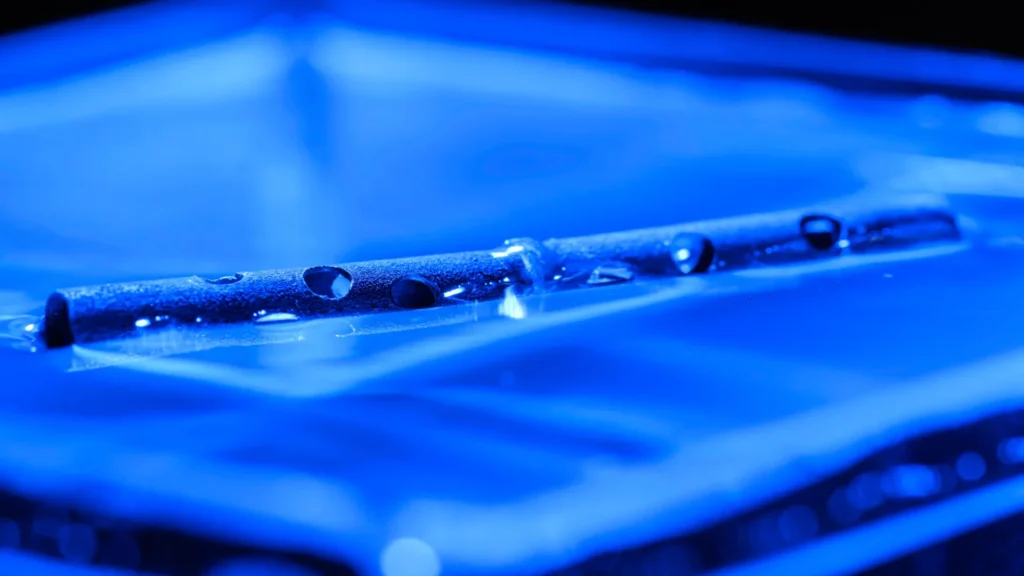
The pioneering work, spearheaded by Chunlei Guo, a distinguished professor of optics and physics and a senior scientist at the University of Rochester’s Laboratory for Laser Energetics, details a revolutionary approach to surface modification. Published in the prestigious journal Advanced Functional Materials, the study outlines how standard aluminum tubes are transformed by precisely etching their interior surfaces. This intricate process creates a complex topography of microscopic and nanoscale pits, fundamentally altering the material’s interaction with water. The resulting textured surface exhibits superhydrophobic properties, a state of extreme water repellency, enabling it to remain perfectly dry even when fully immersed.
Superhydrophobicity, a phenomenon inspired by nature’s own designs such as the lotus leaf, is characterized by a contact angle greater than 150 degrees, meaning water droplets form nearly perfect spheres and roll off the surface without wetting it. In this application, the etched internal surface of the aluminum tubes leverages this property to repel water with extraordinary efficiency, preventing it from penetrating the tube’s core.
Harnessing Trapped Air: A Biomimetic Approach
The core mechanism behind the unsinkable tubes lies in their ability to capture and maintain a stable pocket of air within their superhydrophobic interior when placed in water. This trapped air acts as an intrinsic buoyancy aid, preventing water from filling the tube and, consequently, from increasing its weight to the point of sinking. This ingenious solution draws direct inspiration from the natural world, echoing survival strategies observed in various species.
One notable parallel is the diving bell spider (Argyroneta aquatica), which constructs an underwater web bell filled with air, enabling it to breathe and live submerged for extended periods. Similarly, fire ants (Solenopsis invicta) form remarkable living rafts by interlocking their water-resistant bodies, trapping air bubbles between them to float safely during floods. The Rochester team’s innovation effectively biomimics these natural designs, translating biological principles into robust engineering solutions.
A critical enhancement to this air-trapping mechanism, as highlighted by Professor Guo, involves the strategic inclusion of a divider within the tube. "Importantly, we added a divider to the middle of the tube so that even if you push it vertically into the water, the bubble of air remains trapped inside and the tube retains its floating ability," Guo explains. This internal partition ensures the stability and integrity of the air pocket, even under conditions that would typically displace air from an open-ended tube, thereby guaranteeing consistent buoyancy regardless of orientation or external forces.
Evolution of the Design: From Disks to Indestructible Tubes
Professor Guo’s research group is not new to the realm of superhydrophobic floating devices. Their initial foray into this field in 2019 demonstrated the viability of creating buoyancy using two water-repelling disks sealed together. While effective in principle, this earlier design presented certain limitations, particularly its susceptibility to losing buoyancy when tilted at extreme angles—a common occurrence in dynamic aquatic environments.
The transition to a tube-based design represents a significant leap forward in both structural simplicity and operational stability. The inherent geometry of the tube, combined with the internally etched superhydrophobic surface and the crucial divider, offers vastly improved resilience. This enhanced stability is particularly vital for applications in turbulent conditions, such as those encountered in oceans, where constant wave action and unpredictable currents demand robust and consistent performance.
The rigor of the testing protocol underscores the robustness of the new design. "We tested them in some really rough environments for weeks at a time and found no degradation to their buoyancy," Guo affirms. The researchers subjected the tubes to simulated harsh marine conditions, including prolonged exposure to strong currents and wave action, confirming their sustained floating capabilities. Furthermore, the team pushed the limits of the tubes’ damage resistance: "You can poke big holes in them, and we showed that even if you severely damage the tubes with as many holes as you can punch, they still float." This unprecedented level of damage tolerance, where structural breaches do not compromise buoyancy, challenges conventional engineering paradigms and opens up new possibilities for safety and durability in marine applications.
Scalability and Multifaceted Applications
The potential applications of this unsinkable technology extend far beyond individual tubes. The researchers successfully demonstrated the ability to connect multiple tubes to form larger, modular rafts. This modularity is a critical feature, suggesting that the technology can be scaled up to construct structures substantial enough to support significant loads. Laboratory tests involved tubes of varying lengths, reaching nearly half a meter, indicating that the foundational design is amenable to further enlargement to meet diverse requirements for heavy-duty applications.
Revolutionizing Maritime Transport and Infrastructure:
The immediate and most obvious impact of this innovation lies in maritime safety and transportation. The prospect of truly unsinkable ships, buoys, and floating platforms could fundamentally transform global shipping, passenger transport, and offshore operations.
- Cargo Ships and Vessels: The sinking of cargo ships, often due to hull breaches, severe weather, or structural failure, results in billions of dollars in economic losses annually, not to mention environmental disasters from spilled fuel and cargo. Unsinkable components could drastically reduce these incidents, safeguarding valuable goods and mitigating ecological damage.
- Passenger Ferries and Cruise Ships: While modern cruise ships boast advanced safety features, the psychological impact of incidents like the Costa Concordia disaster highlights the enduring human desire for absolute safety at sea. Unsinkable sections could provide an unparalleled level of security for passengers.
- Buoys and Markers: Navigation buoys, weather monitoring stations, and offshore markers are crucial for maritime safety and data collection. Their consistent buoyancy, even after impact or damage, would ensure uninterrupted service and reduce maintenance costs.
- Offshore Platforms: From oil and gas rigs to wind turbine foundations, offshore platforms operate in some of the harshest environments on Earth. Incorporating unsinkable components could enhance their resilience against extreme weather events, collisions, and structural fatigue, improving safety for personnel and preventing environmental hazards.
- Search and Rescue Operations: Equipment, life rafts, and even specialized rescue vessels built with this technology could offer unprecedented reliability in emergency situations, ensuring they remain operational and accessible when needed most.
Pioneering Renewable Energy Solutions:
Beyond traditional maritime uses, the Rochester team has also unveiled an intriguing application in the renewable energy sector. They demonstrated that rafts constructed from these superhydrophobic tubes possess the capability to capture energy from moving water. This innovative feature positions the technology as a potential game-changer for generating electricity from ocean waves.
Wave energy, a vast and largely untapped renewable resource, holds immense potential to contribute to global energy grids. However, the harsh marine environment poses significant challenges to the durability and cost-effectiveness of wave energy converters. The inherent unsinkability and damage resistance of these tubes could provide a robust and stable platform for such devices, greatly improving their operational lifespan and reducing maintenance requirements. Imagine floating arrays of these tubes, passively converting the kinetic energy of ocean swells into clean electricity, offering a sustainable power source with minimal environmental footprint.
Broader Implications and Future Horizons
The implications of this breakthrough extend into numerous other sectors, promising a ripple effect across various industries:
- Underwater Exploration and Research: Unsinkable platforms could serve as stable bases for underwater drones, remotely operated vehicles (ROVs), or scientific instruments, allowing for longer deployments and more reliable data collection in challenging marine environments.
- Military and Defense: Naval applications could include unsinkable pontoons for temporary bridges, resilient platforms for specialized equipment, or even components for advanced amphibious vehicles.
- Environmental Monitoring: Long-term deployment of sensors on unsinkable rafts could provide invaluable data on ocean currents, water quality, and marine ecosystems, resilient to storm damage.
Economic and Safety Benefits:
The economic benefits could be substantial. Reduced losses from maritime accidents would translate into lower insurance premiums for shipping companies, decreased operational risks, and enhanced supply chain reliability. For industries reliant on offshore infrastructure, the increased durability and reduced maintenance needs could lead to significant cost savings. Most importantly, the technology promises an unprecedented enhancement in human safety at sea, minimizing the risk of fatalities in marine incidents.
Challenges and the Path Forward:
While the potential is immense, the journey from laboratory breakthrough to widespread commercial adoption will undoubtedly face challenges. Key considerations include:
- Cost of Production: Scaling up the intricate etching process for large-scale manufacturing needs to be cost-effective to compete with existing materials and construction methods.
- Long-Term Durability: Real-world marine environments present unique challenges like biofouling (accumulation of marine organisms), UV degradation from sunlight, and long-term chemical stability in saltwater. Extensive field testing will be crucial to validate the technology’s performance over decades.
- Integration with Existing Designs: Adapting current ship designs or building entirely new vessels around this modular tube concept will require significant engineering and naval architecture expertise.
- Regulatory Approval: Any new technology with such profound safety implications will undergo rigorous testing and regulatory approval processes by international maritime organizations.
This groundbreaking project received vital support from a consortium of prestigious organizations, including the National Science Foundation, the Bill and Melinda Gates Foundation, and the University of Rochester’s Goergen Institute for Data Science and Artificial Intelligence. This multi-faceted backing underscores the interdisciplinary nature of the research, combining physics, optics, materials science, and engineering to tackle a challenge that has captivated human ingenuity for generations.
The work by Professor Chunlei Guo and his team at the University of Rochester represents more than just an advancement in materials science; it embodies a paradigm shift in how we conceive of and interact with water. By mastering the delicate balance of surface tension and air entrapment, they have moved beyond the historical lament of the Titanic to lay the foundation for a future where the concept of "unsinkable" is not a tragic illusion, but a tangible, damage-proof reality, poised to enhance safety, sustainability, and human endeavor across the world’s oceans.