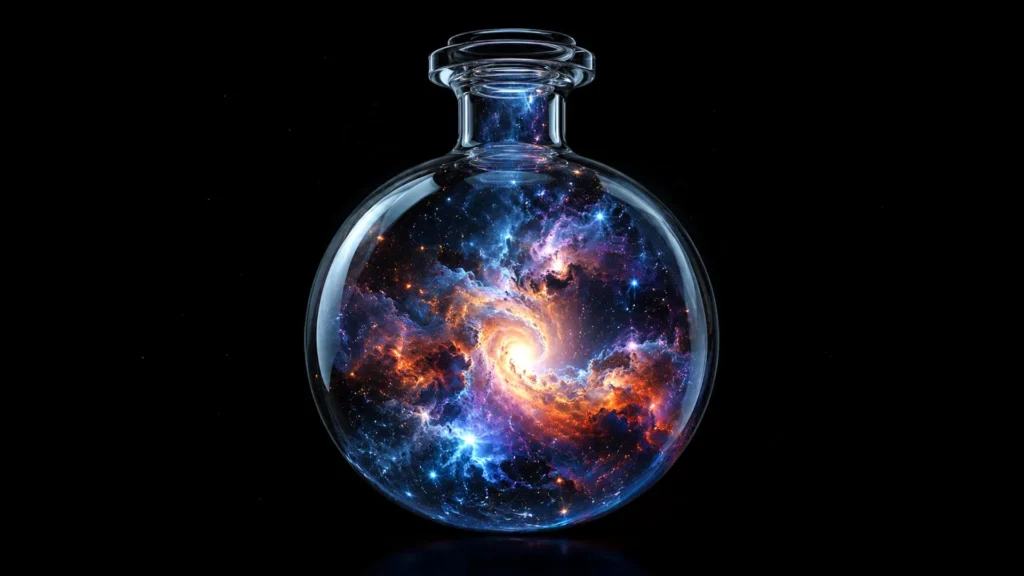
In a landmark achievement for the fields of astrobiology and plasma physics, a doctoral researcher at the University of Sydney has successfully synthesized cosmic dust within a controlled laboratory environment, effectively recreating the chemical conditions of the early universe inside a glass vessel. Linda Losurdo, a PhD candidate specializing in materials and plasma physics at the University’s School of Physics, led the experiment which offers unprecedented insights into the prebiotic chemical pathways that existed long before the formation of Earth. By simulating the high-energy environments found in the vicinity of dying stars and supernova remnants, the research team has demonstrated how the essential ingredients for life can emerge from simple gaseous precursors.
The study, which has been published in The Astrophysical Journal of the American Astronomical Society, represents a significant leap forward in our understanding of "carbonaceous cosmic dust." This material, which permeates the interstellar medium, serves as the primary vehicle for transporting organic molecules across the cosmos. The ability to manufacture this dust on Earth allows scientists to bypass the logistical challenges of space-based observation, providing a "reverse-engineered" look at the structural history of the universe.
Technical Methodology: Replicating the Vacuum of Space
The experiment was conducted under the supervision of Professor David McKenzie, a prominent figure in the study of thin-film physics and plasma. To simulate the near-vacuum conditions of interstellar space, the researchers utilized a high-precision vacuum pump to evacuate all air from specialized glass tubes. Once a baseline vacuum was established, the team introduced a specific mixture of gases: nitrogen, carbon dioxide, and acetylene.
These three gases were selected for their prevalence in the envelopes of carbon-rich stars and their role as fundamental building blocks in organic chemistry. To trigger the transition from gas to solid dust, the mixture was subjected to a "glow discharge"—a form of plasma created by applying an electrical potential of approximately 10,000 volts. This intense energy field mimics the radiation and particle bombardment found in cosmic nurseries and the outer layers of red giant stars.
During the one-hour duration of the glow discharge, the electrical energy effectively shattered the molecular bonds of the nitrogen, carbon dioxide, and acetylene. The resulting ions and electrons collided repeatedly, forcing the atomic components to recombine into increasingly complex and heavy molecular chains. These newly formed particles eventually precipitated out of the plasma, settling onto silicon chips placed at the bottom of the tubes. The result was a fine, carbon-rich coating that, in some instances, exhibited a sparkling quality reminiscent of extraterrestrial mineral samples.
The Chemistry of CHON: The Molecular Fingerprints of Life
The primary significance of Losurdo’s laboratory-grown dust lies in its chemical composition. Analysis revealed that the dust contains intricate combinations of Carbon, Hydrogen, Oxygen, and Nitrogen—collectively known as CHON molecules. These elements are the four most common chemically active elements in the universe and constitute the fundamental building blocks of all known life, forming the basis of amino acids, DNA, and proteins.
"We no longer have to wait for an asteroid or comet to come to Earth to understand their histories," Losurdo stated regarding the implications of the findings. "You can build analogue environments in the laboratory and reverse engineer their structure using the infrared fingerprints."
By utilizing infrared spectroscopy, the researchers were able to confirm that their laboratory dust produced the exact same "fingerprints"—specific patterns of light absorption and emission—that astronomers observe when pointing telescopes at distant interstellar clouds. This match confirms that the laboratory process accurately replicates the natural synthesis occurring in space. It suggests that the complex organic matter found in the solar system today likely had its origins in the high-energy plasma environments of ancient stars that predated our sun.
Historical Context: Earth’s Early Bombardment
To understand the importance of this research, one must look back to the Hadean Eon, the period between 4.56 billion and 3.5 billion years ago. During this era, the nascent Earth was subjected to a period known as the Late Heavy Bombardment. The planet was repeatedly struck by meteorites, micrometeorites, and interplanetary dust particles originating from comets and asteroids.
Current scientific consensus suggests that these celestial impacts delivered vast quantities of organic material to the Earth’s surface, potentially "seeding" the planet with the molecules necessary for life to begin. However, the mystery has always been where those molecules came from originally. Losurdo’s research supports the "extra-terrestrial synthesis" hypothesis, suggesting that the covalent bonds between carbon and hydrogen were forged in the violent envelopes of supernovae or the "puffed out" atmospheres of old, giant stars.
By proving that these molecules can form rapidly in plasma-rich environments, the study provides a missing link in the timeline of chemical evolution. It suggests that the universe is inherently "primed" for life-relevant chemistry, producing complex organics as a standard byproduct of stellar lifecycles.
Implications for Modern Astronomy and the "Fingerprint Library"
The University of Sydney team is now looking toward the future applications of their discovery. One of the primary goals is the creation of a comprehensive database of infrared signatures for various types of laboratory-made cosmic dust. This "fingerprint library" will serve as a vital tool for astronomers using next-generation observatories, such as the James Webb Space Telescope (JWST).
When astronomers observe a distant nebula, they receive a complex spectrum of infrared light. Without a reference point, it is difficult to determine the exact chemical makeup or the physical history of the dust emitting that light. By comparing space observations with Losurdo’s laboratory samples, researchers can now determine the precise temperature, radiation levels, and gas concentrations that were present when a specific cloud of cosmic dust was formed.
Professor McKenzie emphasized that this research allows for a level of granular detail that is impossible to achieve through observation alone. "By making cosmic dust in the lab, we can explore the intensity of ion impacts and temperatures involved when dust forms in space," he noted. "Its chemical signature holds a record of its journey, and experiments like this help us learn how to read that record."
Academic Recognition and Collaborative Support
The impact of this research has already been recognized by the international scientific community. Late last year, Linda Losurdo was awarded the prize for best presentation at the Annual Meeting of the Meteoritical Society, a prestigious international organization dedicated to the study of planetary science and extraterrestrial materials.
The study was supported by significant institutional resources, including the University of Sydney node of Microscopy Australia. Funding was provided by the Australian Research Council (ARC), reflecting the national importance of the work in advancing Australia’s contributions to space science and fundamental physics. The authors have reported no competing interests, underscoring the objective, academic nature of the investigation.
Analysis of Broader Impacts: From Plasma Physics to Astrobiology
The success of the "Universe in a bottle" experiment has several far-reaching implications:
- Astrobiological Pathways: It reinforces the idea that the "building blocks of life" are not unique to Earth but are a common feature of the galaxy. This increases the statistical likelihood of prebiotic chemistry occurring on exoplanets orbiting other stars.
- Plasma Technology: Beyond space science, the ability to control the deposition of carbon-rich dust via glow discharge has potential applications in materials science, particularly in the development of specialized thin films and carbon-based nanostructures.
- Refining Solar System Models: By understanding how dust forms in stellar envelopes, scientists can create more accurate models of how our own solar nebula collapsed to form the sun and planets 4.6 billion years ago.
- Interpreting Meteorite Data: When a meteorite is recovered on Earth, its chemical composition is often altered by its entry through the atmosphere. Having "pristine" laboratory analogues allows scientists to better distinguish between original cosmic signatures and terrestrial contamination.
As the University of Sydney team continues to refine their methods, the focus will shift to introducing even more complex elements into the plasma, such as phosphorus and sulfur, to see if they can recreate the even more elusive precursors of biological metabolism. For now, the experiment stands as a testament to the power of laboratory simulation in solving the most ancient mysteries of our cosmic origins. By recreating the stars in a glass tube, researchers have brought the vast reaches of the interstellar medium down to Earth, providing a new lens through which we can view our place in the universe.