CAMBRIDGE, Mass., and MONTERREY, Mexico — What began in the humble basement of MIT’s Building 35 has blossomed into a groundbreaking international initiative, with the low-cost desktop fiber (Fr) extrusion (E) device (D), known as FrED, and its accompanying educational framework, the FrED factory, now extending its reach beyond North America. This innovative model, born from a unique collaboration between the Massachusetts Institute of Technology (MIT) and Tecnológico de Monterrey (Tec), is fundamentally transforming how future manufacturing engineers are trained, replacing traditional textbook-based learning with an immersive, hands-on, and real-world production experience. The program’s recent summit in Mexico City underscored its remarkable progress and laid out ambitious plans for global expansion, promising to cultivate a new generation of talent equipped for the complexities of Industry 4.0.
The Genesis and Evolution of FrED: A Revolutionary Tool
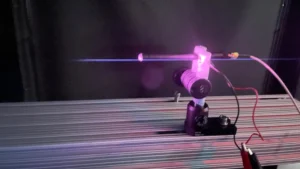
The FrED device, a marvel of student-led design and assembly, represents a significant leap in accessible manufacturing technology. Conceived and developed within an educational factory setting at MIT, FrED is not merely a learning tool but a functional, low-cost desktop fiber extrusion machine capable of producing real products. This deliberate design choice underpins the entire pedagogical philosophy: to provide a tangible, production-level context for academic learning. The journey from its initial conceptualization at MIT to its refinement across dozens of graduate theses and undergraduate research stays at Tec highlights a decade-long commitment to iterative improvement and collaborative innovation.
Fiber extrusion, a foundational process in numerous industries ranging from textiles and composites to medical devices and advanced materials, traditionally requires expensive, industrial-scale equipment. By miniaturizing and democratizing this process, FrED offers students an unprecedented opportunity to engage with complex manufacturing principles without the barriers of cost or access. The fibers produced by FrED can be used in various applications, from simple filament winding demonstrations to more intricate material science experiments, making it a versatile platform for both foundational and advanced studies. This accessibility is crucial for fostering early engagement and understanding of manufacturing processes.
A Paradigm Shift in Manufacturing Education: The FrED Factory Model
The true innovation lies not just in the FrED device itself, but in the "FrED factory" — an educational ecosystem designed to mimic a real production environment. This model is a direct challenge to conventional manufacturing education, which often relies heavily on theoretical instruction. Instead, the FrED factory immerses students in the full lifecycle of product development and manufacturing, from design and assembly to quality control and supply chain management. Tinkering, problem-solving, and continuous information flow are not just encouraged but are integral to the learning process.
Brian W. Anthony, MIT.nano associate director and principal research scientist in the MIT Department of Mechanical Engineering (MechE), articulates the core philosophy: "What does it mean to bring the factory to the learner? We have FrED as a process that manufactures a fiber, and we also have the FrED factory that’s an education and practice factory where we are manufacturing a real product. It’s not just a learning factory where we tear apart the product when we’re done. We really ship FrEDs to our online learners, to educators at MIT and Tec, and soon, to new partners around the world." This commitment to producing and shipping actual FrED units distinguishes the initiative, offering students the invaluable experience of contributing to a real-world supply chain and understanding the implications of their work beyond the classroom.
The FrED factory model forces students to engage in critical leadership behaviors and operational challenges inherent in modern manufacturing. This includes coordinating multi-station systems, identifying and managing bottlenecks, integrating maintenance logic into operations, enforcing rigorous quality measurement, and continuously iterating system design. As cohorts of students graduate and new ones begin, knowledge transfer becomes a dynamic process, with each new group building upon and reimagining previous designs, ensuring FrED and its factory model remain at the cutting edge of manufacturing technologies. This continuous evolution means the curriculum never becomes outdated, a common challenge in rapidly advancing fields.
Strategic International Collaboration: MIT and Tecnológico de Monterrey
The partnership between MIT and Tecnológico de Monterrey, managed by MIT.nano, has been instrumental in FrED’s refinement and expansion. MIT.nano, a state-of-the-art facility at MIT dedicated to nanoscience and nanotechnology, brings its expertise in advanced fabrication and interdisciplinary collaboration to the fore, providing the necessary institutional support and framework for such an ambitious international endeavor. Tecnológico de Monterrey, one of Latin America’s most prestigious universities with a strong focus on engineering and innovation, has proven to be an ideal partner, leveraging its extensive network of campuses and its commitment to developing a skilled workforce for Mexico’s burgeoning industrial sector.
The collaboration has facilitated the establishment of FrED factories at Tec’s campuses in Monterrey and Mexico City, with a new factory at Tec’s Saltillo campus slated to open in the next academic year. This multi-node community scaling strategy is designed to create a thriving, collaborative ecosystem for current and future manufacturing engineers across different geographical locations. This expansion into Mexico is particularly significant given the country’s growing role in global manufacturing and the increasing demand for highly skilled engineers capable of navigating complex, automated production environments. The synergy between MIT’s pioneering research and Tec’s robust educational infrastructure has created a powerful engine for talent development.
Adriana Vargas Martinez, executive director of research strategy at Tec, highlights the profound impact of this partnership: "Together, we are helping build a global engineering talent pipeline. Through the FrED and FrED factory initiative, nearly 500 students have already been trained in advanced manufacturing automation, moving from Tec classrooms into research laboratories and collaborative projects with MIT." This figure is projected to exceed 1,000 students by 2028, demonstrating the program’s rapid scaling and widespread adoption. The collaboration has also yielded significant academic output, with 25 publications already achieved and seven more papers currently in development, showcasing the initiative’s dual impact on education and research.
Driving Industry 4.0 and Smart Manufacturing Education
FrED’s expansion aligns perfectly with a broader global shift towards smart manufacturing, often referred to as Industry 4.0. This paradigm integrates advanced automation, machine learning, artificial intelligence, and digital twins into production processes, demanding a new skill set from engineers. MIT itself has made smart manufacturing a strategic priority through its Initiative for New Manufacturing (INM), which aims to foster new research, develop advanced courses, provide workforce training, and build shared facilities for piloting production lines and immersive manufacturing experiences. FrED and the FrED factory are inherently designed to support these objectives, and crucially, at an international scale.
"FrED and the FrED factory is really, I think, solving at least one problem: how we give real, physically meaningful physical context and production-level data, production-level problems in an academic environment that is directly transferable to the knowledge that you need on the factory floor," Anthony explains. He notes the inherent difficulty in extracting meaningful data from real industrial factories for educational purposes. FrED overcomes this by offering an open platform that generates rich, multi-modal data, providing a unique intersection of physical context and data science. This allows students to engage with real-world data challenges, bridging the gap between theoretical data analytics and practical manufacturing applications.
The FrED factory naturally generates the kind of data — covering process parameters, machine performance, and product quality — essential for developing digital twins, performing advanced analytics, and implementing AI-driven process improvements. This transforms abstract concepts of AI/manufacturing integration into concrete, hands-on practice. Future research objectives within the FrED factory are ambitious: developing a realistic and interactive digital twin of the factory itself, integrating immersive technologies for collaborative learning, and implementing agentic controllers for autonomous operations. Furthermore, plans include incorporating new downstream manufacturing processes and machines that utilize FrED’s fiber output, creating a holistic ecosystem for smart manufacturing education. These advancements are critical for preparing students for the increasingly automated and data-intensive manufacturing environments of tomorrow.
Impact on Students and Workforce Development
The student experience within the FrED factory initiative is transformative, as evidenced by testimonials from participants. Naomi Najera, a Tec undergraduate student who completed a research stay at MIT in 2025, reflects on her experience: "Beyond the technical side, FrED gave me memories, friendships, and a lot more confidence in myself than I knew I had. It also gave me a space where I could make mistakes and learn from them. And also to realize how much I can achieve with my team. That human side of this project really changed my whole experience." This highlights the program’s success in fostering not just technical prowess but also crucial soft skills like teamwork, resilience, and self-confidence.
The program’s commitment to international mobility is a cornerstone of its success. The FrED factory research stay program brings Tec undergraduates to MIT, where they are fully integrated into research teams, working side-by-side with MIT students. This is not merely an observational experience; students are active contributors, gaining invaluable cross-cultural and interdisciplinary collaboration skills. They then return to Mexico, equipped with new knowledge and experiences to enhance FrED factories at their home institutions, creating a continuous feedback loop of innovation and learning.
A tangible outcome of this exchange was announced on June 23 by the American Society for Engineering Education (ASEE). A paper titled "Hands-On Predictive Maintenance Kit for Manufacturing Education: An Accessible Experiential Learning Approach," co-authored by Tec and MIT students, received the prestigious 2026 ASEE Manufacturing Division Best Paper Award. This recognition underscores the high caliber of research and educational innovation emerging from the partnership.
In Mexico, the enthusiasm of Tec students has led to the launch of the FRAME (Factory-based Research for All in Mechatronics Education) curriculum, an Undergraduate Research Opportunities Program-like initiative. This program allows first-year undergraduates to work alongside graduate-level students in the FrED factory, providing early exposure to real-world engineering challenges. Katherine Lucia McLean, a student participating in FRAME, attests to its impact: "Joining FrED as a first-semester university student has been an amazing opportunity for me to get hands-on experience in real-world projects in areas such as coding, manufacturing, and robotics. It’s helped me grow a lot as an engineering student." This early engagement is crucial for nurturing talent and building a robust pipeline of future engineers.
Chronology of Expansion and Future Outlook
The FrED initiative has demonstrated remarkable momentum and a clear trajectory for global expansion:
- Early 2010s: Initial conceptualization and development of FrED in MIT’s Building 35 basement.
- Mid-2010s: Establishment of the first FrED factory at MIT, pioneering the educational model.
- Late 2010s: Formation of the strategic partnership between MIT and Tecnológico de Monterrey, managed by MIT.nano, leading to FrED’s refinement through collaborative research.
- Early 2020s: Expansion of FrED factories to Tec’s campuses in Monterrey and Mexico City. Introduction of FrED into academic and professional courses at both institutions.
- 2025: Tec undergraduate Naomi Najera completes her transformative research stay at MIT.
- June 23, 2026: ASEE announces the "Hands-On Predictive Maintenance Kit" paper, co-authored by Tec and MIT students, as the recipient of the 2026 ASEE Manufacturing Division Best Paper Award.
- Next Academic Year (post-2026): Opening of a new FrED factory at Tec’s Saltillo campus, as announced at the second annual FrED summit in Mexico City.
- 2027: Brian W. Anthony, who taught the global capstone course at the Monterrey campus last year, is slated to expand his teaching to all five international Tec campuses. The FrED Factory Conference is scheduled to take place at MIT, bringing together collaborators and stakeholders from around the world.
- Beyond 2027: The team plans further expansion to other campuses across the United States and Mexico, with aspirations for global deployment in Europe and Asia, solidifying a worldwide network of FrED factories.
This structured expansion underscores a long-term vision to democratize access to advanced manufacturing education and cultivate a globally interconnected engineering talent pool.
Broader Impact and Implications
The FrED and FrED factory initiative carries significant implications for the future of education, industry, and international collaboration. Pedagogically, it champions experiential learning, moving beyond theoretical constructs to hands-on problem-solving in a realistic production context. This approach is vital for developing critical thinking, adaptability, and practical skills that are directly transferable to the factory floor. The emphasis on "making mistakes and learning from them" fosters a culture of innovation and resilience, essential traits for engineers navigating rapidly evolving technological landscapes.
Economically, by training a skilled workforce in advanced manufacturing automation, the program directly addresses the global talent gap in smart manufacturing. This enhances the competitiveness of participating nations, particularly Mexico, by equipping its engineers with the expertise needed to drive industrial growth and adopt cutting-edge technologies. The low-cost nature of FrED also holds the potential to democratize access to manufacturing education in regions or institutions with limited resources, fostering innovation in unexpected places.
From a geopolitical perspective, the collaboration between MIT and Tecnológico de Monterrey serves as a powerful model for international academic partnerships. It demonstrates how institutions can pool resources, share expertise, and jointly address global challenges, such as workforce development in critical sectors. The emphasis on international mobility and cross-cultural teamwork builds bridges between nations and fosters a shared understanding of global industrial demands.
In conclusion, the journey of FrED from an MIT basement to a globally expanding network of educational factories is a testament to the power of innovative pedagogy and collaborative vision. By making advanced manufacturing education accessible, practical, and globally interconnected, the FrED and FrED factory initiative is not just teaching students how to build products; it is building the future of manufacturing itself, one fiber, one student, and one factory at a time. The momentum is undeniable, and as the program continues to grow, its influence on engineering education and industrial innovation is poised to be profound and far-reaching.