Volkswagen has announced a significant strategic shift for its popular Tiguan SUV, confirming that an all-electric version will debut, effectively replacing the ID.4 in its lineup. This move signals Volkswagen’s commitment to electrifying its core models while leveraging the established brand equity of the Tiguan nameplate. The official unveiling is slated for October, with European markets expected to receive priority for initial deliveries, followed by a North American launch.
A Legacy of Success Meets the Electric Horizon
The Tiguan, a mainstay in Volkswagen’s global portfolio for years, has consistently demonstrated robust sales figures, underscoring its appeal to a broad demographic. As of early 2026, over 8.3 million Tiguan vehicles have been produced worldwide, a testament to its enduring popularity. Thomas Schäfer, CEO of Volkswagen Passenger Cars, emphasized the strategic rationale behind this rebranding: "More than 8.3 million Tiguan vehicles produced demonstrate the strength and trust associated with this model name. The Tiguan represents a versatile, premium vehicle and embodies the essence of True Volkswagen. With the ID. Tiguan, we are carrying this product promise into the electric future."
Schäfer further elaborated on the envisioned characteristics of the new model: "The all-electric model builds on the strengths of the bestseller and offers premium design, generous space, intuitive operation, and innovative technologies. Together, both models form a strong offering for our customers’ different powertrain preferences." This statement suggests that while the ID. Tiguan will be an entirely electric vehicle, it aims to retain the core attributes that have made the gasoline-powered Tiguan a success.
Navigating Global Market Nuances
The introduction of the ID. Tiguan is expected to introduce further complexities in how Volkswagen differentiates its SUV offerings across various global markets. In North America, consumers have historically been offered a longer-wheelbase version of the Tiguan, a variant initially launched in the Chinese market under a different designation. This version also offers an optional third row of seating, a feature not available on the European Tiguan, which is a more compact model. The integration of an electric powertrain into the Tiguan nameplate raises questions about whether these regional wheelbase and seating distinctions will persist or be standardized for the electric iteration.
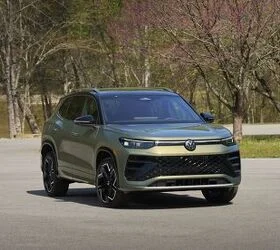
Visually, early glimpses of the ID. Tiguan, albeit under light camouflage, reveal a design that aligns with Volkswagen’s contemporary styling language. The exterior appears to be a refined interpretation of the current Tiguan, featuring subtle design tweaks and a lower stance, suggesting a more aerodynamic profile optimized for electric vehicle efficiency. While the aesthetics are described as "reasonably attractive," industry analysts suggest that the visual appeal alone will not be the sole determinant of the ID. Tiguan’s success. Its ultimate reception will likely hinge on a confluence of factors, including performance, range, charging infrastructure integration, and competitive pricing.
The Evolution of Volkswagen Design and User Experience
Volkswagen has historically been lauded for its understated yet timeless vehicle designs. The brand cultivated a reputation for producing vehicles that offered a sense of enduring quality, with exteriors that aged gracefully and interiors that prioritized thoughtful ergonomics and practicality over fleeting trends. This design philosophy often allowed Volkswagen models to transcend their segment by offering a driving experience that was both composed and engaging, punching above their weight class in terms of refinement and driving dynamics.
However, in recent years, the automotive landscape has shifted dramatically, compelling manufacturers like Volkswagen to adapt to evolving consumer expectations and the imperative to reduce production costs. This has led to a noticeable departure from some of the brand’s traditional design strengths. The shift towards minimalist interiors, characterized by an increased reliance on large touchscreens and a reduction in physical controls, has been a point of contention. This minimalist approach, while aiming for a modern aesthetic, has been criticized for compromising user intuitiveness and driving convenience. The backlash from customers has reportedly prompted Volkswagen to re-evaluate this strategy, with efforts underway to reintroduce more tactile controls in upcoming models. This recalibration suggests a recognition that while modern technology is crucial, it must be integrated in a manner that enhances, rather than detracts from, the overall user experience.
Challenges and Lessons Learned in the Electric Transition
The broader automotive industry is grappling with the monumental task of transitioning to electric mobility, and Volkswagen has faced its share of headwinds during this pivotal phase, particularly in the North American market. The launches of several of Volkswagen’s all-electric ID. models have been marred by complications, including software glitches and technical issues that necessitated recalls. For instance, the ID.4, the very model the ID. Tiguan is set to replace, has experienced recalls related to software vulnerabilities, underscoring the technical hurdles involved in bringing new EV platforms to market.
In response to market feedback and to bolster the appeal of its electric offerings, Volkswagen has been actively revising its EV strategy. A notable example includes the interior revamp of the ID. Polo (though not directly sold in North America, it reflects broader product development), which saw the integration of more physical buttons on the steering wheel. This adjustment is likely to be mirrored in future electric models destined for the U.S. market, as evidenced by similar revisions being implemented in some of Volkswagen’s internal combustion engine (ICE) vehicles. Despite these efforts, the lingering question remains whether these modifications will significantly alter the overall consumer sentiment towards EVs in North America, a market that has shown a more cautious adoption rate compared to other regions.
The ID. Buzz Dilemma and the ID.4’s Stumble
The ambitious introduction of the all-electric ID. Buzz, a nostalgic nod to the iconic Volkswagen Microbus of yesteryear, has, unfortunately, fallen short of expectations in the United States. The model, designed to evoke fond memories for a generation of American consumers, has experienced notably low sales volumes. The company’s decision to skip entire model years for the ID. Buzz in the U.S. market is a stark indicator of its underperformance. This lack of demand has been exacerbated by the phasing out of government subsidies, including the federal EV tax credit, which has made the ID. Buzz’s already substantial price tag even less palatable for prospective buyers.
The contrast between the original VW Microbus and its modern electric counterpart is stark. The original was celebrated for its compact size, affordability, mechanical simplicity, and ease of repair, making it an enduring and accessible vehicle. The ID. Buzz, while capturing the spirit of nostalgia, deviates significantly in these aspects, appearing to target a demographic based solely on sentiment rather than offering a compelling value proposition that aligns with the practicality of its predecessor.
The underperformance of the ID. Buzz is not an isolated incident; it mirrors the broader challenges faced by Volkswagen’s EV strategy in North America. The ID.4, intended to be the brand’s electric flagship in the region, has also struggled with lackluster sales. This disappointing volume led Volkswagen to conclude production of the ID.4 at its Chattanooga, Tennessee, manufacturing facility earlier in 2026. This decision underscores the pressure on Volkswagen to revitalize its EV offerings and regain market traction.
The Path Forward: ID. Tiguan as a Strategic Pivot
The impending arrival of the ID. Tiguan represents Volkswagen’s strategic pivot to address these market challenges. While the visual similarities between the ID. Tiguan and its gasoline-powered namesake are evident, with the electric version appearing as a more streamlined iteration of the current combustion model, it is widely believed that the two vehicles will share little mechanically. Industry speculation strongly suggests that the ID. Tiguan will be underpinned by the Modular Electric Drive Matrix (MEB) platform, the same scalable architecture that supports Volkswagen’s other all-electric vehicles. This platform is designed to optimize battery packaging, interior space, and electric powertrain integration.
Official confirmation of the ID. Tiguan’s technical specifications, including its powertrain options, battery capacity, estimated range, and charging capabilities, is expected upon its formal debut in October. The priority for initial market rollout will understandably be placed on Europe, a region with a more mature EV market and stronger consumer demand. However, Volkswagen has confirmed its intention to bring the ID. Tiguan to North America, with additional details regarding U.S. specifications to be released in the coming months. The success of the ID. Tiguan will be a critical barometer for Volkswagen’s ability to effectively translate its global EV ambitions into tangible market success in the competitive North American landscape.
[Images: Volkswagen]
Become a TTAC insider. Get the latest news, features, TTAC takes, and everything else that gets to the truth about cars first by subscribing to our newsletter.