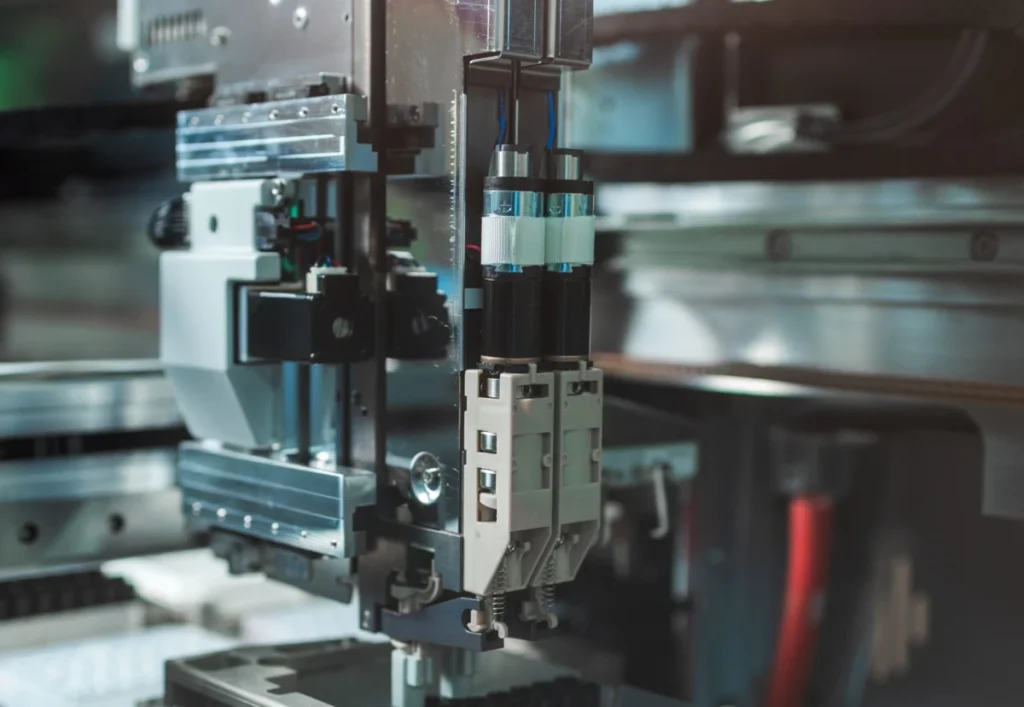
Automated motion systems form the fundamental backbone of modern industrial processes, robotics, and countless everyday devices, serving as the unsung orchestrators of movement and precision. This primer delves into the essential elements that define these sophisticated systems, whether they are intricate pieces of robotics or dedicated machine designs performing specific, routine tasks. At their core, all motion systems are electric-motor-driven designs, meticulously engineered around a symbiotic relationship between mechanical and electrical/electronic components.
The Foundation of Automated Motion: Power Transmission vs. Motion Control
Understanding automated motion begins with a crucial distinction within the industry: power-transmission designs versus motion systems. While both utilize electric motors, their primary objectives and design emphases differ significantly.
Power-transmission designs are characterized by their focus on raw torque (or force) and speed. In these systems, mechanical components often dominate the build, prioritizing the brute force required to move heavy loads or operate at high speeds without necessarily demanding precise positional accuracy. Examples include conveyor belts moving bulk materials, large pumps, or heavy-duty mixers where continuous operation and robust mechanical output are paramount. The emphasis is on transmitting power efficiently and reliably.
In contrast, motion systems are engineered with a distinct emphasis on precision positioning and tightly controlled motion profiles. These systems define the intricate speeds, accelerations, jerk (the rate of change of acceleration), speed-torque profiles, and homing routines of a machine’s various axes. Their objective is not just to move, but to move exactly as commanded, often within micron-level tolerances. This precision is critical for tasks requiring delicate manipulation, exact placement, or synchronized movements, such as those found in advanced manufacturing, medical imaging, or semiconductor production.
Pervasive Applications Across Industries
The impact of both design types is widespread, permeating myriad aspects of modern life and industry. From the seamless operation of consumer products and the efficiency of office automation equipment to the life-saving precision of medical devices and the rigorous demands of laboratory automation, these systems are indispensable. In the industrial space, their influence is most profoundly felt in discrete factory automation, a sector distinct from process or analog automation.
Discrete vs. Process Automation Explained

This distinction is vital for understanding where motion systems find their most critical applications. Discrete automation involves the working, machining, assembling, testing, capping, wrapping, packaging, labeling, counting, scanning, and transporting of separate, individual workpieces or products. Each item undergoes a series of distinct operations before completion. Industries heavily reliant on discrete automation include automotive manufacture, where robots precisely assemble vehicle components; electronics production, which demands exact placement of tiny parts; automated warehousing operations, managing the movement of individual packages; and the packaging industry, where products are filled, sealed, and labeled with high speed and accuracy. The focus here is on the manipulation of individual, tangible units.
Conversely, process automation deals with continuous flows and batches, often involving vats of liquids, uninterrupted systems of fluids, and materials subject to continuous chemical reactions, temperature controls, metering, and flowing operations. These systems are generally difficult to stop and start without significant disruption. Industries dominated by process automation include mining, energy (both coal and nuclear), oil and gas, food processing (e.g., continuous cooking or mixing), pharmaceutical and chemical manufacture, glass and ceramic production, plastics, textiles, and wood and paper. In these environments, the control focus is on variables like flow rates, temperatures, and pressures, rather than the precise positioning of discrete items.
Crucially, motion system designs, with their inherent capacity for precise placement and controlled transport, are almost exclusively associated with discrete automation. They are the workhorses that ensure individual workpieces or products are handled with the necessary accuracy and repeatability throughout their manufacturing journey. The global discrete automation market, valued at over $150 billion in 2023, is projected to grow significantly, driven by demand for increased productivity, reduced labor costs, and enhanced product quality, all underpinned by advanced motion systems.
Core Parameters in Motion System Design
The design process for automated motion systems is meticulous, beginning with a comprehensive understanding of the physical dynamics involved.
Understanding Loads, Friction, and Inertia:
The initial step requires thorough documentation of the loads to be moved, the inertias involved, and the friction the motorized axis will need to overcome without introducing undue sluggishness or inefficiency. Inertia, defined as an object’s resistance to changes in speed (acceleration or deceleration), is a critical parameter. Total inertia in a system encompasses not only the workpiece load but also the moving parts of the axes themselves.
Inertia can vary significantly depending on the system’s architecture. For instance, a torque motor (direct-drive motor) or linear motor, which operate without intermediate mechanical components, typically exhibit very low reflected inertia. Conversely, systems where an electric motor is fitted with a gearset for speed reduction, or those employing power transmission elements like belt-and-pulley, rack-and-pinion, or chain-and-sprocket sets, will have higher inertial values. Similarly, linear actuators incorporating leadscrews, ballscrews, or roller screws also contribute varying inertial loads. Engineers must meticulously calculate how this attached inertia affects the system at the critical location of the axis’s motor-output shaft.
A particularly complex scenario arises with changing inertia, such as in robotic axes executing dispensing or machining tasks where the mass of the end effector changes dynamically. In such cases, the motion controls often require additional servotuning capabilities to adapt and compensate for these evolving dynamics, ensuring consistent performance and preventing instability. Industry best practices suggest that the reflected inertia should ideally be no more than ten times the motor’s rotor inertia for optimal control and performance, although specific applications may dictate different ratios.
Defining Motor Force and Torque Requirements:
Once the mechanisms, their friction, and inertia are quantified, the next critical step is to define the required motor output force (for linear motors) or, more commonly, torque (for rotary motors). This allows for the proper sizing of the electric motor on each axis. A servo axis motor must deliver sufficient torque not only for initial acceleration but also for any constant torques required during run phases and deceleration torques during stopping. This involves complex calculations that consider the entire motion profile, ensuring the motor operates within its continuous and peak torque capabilities without overheating or stalling. The duty cycle, which describes the pattern of motor operation over time, is paramount in determining the motor’s continuous torque rating.

The Brains of the Operation: Motor and Motion Controls
The actions of the motors within a motion system are precisely commanded by system motor controls or motion controls, two technologies that have witnessed significant convergence over the past two decades. Both types of electronics accept low-power signals that then prompt the actuation-level electrical output necessary to drive the involved motors.
If one were to use a zoological analogy, motion controllers serve as the system’s "brains," tasked with monitoring, commanding, and integrating various critical aspects:
- Motor drives and amplifiers: Converting low-power signals into high-power electrical output.
- Feedback devices: Interpreting signals from encoders and sensors.
- Human-Machine Interfaces (HMIs): Communicating with operators.
- Safety systems: Ensuring operational security.
- Interfacing with other automation components: PLCs, vision systems, and higher-level control systems.
Just like the nervous systems of animals, motion controllers can be arranged to command systems for:
- Single-axis control: Managing the movement of one independent axis.
- Multi-axis coordinated motion: Synchronizing the movements of multiple axes for complex tasks (e.g., robotic arms).
- Path generation: Defining and executing complex trajectories in 2D or 3D space.
A key design decision during the reiterative design process involves choosing between centralized controls (where controls, motors, drives, and complementary electronics are housed together in a single cabinet) and distributed drive-based controls. Machines with numerous axes spread over a large operational area often benefit most from decentralized motion control, as this approach can significantly trim wiring issues and costs, while also allowing for a smaller main control cabinet. This trend aligns with Industry 4.0 principles, promoting modularity and distributed intelligence. Conversely, compact machine installations may find greater economic efficiency and simplicity with traditional centralized control, where all components are co-located. The global motion control market, estimated at over $16 billion in 2023, is experiencing a shift towards distributed architectures, particularly with the proliferation of industrial Ethernet protocols.
Regardless of the chosen control architecture, each motor’s drive (whether a motor control or a standalone amplifier) must possess the capability to provide acceleration and continuous current sufficient to satisfy the motion design’s duty-cycle requirements. This includes not only the power to move the load but also to dissipate heat generated during operation and deceleration. This is ultimately dependent on the RMS (Root Mean Square) current or acceleration current, while also accounting for any increase in the motor’s winding resistance due to heat.
The Precision Imperative: Servosystems and Closed-Loop Control
Motion system designs configured as closed-loop systems, commonly known as servosystems, represent the pinnacle of dynamic and precise motion control. These machines are characterized by their ability to execute quick accelerations and decelerations and operate robustly in all four design quadrants – an industry concept indicating that a design controls an axis over both positive and negative torques and speeds.
Sizing such servosystems necessitates a holistic, systems-based approach that concurrently accounts for mechanical, electrical, and software parameters. The drives supplying power to the axes’ servomotors must be meticulously selected to deliver all necessary continuous (RMS) and acceleration (peak) currents, ensuring the motor can respond accurately to commanded movements without saturation or instability. The integration of high-resolution feedback devices (encoders, resolvers) is fundamental to servosystems, allowing real-time comparison of actual position/velocity with commanded values, and enabling the controller to make instantaneous corrections to minimize error.

Environmental Resilience and Component Selection
The operational environment significantly influences component selection for motion system designs. Where a system will operate in hot, dusty, washdown, vacuum, explosive, or other challenging industrial settings, the power-transmission, electromechanical, and electronic components must be chosen for their inherent ruggedness and specific protective features.
Manufacturers provide detailed ratings that specify whether a given component can withstand anticipated conditions. For example, IP (Ingress Protection) ratings and NEMA (National Electrical Manufacturers Association) ratings are crucial for determining a component’s resistance to dust, water, and other environmental factors. Components for washdown environments require specific materials and seals to prevent water ingress and corrosion, while those destined for cleanroom environments must meet stringent standards for particulate emission and outgassing. The selection of appropriately rated components directly impacts the system’s reliability, longevity, and maintenance requirements, preventing premature failure and ensuring consistent performance in demanding conditions.
Feedback, Connectivity, and the IIoT Ecosystem
Many motion system designs rely heavily on an array of sensors and encoders to accurately track position, velocity, and other critical axis values during machine operation. These devices are the "eyes and ears" of the motion system, providing the real-time data necessary for precise control.
Sensors and Encoders: The Eyes and Ears: Common feedback devices include Hall-effect sensors, resolvers, incremental and absolute encoders, and various forms of mechanical, optical, and magnetic feedback mechanisms. These devices convert their collected physical signals into (in many cases) digital signals, which the motion controls then employ in their trajectory and correction calculations. The accepted communication protocols of the controls—such as EtherCAT, PROFINET, Modbus TCP/IP, or SERCOS III—partially dictate which feedback devices are compatible with the system, highlighting the importance of standardized industrial communication.
The Critical Role of Cabling and Connectors: While often overlooked, the cables and connectors transmitting power and data between components are equally vital and must satisfy specific electrical and physical requirements. Cable runs should be kept as short as possible to mitigate issues associated with voltage drop, signal impedance, and, critically, electromagnetic interference (EMI). This is especially true if pulse-width modulated (PWM) drives are nearby, which can generate significant electrical noise. High-speed feedback data, in particular, is highly vulnerable to impedance mismatches and noise, necessitating shielded cables and robust connectors to ensure signal integrity and reliable operation.
Integrating with the Industrial Internet of Things (IIoT): Modern motion systems are increasingly integrated into the broader Industrial Internet of Things (IIoT) ecosystem. This connectivity allows for extensive data collection from sensors and controllers, enabling remote monitoring, predictive maintenance, and overall system optimization. By analyzing operational data, manufacturers can identify trends, anticipate potential failures, and schedule maintenance proactively, significantly reducing downtime and improving efficiency. This integration transforms motion systems from isolated machines into intelligent, networked assets within a smart factory environment.
Crafting Movement: Motion Profiles, Accuracy, and Repeatability

Supreme in the world of motion systems are motion profiles—the mathematically defined trajectories that motion controllers command axis drive-and-motor systems to follow. These profiles are not merely simple starts and stops but intricate sequences of position commands over time that dictate precisely how and where an attached load will be positioned. They also define the necessary accelerations, move times, and dwell times required for each task. Motion-controller electronics translate these created trajectories into precise torque commands, which are then relayed to the drive powering the motor, ensuring smooth and controlled movement. Common motion profiles include trapezoidal (constant acceleration, constant velocity, constant deceleration) and S-curve (smoother transitions to minimize jerk), each chosen based on the application’s specific demands for speed, smoothness, and wear reduction.
Of course, a design’s required accuracy, resolution, and repeatability are just as important as its motion profile. These measures of precision dictate the acceptable level of mechanical backlash (play in the system) and compliance (flexibility), and directly influence the selection of necessary feedback components.
- Accuracy refers to how close the system’s actual position is to the commanded position.
- Repeatability indicates how closely the system can return to a previously commanded position, consistently.
- Resolution describes the smallest increment of movement the system can detect or achieve.
These metrics are crucial for applications ranging from high-precision machining, where micron-level accuracy is essential, to rapid pick-and-place operations, where high repeatability ensures consistent throughput. The choices made here ripple through the entire design, affecting component costs, performance capabilities, and the overall success of the automated task.
The Future of Motion System Design
The field of motion system design continues to evolve rapidly, driven by advancements in artificial intelligence, machine learning, and connectivity. Emerging trends include the integration of AI/ML algorithms for adaptive control, allowing systems to learn and optimize their motion profiles in real-time, compensating for wear or changing loads. Collaborative robotics, where motion systems enable robots to work safely alongside humans, is another significant growth area. Furthermore, there is an ongoing push for greater energy efficiency, modularity, and ease of integration, reflecting the broader demands of Industry 4.0. As automation becomes more pervasive, the principles of robust and precise motion system design will remain at the forefront of technological innovation, underpinning the next generation of smart manufacturing and intelligent machines.