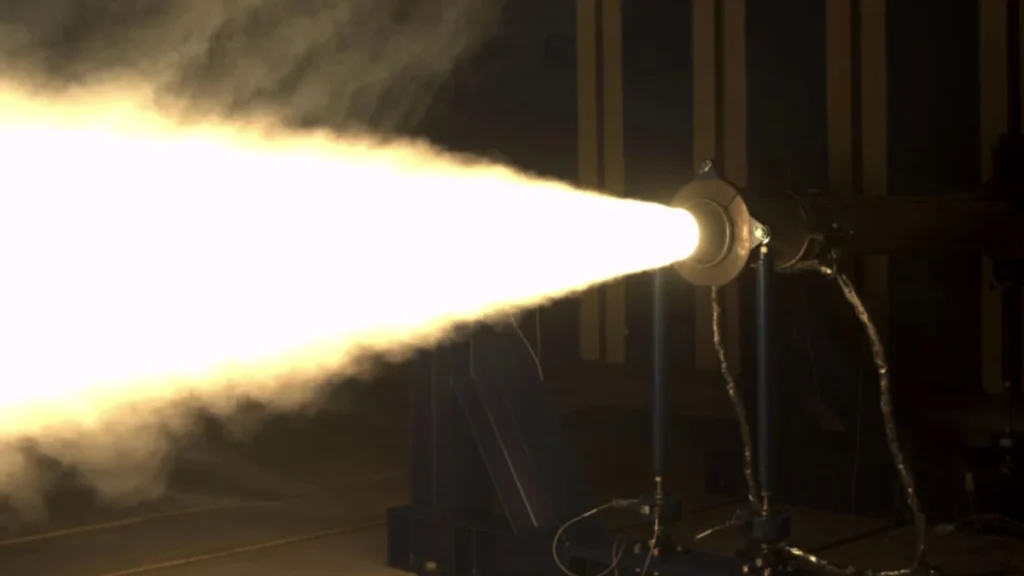
X-Bow Systems, a burgeoning leader in propulsion technology, has been awarded a significant agreement valued at a potential $69.7 million by the U.S. Navy. This pivotal contract tasks the company with the development of a next-generation solid rocket motor (SRM) booster, destined for integration into a future U.S. Navy weapon system. The initiative underscores a critical strategic thrust by the Pentagon to modernize its arsenal and bolster the nation’s defense industrial base, particularly in the realm of advanced propulsion systems. The multi-phase program will see X-Bow Systems undertake the comprehensive design, rigorous testing, and ultimate qualification of this essential motor, with an ambitious target set for the Navy to field an initial operational version of the associated weapon in early fiscal year 2031. This long-term commitment highlights the Navy’s foresight in planning for future naval combat capabilities and addressing evolving geopolitical challenges.
The financial framework of the agreement delineates a clear allocation of resources: $50.4 million is earmarked specifically for the intensive development phase, while an additional $19.3 million represents a crucial qualification option. This structured funding approach allows for incremental progress and evaluation before committing to the final stages of certification. Immediately, the U.S. government has obligated $50 million to commence operations, covering the initial 12 months of work. This upfront investment signals the urgency and importance placed on this program by defense authorities, recognizing the imperative to accelerate technological advancements in critical defense sectors.
Strategic Imperative: Modernizing Naval Propulsion for Future Conflicts
The development of this new solid rocket motor booster is not merely an isolated technological upgrade; it is intrinsically linked to a broader strategic vision within the U.S. Navy. The motor is designed to support a common architecture, a pivotal concept aimed at replacing the current array of single-purpose interceptors with a more versatile and adaptable system. This architectural shift promises enhanced flexibility and operational efficiency, allowing for greater commonality across various weapon platforms. A significant benefit of this modular approach is the potential for some versions of the new weapon system to carry a substantially increased number of interceptors within each launch system, dramatically expanding the Navy’s "magazine depth" – the total number of missiles available for engagement. This increased capacity is a direct response to analyses indicating the need for higher volumes of interceptors in potential peer-on-peer conflicts, particularly in contested maritime environments.
This emphasis on a common architecture and increased missile capacity positions the booster at the very heart of the Navy’s efforts to modernize its strike and defensive capabilities. The goal is to ensure that naval forces can maintain superiority in an increasingly complex and competitive global security landscape. X-Bow Systems has articulated plans to distribute its development work across key facilities located in California, New Mexico, and Texas, leveraging regional expertise and infrastructure. Furthermore, the company will establish dedicated production tooling at its Luling, Texas, site. This investment in manufacturing infrastructure is critical, as it will support a projected production rate of up to 500 motors annually once the program transitions from development into full-scale production, a rate that directly addresses long-standing bottlenecks in the defense industrial base.
X-Bow’s Modular Motor Architecture: A Game Changer
At the core of X-Bow Systems’ approach to this program is its proprietary Modular Motor Architecture (MMA). This innovative design philosophy represents a significant departure from traditional, bespoke solid rocket motor development. The MMA allows engineers unprecedented flexibility to adapt propulsion designs rapidly for diverse military applications, streamlining the development process and potentially reducing costs and lead times. This modularity is achieved through a standardized component design that can be assembled in various configurations to meet specific thrust, duration, and size requirements for different missile types. This adaptability is particularly valuable in an era where defense needs are constantly evolving, and the ability to quickly reconfigure or scale production is paramount.
While X-Bow Systems has not yet disclosed the specific weapon associated with this award, the Navy’s planned fielding date of early 2031 provides a clear timeline for the program’s progression. This seven-year window allows ample time for the rigorous stages of development, testing, and qualification, ensuring that the booster meets stringent military specifications and performance criteria. The modular design, combined with advanced manufacturing techniques, is expected to facilitate this ambitious timeline, enabling X-Bow to deliver a cutting-edge solution efficiently. The contract’s phased structure, moving from development into qualification, is a standard practice in defense procurement, designed to de-risk major programs by verifying performance at each stage before committing to larger production efforts. This systematic approach ensures that the Navy receives a thoroughly tested and reliable system ready for deployment.
Addressing the Industrial Bottleneck: A National Priority
This agreement marks X-Bow Systems’ sixth new propulsion program selection in 2026, highlighting the company’s growing prominence and expertise within the defense sector. Its current workload spans critical requirements from the Navy, Army, and Missile Defense Agency, demonstrating its versatile capabilities across various domains of military propulsion. This escalating demand for X-Bow’s services is not coincidental; it directly reflects a broader strategic imperative articulated by the Pentagon to revitalize and expand the nation’s capacity for producing solid rocket motors at significantly higher rates. These motors are indispensable components for a vast array of missiles and interceptors that form the backbone of the U.S. military’s offensive and defensive capabilities.
The challenges in solid rocket motor production are well-documented, stemming from decades of underinvestment and consolidation within the defense industrial base. The limited number of suppliers, coupled with specialized manufacturing processes and a highly skilled workforce, has created a persistent bottleneck that the U.S. government is now urgently seeking to address. Recent geopolitical events, particularly the conflicts in Ukraine and the Middle East, have underscored the critical importance of a robust and resilient defense industrial base capable of sustaining high-intensity conflict. The demand for SRMs has surged, revealing vulnerabilities in the supply chain and production capacity.
X-Bow Systems recently completed its first major production contract, successfully delivering more than 2,100 combat-ready rocket motors. This achievement provides concrete evidence of the company’s ability not only to innovate but also to scale production efficiently – a capability that is highly valued by the Pentagon. Jason Hundley, founder and CEO of X-Bow Systems, has been a vocal proponent of addressing these long-standing limitations in solid rocket motor production. "To be the Arsenal of Freedom, we must first break the decades-old bottleneck in solid rocket motor production," Hundley stated, emphasizing the national security implications of this issue. He further articulated that the new Navy award serves as a powerful testament to the Pentagon’s evolving strategy, which increasingly embraces advanced manufacturing techniques and agile production methodologies to expand critical defense capacities.
The significant investment in the Luling, Texas facility, specifically for establishing dedicated tooling capable of supporting hundreds of motors annually, provides a tangible footprint for this national strategy. If the Navy program reaches its production phase, this facility will play a crucial role in ensuring a sustained supply of critical propulsion systems, directly contributing to national security objectives.
Phased Qualification and Long-Term Implications
The program’s initial phase will concentrate on the meticulous development of the booster and the rigorous demonstration that it effectively meets all specified program requirements. This includes extensive ground testing, simulated flight conditions, and performance evaluations. Only upon successful completion of this phase will the program advance to a second, even more demanding phase: full qualification of the motor. This sequential approach is designed to provide the Navy with comprehensive data and confidence in the booster’s performance and reliability before making a larger commitment to full-scale production. It also serves as another demanding proving ground for X-Bow’s innovative manufacturing approach, subjecting its processes to the stringent demands of military application.
The target production rate of up to 500 motors per year is particularly noteworthy because the capacity to manufacture rocket motors has become a significant constraint across the entire defense industry. In an era of increasing global tensions and potential conflicts, expanding output is often as critical as, if not more critical than, merely improving the underlying propulsion technology. The ability to produce systems at scale, reliably and efficiently, directly translates into military advantage. X-Bow Systems’ demonstrated capability, evidenced by its recent delivery of over 2,100 motors, offers an early, compelling indication of its production ambitions and its potential to contribute substantially to alleviating the industrial bottleneck. This new Navy program now presents the company with another strategic opportunity to validate its scalability and solidify its position as a key player in the defense industrial base.
The next immediate milestone for X-Bow Systems will involve intensive development and testing activities across its various facilities. Should the booster successfully clear the rigorous qualification process, the Luling operation will be strategically positioned to become a cornerstone for sustained production for the Navy, potentially for decades to come. This contract, therefore, represents more than just a financial award; it signifies a strategic partnership aimed at enhancing the U.S. Navy’s future capabilities, strengthening the domestic defense industrial base, and ensuring the nation’s ability to respond effectively to emerging threats on a global scale. The successful execution of this program by X-Bow Systems will have far-reaching implications for missile technology, defense manufacturing, and the overall strategic readiness of the United States.