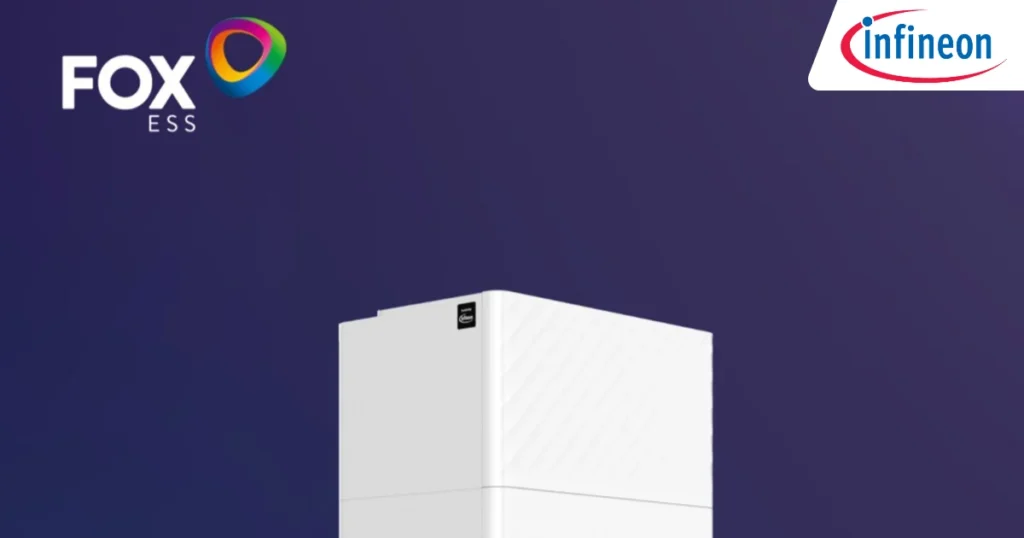
Infineon Technologies AG, a global leader in power semiconductors, has announced a significant collaboration with Fox ESS, a prominent provider of energy storage solutions, to integrate its advanced silicon carbide (SiC) power semiconductors into Fox ESS’s residential energy storage systems. This strategic partnership aims to redefine efficiency benchmarks in the rapidly expanding home energy storage market, with Fox ESS reporting substantial reductions in switching losses and achieving unprecedented system performance indices. The deployment of Infineon’s cutting-edge CoolSiC MOSFETs 1200 V G2, housed in the innovative Q-DPAK package, has already demonstrated a transformative impact on the efficiency and reliability of Fox ESS’s product portfolio, positioning both companies at the forefront of the global transition towards sustainable energy solutions.
Pioneering Efficiency with Infineon’s CoolSiC Technology
The core of this technological advancement lies in Infineon’s CoolSiC MOSFETs 1200 V G2. These state-of-the-art power semiconductors are being specifically utilized in Fox ESS’s PQ3-Ultra energy storage system, a flagship product designed for high-performance residential applications. The integration of these SiC components has led to a remarkable 70% reduction in switching losses, a critical metric in power conversion that directly impacts overall system efficiency. This reduction is not merely an incremental improvement; it signifies a substantial leap forward in the capabilities of residential energy storage. Consequently, the PQ3-Ultra system has achieved a peak photovoltaic (PV) inverter efficiency of up to 98.78% in grid-tied operation, alongside a peak battery charge and discharge efficiency of up to 98.47%. Such high efficiency figures translate directly into more usable energy for homeowners, reduced energy waste, and ultimately, greater economic returns on their investment in renewable energy systems.
Silicon carbide (SiC) technology itself represents a paradigm shift in power electronics, offering distinct advantages over conventional silicon-based semiconductors. Its wider bandgap, higher thermal conductivity, and superior breakdown electric field allow SiC devices to operate at much higher temperatures, frequencies, and voltages with significantly lower losses. For energy storage systems, this translates into several key benefits: smaller component sizes, higher power density, reduced cooling requirements, and extended operational lifetimes. Infineon, with its extensive expertise and proprietary manufacturing processes, has been a driving force in the commercialization and continuous improvement of SiC technology, making it accessible for a broader range of applications, from electric vehicles to industrial power supplies and, crucially, renewable energy infrastructure.
The specific attributes of Infineon’s CoolSiC MOSFETs 1200 V G2 in the Q-DPAK package further amplify these advantages. The Q-DPAK is engineered for top-side cooling, a design innovation that significantly improves thermal performance by allowing heat to dissipate directly from the top surface of the device. This contrasts with traditional bottom-side cooled designs, where heat must travel through the entire package to the PCB. The superior thermal management of the Q-DPAK package not only enhances system efficiency by maintaining optimal operating temperatures but also contributes to higher power density, enabling more compact and robust system designs. Furthermore, the Q-DPAK package simplifies printed circuit board (PCB) layout by reducing parasitic effects and stray inductance, which can otherwise impede high-frequency switching performance. Its compact footprint supports the development of smaller, more aesthetically pleasing residential energy storage units, while its compatibility with automated assembly processes streamlines high-volume manufacturing, ensuring cost-effectiveness and scalability for partners like Fox ESS.
Adding to these innovations is Infineon’s proprietary .XT interconnection technology, integrated into the CoolSiC MOSFETs. This technology further reduces thermal resistance and optimizes the operating junction temperature of the devices, ensuring reliability and performance even under demanding conditions. Coupled with a trench gate architecture, which is specifically designed to minimize switching losses, these MOSFETs deliver unparalleled efficiency. Amit Raut, Application Manager for Photovoltaic and Residential ESS at Infineon, underscored the significance of these advancements, stating, "With our SiC MOSFETs in the Q-DPAK package, we are enabling a new level of efficiency, thermal performance, and design flexibility for residential energy storage systems. Fox ESS is demonstrating how advanced SiC technology can translate into measurable system-level gains and support the broader adoption of clean energy solutions in homes worldwide." This statement highlights not only the technical prowess of Infineon’s products but also the tangible benefits they bring to the end-user and the broader energy transition.
Fox ESS Achieves Unprecedented System Performance Index
The real-world impact of this collaboration is perhaps best illustrated by the performance metrics achieved by Fox ESS’s hybrid energy storage solution. This system, which combines the PQ-H3-Ultra-10.0 inverter with the EQ3300-5 battery, recently underwent rigorous testing by the renowned HTW Berlin University of Applied Sciences and AQUU Research. The results were nothing short of remarkable: the system achieved an extraordinary System Performance Index (SPI) of 97.0%.
The System Performance Index (SPI) is a comprehensive metric used to evaluate the overall efficiency and effectiveness of energy storage systems, taking into account various factors such as conversion losses, standby power consumption, and control accuracy. A higher SPI indicates a more efficient and well-integrated system that maximizes energy utilization and minimizes waste. The 97.0% SPI recorded by Fox ESS’s solution is particularly significant. According to Fox ESS, this result positioned their system first in the highly competitive 10kW class among hybrid inverter and storage systems tested for the 2026 evaluation cycle. Crucially, it represents the highest SPI score ever recorded since the evaluation program commenced in 2018. This achievement is a powerful testament to the superior design of Fox ESS’s systems, underpinned by the high-performance SiC technology provided by Infineon. It sets a new industry benchmark for efficiency in residential energy storage, demonstrating what is possible when advanced semiconductor technology meets innovative system integration.

Daniel Deng, R&D Director at Fox ESS, emphasized the strategic importance of this partnership: "The collaboration with Infineon is a major pillar of our strategy to deliver high-performance energy storage solutions. Infineon’s CoolSiC technology offers superior efficiency and outstanding reliability, values that perfectly match our philosophy. By working together, we will further advance the performance of residential energy storage systems and accelerate the adoption of renewable energy." His comments highlight the shared vision of both companies to drive innovation and contribute meaningfully to the global renewable energy landscape.
The Broader Context: The Ascent of Residential Energy Storage
The success of the Infineon-Fox ESS partnership unfolds against the backdrop of a rapidly expanding global market for residential energy storage systems. The surge in solar photovoltaic (PV) installations worldwide has created an urgent need for efficient and reliable storage solutions to maximize self-consumption, provide energy independence, and enhance grid stability. Factors driving this demand include fluctuating energy prices, decreasing feed-in tariffs for grid-exported solar power, increasing awareness of climate change, and the desire for energy resilience in the face of grid outages.
Residential ESS allows homeowners to store excess electricity generated by their rooftop solar panels during the day and use it during periods of low solar production, such as evenings or cloudy days. This capability significantly reduces reliance on the grid, lowers electricity bills, and decreases carbon footprints. The market for residential ESS is projected to grow substantially over the next decade, with various reports indicating annual growth rates exceeding 20-30% in key regions like Europe, North America, and Australia. The efficiency of these systems is paramount, as every percentage point gained in energy conversion directly translates into greater economic benefits for the homeowner and a more effective utilization of renewable resources. Highly efficient power electronics, therefore, are not just a technical advantage but a fundamental enabler for the widespread adoption and long-term viability of residential energy storage.
Fox ESS has already established a significant presence in this burgeoning market. Over the past three years, the company has successfully installed more than 890,000 PV inverters and over one million batteries across more than 70 countries. This impressive global footprint underscores their capability to deliver at scale and their commitment to making renewable energy accessible to homes worldwide. The integration of Infineon’s CoolSiC technology into such a vast and rapidly deployed network amplifies the impact of this technological advancement, setting new standards for performance across a diverse range of geographical and climatic conditions.
Strategic Implications and Future Outlook
The collaboration between Infineon and Fox ESS carries significant implications for both companies and the broader energy industry. For Infineon, it solidifies its position as a leading provider of advanced power semiconductors for the renewable energy sector. The successful deployment and record-breaking performance of its SiC MOSFETs in Fox ESS systems serve as a powerful validation of its investment in cutting-edge materials and packaging technologies. This success will likely further stimulate demand for Infineon’s SiC products in other high-growth applications, strengthening its market leadership.
For Fox ESS, the achievement of a 97.0% SPI represents a substantial competitive advantage. In a market where efficiency and reliability are key differentiators, this benchmark performance enhances their brand reputation, attracts new customers, and reinforces their commitment to innovation. It positions them as a technological leader in the residential ESS space, capable of delivering products that not only meet but exceed industry expectations. The ability to offer such highly efficient systems will be crucial for Fox ESS as it continues its global expansion, particularly in regions with stringent energy efficiency standards and a strong focus on sustainable living.
More broadly, this partnership and the resulting technological advancements contribute directly to accelerating the global energy transition. By making residential energy storage systems more efficient, reliable, and cost-effective, Infineon and Fox ESS are helping to democratize access to renewable energy. This fosters greater energy independence for homeowners, reduces strain on centralized grids, and significantly lowers carbon emissions. The continuous innovation in power electronics, particularly with materials like SiC, is a foundational element in achieving a sustainable energy future. Industry observers suggest that such collaborations between component manufacturers and system integrators will become increasingly vital in pushing the boundaries of what is possible in renewable energy technologies. The high SPI score achieved by Fox ESS, driven by Infineon’s SiC technology, is not just a technical milestone; it is a clear indicator of the transformative potential that advanced materials and intelligent design hold for a cleaner, more resilient energy landscape worldwide. As the demand for sustainable energy solutions continues to surge, the precedent set by this collaboration will undoubtedly inspire further innovation and adoption across the residential energy storage sector.