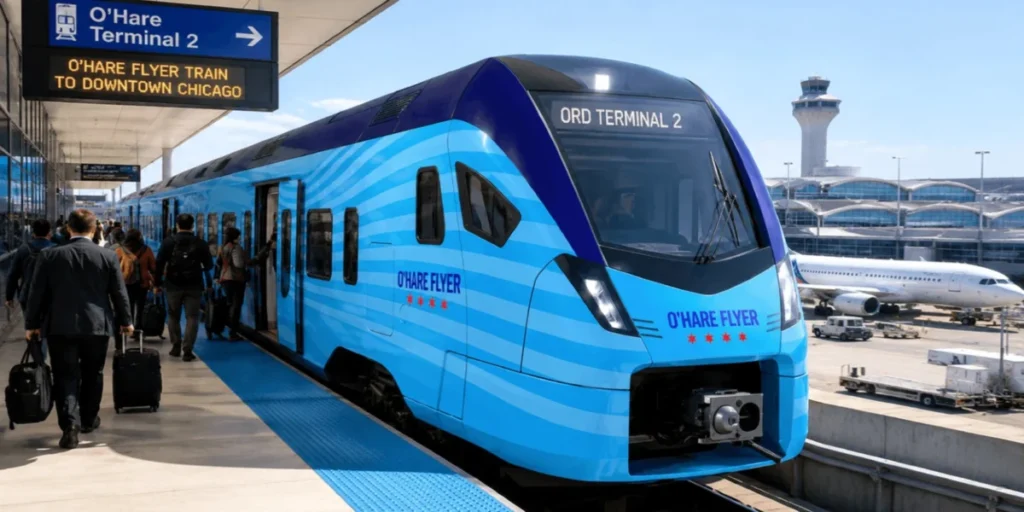
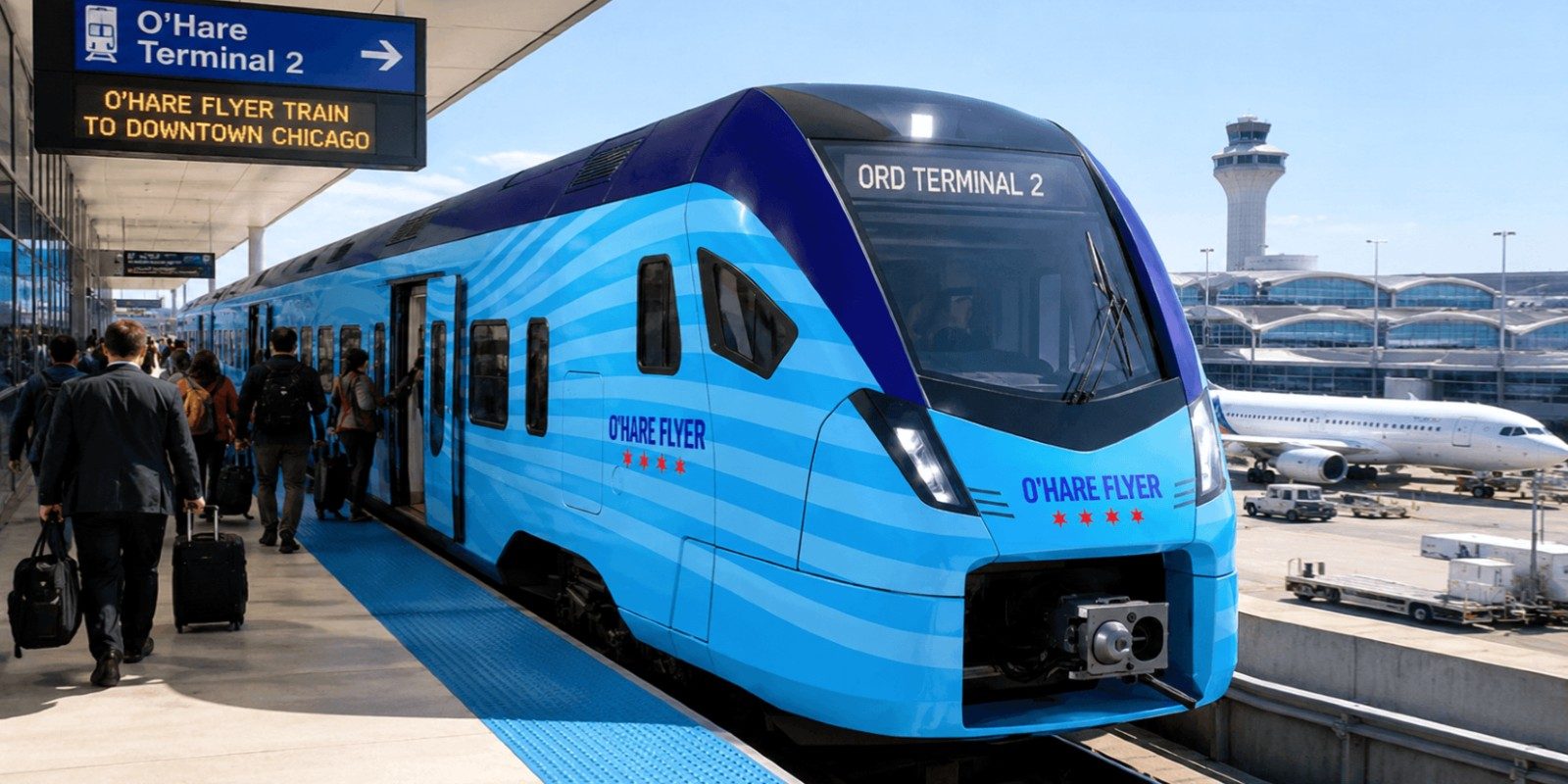
A consortium of Chicago business leaders has unveiled an ambitious plan to revolutionize airport transportation with the proposed "O’Hare Flyer," a fully electric express train service designed to connect downtown Chicago directly to O’Hare International Airport (ORD) in a mere 15 minutes. Heralded as potentially the "first airport express train in the US," this private commercial endeavor aims to leverage existing freight rail infrastructure to create a swift, efficient, and environmentally conscious link between the city’s central business district and one of the nation’s busiest air travel hubs.
The O’Hare Flyer project, spearheaded by a group of prominent Chicago figures, is based on a novel approach to utilizing underutilized freight rail corridors. The proposed route is being pieced together, akin to a complex logistical puzzle, by integrating segments of freight rail right-of-way currently owned by three major Class I railroads: CSX, Canadian National (CN), and Union Pacific (UP). The O’Hare Flyer group has already secured a Letter of Intent (LOI) with CSX and is actively engaged in discussions with CN and UP to finalize agreements for access and operation. This collaborative model, drawing upon existing infrastructure rather than necessitating entirely new construction, is a key factor in the project’s projected timeline and potential cost-effectiveness.
Mark Walbrun, Founder and Chief Engineering Officer of O’Hare Flyer, articulated the vision behind the project, stating, "By combining three existing but underused freight rights-of-way into a dedicated express rail service, we will create the best airport transportation experience in America – and one of the best in the world. This is an important first for Chicago and for the country. O’Hare Flyer will build on Chicago’s heritage as America’s rail capital and center of innovation." This statement underscores the project’s dual aims of enhancing urban mobility and reinforcing Chicago’s historical significance in the nation’s rail network.
The proposed service envisions passenger trains operating from a new station in Chicago’s West Loop, a burgeoning business and residential area, to Terminal 2 at O’Hare International Airport. This terminal currently serves a significant number of domestic and international carriers, including Air Canada, JetBlue, United Express, select United Airlines flights, Alaska Airlines, and select Delta flights, making it a strategically important connection point for a wide range of travelers.
A Paradigm Shift in Airport Commuting
The O’Hare Flyer promises a dramatic reduction in travel time compared to existing options. Current estimates suggest a journey time of just 15 minutes, a stark contrast to the typical travel times experienced by commuters and travelers. The existing CTA Blue Line, for instance, offers a rail connection from downtown to O’Hare, but it is a commuter-focused service with multiple stops throughout the Northwest suburbs, resulting in a significantly longer travel duration. While the Blue Line is an economical option at $2.50 per ride, its operational characteristics cater to a different passenger need.
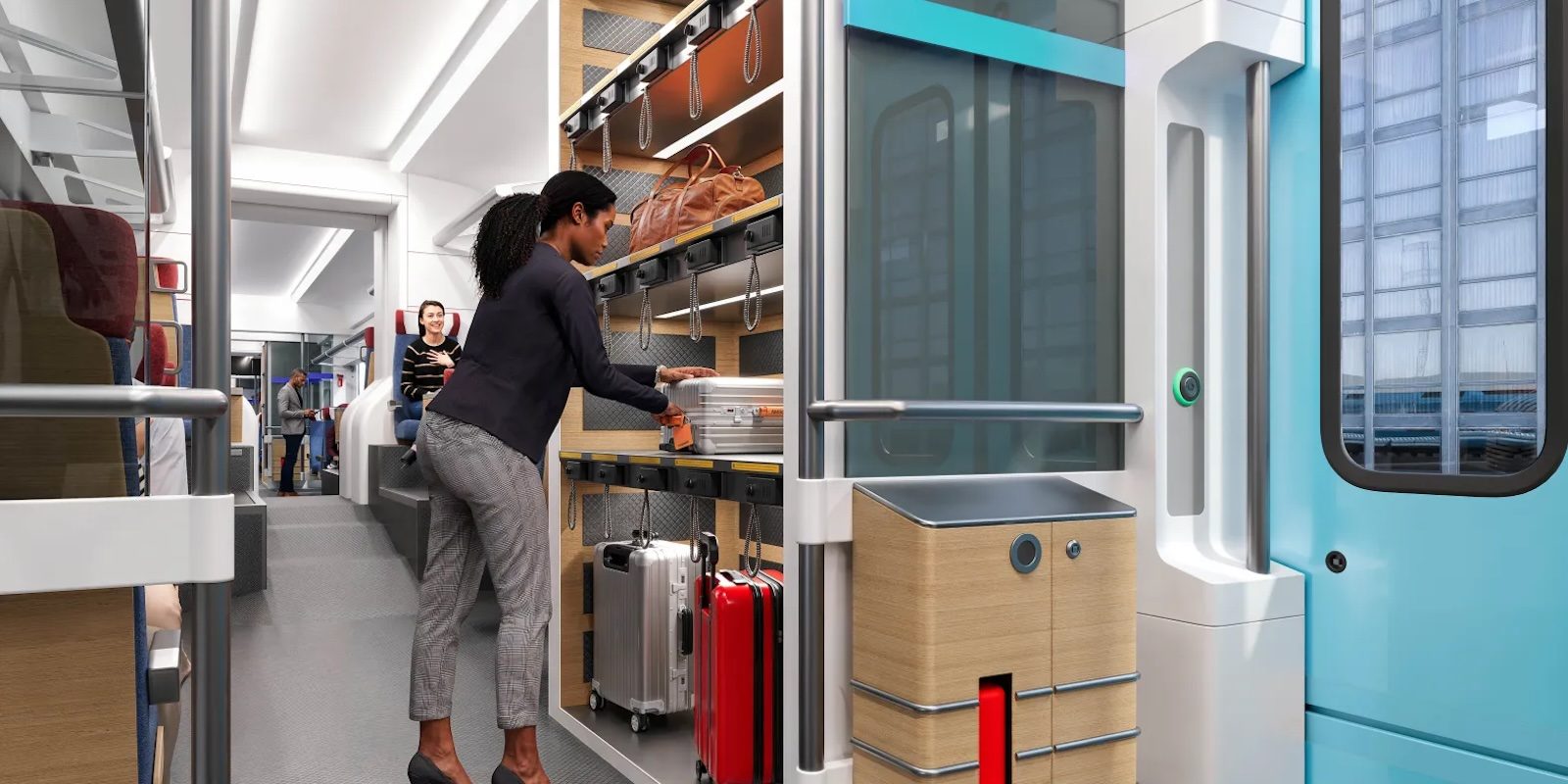
The proposed fare for the O’Hare Flyer is projected to be between $25 and $35 per passenger, a premium reflecting the speed, convenience, and non-stop nature of the service. This pricing strategy positions the O’Hare Flyer as a premium alternative, targeting business travelers, tourists seeking efficiency, and individuals who prioritize minimizing travel time to and from the airport. Trains are expected to depart O’Hare every 15 minutes, operating on the quarter-hour, ensuring a high frequency of service to meet demand.
A Private Endeavor with a Focus on Job Creation
Crucially, the O’Hare Flyer is structured as a private, commercial venture. The group behind the project has emphasized that they are not currently seeking government subsidies or public funding that could potentially divert resources from existing public transit agencies such as the Chicago Transit Authority (CTA) or Metra. This private funding model signifies a significant investment by the business leaders involved and potentially opens new avenues for public-private partnerships in urban infrastructure development.
Beyond the immediate benefits of improved transit, the O’Hare Flyer project is also projected to be a significant engine for job creation. The initiative is committed to working with labor unions to ensure that the construction and operation of the new service are carried out by a highly skilled unionized workforce. Mike Macellaio, President of the Chicago and Cook County Building and Construction Trades Council, expressed strong support for the project, stating, "O’Hare Flyer will be a job creation engine and an investment in working families and communities across Greater Chicago. Our MOU is an important first step toward a Project Labor Agreement that will help ensure this landmark project is built by Greater Chicago’s highly skilled unionized construction workforce while expanding opportunities for local workers and delivering lasting economic benefits throughout the region." This commitment to local union jobs and economic development is a key component of the project’s broader community engagement strategy.

Project Timeline and Stakeholder Engagement
The O’Hare Flyer team is targeting an operational launch around 2030. This ambitious timeline suggests a focused and accelerated development process. To achieve this goal, the group is actively engaging with a diverse range of stakeholders. This includes ongoing meetings with public officials to secure necessary approvals and coordinate with city and state planning initiatives, as well as discussions with business leaders, financial institutions to secure investment, government agencies for regulatory guidance, and community groups to foster understanding and support. This multi-faceted approach to stakeholder engagement is critical for navigating the complex regulatory and logistical landscape of such a large-scale infrastructure project.
The project’s reliance on existing freight rail rights-of-way presents both opportunities and challenges. While this approach can reduce land acquisition costs and expedite development, it also necessitates careful coordination with the freight railroads to ensure minimal disruption to their operations. The integration of passenger service onto these corridors will require sophisticated scheduling and operational protocols. The fact that these rights-of-way are described as "underused" suggests potential capacity for dual-use, but detailed studies and agreements will be paramount.
Broader Implications for Urban Mobility and Sustainability
The O’Hare Flyer’s commitment to a fully electric train system aligns with growing global and national efforts to decarbonize transportation. Electric trains produce zero direct emissions, contributing to improved air quality in the urban environment and reducing the overall carbon footprint of air travel. As O’Hare International Airport continues to grow and face increasing pressure to adopt sustainable practices, the O’Hare Flyer could serve as a model for other major airports seeking to enhance their environmental performance.

The success of the O’Hare Flyer could also pave the way for similar airport express train services in other major metropolitan areas across the United States. Currently, many American cities rely on less efficient or slower public transit options, or on increasingly congested road networks, to connect airports to their downtown cores. A model that successfully leverages existing rail infrastructure for high-speed, dedicated airport transit could be highly replicable, potentially transforming the travel experience for millions of passengers annually.
The projected cost of the project, while not explicitly detailed in the initial announcement, is implied to be substantial, given the scale of infrastructure upgrades and rolling stock required. The mention of a $2.25 billion figure in the original source material, though not present in the provided text, would place this project among significant public-private infrastructure investments. The ability of the private consortium to secure the necessary capital will be a key determinant of the project’s realization.
A Glimpse into Chicago’s Transportation Future
The O’Hare Flyer represents a bold vision for the future of urban transportation in Chicago. By proposing a private, electric, and high-speed rail connection to its primary airport, the project aims to address the perennial challenge of airport accessibility while championing environmental sustainability and economic development. The initiative builds upon Chicago’s rich railway history, seeking to usher in a new chapter of innovation and efficiency. As the project progresses through its planning and development phases, its ability to secure necessary agreements, financing, and regulatory approvals will be closely watched by urban planners, transportation experts, and residents alike, all eager to see if this ambitious 15-minute dream can become a tangible reality.