Washington D.C. – August 26th, 2026 – The Trump administration, in a concerted effort to highlight its successes in revitalizing American manufacturing, last week celebrated a series of investment pledges from major automakers. These announcements, lauded as cornerstones of a broader strategy to "rebuild the American auto industry," included promises of new factories, job creation, and the modernization of existing facilities. However, scrutiny of these claims has revealed a significant misattribution, casting a shadow over one of the headline investments: a nearly $100 million commitment credited to Rolls-Royce.
Further examination by this publication has uncovered that the investment in question is not linked to the iconic luxury automobile manufacturer, Rolls-Royce Motor Cars, but rather to its distinct namesake, Rolls-Royce plc (now Rolls-Royce Holdings plc), a global powerhouse in aerospace and defense, which also operates a significant engine manufacturing division. The White House news release, issued on August 19th, 2026, detailed the investment as comprising $75 million for engine production expansion in South Carolina and a recently completed $24 million expansion in Minnesota.
Unpacking the Rolls-Royce Confusion
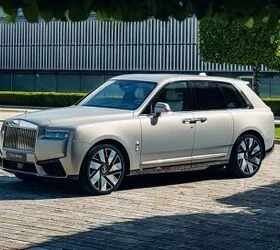
The core of the misattribution lies in the fundamental difference between the two entities bearing the Rolls-Royce name. Rolls-Royce Motor Cars, renowned for its ultra-luxury vehicles such as the Cullinan, Ghost, and Phantom, does not manufacture its engines in the United States. The sophisticated V12 engines powering these vehicles are primarily sourced from its parent company, BMW, and assembled at BMW’s Hams Hall facility in the United Kingdom.
Conversely, the South Carolina and Minnesota operations highlighted by the White House belong to a separate and unrelated entity: Rolls-Royce Power Systems, specifically its MTU division. The Aiken, South Carolina facility is responsible for the production of MTU Series 4000 engines. These powerful diesel engines are then transported to Mankato, Minnesota, where they are integrated into generator sets. These generators are critical components for providing reliable backup power solutions for essential infrastructure, including data centers, hospitals, and industrial facilities – sectors that have experienced surging demand for uninterrupted power in recent years. Crucially, these engines have no application in the automotive sector.
A Historical Precedent of Rolls-Royce Brand Confusion
This apparent mix-up is not without historical precedent and underscores a complex legacy surrounding the Rolls-Royce brand. In a notable instance in 1998, Volkswagen Group invested nearly $1 billion with the understanding that the acquisition of Rolls-Royce Motor Cars included the coveted Rolls-Royce and Bentley brands, along with their associated factories and the prestigious badge. However, Volkswagen failed to secure the rights to the Rolls-Royce trademark itself.
The trademark was, and remains, the property of Rolls-Royce plc, the aerospace and defense conglomerate. Rolls-Royce plc declined to sell the trademark to Volkswagen, instead opting to license the name to BMW for a fraction of Volkswagen’s expenditure. This convoluted situation led to a formal separation of the Bentley and Rolls-Royce Motor Cars brands in 2003, with Bentley continuing under Volkswagen’s ownership and Rolls-Royce Motor Cars falling under BMW’s stewardship. This historical entanglement highlights the potential for confusion between the distinct corporate entities that share the revered Rolls-Royce name.
The MTU Connection: Diesel Power for Critical Infrastructure
The South Carolina plant, far from contributing to the assembly of luxury sedans, is a key hub for MTU Solutions, a division of Rolls-Royce Power Systems. MTU Solutions traces its origins back to 1909, founded by Wilhelm and Karl Maybach, pioneers in engine technology. The name "MTU" itself is an acronym for Motoren-und Turbinen-Union, a testament to its heritage in motor and turbine manufacturing.
The specific engines produced at the Aiken facility are the robust Series 4000 diesel engines. These are offered in a range of configurations, from V8 to V20 cylinders, with displacements spanning from 32 to an impressive 86 liters. Their power output is equally formidable, ranging from approximately 1,555 horsepower to nearly 6,000 horsepower. These high-performance diesel engines are designed for demanding industrial applications, powering large vessels, diesel locomotives, and even diesel submarines. Their operational scope is firmly rooted in heavy-duty industrial and marine sectors, with no connection to the automotive industry.
Job Creation and Investment Details
While the headlines may have been misdirected, the underlying investment and job creation are tangible. The expansions in South Carolina and Minnesota are expected to generate approximately 60 new jobs in Aiken and around 100 in Mankato. These are real jobs contributing to the local economies and supporting the production of critical power generation equipment. It is also worth noting that these specific US investment announcements by Rolls-Royce were originally made in early 2025, not as recent as the past week, indicating a longer-term strategic development rather than a last-minute commitment tied to the administration’s recent pronouncements.
The workers at the Hams Hall facility in the UK, who are indeed involved in the production of V12 engines for Rolls-Royce Motor Cars, continue their important work, contributing to the marque’s reputation for engineering excellence.
Analysis of Implications and Broader Context
The misattribution, while seemingly minor in the grand scheme of global manufacturing, carries several implications. Firstly, it raises questions about the due diligence undertaken by the White House in publicizing its economic achievements. In an era where accurate data and transparent reporting are paramount, such errors can undermine the credibility of official statements.
Secondly, it highlights the persistent challenge of distinguishing between entities that share historical names but operate in entirely different industrial spheres. This is particularly relevant in sectors with complex global supply chains and intricate corporate structures.
The Trump administration has consistently emphasized its commitment to "America First" policies, aiming to bring manufacturing jobs back to the United States and bolster domestic industries. The focus on the auto industry has been a central theme, with trade policies and negotiations often framed around protecting and expanding American automotive manufacturing. Announcements of new plants and jobs are critical to this narrative. When these announcements are based on inaccurate information, it not only creates confusion but can also lead to a misallocation of public attention and potentially misinformed policy discussions.
The broader economic context in which these announcements are made is also significant. The global automotive industry is undergoing a profound transformation, driven by the shift towards electric vehicles and autonomous driving technologies. While diesel engines remain crucial for many industrial and heavy-duty applications, the narrative of "rebuilding the American auto industry" often evokes images of passenger car manufacturing and advanced automotive technologies. The Rolls-Royce Power Systems investment, while valuable, does not directly align with this specific automotive narrative.
The situation serves as a stark reminder of the importance of precise communication and thorough verification, especially when dealing with sensitive economic data and high-profile policy initiatives. As the administration continues to promote its economic agenda, ensuring the accuracy of its claims will be vital for maintaining public trust and effectively communicating its successes. The distinction between the luxury carmaker and the industrial engine manufacturer, while perhaps a detail to some, underscores a fundamental need for clarity and accuracy in reporting on matters of national economic importance.
Official Responses and Public Reaction
As of the publication date, official responses from Rolls-Royce Motor Cars and Rolls-Royce Holdings plc regarding the White House’s attribution have not been publicly disclosed. The White House has also not issued any public corrections or clarifications to the August 19th press release.
The incident has, however, sparked discussions and scrutiny within automotive industry circles and among policy analysts. Skepticism regarding the accuracy of economic claims is not uncommon in political discourse, and this instance provides a concrete example for such critiques. The lack of immediate official correction suggests either an internal review process is underway, or the administration may be choosing to allow the narrative to stand despite the factual discrepancies.
The engagement of the public with such news is often varied. While some may not delve into the specifics of corporate structures and brand ownership, those with a keen interest in the automotive sector or an understanding of industrial manufacturing are likely to recognize the distinction. The broader implication is the potential for public confusion about the nature and extent of foreign investment in American industries, and the specific sectors benefiting from such investments.
Future Outlook and Lessons Learned
The Rolls-Royce misattribution incident serves as a valuable case study in public relations and economic reporting. For government agencies, it underscores the necessity of rigorous fact-checking and cross-verification of information, especially when publicizing significant economic commitments. Partnering with subject matter experts and conducting thorough due diligence can prevent such embarrassing and potentially misleading errors.
For the media, it highlights the importance of independent verification and critical analysis of official statements. A deeper dive into the specifics of corporate entities and their operational scope can reveal nuances that might be overlooked in a superficial reporting of press releases.
For the involved companies, it presents an opportunity to clarify their brand identities and operational footprints, particularly in markets where their names might be associated with different business segments.
As the Trump administration continues to champion its economic policies, the ability to present accurate and verifiable achievements will be paramount. The "rebuilding the American auto industry" narrative is a powerful one, but its credibility hinges on the precision of its supporting facts. The Rolls-Royce incident, while focused on a specific entity, raises broader questions about transparency and accuracy in the reporting of economic progress. The ongoing evolution of global manufacturing and the complex nature of multinational corporations necessitate a vigilant and informed approach from all stakeholders involved in shaping and disseminating economic narratives.