The landscape of modern gaming, often characterized by rapid-fire inputs and complex multi-button combinations, has long presented a formidable barrier to individuals with significant physical disabilities. For players with limited mobility, particularly those with quadriplegia, the standard handheld controller is not merely difficult to use; it is often entirely inaccessible. Recognizing this systemic gap in the multibillion-dollar gaming industry, Caleb Kraft, the founder of The Controller Project and a former editor at Make: Magazine, has unveiled a groundbreaking open-source sip-and-puff controller. This device, which allows users to navigate digital environments using breath-based inputs and mouth movements, represents a significant shift toward the democratization of assistive technology through low-cost, 3D-printable hardware.
While assistive gaming devices have existed for years, they are frequently prohibitively expensive, often costing hundreds or even thousands of dollars. Kraft’s latest prototype disrupts this market by utilizing off-the-shelf components and digital fabrication techniques, bringing the estimated cost of assembly down to approximately $40. This development comes at a critical time as the gaming community increasingly recognizes the importance of inclusive design, following the precedent set by major industry players like Microsoft with the Xbox Adaptive Controller. However, Kraft’s project takes accessibility a step further by removing the financial barriers that often prevent disabled individuals from accessing necessary hardware.
The Evolution of The Controller Project
The Controller Project was established by Caleb Kraft in approximately 2012 with a singular mission: to provide custom, accessible gaming solutions to those who cannot use standard hardware. Over the last decade, the initiative has grown from a personal passion project into a global community of "makers" who design and distribute 3D-printed modifications for existing gamepads. These modifications often include physical extensions for thumbsticks, button remappers, and specialized mounts that allow players to use their feet, elbows, or chins to interact with a console.
The development of the sip-and-puff controller marks a sophisticated leap in the project’s technical trajectory. Unlike simple mechanical extensions, this device integrates electronic sensors and programmable microcontrollers to translate pneumatic pressure—inhaling (sipping) and exhaling (puffing)—into digital signals. Throughout its history, The Controller Project has benefited from the support of the maker community and the leadership of Make: Magazine, specifically Dale Dougherty, who encouraged Kraft to pursue these humanitarian efforts alongside his editorial responsibilities. This supportive environment allowed Kraft to iterate on designs that the commercial market often ignores due to the relatively small consumer base and high research costs associated with assistive technology.
Technical Specifications and Functional Design
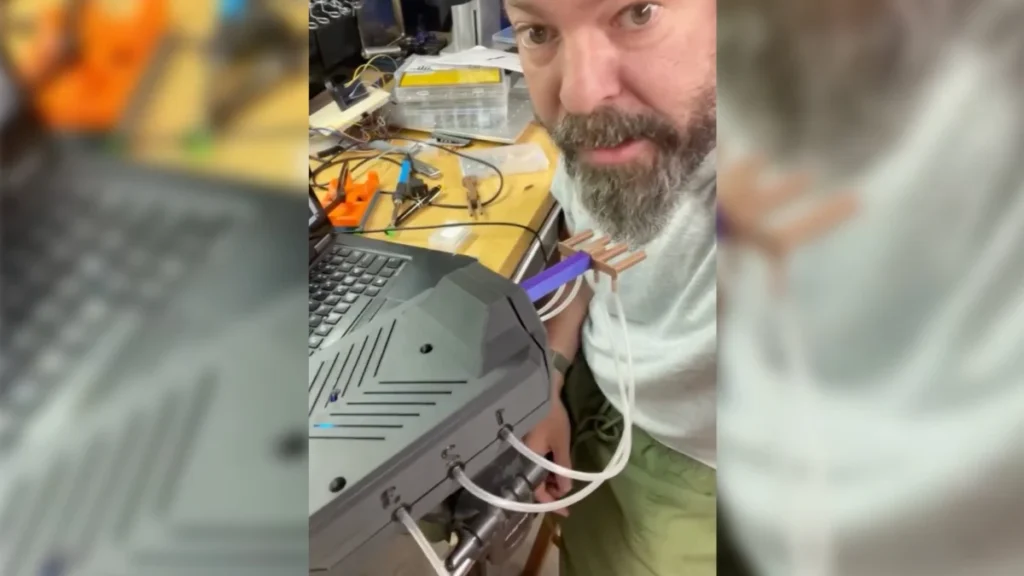
The sip-and-puff controller is engineered to be as versatile as the games it is intended to play. At its core, the device utilizes a series of tubes mounted onto a joystick. This configuration allows the user to control directional movement via their mouth while simultaneously using breath inputs to trigger actions such as jumping, firing, or navigating menus.
One of the most innovative aspects of Kraft’s design is its high degree of configurability. The controller features a built-in OLED screen that provides a user interface for adjusting settings on the fly. Key features include:
- Sensitivity Calibration: Users can adjust how much breath pressure is required to trigger an input, accommodating those with varying levels of lung capacity.
- Analog and Digital Modes: The pneumatic sensors can be toggled between digital (on/off) or analog (pressure-sensitive) inputs, allowing for more nuanced control in genres like racing or simulation games.
- Advanced Behaviors: The software supports "latch" and "repeat" functions. A "latch" allows a player to puff once to keep a button "held down," which is essential for games requiring constant sprinting or aiming.
- Macro Support: Perhaps most importantly, the device allows for macros, where a single sip or puff can execute a complex sequence of button presses. This is a vital feature for competitive play or games with complex control schemes.
The controller is built using a combination of 3D-printed housings, flexible tubing, and low-cost pressure sensors. By making the code open-source and providing a list of off-the-shelf components—available via platforms like Amazon—Kraft has ensured that anyone with access to a 3D printer and basic soldering skills can build the device for a fraction of the cost of commercial alternatives.
Addressing the Economic Barriers to Accessibility
In the field of assistive technology, the "disability tax" is a well-documented phenomenon where specialized equipment is sold at a massive markup compared to standard consumer electronics. For example, professional-grade sip-and-puff systems can range from $500 to over $1,000. For many individuals with disabilities, who may already face significant medical expenses and lower employment rates, these costs are insurmountable.

Kraft’s prototype, currently costing around $40 in raw materials, represents a 90% to 95% reduction in price. This price point is revolutionary because it moves the device from the realm of "medical equipment" into the realm of "hobbyist electronics." By leveraging the "Right to Repair" ethos and the Maker Movement, Kraft is empowering the community to self-service their needs. This approach not only makes the technology affordable but also ensures that if a component breaks, the user or a local maker can replace it for a few dollars rather than being forced to buy an entirely new system.
Challenges in Prototyping and Real-World Testing
Despite the viral success of the project on social media, Kraft remains transparent about the device’s current limitations. He describes the prototype as being in a "usable but untested" state. Early iterations have revealed practical challenges that are common in hardware development.
Specifically, Kraft noted that the initial 3D-printed shell design was difficult to assemble and wire, necessitating a redesign for better ergonomics and ease of manufacturing. There are also concerns regarding the longevity of the sip-and-puff sensors. Because these sensors are being used in a manner they were not originally designed for—exposed to moisture from breath over long periods—their durability remains an open question. Furthermore, using a standard thumbstick for mouth movements requires a specific level of neck and jaw strength that may not be suitable for all users. Kraft has emphasized that the project will require rigorous testing by actual gamers with disabilities to refine the ergonomics and software before it can be considered a finished product.
The Psychological and Social Impact of Inclusive Gaming
The significance of this project extends beyond technical innovation; it touches on the fundamental human need for agency and social connection. For individuals with profound physical limitations, video games offer a rare space where they can interact with others on an equal playing field. In a virtual environment, a player’s physical mobility is irrelevant; their skill, strategy, and personality are what matter.
Gaming also serves as a vital tool for mental health, providing an escape from the daily rigors of living with a disability and a means of maintaining social bonds. By creating a low-cost entry point into this world, Kraft is effectively combating the social isolation that often accompanies quadriplegia. The overwhelming response to Kraft’s social media videos—filled with requests from potential users and offers of help from engineers—underscores the desperate need for such solutions.
Industry Implications and the Future of Open-Source Assistive Tech
The success of Kraft’s sip-and-puff controller serves as a challenge to the broader gaming industry. While companies like Sony and Microsoft have made strides with the DualSense Access controller and the Xbox Adaptive Controller, these devices often still require expensive peripherals to be fully functional for quadriplegic players. Kraft’s work demonstrates that high-quality accessibility solutions do not necessarily require high-cost manufacturing.
As the project moves forward, it is expected to inspire a new wave of open-source assistive devices. The Controller Project plans to continue refining the design based on community feedback, with a focus on improving the "buildability" for non-experts. Kraft has encouraged interested parties to support the project through donations and by contributing to the open-source codebase.
In conclusion, Caleb Kraft’s sip-and-puff controller is more than just a piece of hardware; it is a proof of concept for a more inclusive future. By combining the power of 3D printing, open-source software, and low-cost electronics, Kraft is dismantling the barriers that have long kept a segment of the population in the dark. As the prototype moves into more rigorous testing phases, it stands as a testament to the impact that a single dedicated individual can have when they use their technical skills for the greater good of the community. The project highlights a shift toward a world where the ability to play is seen not as a luxury for the able-bodied, but as a right for everyone.