The fundamental behavior of matter often reveals itself through the concept of phases. In the macroscopic world, the coexistence of different phases is a common sight; a glass of ice water provides a quintessential example where a single substance, H2O, exists simultaneously as a solid and a liquid. However, in the realm of quantum materials, the coexistence of electronic phases is far more intricate and governs the exotic properties that could define the next generation of technology. Researchers at the Massachusetts Institute of Technology (MIT) have recently achieved a breakthrough in understanding these complexities, uncovering how two distinct forms of electron organization emerge and interact within a single quantum material.
The study, published in the journal Nature Physics, provides a detailed look at the internal mechanics of erbium tritelluride (ErTe3), a material known for its unusual electronic properties. By utilizing advanced laser techniques, the team has successfully mapped the "checkerboard" of electrons that forms within the material, distinguishing between two different types of phase transitions that occur as the material is cooled. This research offers a critical framework for understanding materials that exhibit superconductivity, magnetism, and other collective electronic behaviors, potentially paving the way for more efficient quantum devices and a successor to silicon-based electronics.
The Architecture of Quantum Checkerboards
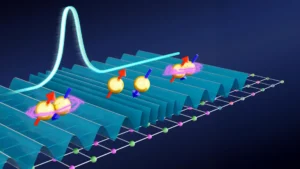
At the heart of this discovery is a phenomenon known as a "charge density wave" (CDW). Under normal conditions, electrons in a metallic material move relatively independently and are distributed with a degree of uniformity. However, in certain quantum materials like erbium tritelluride, cooling the substance causes electrons to spontaneously organize into a periodic, wave-like pattern. This state is characterized by regions of high electron density (crests) and low electron density (troughs), creating a stationary ripple of charge throughout the atomic lattice.
Erbium tritelluride is particularly interesting to physicists because it does not just host one charge density wave, but two. When the material is cooled to approximately -8 degrees Celsius (265 Kelvin), the first "dominant" CDW emerges, with the wave traveling in a specific direction across the material’s crystal structure. As the temperature is lowered further to roughly -113 degrees Celsius (160 Kelvin), a second "subdominant" CDW appears, oriented at a 90-degree angle to the first.
The intersection of these two perpendicular waves creates a complex, two-dimensional electronic pattern that resembles an atomic-scale checkerboard. While the existence of these phases was previously known, the specific mechanism by which the second phase emerges and how it interacts with the pre-existing dominant phase remained a subject of intense scientific debate.
Experimental Methodology: The Shake and Listen Technique
To resolve the mystery of how these phases form, the MIT team, led by Nuh Gedik, the Donner Professor of Physics, employed a sophisticated experimental setup involving ultrafast laser pulses. The researchers obtained atomically thin samples of ErTe3, synthesized by collaborators at Stanford University, and cooled them to a frigid -230 degrees Celsius. At this temperature, both charge density waves are firmly established in their checkerboard configuration.
The experiment relied on a "pump-probe" method, which Professor Gedik describes as a process of "shaking" the system and then "listening" to its response.
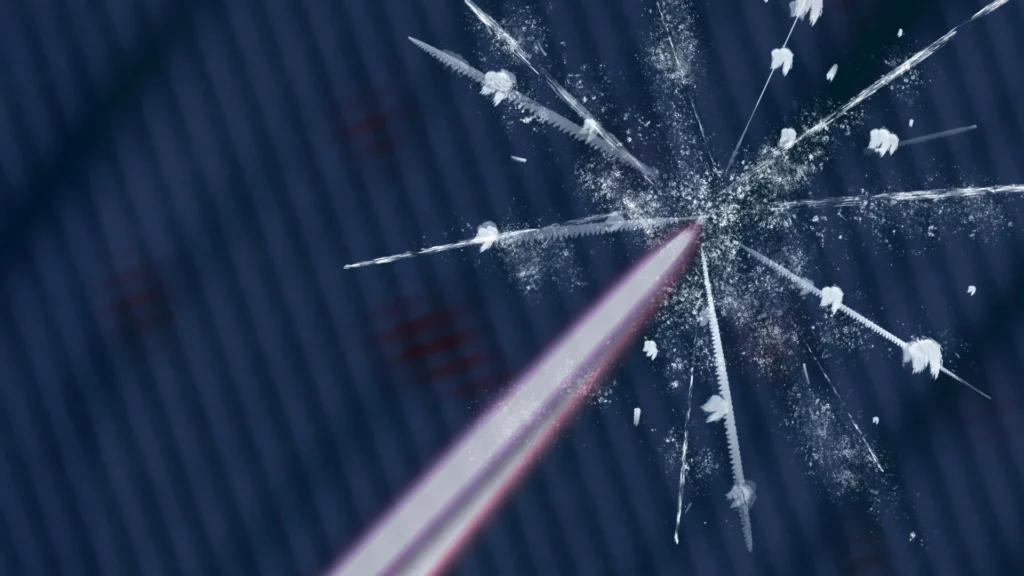
- The Shake: A primary laser pulse is fired at the material. This pulse carries enough energy to momentarily disrupt or "melt" the electronic checkerboard pattern, throwing the electrons back into a state of relative disorder. By varying the intensity of this pulse, the researchers could control the degree of the disruption.
- The Listen: Following the first pulse at intervals measured in femtoseconds (quadrillionths of a second), a second pulse of high-energy photons is directed at the sample. This second pulse knocks electrons out of the material—a process known as photoemission.
By measuring the energy and momentum of these expelled electrons, the researchers could reconstruct a series of snapshots showing how the electronic phases recovered over time. This time-resolved approach allowed the team to watch the "rebirth" of the CDW phases in real-time, providing data that static observations could never capture.
A Tale of Two Transitions: Smooth vs. Stochastic
The most significant finding of the study lies in the starkly different ways the two CDW phases recovered after being disrupted. The dominant phase, which appears at higher temperatures, exhibited a "second-order" phase transition. This means that as the system cooled or recovered from the laser pulse, the wave pattern emerged gradually and uniformly throughout the entire material. It is a smooth transition, akin to the way a piece of iron slowly gains its magnetic properties as it cools below a certain threshold.
In contrast, the subdominant phase—the second set of waves that completes the checkerboard—followed a "first-order" transition. This behavior was much more abrupt and localized. Instead of appearing everywhere at once, the subdominant phase began in isolated "pockets" or nuclei. These pockets then expanded and merged until the phase covered the material. This process is strikingly similar to the way ice crystals nucleate and grow in a container of supercooled water.
"The mechanism responsible for the emergence of this second phase has long been debated," noted Professor Gedik. "Our approach provides a powerful new way to uncover the hidden physics behind phase transitions in quantum materials."
Data Analysis and Scientific Implications
The data collected by the MIT team highlights the competitive and cooperative nature of electronic phases. In the case of ErTe3, the dominant phase appears to set the stage, but the subdominant phase must find its own way to manifest within the constraints of the existing electronic architecture. The observation of a first-order transition for the subdominant CDW suggests that there is an energy barrier to its formation, requiring specific conditions or "seeds" to begin its growth.
This distinction is crucial for the field of condensed matter physics. Many of the most sought-after properties in modern science, such as high-temperature superconductivity, occur in materials where multiple phases compete for dominance. In high-temperature superconductors (like cuprates), researchers often observe charge density waves existing alongside superconductivity. Understanding whether these phases help or hinder one another is the key to eventually creating materials that can conduct electricity without resistance at room temperature.
"People believe the cornerstone of replacing silicon lies in quantum materials that have multiple coexisting phases," said co-author Alfred Zong, a former MIT graduate student and now an assistant professor at Stanford. "Our experiment provides a very neat way to study these multiple phases."
Context and Chronology of Research
The study of charge density waves dates back several decades, but it has seen a resurgence in the last ten years due to the discovery of 2D materials and the development of ultrafast spectroscopy. The MIT study represents a culmination of several years of work by a diverse group of researchers.
- Pre-2017: Theoretical models suggested that ErTe3 was an ideal "playground" for studying CDW interactions due to its relatively simple crystal structure compared to more complex superconductors.
- 2017-2020: Development of the ultrafast photoemission setup at MIT, led by Nuh Gedik’s lab, allowed for higher precision in measuring electron momentum.
- 2020-2023: The experimental phase, involving the "shake and listen" technique, was conducted, focusing on the recovery dynamics of the checkerboard pattern.
- 2024: Publication of findings in Nature Physics, identifying the first-order nature of the subdominant phase.
The research was a collaborative effort involving first authors Yifan Su and Bai-Qing Lv, along with contributors from multiple institutions including Stanford and the University of California, Berkeley. The project received support from the U.S. Department of Energy, the National Science Foundation, and the Gordon and Betty Moore Foundation.
The Future: Toward Quantum Engineering
The ability to observe and eventually control these phase transitions marks a significant step toward "quantum engineering." If scientists can manipulate the way these electronic waves form—perhaps using light, pressure, or chemical doping—they could switch the properties of a material on and off at incredible speeds.
Lead author Yifan Su emphasized the simplicity and utility of the CDW model. "Just like superconductivity, charge density waves are a collective phenomena where electrons move together in certain ways," Su explained. "The power of CDWs is that they are a much simpler form of matter compared to superconductivity. They offer a playground for fundamental understanding."
The implications of this research extend to the development of quantum computers and ultra-low-power electronics. In traditional silicon chips, information is processed by moving individual electrons, a process that generates heat and limits speed. In quantum materials, information could be encoded in the collective state of the electronic phases themselves. By understanding the "checkerboard" dynamics, researchers are moving closer to devices that operate with minimal energy loss and maximum computational power.
As the scientific community continues to probe the boundaries of the quantum world, the lessons learned from erbium tritelluride will likely serve as a blueprint for investigating more complex systems. By looking beyond the static snapshots of matter and focusing on the dynamic recovery of phases, the MIT team has provided a new lens through which we can view the fundamental organization of the universe at its smallest scales.