Welcome to the closing days of August, a period often marked by a transition in the watch market, with collectors and enthusiasts seeking out unique pieces as the year begins to wind down. This week’s "What’s Selling Where" column from Hodinkee delves into a diverse array of timepieces, from vintage rarities with innovative complications to modern collaborations that bridge the gap between horology and art. The selection offers a compelling snapshot of current market trends and the enduring appeal of well-crafted watches across different eras and styles.
A Deep Dive into This Week’s Notable Timepieces
The editorial team at Hodinkee has curated a selection that spans several decades and brands, highlighting watches that have recently surfaced or are coming to auction. The collection includes a fascinating Hamilton Cross Country, a striking Heuer Titanium Quartz, a robust Movado Super Sub Sea Chronograph, and a pair of Breitling Top Time chronographs, among other noteworthy pieces. This curated list serves as a guide for collectors interested in acquiring unique watches, offering insights into their historical context, technical specifications, and current market value.
The Hamilton Cross Country: A Unique Approach to Timekeeping
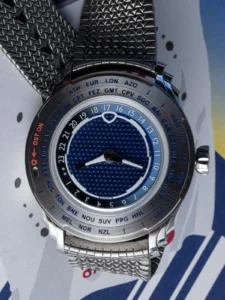
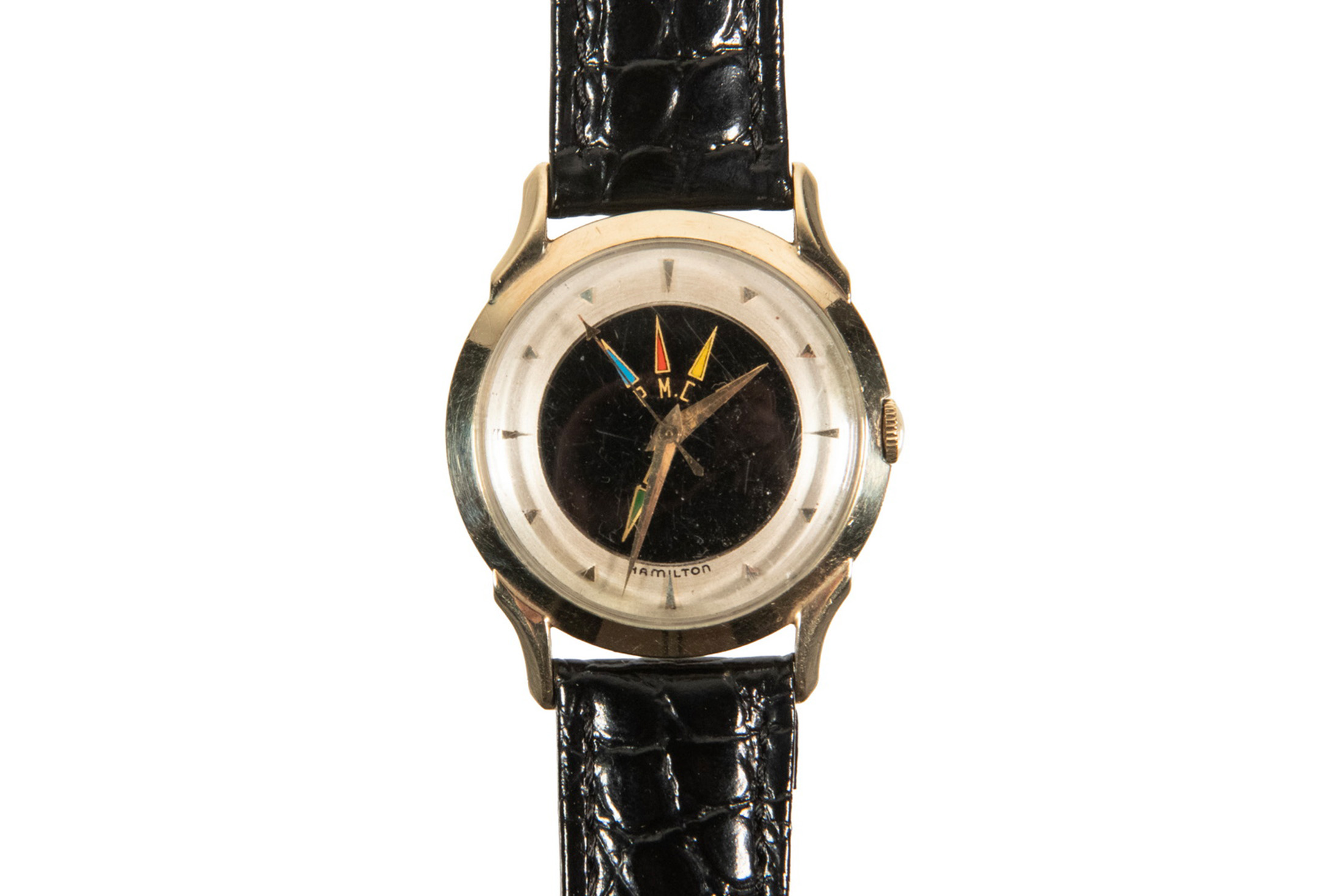
Introduced in 1956, the Hamilton Cross Country stands out as an intriguing attempt to address the growing need for multi-time zone functionality, a year after Rolex launched its iconic GMT-Master ref. 6542. Unlike its contemporaries, the Cross Country eschewed a rotating bezel and an independently adjustable hour hand. Instead, it incorporated a novel system where the black portion of the dial rotated in sync with the hour hand.
Innovative Dial Design: This rotating dial featured triangles marked with abbreviations for different U.S. time zones: P for Pacific, M for Mountain, C for Central, and G for Greenwich Mean Time. An uncolored triangle marked ‘E’ for Eastern Time was present, typically obscured by the hour hand when the watch was set to that zone. This ingenious, albeit unconventional, approach allowed wearers to ascertain the time in different parts of the United States by simply observing the position of the hour hand relative to these marked zones.
Setting the Time: A notable aspect of the Cross Country’s functionality is its manual setting mechanism for the pseudo-GMT complication. To adjust the time zone display, the watch’s hands had to be removed and the hour hand repositioned. This method, while requiring a deliberate action, ensured the watch remained a relatively simple and robust timekeeping instrument.

Market Context and Condition: The example highlighted in this week’s column is set to Eastern Time, with the ‘E’ marker obscured. It features a gold-plated case, measuring a compact 34mm without its original crown, and a remarkably clean dial. Despite some expected wear on the case back, the overall condition is described as good, with a crystal polish potentially enhancing its appearance. The watch is slated for auction with an estimated price of $800-$1,000, reflecting its status as a unique vintage piece with a charmingly quirky complication.
Heuer Titanium Quartz: A Glimpse into the Early 1980s
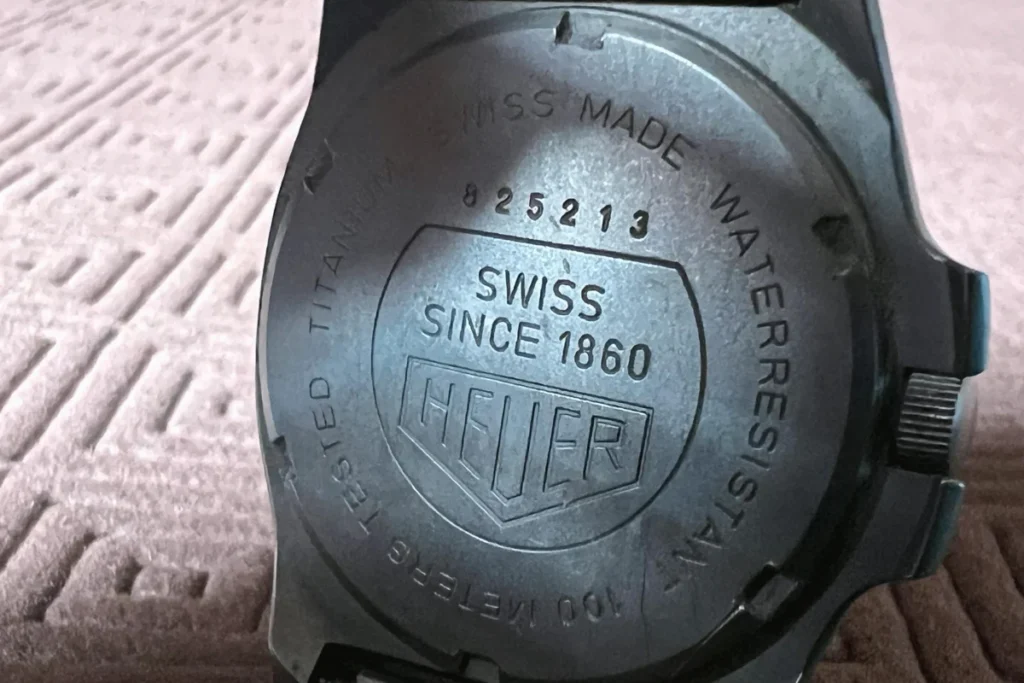
The Heuer reference 825.213, a Titanium Quartz watch from 1983, represents a fascinating intersection of technological advancement and design innovation during a transitional period for the brand. Introduced just before TAG’s acquisition of Heuer, this timepiece embodies the era’s embrace of new materials and quartz technology.
Design and Materials: The watch features a striking combination of titanium, gold accents, and a quartz movement, reflecting the trends of the early 1980s. Its design is a complex interplay of shapes, with a circular dial, an octagonal bezel, a tonneau case, and a rectangular date window. This eclectic mix of geometric forms contributes to its distinctly futuristic and somewhat unconventional aesthetic.
Market and Rarity: With few of these models currently available, this particular Heuer is considered a rare find. The example up for auction shows expected wear after 40 years, but remains in presentable condition. It is believed to retain its original Heuer-signed titanium bracelet with gold inlay, a significant detail given the rarity of such combinations. The dial and hands are described as excellent, with the "Titanium" font adding to its appeal. The watch is noted as not currently working, necessitating a service calculation for potential bidders. It is set to auction in Perth, Australia, with a current bid of 95 AUD.
Broader Industry Context: The early 1980s were a challenging time for many traditional watch manufacturers, including Heuer and Omega. The quartz crisis had significantly impacted the Swiss watch industry, leading to a period of intense innovation and sometimes desperate attempts to capture market share. Watches like the Heuer Titanium Quartz and the Omega Seamaster Polaris (often debated as a Genta design) emerged from this period of uncertainty, showcasing a bold embrace of new technologies and materials as a means of survival and reinvention.

Movado Super Sub Sea Chronograph: A Bold Statement Piece
The Movado Super Sub Sea Chronograph, reference 206-705-502, is presented as a watch that embraces its bold aesthetic with unapologetic enthusiasm. At 40.5mm, it’s a substantial timepiece with a vibrant orange inner bezel that complements its panda dial, large lumed hands, and a distinctive lollipop chronograph seconds hand.
Shared Heritage and Movement: This Movado shares its lineage with its Zenith counterpart, a testament to the integrated design strategy of the Mondia-Zenith-Movado conglomerate. Both watches utilized the robust Zenith caliber 146 HP, a manual-winding column-wheel integrated chronograph movement, and were often fitted with the same Gay Frères ladder bracelet. This shared heritage means that while the name on the dial differs, the core horological quality remains consistent.
Condition and Collectibility: The example featured is in exceptionally good condition, a rarity for these models, which often show significant signs of wear. Minor flaws include a replaced original signed crown and a small smudge on the hour totalizer. However, the overall presentation is excellent, making it a desirable piece for collectors of classic chronographs. It is scheduled for auction on September 1st, with bids reaching $1,100.
Breitling Top Time Chronographs: A Nod to the Youth Market
Breitling’s Top Time line, launched in 1964, was conceived as a collection for the "young, speed-obsessed generation," characterized by its "sporty personality." Today, vintage sports chronographs can sometimes feel distant from contemporary tastes, but the early Top Time models, particularly those with panda dials, represent a significant chapter in watch design.
The Breitling 810: This example, from the early 1970s, is powered by the legendary Venus 178 movement, a caliber found in many of Breitling’s most iconic chronographs. It features a splashy orange chronograph seconds hand, nicely aged luminous plots, and a crystal showing considerable scuffing. Located in the United States, this reference 810 is a testament to Breitling’s commitment to performance and style for a younger demographic. Bids have reached $1,800, with the auction concluding on the 30th.
The Breitling 815: The reference 815, also from the early 1970s, offers a more subdued aesthetic and is located in Europe. It is powered by a Valjoux 7736 movement and features a less obtrusive, unpainted central chronograph seconds hand. The dial lacks any Top Time badging, and the subdials are a shiny gray, contrasting with the matte black subdials of the 810. This example presents a cleaner appearance with a less scuffed crystal. The opening bid for the 815 is €2,600, with the auction closing on September 5th.
Shared Design Elements: Both watches share identical 38mm steel cases, signed crowns, and snap-on casebacks. The cases appear sharp, and the dials and hands are consistent with their era, with the 810 showing more wear on its caseback. These models highlight Breitling’s strategy of offering variations on a popular theme, catering to different preferences while maintaining a strong brand identity.
Baume & Mercier "Hommage à Pierre Soulages": Art Meets Horology
In an ongoing trend that sees artists collaborating with watchmakers, the Baume & Mercier "Hommage à Pierre Soulages" represents a compelling fusion of fine art and horology. Released in 2022 in a limited edition of 102 pieces, this watch was initially priced at $5,850.
Dial Creation and Inspiration: The dial’s unique texture and dramatic appearance are inspired by the work of French artist Pierre Soulages, renowned for his mastery of black and his concept of "Outrenoir" (beyond black). Soulages famously stated, "My instrument is not black, but the light reflected from the black." The watch’s dial meticulously captures this philosophy, creating a dynamic and textural surface that plays with light. The pops of gold on the dial and hands add an unexpected and elegant contrast.
Technical Specifications and Edition: The watch is based on the standard Baume & Mercier Hampton model, featuring a 31mm case and powered by an ETA 2892 automatic movement. The case is DLC-coated, providing a modern finish. The success of this initial collaboration led to a second limited edition of 328 pieces, featuring a different dial design but maintaining the core aesthetic.
Provenance and Auction: The featured watch is a complete set, including its original box and papers, a book on Soulages’ art, and a VIP card granting lifetime access to the Musée Soulages. It is set to be auctioned in France on the 30th, with an estimated price range of €9,000-€10,000, reflecting its artistic significance and limited production.
Angelus Pulsations Medical Monopusher: A Doctor’s Essential Tool
Concluding this week’s highlights is the Angelus Pulsations Medical Monopusher, a vintage chronograph designed specifically for medical professionals. This timepiece represents a fascinating niche within watchmaking, where functionality for a specific profession took precedence.
Historical Context and Design: The original Angelus Pulsations Medical chronographs, along with similar models from brands like Paul Portinoux and Vernal, were crucial tools for doctors in the mid-20th century. The example on offer, from Shuck The Oyster, is in excellent condition, featuring a clean case, attractive hands and dial with subtle yellowing of the lume, and a magnifier crystal to enhance readability of the pulsations scale. The watch measures a substantial 37.5mm, offering a comfortable presence on the wrist.
Unique Functionality: The dial’s design is highly specialized. It features a pulsations scale running from 150 to 45 and a respirations scale from 40 to 10. The chronograph is purely medical, lacking a minute totalizer, which emphasizes its singular purpose. The color-coded scale for cardiac intensity and the curved arrow on the dial add a touch of playful yet functional design to an otherwise business-oriented instrument.
Rarity and Movement: These medical chronographs are not frequently encountered, making this Angelus a particularly desirable find. The movement is a modified Valjoux 22, confirmed as correct for Angelus-branded models. The watch has been recently serviced. Shuck The Oyster is offering this rare piece for €13,900, a price point that reflects its historical significance, rarity, and excellent condition. The resurgence of interest in vintage medical watches, amplified by modern interpretations, continues to drive demand for these historically important timepieces.