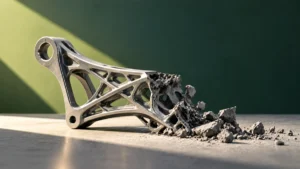
Massachusetts Institute of Technology (MIT) engineers have achieved a significant breakthrough in materials science with the development of a novel aluminum alloy engineered for additive manufacturing, capable of withstanding extreme temperatures and exhibiting unprecedented strength levels. This new material is not only five times stronger than aluminum produced through conventional manufacturing methods but also opens up a new frontier for high-performance applications across various industries. The research, detailed in the latest issue of the journal Advanced Materials, marks a pivotal moment in the quest for lighter, more robust, and more efficient engineering components.
The creation of this advanced alloy is a testament to the power of integrating cutting-edge computational tools with experimental validation. Researchers combined aluminum with several carefully selected elements, a process guided by a sophisticated blend of computer simulations and machine learning algorithms. This intelligent approach drastically accelerated the discovery process. Traditional methods for alloy development, which involve systematically testing combinations, could have necessitated the evaluation of over a million potential material recipes. However, the machine learning model effectively narrowed this vast landscape down to a mere 40 highly promising candidates before pinpointing the optimal formulation. This dramatic reduction in experimental scope not only saves considerable time and resources but also increases the likelihood of uncovering truly novel material properties.
Upon fabricating the alloy using 3D printing techniques and subjecting it to rigorous mechanical testing, the experimental results precisely mirrored the predictions made by the computational models. The printed metal demonstrated performance on par with, and in many cases exceeding, the most robust aluminum alloys currently manufactured through traditional casting processes. This validation underscores the reliability of the machine learning-driven design methodology and the precision of the additive manufacturing process in realizing the alloy’s inherent potential.
A Lighter, Stronger Future for Transportation and Beyond
The implications of this printable, high-strength aluminum alloy are far-reaching, promising to revolutionize component design and manufacturing across numerous sectors. The team envisions its use in producing lighter, more durable, and heat-resistant parts, with a particular focus on applications within the aerospace industry. For instance, fan blades for jet engines, a critical component requiring exceptional strength and resistance to extreme conditions, are typically fabricated from titanium. Titanium, while strong, is more than 50 percent heavier and can be up to ten times more expensive than aluminum. Advanced composite materials are also used, but a high-strength, lightweight aluminum alloy could offer a compelling alternative, potentially leading to significant weight reductions and cost savings in aircraft manufacturing.
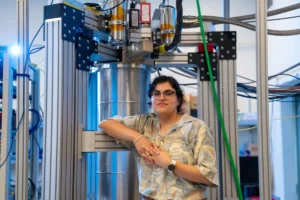
Mohadeseh Taheri-Mousavi, who spearheaded this research as a postdoctoral associate at MIT and is now an assistant professor at Carnegie Mellon University, emphasized the economic and environmental benefits. "If we can utilize lighter, high-strength material, this would save a considerable amount of energy for the transportation industry," she stated. This reduction in energy consumption, particularly in the aviation sector, translates directly into lower operational costs and a reduced carbon footprint, aligning with global efforts towards sustainable transportation.
John Hart, the Class of 1922 Professor and head of MIT’s Department of Mechanical Engineering, highlighted that the impact extends well beyond aviation. "Because 3D printing can produce complex geometries, save material, and enable unique designs, we see this printable alloy as something that could also be used in advanced vacuum pumps, high-end automobiles, and cooling devices for data centers," Professor Hart explained. The ability of 3D printing to create intricate, optimized shapes that are difficult or impossible to achieve with conventional methods, coupled with the superior properties of this new alloy, opens up possibilities for enhanced performance and efficiency in these diverse applications. For example, in data centers, the demand for efficient cooling solutions is paramount to prevent overheating and ensure system reliability; this alloy could contribute to more effective and compact cooling systems. In the automotive sector, its application could lead to lighter vehicles, improving fuel efficiency and performance.
From Classroom Challenge to Materials Breakthrough: A Timeline of Innovation
The genesis of this groundbreaking research can be traced back to a 2020 course at MIT, "Computational Design of High-Performance Alloys," taught by Professor Greg Olson, a professor of the practice in the Department of Materials Science and Engineering. This course was designed to equip students with the knowledge and tools to leverage computational simulations for the design of advanced materials. Alloys, by definition, are mixtures of elements where the specific proportions and interactions dictate the material’s properties, such as strength, ductility, and heat resistance.
Professor Olson presented students with a challenging project: to design a 3D-printable aluminum alloy that would surpass the strength of any existing material in its class. The strength of aluminum is intrinsically linked to its microstructure, particularly the size and distribution of microscopic crystalline structures known as "precipitates." Generally, smaller and more densely packed precipitates lead to a stronger metal. Students employed simulations to explore various elemental compositions and concentrations, attempting to predict which combinations would yield the desired microstructure and, consequently, the highest strength. Despite their extensive modeling efforts, the project did not result in an alloy that outperformed current state-of-the-art printable aluminum designs.
This outcome, rather than marking an end, served as a catalyst for Taheri-Mousavi. Recognizing the limitations of purely simulation-based approaches when dealing with the complex, non-linear interactions within alloys, she began to explore alternative methodologies. "At some point, there are a lot of things that contribute nonlinearly to a material’s properties, and you are lost," Taheri-Mousavi reflected on the challenges faced during the class project. "With machine-learning tools, they can point you to where you need to focus, and tell you for example, these two elements are controlling this feature. It lets you explore the design space more efficiently." This insight led her to pursue a more advanced, data-driven approach for her subsequent research.
Leveraging Machine Learning to Redesign Aluminum
Building upon the foundation laid during the classroom challenge, Taheri-Mousavi initiated the new study by applying machine learning techniques to the problem of designing a stronger aluminum alloy. Unlike traditional simulations, which rely on predefined physical models, machine learning algorithms can analyze vast datasets of elemental properties and identify subtle patterns and correlations that might be missed by conventional methods. These algorithms can learn from existing material data, experimental results, and theoretical principles to predict the properties of new, untested compositions.
The machine learning system meticulously sifted through data on elemental characteristics, uncovering intricate relationships between composition and microstructure. By focusing its analysis on a significantly reduced set of only 40 candidate compositions, the system was able to identify an alloy design that featured a markedly higher proportion of small precipitates compared to previous attempts. This specific microstructural configuration was the key to achieving exceptional strength. The strength gains observed were substantial, surpassing the results obtained from the millions of simulations that had been conducted without the aid of machine learning.
The Critical Role of 3D Printing in Alloy Realization
Crucially, the researchers opted for additive manufacturing, or 3D printing, rather than conventional casting to produce the alloy. Conventional casting involves melting the metal and pouring it into a mold, where it cools slowly. This prolonged cooling process allows precipitates to grow larger, which, as previously noted, diminishes the material’s overall strength. In contrast, 3D printing, particularly processes like laser bed powder fusion (LBPF), offers a distinct advantage.
In LBPF, a thin layer of metal powder is spread across a build platform, and a high-power laser selectively melts and fuses the powder particles according to a digital design. This process occurs layer by layer, with each layer solidifying very rapidly after being exposed to the laser. This rapid cooling and solidification effectively "freezes" the microstructure in place, preserving the fine precipitate structure that the machine learning model predicted would lead to superior strength.
"Sometimes we have to think about how to get a material to be compatible with 3D printing," Professor Hart observed. "Here, 3D printing opens a new door because of the unique characteristics of the process — particularly, the fast cooling rate. Very rapid freezing of the alloy after it’s melted by the laser creates this special set of properties." This synergy between the material design and the manufacturing process is a hallmark of modern engineering innovation. The rapid cooling rates achievable in LBPF are instrumental in realizing the full potential of alloys designed for high strength.
Rigorous Testing Confirms Record-Breaking Strength and Thermal Stability
To validate their groundbreaking design, the research team commissioned the production of a printable metal powder batch based on their newly formulated alloy. This powder, a meticulously crafted blend of aluminum and five additional elements, was then sent to collaborators at Paderborn University in Germany, who possess specialized LBPF equipment. These collaborators successfully printed small, standardized test samples from the powder.
Following the printing process, these test samples were returned to MIT for comprehensive mechanical testing and microscopic analysis. The results unequivocally confirmed the accuracy of the machine learning predictions. The printed alloy exhibited a tensile strength five times greater than a cast version of the same material and a remarkable 50 percent increase in strength compared to aluminum alloys that were designed using conventional simulation techniques alone.
Microscopic imaging provided further evidence, revealing a dense and uniform distribution of small precipitates within the alloy’s structure. Beyond its exceptional strength, the alloy also demonstrated impressive thermal stability, remaining structurally sound and maintaining its properties at temperatures up to 400 degrees Celsius. This is a significant achievement for aluminum-based materials, which typically have much lower temperature limits. This high-temperature tolerance further expands the potential applications for this novel alloy, particularly in environments subjected to significant thermal stress.
The research team is not resting on their laurels. They are currently applying the same machine learning-driven methodology to further refine other critical properties of the alloy, such as its fatigue resistance, corrosion resistance, and fracture toughness. This iterative process of design, manufacturing, and testing promises to unlock even greater performance capabilities.
"Our methodology opens new doors for anyone who wants to do 3D printing alloy design," Taheri-Mousavi stated with enthusiasm. "My dream is that one day, passengers looking out their airplane window will see fan blades of engines made from our aluminum alloys." This vision encapsulates the transformative potential of their work, aiming to integrate advanced materials into everyday technologies and to contribute to a more efficient and sustainable future. The collaborative efforts involved in this project, including contributions from researchers at Carnegie Mellon University and Paderborn University, underscore the global nature of scientific advancement in the 21st century. The successful translation of a classroom challenge into a world-leading materials breakthrough is a testament to the innovative spirit and rigorous research environment at MIT.