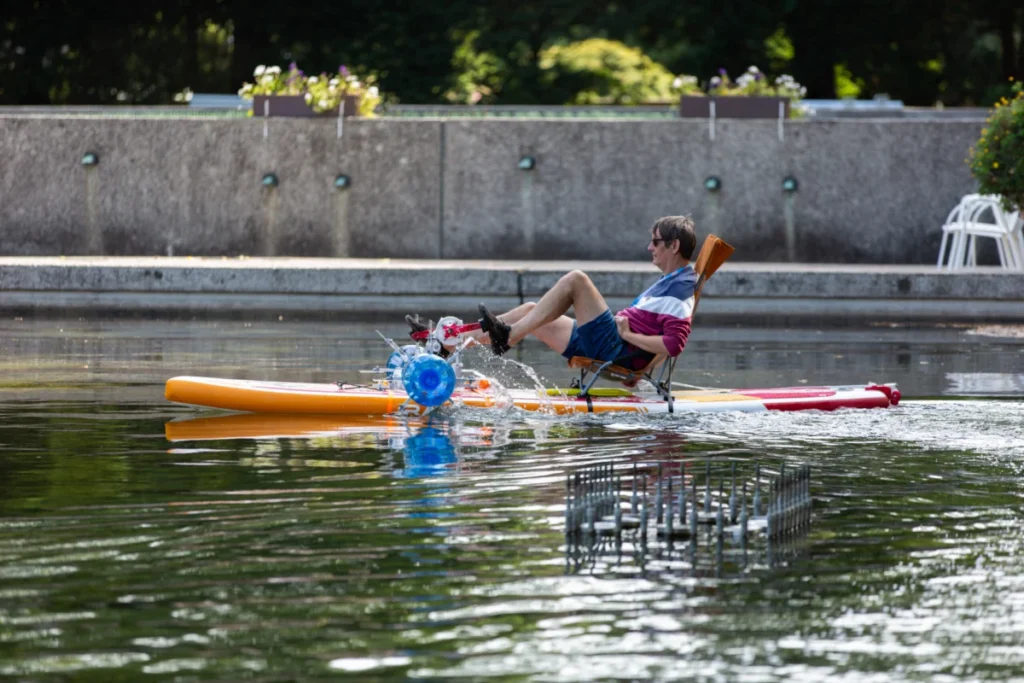
The Hannover Congress Centrum (HCC) is set to transform into a sprawling laboratory of innovation as it hosts the 13th edition of Maker Faire Hannover on August 15 and 16. As Germany’s premier festival for do-it-yourself (DIY) technology, the event serves as a critical junction where engineering, art, and science converge. Produced in a long-standing partnership with the Heise Group, the publisher behind the influential Make: and c’t magazines, the 2026 festival is expected to draw thousands of enthusiasts, ranging from professional engineers and educators to families and hobbyists. The event occupies a unique position in the European technology calendar, taking advantage of Hannover’s status as a global hub for industrial trade fairs while maintaining the grassroots, experimental spirit of the international Maker movement.
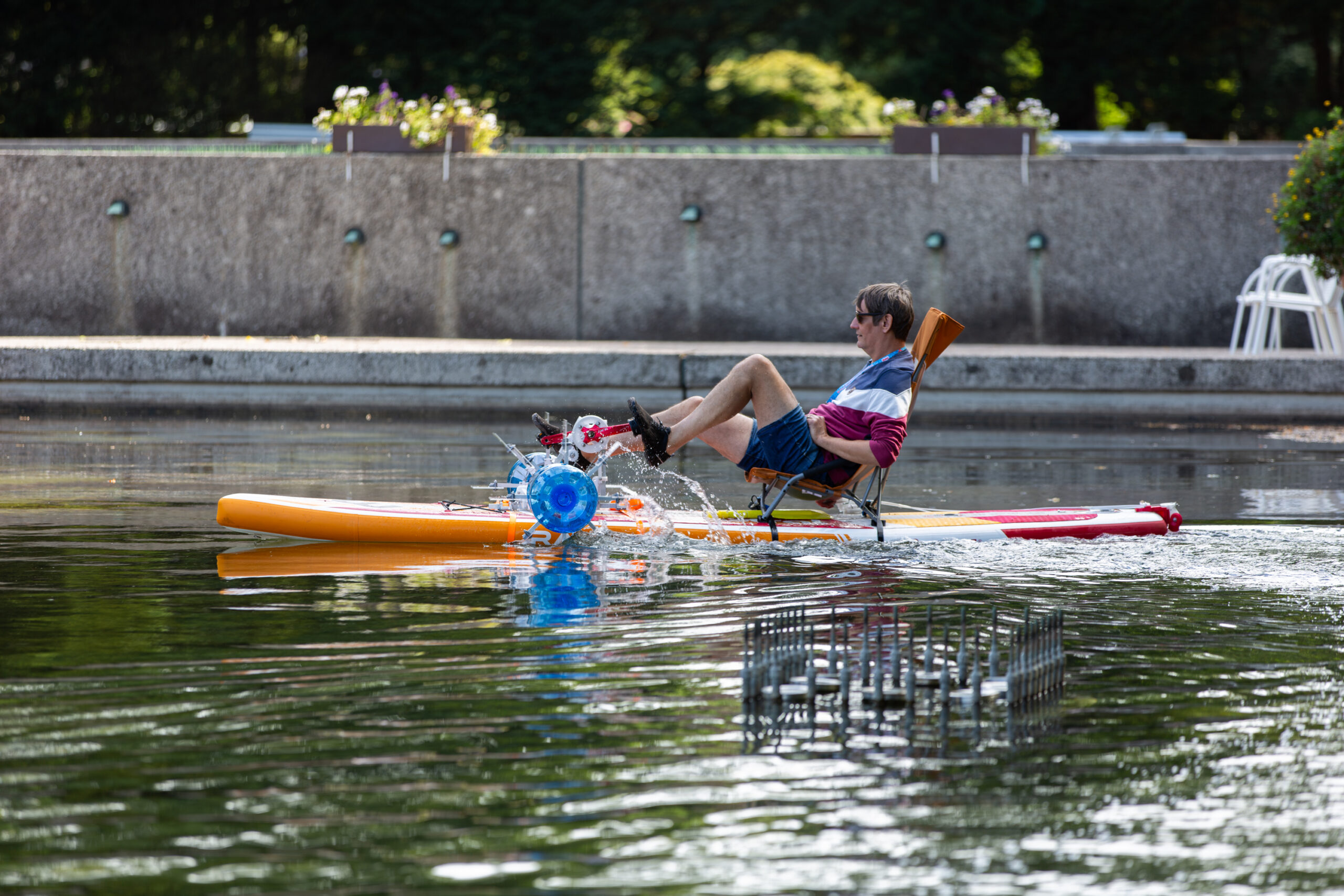
The 2026 iteration of Maker Faire Hannover features more than 200 exhibitors, with approximately one-third of the participants making their debut at the event. This influx of new talent ensures a continuous cycle of fresh ideas, ranging from advanced robotics and artificial intelligence applications to traditional woodworking and textile arts. According to Daniel Rohlfing, Head of Events and Sales at Maker Faire Deutschland, the event’s primary strength lies in its ability to turn abstract or unusual concepts into tangible, interactive experiences. By providing a platform where technology is not just observed but actively manipulated, the festival fosters a culture of curiosity and hands-on learning that is increasingly vital in a digital-first world.
A Confluence of Art and Engineering: Major Installations
At the heart of this year’s exhibition are several large-scale installations that blur the boundaries between mechanical engineering and performance art. One of the most anticipated projects is "BuzzBird," a mechanical avian structure designed by Berlin-based artist and product designer Eitan Rieger. Standing several meters tall with a five-meter wingspan, BuzzBird is more than a static sculpture; it is an interactive exploration of biomimicry. The installation utilizes sensors to detect human movement, translating those gestures into the flapping of its massive wings. This project exemplifies a core theme of the 2026 Faire: the symbiotic relationship between human input and machine response.

Complementing the aerial spectacle of BuzzBird is "FlowerPower," a monumental steel installation created by New Zealand artist Bibi Jordan. Constructed from recycled car hoods, this project highlights the "upcycling" movement within the Maker community. The sculpture uses advanced image processing and hydraulics to interact with the crowd; as more visitors gather around it, the steel petals gradually unfurl. The performance culminates in a dramatic display of fire, as flames are discharged from the center of the flower. This project serves as a case study in integrating diverse technologies—computer vision, fluid power, and pyrotechnics—into a singular, cohesive piece of public art.
The sensory experience of the Faire is further enhanced by "Voltronics," a high-voltage performance involving two 2.2-meter-high Tesla coils. These devices generate electrical discharges that manifest as lightning bolts stretching up to three meters in length. In a display of precise electronic control, the frequency of the electrical arcs is modulated to create music, a phenomenon known as a "singing Tesla coil." The performance is synchronized with laser animations, providing a visceral demonstration of electromagnetic physics and high-voltage engineering.

Chronology and Evolution of the Maker Movement in Germany
To understand the significance of the 13th Maker Faire Hannover, one must look at the evolution of the Maker movement within the German technological landscape. The first Maker Faire was held in San Mateo, California, in 2006, sparked by the launch of Make: magazine. The concept quickly spread globally, reaching Germany in the early 2010s. Hannover, with its deep industrial roots and history of hosting the world-renowned Hannover Messe, was a logical choice for the flagship German event.
Over the past decade, the event has transitioned from a niche gathering of electronics hobbyists to a significant cultural phenomenon. In its early years, the focus was primarily on amateur radio, basic robotics, and early-stage 3D printing. Today, the scope has expanded to include sophisticated AI-driven projects, sustainable "green-tech" solutions, and professional-grade prototyping. This evolution mirrors the broader "Fourth Industrial Revolution" (Industry 4.0), where the tools of production—such as CNC machines, laser cutters, and microcontrollers—have become accessible to individuals and small collectives.

Technical Deep Dives: From Microcontrollers to Marine Science
Beyond the large-scale spectacles, the Faire is a showcase for specific technical achievements and educational tools. A notable entry this year is the "C2H6O" cocktail machine. Built using an ESP32 microcontroller and 3D-printed components, the machine utilizes a custom mixing mechanism to handle up to 13 different ingredients with high precision. The creator is scheduled to deliver a technical lecture titled "From Cocktail to Prototype: Concept Development of a Cocktail Machine," which will detail the iterative design process from the initial concept to the third-generation prototype. This focus on documentation and knowledge sharing is a hallmark of the Maker community.
The 2026 event also places a significant emphasis on marine technology and environmental science, reflecting Germany’s commitment to ecological research. One project demonstrates how inexpensive piezoelectric speakers, commonly found in greeting cards, can be repurposed as hydrophones for underwater acoustic monitoring. By reversing the transducer’s function and pairing it with a simple transistor circuit, Makers can build functional scientific instruments for less than €10.

In a similar vein, a portable wave simulator created with LEGO bricks and 3D-printed components allows visitors to test coastal protection strategies. The simulator unleashes water waves onto different shoreline scenarios, demonstrating how various structures and vegetation types mitigate erosion. These projects highlight the "citizen science" aspect of the Maker movement, where low-cost, open-source hardware is used to tackle complex environmental challenges.
Supporting Data and the "Maker" Economy
The scale of Maker Faire Hannover reflects the robust health of the DIY and hardware startup sector in Europe. According to industry data, the global Maker market—encompassing 3D printing, microcontrollers like Arduino and Raspberry Pi, and associated tools—has seen a compound annual growth rate (CAGR) of over 15% in the last five years. In Germany, the movement is supported by a dense network of "FabLabs" and "Makerspaces," many of which are represented at the Hannover event.

The participation of the Heise Group is a critical factor in this success. As a media powerhouse, Heise provides the editorial framework that connects disparate hobbyists into a cohesive community. The "Make-Adventskalender," a collaborative project with kit-maker Franzis, is a prime example of this community engagement. The calendar, which will be showcased at the Faire, replaces traditional sweets with electronic components, culminating in a completed project by December 24. This initiative, along with the "Printember" event which offers daily 3D-printable files, demonstrates the year-round influence of the Maker ecosystem.
Broader Impact and Educational Implications
The implications of Maker Faire Hannover extend far beyond the two-day festival. Educators increasingly view the "Maker" approach as a vital component of STEM (Science, Technology, Engineering, and Mathematics) education. By engaging in "constructionism"—the theory that people learn most effectively when they are making tangible objects—students develop problem-solving skills that are difficult to cultivate through traditional rote learning.

Furthermore, the Faire serves as an informal incubator for the next generation of engineers and entrepreneurs. Many projects that debut at Maker Faire Hannover eventually transition into commercial products or lead to the formation of startups. The presence of professional-grade tools, such as the "Flipper to go" mobile VR pinball machine, illustrates how Makers are pushing the boundaries of consumer electronics. By combining physical gameplay with immersive virtual reality, these creators are exploring new frontiers in human-computer interaction.
The 2026 event also highlights the importance of international collaboration in the DIY space. With projects like Tetsuji Katsuda’s "Music Train," which visualizes musical compositions through the movement of model trains, the Faire brings global perspectives to the German audience. Katsuda’s work, which uses 12 rails corresponding to musical notes, allows users to "see" the frequency and structure of a song, bridging the gap between media art and data visualization.

Conclusion: The Future of Making
As Maker Faire Hannover concludes its 13th year, the event stands as a testament to the enduring human drive to create, experiment, and share. In an era where many technologies are "black boxes" that are difficult to repair or understand, the Maker movement advocates for transparency, modularity, and the democratization of innovation. The 2026 festival, with its blend of high-tech robotics and low-tech upcycling, proves that the most significant innovations often occur at the intersection of different disciplines.
By providing a venue where a giant bird can flap its wings alongside a wave simulator and a singing Tesla coil, Hannover continues to solidify its reputation as a center for both industrial excellence and creative exploration. For the visitors of all ages who walk through the doors of the HCC, the message is clear: the future is not something to be passively consumed, but something to be built, one prototype at a time.