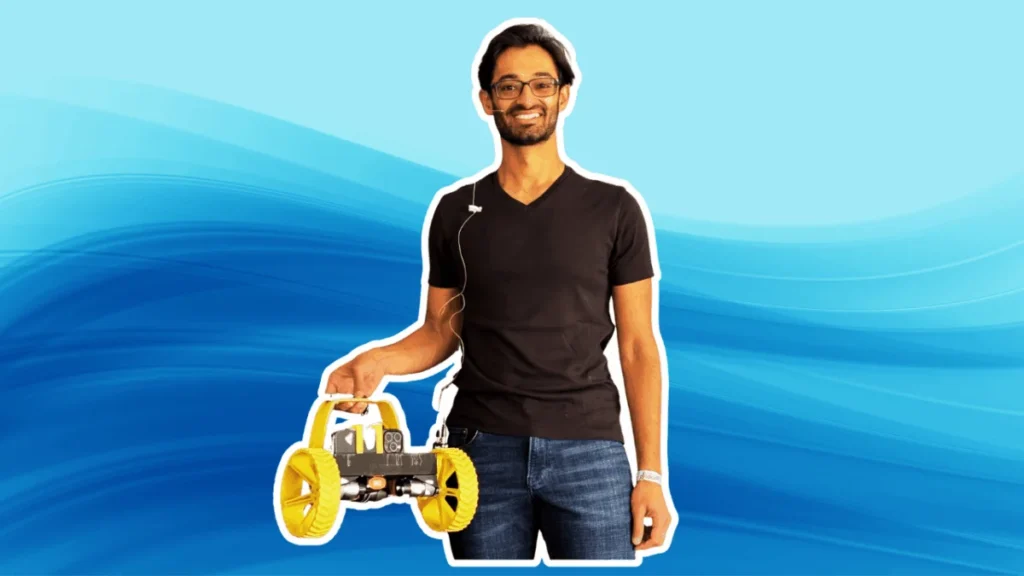
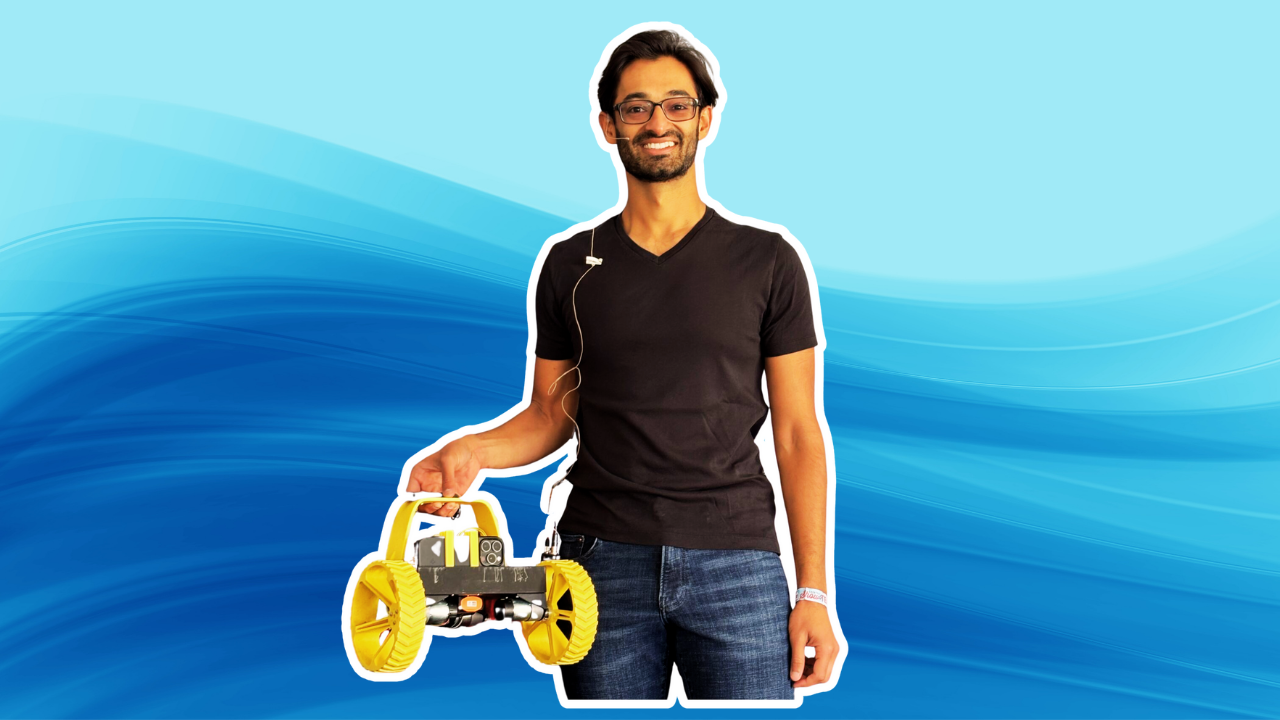
The annual Maker Faire Bay Area once again served as a crucible for innovation, showcasing the ingenuity of individuals who transform everyday objects and nascent ideas into tangible technological advancements. Among the myriad of projects, one particularly resonated with attendees: the autonomous outdoor robot developed by maker Survy. His presentation meticulously chronicled the evolution of a complex machine capable of navigating diverse terrains and identifying objects, all originating from the humble confines of a shoe box. This project stands as a testament to the principles of iterative design and the democratizing power of accessible technology, demonstrating that sophisticated robotics are not exclusive to well-funded laboratories but are within the grasp of any dedicated enthusiast.
The Genesis of Autonomy: A Vision Realized at Maker Faire
Survy’s project, unveiled at the esteemed Maker Faire Bay Area, epitomizes the spirit of the global Maker Movement. This movement, a cultural phenomenon, champions the philosophy of ‘learning by doing,’ encouraging individuals to create, invent, and hack. Maker Faire, often described as the "Greatest Show (and Tell) on Earth," provides a vital platform for these innovators to share their creations, exchange knowledge, and inspire future generations. Survy’s journey, from a rudimentary concept to a fully functional autonomous robot, perfectly encapsulated this ethos, drawing significant attention for its pragmatic approach and impressive final capabilities. His robot’s ability to successfully traverse a park environment and accurately identify objects underscores a significant achievement in amateur robotics, challenging preconceptions about the necessary resources for advanced technological development.
A Phased Development: The Iterative Path to Robotic Intelligence
The development of Survy’s autonomous robot was characterized by a methodical, iterative design process, a hallmark of effective engineering. This phased approach allowed for continuous testing, problem identification, and subsequent refinement, transforming initial failures into crucial learning opportunities.
Phase 1: Conceptualizing Mobility – The Shoe Box Prototype
The journey commenced with the most fundamental iteration: a shoe box affixed with basic motors and wheels. This initial prototype, deliberately simplistic, was not designed for advanced functionality but rather to validate the core concept of mobility. The objective was to establish whether a basic chassis could be propelled and steered, serving as a critical proof-of-concept for the entire project. This stage, often overlooked in the pursuit of immediate sophistication, is vital for identifying foundational challenges and ensuring the viability of subsequent development. The modest appearance of this early model belied its significance as the bedrock upon which all future enhancements would be built.
Phase 2: Environmental Awareness – Integrating Sensory Input
As the project progressed, the need for the robot to perceive and interact with its environment became evident. This led to the integration of various sensors. While specific sensor types were not exhaustively detailed, typical autonomous robots employ ultrasonic sensors for obstacle detection, infrared (IR) sensors for proximity sensing, and potentially encoders for precise wheel rotation measurement. These additions enabled the robot to gather real-time data about its surroundings, moving beyond mere locomotion to rudimentary environmental understanding. This phase marked a pivotal shift, transforming the mobile platform into a data-gathering entity, laying the groundwork for intelligent navigation.
Phase 3: The Robotic Brain – Harnessing the Raspberry Pi
To process the influx of sensory data and execute decision-making algorithms, a central processing unit was indispensable. Survy ingeniously integrated a Raspberry Pi into the robot’s architecture. The Raspberry Pi, a series of small single-board computers, has revolutionized DIY electronics and robotics due to its affordability, versatility, and robust computing power. Running a Linux-based operating system, it offers a powerful yet accessible platform for programming complex behaviors. In Survy’s robot, the Raspberry Pi served as the ‘brain,’ interpreting sensor inputs, coordinating motor movements, and managing the overall system logic, thereby enabling more sophisticated autonomous functions.
Phase 4: Advanced Perception and Navigation – Smartphone Integration
Perhaps the most innovative aspect of Survy’s design was the strategic utilization of a smartphone. Modern smartphones are equipped with an array of powerful components, including high-resolution cameras, advanced processors, and integrated GPS modules. By leveraging a smartphone, Survy bypassed the need for costly dedicated components. The smartphone’s camera facilitated computer vision tasks, enabling the robot to ‘see’ and identify objects in its path. Simultaneously, its GPS capabilities provided precise localization data, allowing the robot to navigate specific waypoints and track its position within the park environment. This integration exemplified resourcefulness, demonstrating how readily available consumer technology can be repurposed for advanced robotic applications.
Phase 5: Real-World Application – Outdoor Testing and Refinement
The culmination of these iterative steps involved extensive outdoor testing. Unlike controlled laboratory environments, outdoor settings present a multitude of unpredictable challenges: uneven terrain, varying light conditions, unexpected obstacles, and environmental factors like wind and moisture. Each test run, irrespective of its immediate outcome, provided invaluable data. Failures were meticulously analyzed, leading to targeted modifications, software patches, or hardware upgrades. This continuous loop of "test, fix, iterate" was fundamental to honing the robot’s performance, resilience, and reliability in real-world scenarios, ultimately leading to its successful autonomous operation in a park setting.
Technical Underpinnings: A Blend of Accessible Hardware and Software
The successful execution of Survy’s robot relies on a clever combination of widely available hardware and open-source software principles, underscoring the accessibility of modern robotics.
Hardware Architecture:
The robot’s physical structure, while starting as a shoe box, evolved into a more robust chassis capable of housing the electronics and enduring outdoor conditions. The propulsion system typically involves DC geared motors connected to motor drivers (e.g., H-bridge circuits) controlled by the Raspberry Pi’s General Purpose Input/Output (GPIO) pins.
The sensory array, crucial for environmental interaction, likely includes ultrasonic sensors for range finding, allowing the robot to detect obstacles and measure distances. Infrared (IR) sensors could be employed for closer proximity detection or line following. For maintaining orientation and balance, an Inertial Measurement Unit (IMU), comprising accelerometers and gyroscopes, is often incorporated, providing data on the robot’s tilt and rotational velocity.
The Raspberry Pi 4, a likely candidate, boasts a quad-core processor, sufficient RAM (2GB to 8GB), and integrated Wi-Fi and Bluetooth, making it an ideal choice for computational tasks and wireless communication. Power management is critical; a battery pack (e.g., LiPo or NiMH) with appropriate voltage regulators would supply consistent power to the motors, Raspberry Pi, and sensors.
The smartphone acts as a powerful peripheral, leveraging its advanced camera for visual data capture (e.g., 12-megapixel resolution or higher), its built-in GPS for location tracking with accuracies down to a few meters, and its internal processing power to offload some computer vision tasks or relay data wirelessly.

Software and Algorithmic Framework:
The software driving the robot would predominantly be written in Python, a popular language in robotics due to its readability, extensive libraries, and ease of integration with Raspberry Pi.
For navigation, algorithms would include basic obstacle avoidance (e.g., "bug algorithms" or potential field methods), path planning (e.g., A* search for known environments or reactive methods for unknown ones), and waypoint navigation using GPS coordinates.
Computer vision is handled via libraries like OpenCV (Open Source Computer Vision Library), which can perform tasks such as object detection (e.g., identifying park benches, trees, or specific markers), object tracking, and feature extraction from the smartphone’s camera feed. Machine learning models, potentially lightweight ones deployed on the smartphone or Raspberry Pi, could enhance object recognition capabilities.
Communication between the Raspberry Pi and the smartphone could be established via Wi-Fi or Bluetooth, allowing for real-time data exchange, command issuance, and status monitoring.
The Broader Context: Maker Faire and the Democratization of Technology
Maker Faire Bay Area, since its inception in 2006, has become a pivotal event for the global maker community. It serves not only as an exhibition but also as a vibrant forum for collaboration and learning. The fair typically attracts tens of thousands of attendees, ranging from seasoned engineers to curious schoolchildren, all united by a passion for creation. Survy’s presentation aligns perfectly with Maker Faire’s mission to inspire innovation, foster technical literacy, and demonstrate the practical applications of STEM (Science, Technology, Engineering, and Mathematics) principles.
Inferred reactions from the community would invariably highlight inspiration. Many attendees would likely express renewed enthusiasm for their own projects, encouraged by the tangible results achieved with accessible tools. Organizers would likely laud Survy’s project as an exemplary display of iterative design and problem-solving, perfectly embodying the "start simple, iterate often" mantra. Survy himself, through his detailed sharing, implicitly advocates for perseverance and the embrace of challenges as integral components of the creative process.
Impact and Implications: Beyond the Park
Survy’s journey from a shoe box to an autonomous outdoor robot carries significant implications, extending beyond the immediate success of his project.
Democratization of Robotics: This project powerfully illustrates that advanced robotics is no longer the exclusive domain of large corporations or academic institutions. With affordable microcontrollers like the Raspberry Pi, open-source software, and repurposed consumer electronics, individuals can now build sophisticated machines. This democratization lowers the barrier to entry, fostering innovation from a wider talent pool.

Educational Catalyst: Survy’s work serves as an invaluable educational tool. It provides a relatable, step-by-step example of engineering design, problem-solving, and systems integration. Educators can leverage such projects to inspire students in STEM fields, demonstrating that complex challenges can be tackled with creativity and persistence, even with limited resources. It moves abstract concepts into tangible, exciting applications.
Sustainable Prototyping: The initial use of a shoe box and the subsequent integration of a smartphone exemplify a resourceful and potentially more sustainable approach to prototyping. Instead of manufacturing specialized components, readily available or repurposed items are utilized, reducing waste and cost. This approach aligns with a growing emphasis on circular economy principles in design and engineering.
Future Applications and Adaptability: While Survy’s robot navigated a park, the underlying principles and modular design offer broad adaptability. Such low-cost autonomous platforms could find applications in diverse areas:
- Environmental Monitoring: Collecting data on air quality, temperature, or plant health in remote or hazardous areas.
- Logistics and Delivery: Small-scale, localized delivery services within campuses or controlled environments.
- Security and Surveillance: Patrols of private properties or monitoring specific zones.
- Agriculture: Automated inspection of crops, localized pest detection, or precise irrigation.
- Home Automation: Assisting with tasks in larger homes or outdoor spaces.
The core lesson from Survy’s endeavor is the enduring power of iterative design. The journey, characterized by continuous cycles of testing, analysis, and refinement, is fundamental to transforming nascent ideas into robust, functional solutions. Each "failure" was not an endpoint but a directive for improvement, a crucial data point guiding the next iteration. This methodical approach is a cornerstone of effective engineering and applicable across all fields of innovation.
In conclusion, Survy’s autonomous robot, a remarkable evolution from a humble shoe box, stands as a beacon of ingenuity and a testament to the maker spirit. His presentation at Maker Faire Bay Area not only showcased a fascinating piece of technology but also delivered a profound message: that the most extraordinary innovations often begin with the simplest steps, driven by curiosity, perseverance, and a willingness to embrace the iterative process of creation. His project unequivocally demonstrates that the future of robotics is increasingly open to all who dare to imagine and, crucially, to begin.