Some of the most important reactions in nature depend on positively and negatively charged particles moving in a coordinated way. These reactions are essential to processes such as photosynthesis, catalysis, and biological energy conversion, but they happen so quickly that they are extremely difficult to observe. A pioneering team, spearheaded by the Department of Energy’s Pacific Northwest National Laboratory (PNNL) and collaborating with researchers at SLAC National Accelerator Laboratory and several universities, has achieved a significant scientific milestone by capturing unprecedented snapshots of these intricate events. These fleeting molecular ballets, known as proton-coupled electron transfer (PCET) reactions, were observed moments after being triggered by light striking a specific molecule, offering a granular view previously unattainable. The groundbreaking findings, recently published in the esteemed journal Nature Communications, are poised to profoundly deepen scientists’ understanding of these fundamental reactions, with far-reaching implications that could eventually contribute to the development of improved flow batteries, highly efficient fuel cells, and more sustainable catalysts.
Understanding Nature’s Powerhouses: The Enigma of PCET
At the very core of this landmark study lies the synchronized, coordinated motion of positively charged protons and negatively charged electrons. This highly orchestrated type of energy transfer stands as one of the most efficient known mechanisms in the natural world. Its pervasive influence is evident across biological and chemical landscapes: plants, for instance, ingeniously leverage related PCET processes during photosynthesis to capture energy from sunlight and convert it into stored chemical energy, powering nearly all life on Earth. Similarly, within animal cells, PCET reactions are integral to cellular respiration, facilitating the efficient conversion of food into usable biological energy, primarily in the form of adenosine triphosphate (ATP). Beyond biology, PCET is a cornerstone in numerous industrial and synthetic chemical processes, from the development of pharmaceuticals to the production of fuels.
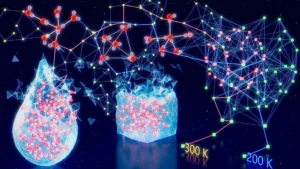
When electrons and protons move in such a tightly coordinated fashion, molecules gain a remarkable advantage: they can bypass energetically unfavorable intermediate steps that would otherwise demand significantly more energy input. This direct and streamlined pathway makes a reaction not only substantially faster but also dramatically more efficient. The research team specifically investigated the intricate interplay between changes in a molecule’s electronic structure, the timely arrival of a proton, and the dynamic shifts occurring within the surrounding water environment—all interconnected elements during this complex process. For decades, scientists have grappled with the elusive nature of PCET, recognizing its importance but struggling to observe its ultrafast kinetics and atomistic details directly. The challenges stemmed from the incredibly short timescales involved—electrons move on femtosecond (10^-15 seconds) timescales, and protons nearly as quickly—and the inherent difficulty in simultaneously tracking the subtle reorganizations of surrounding solvent molecules, such as water, which play a critical but often hidden role. Previous experimental approaches could typically only capture isolated aspects of this multifaceted process, leaving a fragmented and incomplete picture.
A Collaborative Leap: The PNNL-SLAC Initiative
The recent breakthrough is a testament to the power of interdisciplinary collaboration and the strategic utilization of cutting-edge scientific infrastructure. The research was led by experts from PNNL, a national laboratory renowned for its contributions to chemical and materials sciences, and involved crucial partnerships with SLAC National Accelerator Laboratory, home to world-leading X-ray light sources, as well as several distinguished academic institutions. This concerted effort brought together diverse expertise in experimental chemical physics, theoretical chemistry, and advanced computational modeling, all essential for tackling a problem of this complexity.
PNNL experimental chemical physicist Elisa Biasin, former PNNL scientist Abdullah Kahraman, and PNNL theorists Niranjan (Niri) Govind and Amity Andersen formed the core of the PNNL team, working in close concert with their collaborators to meticulously study a light-driven PCET reaction. The project benefited immensely from the advanced capabilities available at SLAC’s Linac Coherent Light Source (LCLS), a premier X-ray free-electron laser facility capable of generating ultra-bright, ultra-short X-ray pulses—a critical prerequisite for observing phenomena on femtosecond timescales. Additional support and resources were provided by the Environmental Molecular Sciences Laboratory (EMSL), another DOE Office of Science user facility located at PNNL, which contributed to the foundational computational aspects of the research.
Peering into the Ultrafast: Methodology and Advanced Techniques
The unprecedented detail achieved in this study was made possible by an innovative combination of advanced experimental techniques and sophisticated theoretical calculations. For the first time, researchers managed to combine ultrafast X-ray spectroscopy with X-ray scattering and state-of-the-art quantum chemistry calculations, along with molecular dynamics simulations, to provide an unusually detailed and holistic view of the PCET process.
-
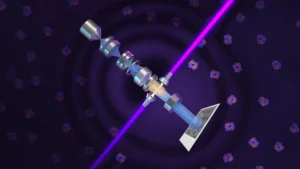
The Power of X-ray Probes: To track the dynamic evolution during the reaction, the team deployed two complementary X-ray methods at LCLS.
- Element-specific X-ray absorption spectroscopy, utilizing the chemRIXS instrument, allowed scientists to precisely observe how electrons moved between different molecular sites. This technique provided crucial insights into the evolving electronic structure of the molecule, essentially acting as a "fingerprint" of electron redistribution.
- Simultaneously, time-resolved X-ray scattering, performed with the X-ray Correlation Spectroscopy (XCS) instrument, tracked the subtle rearrangements of atoms, including the critical motion and reorganization of solvent molecules—in this case, water—surrounding the reacting species. This offered structural sensitivity, showing how the molecular architecture and its environment responded in real-time.
-
The Indispensable Role of Computational Chemistry: The sheer volume and complexity of the X-ray data necessitated robust theoretical modeling for accurate interpretation. PNNL’s Niranjan Govind contributed time-dependent density functional theory (TD-DFT) calculations, which are essential for understanding how electronic structures evolve over time. Amity Andersen provided molecular dynamics simulations, which model the movement of atoms and molecules, particularly crucial for capturing the dynamic reorganization of the water environment. These calculations were not merely supplementary; they were absolutely critical for interpreting the intricate X-ray signals and translating them into a detailed, atomic-level picture of the underlying behavior of the electrons and protons. First author Abdullah Kahraman emphasized this synergy, stating, "Understanding the photochemistry of this complex required us to push the limits of our data analysis. By combining X-ray absorption spectroscopy with precise theoretical modeling, we gained an unprecedented look into the real-time electronic changes driving these reactions." Govind further highlighted the theoretical aspect, noting, "While this was an experiment-driven discovery, our theoretical work provided the molecular-level interpretation needed to translate the X-ray measurements into a detailed picture of the underlying coordination between proton, electron and solvent motion."
-
Selecting the Ideal Molecular System: A critical step in the experimental design was the selection of a suitable model system. Biasin and her colleagues chose a well-studied ruthenium-based molecule. This particular complex absorbs light and, in acidic conditions, readily captures a proton from its surroundings. Christopher Larsen, a co-investigator and senior lecturer at the University of Auckland, New Zealand, explained the rationale: "We identified the metal complex used in this study because it does not undergo additional electronic and structural rearrangements that complicate interpretation of X-ray signals, allowing us to isolate signals associated with the electron, proton and solvent motion." This strategic choice allowed the researchers to isolate and clearly observe the specific PCET events without interference from extraneous molecular dynamics. Prior to the LCLS experiments, time-resolved characterization methods at the University of Geneva were employed to identify the optimal experimental conditions and timescales for the demanding X-ray measurements.
Unveiling the Coordinated Dance: Key Findings
The culmination of this meticulous research was the direct observation of the coordinated motion of electrons, protons, and the surrounding solvent environment. For the first time with such high structural sensitivity, the researchers were able to definitively show how a molecule’s electronic structure changes at specific locations as it gains a proton, while the surrounding water environment reorganizes in a synchronized fashion at the exact same time. This simultaneous observation of local electronic changes and broader structural rearrangements in the solvent represents a monumental leap forward.
"We have captured for the first time how electronic changes associated with proton transfer are coupled to reorganization of the surrounding solvent," said Elisa Biasin. "This gives us a new way to understand how molecules and their environments evolve together during fundamental chemical transformations." This finding directly addresses a long-standing challenge in physical chemistry: elucidating the precise mechanisms by which molecular structure, electronic configuration, and solvent dynamics collectively govern chemical reactivity. The results unequivocally demonstrate that local changes in electronic structure are not isolated events but occur in concert with a broader, dynamic rearrangement of the surrounding water network as the molecule accepts a proton.
From Fundamental Insight to Practical Impact: Implications for Energy and Catalysis
The implications of this breakthrough extend far beyond fundamental scientific understanding. By providing a detailed, real-time view of PCET reactions, this research opens new avenues for designing more efficient and sustainable technologies crucial for the global energy transition and environmental protection.
-
Enhancing Energy Storage and Conversion: The ability to examine these connected changes at the molecular level could eventually revolutionize the design of various energy technologies. For instance, flow batteries, which are gaining traction for large-scale energy storage in grid applications, often rely on PCET processes. A deeper understanding could lead to electrolytes with faster reaction kinetics, higher energy density, and extended cycle life, making them more competitive and cost-effective. Similarly, fuel cells, which convert chemical energy into electrical energy with high efficiency and minimal emissions, often employ PCET in their electrode reactions. Optimizing these processes could yield more durable and powerful fuel cells for transportation and stationary power generation, reducing reliance on fossil fuels.
-
Advancing Catalytic Processes: Catalysis is the backbone of the chemical industry, responsible for producing everything from fertilizers to plastics. Many industrially important catalytic reactions, including those for converting carbon dioxide into valuable chemicals or generating hydrogen fuel from water, involve PCET steps. With this new insight, researchers can potentially design novel catalysts that are more selective, operate at lower temperatures and pressures, and require less energy input, leading to more sustainable and environmentally friendly chemical manufacturing processes. The insights gained could also accelerate the development of bio-inspired catalysts that mimic the unparalleled efficiency of natural enzymes.
Addressing the Unanswered: Future Research Horizons
While this study marks a significant stride, many questions about PCET reactions remain, particularly concerning the precise timing and order in which electrons and protons move in other, more complex systems. Biasin articulated these enduring scientific inquiries: "Are they happening together or not? At which molecular site? And how is the water network facilitating the proton hop? These are some of the possible open questions. To answer them, you need ultra-fast time resolution, chemical and structural sensitivity, and alignment with theory. We have made a step forward to shed light on these questions."
The new methodology established by this team provides a robust framework for investigating these complex questions more directly. Although the experiment could not directly observe the proton itself—X-ray scattering primarily detects electron-rich atoms—the strong agreement between the experimental data and theoretical calculations provides compelling indirect evidence for proton movement and its coupled effects. "X-ray scattering mostly sees atoms that are rich with electrons, and so the proton is not seen directly," Biasin explained. "But we observe the local reorganization of the electronic structure, together with the global reorganization of the water networks, and we can draw conclusions based on the agreement between data and calculations."
This combined X-ray approach, even with this limitation, provides a powerful template that researchers can now apply to PCET reactions in more complicated chemical and biological systems. Roberto Alonso Mori, a senior scientist at SLAC and a coauthor on the study, emphasized the broader potential: "Many of the most important chemical reactions involve electrons, protons, and their surrounding environment moving together on ultrafast timescales. By combining complementary X-ray techniques at LCLS, this work provides a uniquely complete view of these coupled processes, opening new opportunities to understand and ultimately control the chemistry that underpins energy conversion and catalysis." Looking ahead, SLAC staff scientist David Hoffman added an optimistic note regarding future capabilities: "This is an important first step in combining X-ray scattering and spectroscopy to study these complicated processes in a model system. With the better signal-to-noise offered by the LCLS-II upgrade, we can use these methods to solve real problems in catalysis and energy harvesting." The LCLS-II upgrade, which significantly enhances the X-ray laser’s repetition rate and brightness, promises to unlock even greater detail and allow for the study of more dilute and complex samples, pushing the boundaries of what is observable.
A Testament to Scientific Collaboration: Funding and Support
This pioneering research was made possible through substantial support from the U.S. Department of Energy (DOE) Office of Science, specifically through the Basic Energy Sciences, Chemical Sciences, Geosciences, and Biosciences Division. Key funding mechanisms included the Condensed Phase and Interfacial Molecular Science (CPIMS) program and the Atomic, Molecular, and Optical Sciences (AMOS) program at PNNL. The utilization of the Linac Coherent Light Source at SLAC National Accelerator Laboratory, a critical component of the experimental setup, is also supported by the DOE Office of Science. This robust governmental backing underscores the strategic importance of fundamental research in driving innovation and addressing global challenges in energy and environmental sustainability.