As the global climate continues to warm, the secondary effects of rising sea levels are beginning to manifest in ways that extend far beyond the visible erosion of coastlines. One of the most significant yet least understood consequences is the intrusion of saltwater into previously freshwater or brackish environments. In a comprehensive new study published in Nature Microbiology, researchers from the Massachusetts Institute of Technology (MIT) have detailed how this increasing salinity is fundamentally altering the microbial ecosystems that underpin the health of rivers, estuaries, and coastal deltas.
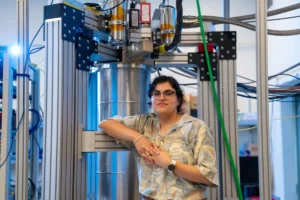
The study, led by MIT postdoc Jana Huisman and senior author Jeff Gore, a professor of physics at MIT, reveals a complex biological trade-off. While microbial communities demonstrate a surprising ability to maintain their overall growth rate and biomass production when exposed to higher salt concentrations, they do so at a steep cost to their internal diversity. This loss of microbial variety could have long-term repercussions for the resilience of these ecosystems, potentially making them more vulnerable to subsequent environmental shocks.
The Invisible Engine of Coastal Ecosystems
Microbial communities are often described as the "invisible engines" of the planet. In aquatic environments like the Charles River or the Chesapeake Bay, these microscopic organisms—including bacteria and archaea—perform essential ecological functions. They are the primary drivers of the carbon cycle, breaking down organic matter such as dead algae and leaf litter, and recycling nutrients back into the food web.
When the salinity of these environments changes, the physiological stress on these organisms is immense. Microbes adapted to freshwater typically lack the specialized cellular machinery required to survive in high-sodium environments. Conversely, marine microbes possess reinforced cell walls designed to withstand osmotic pressure and sophisticated membrane transporters that actively pump sodium ions out of the cell to maintain internal balance.
As sea levels rise due to the melting of polar ice and the thermal expansion of seawater, oceanic water is increasingly pushed into inland bodies of water. This process, known as saltwater intrusion, transforms the chemical makeup of these habitats. The MIT study aimed to determine whether these microbial "engines" would stall under this pressure or if they would adapt—and what that adaptation would look like for the broader environment.
Experimental Design: From the Charles River to the Laboratory
To understand the impact of salinity on these complex communities, the research team collected samples from three distinct locations in Massachusetts, each representing a different baseline salinity level. These included the Charles River near the MIT Sailing Pavilion (approximately 4 grams of salt per liter), Boston Harbor (30 g/L), and the coastline of Nahant (35 g/L). For context, typical freshwater sources contain less than 1 g/L, while the open ocean averages around 35 g/L.
Each of these samples contained hundreds of different microbial species, creating a miniature representation of a natural ecosystem. In the laboratory, the researchers subjected these communities to three different salinity environments: 16 g/L, 31 g/L, and a hypersaline 46 g/L.
Over a period of two weeks, the team monitored the growth rates and the composition of these populations. The results provided a dual narrative. On one hand, the total biomass produced by the communities remained remarkably stable across different salinity levels. On the other hand, the census of species within those communities changed drastically.
"At higher salinity, you lose diversity, which is ultimately not good for an ecosystem," explained Jana Huisman. "But what we were surprised at is that in the meantime, even though diversity decreases, the growth of the community and the production of biomass is not impacted that much."
The Rise of the Fast-Growers
The study found that as salt levels increased, the microbial communities underwent a "filtering" process. Species that were slow to adapt or lacked the genetic tools to handle osmotic stress were quickly outcompeted. In their place, a small number of faster-growing strains took over the community.
In ecological terms, the system shifted from a diverse group of specialists to a dominated group of generalist "r-strategists"—organisms that prioritize rapid reproduction and colonization over long-term stability. While these fast-growers were able to maintain the overall "productivity" of the sample (in terms of biomass), the loss of the slower-growing, more specialized species meant that many niche ecological roles might no longer be filled.
This finding contrasts with previous research from Professor Jeff Gore’s lab, which showed that rising seawater temperatures—another symptom of climate change—actually tend to favor slower-growing bacteria. This suggests that the twin pressures of warming and salinization may pull microbial communities in opposite directions, creating a highly unpredictable future for coastal microbiology.
Validating Laboratory Findings with Global Genomic Data
A critical component of the MIT study was determining whether the trends observed in the lab held true in the "wild." To do this, the researchers analyzed massive amounts of publicly available genomic data from various natural aquatic ecosystems, including the Gulf of Mexico, the Baltic Sea, and the Chesapeake Bay.
The team utilized a specific genetic marker known as the 16S rRNA gene copy number. In the world of microbiology, the number of copies of this gene a species possesses is a reliable proxy for its maximum potential growth rate. Species with high copy numbers are built for speed; those with low copy numbers are typically slower, more efficient growers.
The analysis of natural data confirmed the laboratory results: in environments across the globe where salinity is higher, the microbial communities are consistently dominated by species with higher 16S rRNA gene copy numbers.
"When we first saw that, it was very exciting," Huisman noted. "It’s highly suggestive that what we found in the lab might also be true in natural environments." This correlation provides a powerful tool for scientists to predict how ecosystems will change as saltwater intrusion continues to advance.
Broader Implications for Resilience and Pathogen Risk
While the maintenance of biomass growth might seem like a positive sign of ecosystem robustness, ecologists warn that the loss of diversity is a "hidden" vulnerability. A diverse ecosystem is like a diversified investment portfolio; if one "stock" (or species) fails due to a specific stressor, others are available to fill the gap.
By narrowing the diversity of microbial communities to only a few fast-growing strains, the ecosystem loses its "functional redundancy." If these surviving strains are then hit by a different stressor—such as a chemical pollutant, a heatwave, or a viral outbreak—there may be no other species left to sustain the community’s essential functions, such as decomposition or nutrient cycling.
Furthermore, there is the concern of what exactly these fast-growing strains are. The MIT study did not specifically categorize the functions of every strain that rose to dominance, but the researchers noted that many opportunistic pathogens are characterized by rapid growth rates. If rising salinity favors pathogenic bacteria over beneficial ones, it could have significant implications for the health of fish populations, shellfisheries, and even humans who interact with these waters.
Saltwater Intrusion: A Global Chronology of Change
The MIT study arrives at a time when saltwater intrusion is becoming an urgent crisis for coastal planners. In the Netherlands, where Huisman is from, the management of the "salt line" is a matter of national security. As sea levels rise, the pressure of the North Sea pushes saltwater further into the country’s intricate canal and river systems, threatening both agriculture and drinking water supplies.
In the United States, the East Coast and the Gulf Coast are experiencing similar phenomena. In Louisiana, the retreat of the Mississippi River’s freshwater flow has allowed a "salt wedge" to move upriver, threatening the drinking water of New Orleans. In the Chesapeake Bay, rising salinity levels are altering the habitat for blue crabs and oysters, which depend on specific salinity ranges to thrive.
The chronology of these changes is accelerating. While saltwater intrusion was once considered a threat primarily during extreme storm surges or droughts, it is now becoming a permanent feature of the landscape due to the steady rise of the baseline sea level.
Conclusion and Future Directions
The research conducted by Huisman, Gore, and Dal Bello provides a vital framework for understanding the microbial dimensions of climate change. It highlights a paradox of nature: that an ecosystem can appear healthy and productive on the surface while its internal structural integrity is being hollowed out.
The funding for this research, provided by a Human Frontier Science Program Fellowship and a Schmidt Science Polymath Award, underscores the interdisciplinary nature of the work. By combining physics, ecology, and genomics, the team has shed light on a transition that is largely invisible to the naked eye but fundamental to the planet’s health.
Future research will likely focus on the specific identities and functions of the fast-growing microbes that survive the "salt filter." Understanding whether these survivors are helpful neighbors or harmful invaders will be the next step in predicting the long-term viability of our world’s estuaries and rivers. As the salt moves in, the microbial world is changing—and with it, the very foundations of coastal life.