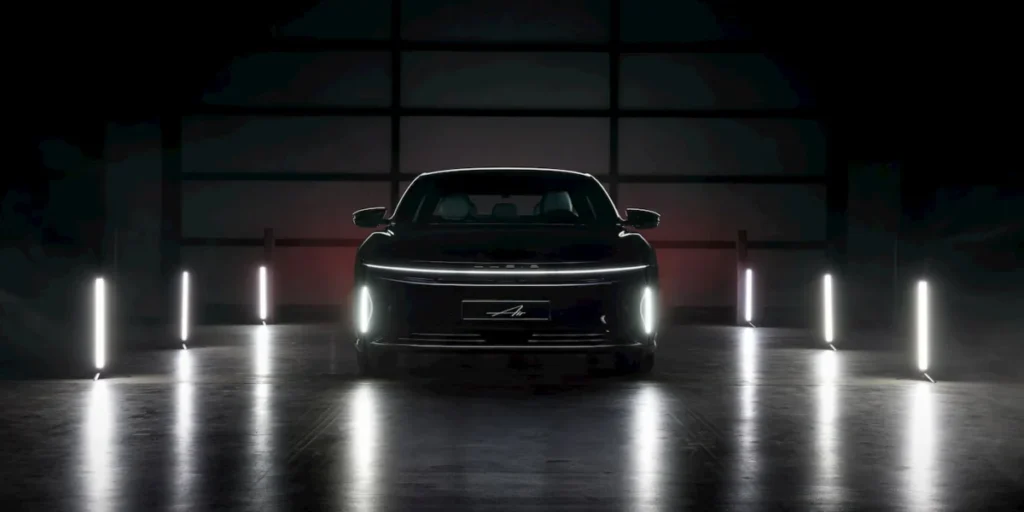
A significant recall affecting over 27,000 Lucid Air vehicles has been issued due to a potential fire risk, prompting warnings for owners to park their cars outdoors. However, the underlying issue is not as dire as the "fire risk" label might suggest. The problem stems from an electronic fuse controlling exterior LED lights that, in specific circumstances, could lead to overheating. Crucially, Lucid states that this issue has already been resolved through a software update distributed in July, and the majority of affected vehicles have already received the fix.
This situation highlights a recurring theme in the electric vehicle (EV) industry, where any mention of "fire" in relation to EVs often garners disproportionate media attention, overshadowing the significantly higher rate of fires involving internal combustion engine (ICE) vehicles. While Lucid’s recall, labeled "Fire Risk Warning," encompasses 27,185 Lucid Air vehicles from model years 2022-2026, and includes a recommendation to park outside until the fix is applied, a closer examination of the technical details reveals a more nuanced situation.
The core of the problem lies within the software governing the vehicle’s low-voltage exterior lighting system, specifically the LED components. Lucid identified that this software did not adequately prevent overcurrent conditions. In certain scenarios, an excessive electrical current could flow to the LEDs, potentially causing them to overheat. This overheating could, in turn, lead to smoldering, smoke, or in the most severe, albeit rare, instances, a fire.
Unlike traditional automotive fuses, which are physical components that melt to break a circuit, Lucid vehicles utilize an "eFuse." This electronic fuse is software-controlled, allowing for remote management and updates. This technological capability is precisely what enabled Lucid to address the issue swiftly through an over-the-air (OTA) software update. Many of the affected vehicles had already received this crucial update before the official recall notice was even filed with the National Highway Traffic Safety Administration (NHTSA).

The Swift Resolution: A July Software Patch
The corrective measure was implemented via the 2.10.0 software update, which Lucid rolled out in July. This update modifies the software’s behavior in several key ways. Firstly, it reduces the amperage directed to the exterior lighting circuits, thereby lowering the risk of overcurrent. Secondly, and perhaps more importantly, if the software detects a fault within these circuits, it will no longer repeatedly attempt to re-energize the lights. This persistent re-energization was a contributing factor to the overheating issue in the original software configuration.
As of August 20th, 2023, Lucid reported that 20,719 of the 27,185 affected vehicles had already successfully received the software update. This represents approximately 76% of the recalled population, indicating a proactive response from many owners. However, 6,466 vehicles still required the update at that time.
Over the past three years, Lucid has documented three fire incidents that are believed to be connected to this specific issue, all involving the vehicle’s front lighting system. The most recent of these fire events occurred in March 2023. In addition to these fires, there have been four reported instances of smoke related to the same problem within the last year. Furthermore, Lucid has received 33 warranty reports that suggest potential wiring harness damage, which may be linked to the overcurrent condition.
Understanding the Recall: Software Update vs. Parking Outdoors
While Lucid’s recall documentation advises owners to park their vehicles outdoors until the fix is applied, this is a standard precautionary measure often included in recall notices as a baseline safety recommendation. The actual and most effective remedy for the vast majority of owners is the readily available software update. For owners who have the capability to connect their vehicle to Wi-Fi or cellular service, applying the software update is a far more practical and less inconvenient solution than adhering to the outdoor parking directive.
Owners who have not yet applied the software update will receive a formal recall notice by mail, expected to arrive around October. This provides ample time for owners to schedule the update or ensure their vehicle receives it wirelessly. Given the ease of the software fix, Lucid encourages owners to proactively update their vehicle’s software at their earliest convenience.

Broader Implications: The Power and Perils of Software-Defined Vehicles
This situation presents a dual perspective on the evolution of vehicles into "software-defined" entities. On one hand, it showcases the remarkable ability of manufacturers to rectify hardware-related issues through software patches. This capability, also observed with Tesla and other EV manufacturers, allows for rapid problem-solving without the need for physical recalls or component replacements in many cases. It’s a testament to the flexibility and adaptability of modern automotive technology.
On the other hand, it raises questions about the rigor of pre-release testing and quality assurance processes. The fact that a potential fire risk, even one mitigated by an eFuse, could make its way into production vehicles suggests that some errors, particularly those related to software control, might be addressed post-deployment. This contrasts with the traditional automotive industry’s approach, where physical component failures often necessitated extensive factory recalls or part replacements.
However, it is crucial to contextualize these concerns. The automotive industry, regardless of powertrain type, has a history of issuing recalls for issues with potentially serious consequences that sometimes have relatively simple fixes. For instance, recalls related to ignition switches or airbags in gasoline-powered vehicles have, in the past, involved significant safety concerns that were eventually addressed. The key differentiator in the EV space is often the speed and method of the fix.
The Lucid Air recall serves as a reminder that while EVs offer significant technological advancements, they are not immune to manufacturing and software development challenges. The industry is navigating a new paradigm where the lines between hardware and software are increasingly blurred. The ability to resolve issues remotely through software is a powerful tool, but it also necessitates robust oversight and validation to ensure the safety and reliability of vehicles before they reach consumers.
Contextualizing the "Fire Risk" Narrative
The media’s tendency to sensationalize EV fire incidents, while often downplaying the far more prevalent fires in gasoline-powered vehicles, warrants further discussion. Data from the National Fire Protection Association (NFPA) consistently shows that gasoline vehicles are involved in fires at a substantially higher rate than electric vehicles. For example, reports have indicated that for every 1,000 gasoline vehicles, approximately 1,500 fires occur annually in the U.S. In contrast, EV fires, while concerning when they do happen, are statistically much rarer.

This disparity in reporting can create a skewed perception of EV safety among the public. While every vehicle fire is a serious event and warrants thorough investigation and resolution, the narrative surrounding EV fires often omits the broader context of vehicle fire statistics. Lucid’s recall, despite its "fire risk" designation, ultimately highlights the efficacy of modern software-based solutions in addressing potential issues before they escalate into widespread problems.
The recall process for Lucid Air vehicles, while appearing alarming at first glance, ultimately underscores the advanced capabilities of modern electric vehicles and the proactive measures Lucid is taking to ensure customer safety. The swift resolution through a software update, coupled with the company’s transparency regarding the technical details, provides reassurance to owners. As the automotive landscape continues to evolve, the ability to remotely diagnose and fix complex issues through software will likely become an even more integral aspect of vehicle ownership, offering both unprecedented convenience and new challenges in quality assurance.