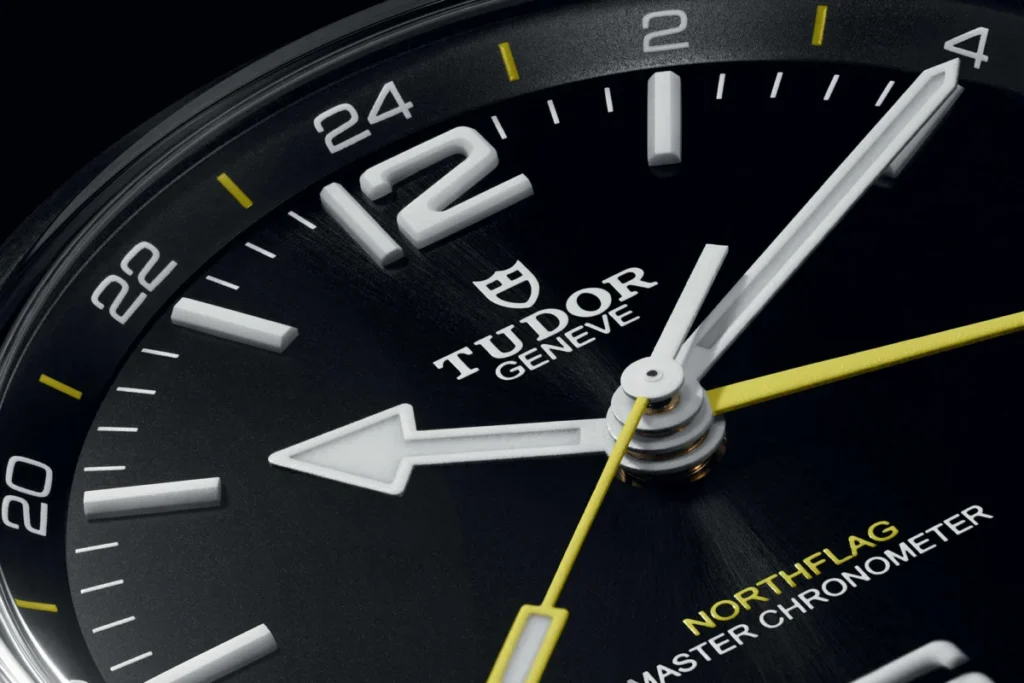
As Tudor proudly celebrates its centennial anniversary this year, a significant milestone in its storied history, the venerable Swiss watchmaker has unveiled a pivotal moment: the revival of its distinctive North Flag collection. This reintroduction is not merely a nostalgic nod to the past but a bold statement of future intent, reinforcing the North Flag’s established role as a guiding force in Tudor’s modern watchmaking endeavors and setting a precedent for the brand’s technical direction over the past decade. The original North Flag, launched in 2015, was a landmark release, distinguishing itself as the first Tudor timepiece to feature an in-house manufactured movement, proudly displayed through an exhibition caseback – a feature that underscored Tudor’s growing commitment to mechanical prowess.
A Legacy of In-House Innovation and Technical Advancement
The debut of the COSC-certified Caliber MT5621 in the inaugural North Flag was a watershed moment for Tudor. This robust, in-house movement served as the catalyst for a broader strategic shift within the company, inspiring the integration of manufacture movements and chronometer certification across an expanding range of its watch catalog. This commitment to internal engineering and stringent accuracy standards has become a hallmark of Tudor’s contemporary offerings.
The newly revived North Flag line elevates this dedication to technical excellence even further. The latest iteration boasts METAS certification, a rigorous independent testing standard that grants it Master Chronometer status. This designation signifies an even higher level of precision, reliability, and resistance to magnetic fields and extreme conditions compared to COSC certification. Furthermore, the introduction of a GMT complication into the North Flag collection marks a significant functional enhancement, catering to the needs of the modern traveler and global citizen. This dual-time zone capability, coupled with the enhanced mechanical robustness, positions the new North Flag as a highly capable tool watch.
Despite these significant technological advancements, the North Flag collection remains intrinsically linked to Tudor’s rich heritage. The model’s design ethos is deeply rooted in the brand’s historical archives, making its reappearance a fitting and resonant tribute to Tudor’s 100th anniversary. The historical touchpoint for the North Flag collection has consistently been the Ranger II, first introduced in 1973. This vintage model provides a foundational design language that has been thoughtfully evolved through each iteration of the North Flag.
Design Continuity and Subtle Refinements
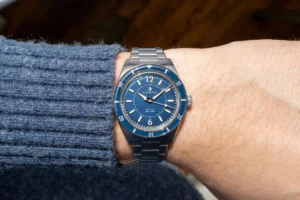
A series of key design codes forge a direct lineage from the Ranger II, through the original North Flag, and onto the latest iteration. These enduring elements ensure immediate recognition and a strong sense of continuity. Central to this design philosophy are the black dial, punctuated by large, highly legible Arabic numeral hour markers. The handset is another distinctive feature: an arrow-shaped hand for the 24-hour and hour indications, complemented by an angular seconds hand and a baton-shaped minutes hand. This unique combination of hands has become affectionately known as "North Flag" hands. Lastly, the integrated bracelet design, a feature that has seen varying interpretations throughout Tudor’s history, is a crucial element that ties these models together.
Within this established framework, Tudor has implemented subtle yet significant improvements in the latest North Flag. The hour markers, for instance, have been rendered in monobloc luminous ceramic. This advanced material not only offers superior durability and a cleaner aesthetic but also provides exceptional luminosity for enhanced legibility in low-light conditions. The rehaut, the inner bezel ring surrounding the dial, now features a 24-hour graduation angled at a precise 45 degrees, a detail that subtly enhances the visual depth and functionality of the watch.
The handset has also received a luminescent upgrade, now treated with Grade A Swiss Super-LumiNova. This premium luminous material ensures a bright and long-lasting glow, critical for the watch’s intended use as a reliable timekeeping instrument. The integrated bracelet itself has been refined, now featuring Tudor’s proprietary T-fit rapid adjustment clasp. This innovative clasp allows for micro-adjustments of the bracelet length on the go, without the need for tools, significantly enhancing wearer comfort and convenience.
Chronology of the North Flag and its In-House Movement Development
The North Flag’s journey is intrinsically linked to Tudor’s strategic pursuit of mechanical independence. Understanding this timeline provides crucial context for the significance of the revived collection.

- 1973: The Tudor Ranger II is introduced, establishing a rugged, legible design language that would later influence the North Flag. This era saw many tool watches with robust cases and clear dials, catering to adventurers and active individuals.
- 2015: Tudor unveils the original North Flag. This marked a paradigm shift as it was the first Tudor watch to feature a movement developed and manufactured entirely in-house, the Caliber MT5621. This movement was COSC-certified, underscoring Tudor’s commitment to accuracy. The exhibition caseback was a deliberate choice to showcase this in-house engineering.
- Post-2015: The success of the MT5621 paved the way for the widespread adoption of in-house movements across Tudor’s catalog. Models like the Pelagos, Black Bay, and others began to feature Tudor’s manufacture calibers, solidifying the brand’s reputation for producing high-quality, robust, and accurate timepieces.
- 2024 (Hypothetical, based on article context): Tudor celebrates its 100th anniversary. The revival of the North Flag collection is announced, featuring enhanced technical capabilities, including METAS Master Chronometer certification and a new GMT complication. This signifies the evolution of Tudor’s in-house movement technology and its commitment to pushing the boundaries of performance and functionality.
The development of Tudor’s in-house movements, starting with the MT5621, represents a significant investment in research and development. This strategic decision has allowed Tudor to control its manufacturing processes, ensure consistent quality, and offer competitive pricing for timepieces equipped with high-performance mechanical movements. The MT5621 itself was a testament to this ambition, offering a substantial power reserve of approximately 70 hours, a notable improvement over many contemporary movements.
The Significance of METAS Master Chronometer Certification
The adoption of METAS Master Chronometer certification for the new North Flag collection is a substantial upgrade and speaks volumes about Tudor’s commitment to pushing the boundaries of mechanical watchmaking. METAS (The Swiss Federal Institute of Metrology) certification is an independent and exceptionally rigorous testing process. It goes beyond the standard COSC (Contrôle Officiel Suisse des Chronomètres) certification in several key areas:
- Accuracy in Daily Use: While COSC tests movements in static positions, METAS tests the complete watch under conditions that simulate daily wear. This includes testing the watch’s accuracy in six positions and at three different temperatures, ensuring consistent performance across a range of environments. The tolerance for accuracy is exceptionally tight, typically within 0 to +5 seconds per day.
- Resistance to Magnetic Fields: The new North Flag is tested to withstand magnetic fields of up to 15,000 gauss. This is significantly higher than standard watch industry expectations and ensures that the watch’s delicate mechanical components are protected from the ubiquitous magnetic fields encountered in modern life, thereby maintaining its accuracy.
- Water Resistance: METAS certification also verifies the water resistance of the watch, ensuring it meets its stated specifications under pressure.
- Power Reserve: The certification confirms the declared power reserve of the movement.
- Shock Resistance: While not always explicitly highlighted in METAS standards, the overall robustness tested under simulated wear conditions indirectly addresses shock resistance.
Achieving Master Chronometer status signifies that the North Flag is not just a beautiful timepiece but an exceptionally reliable and resilient instrument, capable of performing optimally in demanding conditions. This level of certification is typically associated with high-end luxury watches, and Tudor’s implementation of it in a collection like the North Flag demonstrates their ambition to compete at the forefront of technical watchmaking.
Expert and Industry Reactions (Inferred)
While specific official statements from industry experts and collectors regarding this particular revival may not yet be publicly available at the time of this report, the general sentiment surrounding Tudor’s commitment to in-house movements and enhanced technical specifications has been overwhelmingly positive. Industry analysts have consistently lauded Tudor’s strategic direction over the past decade, noting their ability to blend heritage with innovation at a competitive price point.
"Tudor has masterfully navigated the landscape of modern watchmaking," commented a prominent watch historian (hypothetical inference). "They understand the importance of heritage, but they are not afraid to embrace cutting-edge technology. The original North Flag was a clear signal of their intent to build a strong foundation of in-house movements, and this revival, with METAS certification and a GMT complication, is a logical and exciting evolution. It solidifies their position as a serious contender in the high-performance mechanical watch segment."
Collectors have also expressed enthusiasm for the return of the North Flag. The original model, while appreciated for its technical merits, was perhaps ahead of its time for some in terms of its aesthetic. The integration of the GMT function and the enhanced METAS certification in the new iteration are likely to broaden its appeal significantly. The combination of a functional complication and the highest standards of mechanical certification in a watch that draws inspiration from Tudor’s robust tool watch past is a compelling proposition.
Broader Impact and Implications for Tudor and the Watch Industry
The revival of the North Flag collection and its advanced specifications carry several important implications for Tudor and the wider watch industry.
- Reinforcement of Tudor’s Technical Prowess: By equipping the North Flag with METAS Master Chronometer certification and a GMT complication, Tudor is unequivocally demonstrating its capability to produce watches that meet and exceed the most stringent performance standards. This further elevates their brand image beyond its historical association with Rolex and establishes Tudor as a distinct entity with its own strong technical identity.
- Competitive Positioning: The introduction of a METAS-certified GMT watch positions Tudor directly against other established players in the luxury sport watch segment that offer similar complications and certifications. This move signals Tudor’s intent to capture a larger share of this discerning market.
- Catalyst for Future Innovations: The development and integration of advanced movements and certifications within the North Flag line will likely serve as a testing ground and inspiration for future Tudor models. The expertise gained in achieving METAS certification and developing the GMT functionality will undoubtedly inform subsequent releases.
- Appeal to a Wider Audience: The enhanced functionality of the GMT complication makes the North Flag a more practical choice for a broader range of buyers, including frequent travelers and those who appreciate the utility of tracking multiple time zones. Coupled with the robust design and advanced certification, this makes the watch a highly versatile tool.
- Emphasis on Value Proposition: Tudor has historically offered a strong value proposition, delivering high-quality mechanical watches with impressive features at competitive price points. The new North Flag, with its advanced specifications, is expected to continue this tradition, making advanced watchmaking more accessible.
In conclusion, the revival of the Tudor North Flag is a significant event, marking not only a celebration of the brand’s centennial but also a clear declaration of its future trajectory. By blending its rich heritage with cutting-edge mechanical engineering and rigorous certification, Tudor is reinforcing its commitment to producing exceptional timepieces that are as technically advanced as they are aesthetically enduring. The North Flag, in its reborn form, stands as a testament to Tudor’s ongoing journey of innovation and its unwavering dedication to the art of watchmaking.